In traditional sports media and content platforms, user activity such as browsing and interaction typically translates only into platform traffic and advertising revenue, with little direct participation in value distribution. With the rise of blockchain technology, the Web3 model has begun exploring ways to turn user behavior into assets. OneFootball emerged in this context, aiming to convert the attention, engagement, and data of global football fans into onchain assets, thereby reshaping the value structure of the fan economy.
As a blockchain-based football fan engagement platform, OneFootball’s core mechanism lies in recording user activity and combining it with a points system and token distribution to turn participation into economic incentives.

Within this system, users are no longer just content viewers. Through interaction, they actively contribute to the ecosystem’s value creation. OFC is the platform’s native utility token, used for rewarding users, participating in governance, and enabling various in-platform functions.
As early as late April 2022, OneFootball completed a $300 million Series D funding round led by Liberty City Ventures, with participation from Animoca Brands, Dapper Labs, DAH Beteiligungs GmbH, Quiet Capital, RIT Capital Partners, Senator Investment Group, and Alsara Investment Group. In August 2025, OneFootball raised an additional $3 million on Coinlist at a valuation of $50 million.
At its core, OneFootball represents an attempt to transform the “attention economy” into an “onchain value distribution mechanism.”
OneFootball originally started as a global football content platform, offering match data, news, and video content, and building a large user base. Under the Web2 model, its primary revenue streams relied on advertising and content distribution.
With the evolution of Web3, content platforms began exploring new ways to distribute value, specifically how users could share in the benefits of platform growth. OneFootball Club was introduced in this context, with the goal of building a user-centric fan economy system.
Compared to traditional sports platforms, OneFootball Club places greater emphasis on:
-
Quantifiable user participation
-
Verifiable data ownership
-
Transparent incentive mechanisms
This transition reflects a broader shift from Web2 content platforms toward Web3 community-driven ecosystems.
Core Mechanisms and Functions of the OFC Token
OFC is the central token within the OneFootball ecosystem, with its functionality focused on incentives, utility, and participation.
First, OFC is used to reward user activity on the platform, such as consuming content, engaging with features, or completing tasks. This incentive model makes user participation a fundamental part of the ecosystem.
Second, OFC can be used across various in-platform scenarios, including acquiring digital assets, accessing membership benefits, or unlocking specific features, thereby creating real demand for the token.
In addition, OFC supports community governance, allowing users to participate, to some extent, in ecosystem decision-making. This design shifts users from passive consumers to active contributors.
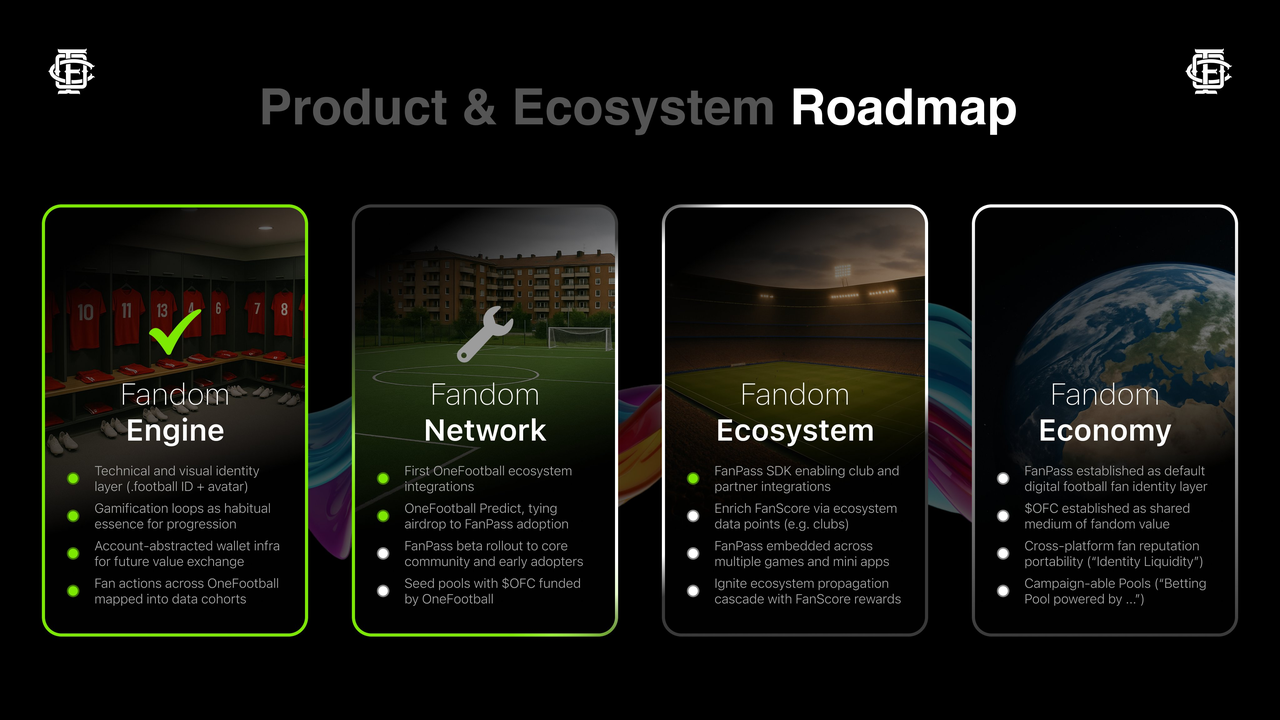
The core operational logic of OneFootball can be summarized as a closed-loop system: user behavior → data recording → points system → token distribution → ecosystem usage.
User actions on the platform, such as browsing, liking, or participating in activities, are first recorded as data to measure engagement. The system then quantifies these behaviors through a points mechanism, such as BALLS.
Over a defined period, OFC tokens are distributed based on users’ points or contribution ratios, rather than through fixed rewards. This approach ties incentives directly to actual participation levels.
Finally, the OFC earned by users can be spent within the platform or used in other activities, forming a continuous participation loop.
OneFootball Club introduces the concept of onchain identity, linking user behavior to blockchain addresses to ensure data ownership and traceability.
This identity system typically exists in the form of digital identifiers, such as usernames or domain-like formats, allowing users to maintain a unified onchain identity across different scenarios.
From a data architecture perspective, high-frequency user activity is usually processed off-chain, while key assets and identity data are stored onchain. This hybrid “onchain + offchain” structure balances efficiency with verifiable ownership.
With onchain identity in place, user behavior is no longer just internal platform data but becomes a composable and verifiable digital asset.
OFC Tokenomics
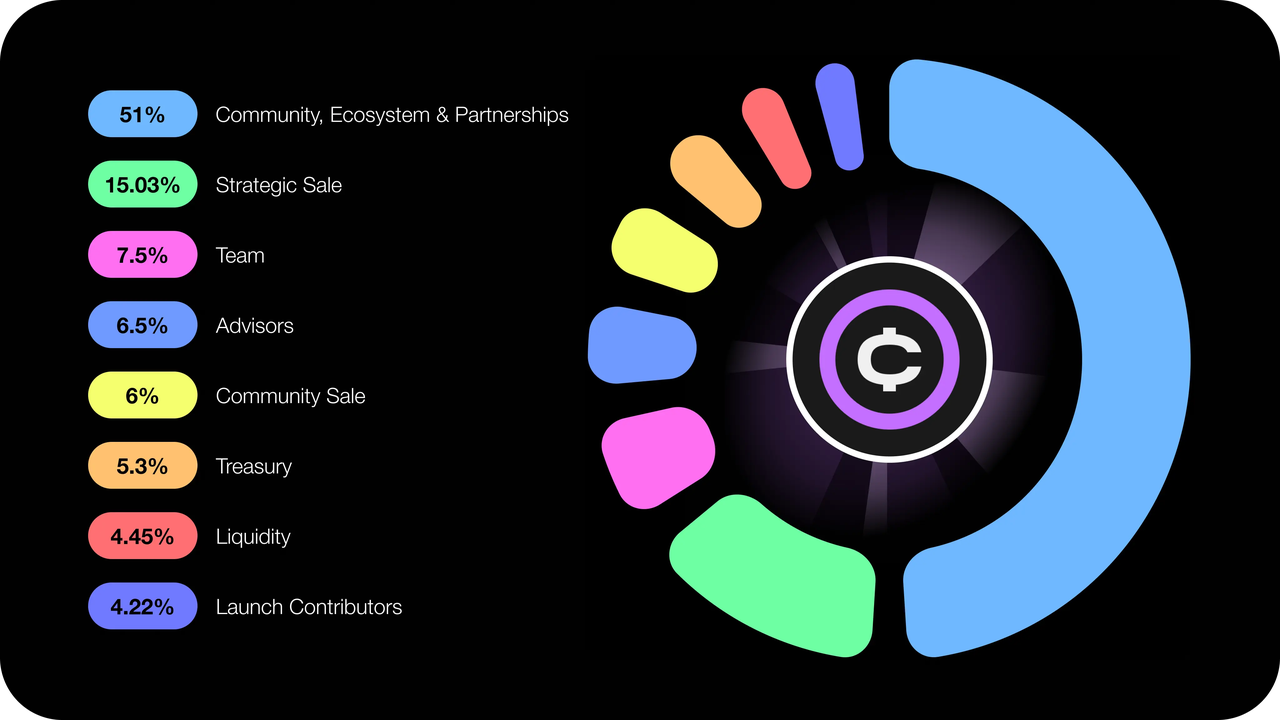
The total supply of OFC is 1 billion tokens. In terms of allocation, OFC is primarily distributed indirectly through user activity, with 51% allocated to the community and partners. The team holds 7.5%, subject to a 21-month lock-up period. This design closely aligns platform growth with user participation, creating a participation-driven economic system.
OFC has multiple use cases within the OneFootball Club ecosystem.
At the content and interaction level, OFC can be used to participate in platform activities, acquire digital assets, or unlock exclusive content. In the digital asset space, users can also use OFC in NFT-related scenarios or collectible ecosystems.
At the community level, OFC enables governance and voting, allowing users to participate in certain ecosystem decisions.
In addition, OFC may play a role in membership systems, subscription services, and fan engagement, forming a multi-dimensional application landscape.
OneFootball Club differs significantly from traditional Fan Token models in both structure and purpose.
Traditional Fan Tokens, such as those in the Chiliz ecosystem, are typically issued around individual clubs and are mainly used for voting and fan engagement, with relatively limited use cases.
In contrast, OneFootball Club operates as a platform-level system. Its token, OFC, serves the entire ecosystem rather than a single club. Its incentive model emphasizes user behavior rather than mere token holding.
Moreover, OneFootball Club places greater focus on onchain identity and data structures, integrating user behavior into a long-term value system instead of treating it as a short-term engagement tool.
These differences position it closer to a full Web3 content platform rather than just a fan voting mechanism.
The main features of OneFootball Club include:
First, it places user participation at the center, converting behavior into value and giving fans a more meaningful role within the ecosystem. Second, through onchain identity and data structures, it enables verifiable ownership and composability of data.
However, this model also faces challenges. For example, whether the incentive mechanism can sustain long-term user engagement depends on real-world use cases and user growth. In addition, user education and the barriers associated with Web3 adoption may affect its broader reach.
From a tokenomics perspective, insufficient demand or excessive incentives could also disrupt the ecosystem’s balance.
Conclusion
OneFootball Club is a Web3 application that integrates a football content platform with blockchain technology. Its core lies in transforming user participation into measurable value through tokens and onchain data.
Through the mechanism of “behavior → data → points → tokens,” OneFootball Club builds a user-centric fan economy model. Compared to traditional platforms, it not only changes how value is distributed but also redefines the role of users within the ecosystem.
From a broader perspective, OneFootball Club represents a pathway for content platforms transitioning to Web3, where data ownership and incentive mechanisms make user participation a fundamental component of the ecosystem.
FAQs
How can users earn OFC?
Users typically earn points through platform activities, such as interactions and task participation, and receive OFC based on their contribution ratio.
It generally adopts a hybrid structure, with high-frequency data processed off-chain and key assets and identity recorded onchain.
What is the difference between OFC and traditional Fan Tokens?
OFC serves the entire platform ecosystem and emphasizes behavior-driven incentives, while traditional Fan Tokens are usually tied to individual clubs and voting functions.
Both include incentive mechanisms, but OneFootball focuses more on content consumption and fan engagement rather than profit-driven gameplay.
Its primary use cases are within the ecosystem, but the scope ultimately depends on the platform’s design and future expansion.