Rising Community Concerns: Will Hashrate Disappear Overnight?
Following US and Israeli military strikes on Iran, social platforms have seen a surge in posts warning of potential major disruptions to Bitcoin mining, including:
- A 2%–5% drop in global hashrate
- Hundreds of thousands of mining rigs going offline
- Large-scale forced BTC sell-offs
Some even predict that if Iran’s regime collapses, the market could face a supply shock. However, many industry observers consider these claims to be exaggerated.
Impact Not Comparable to Historical Events
Wolfie Zhao, Research Director at TheMinerMag, noted that even if Iran’s power grid is disrupted by conflict, it would not pose a significant threat to the global network. He emphasized that Iran’s mining scale is much smaller than what was seen during China’s comprehensive mining crackdown in 2021, which remains the benchmark for global hashrate volatility.
Data Shows Hashrate Remains at High Levels
According to CoinWarz:
- February 28 (after the initial attack): Hashrate was about 986 EH/s
- March 1: Briefly peaked at 1.136 ZH/s
- Early Tuesday: Pulled back to around 1 ZH/s
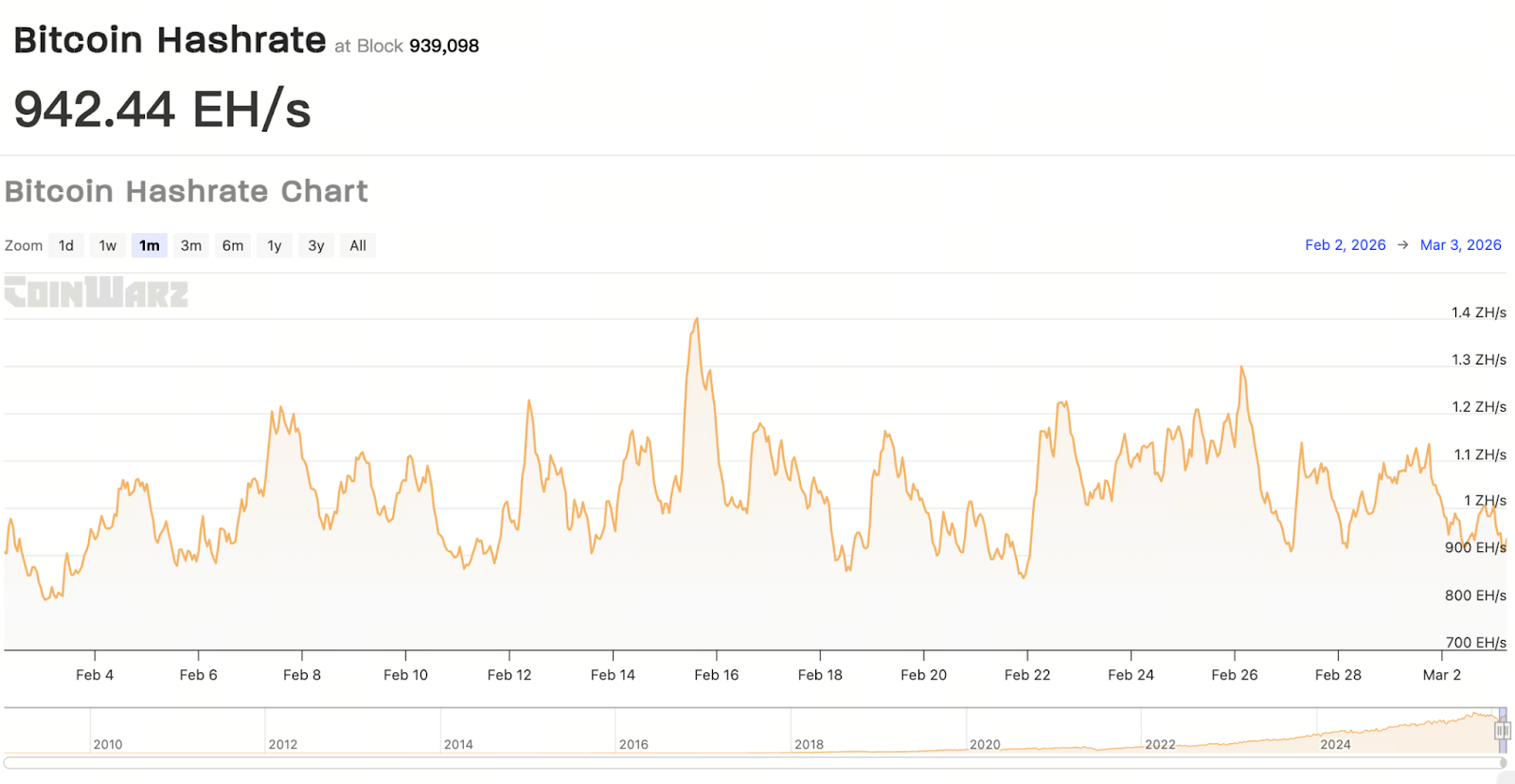
(Source: CoinWarz)
Overall, hashrate fluctuations remain near historic highs, and the dramatic collapse rumored in the market has not occurred.
Iran’s Mining Share Has Always Been Low
Since 2019, Iran has legalized cryptocurrency mining, but the industry faces several constraints:
- Unstable power supply
- High equipment import costs
- Complex regulatory environment
Ethan Vera, COO of Luxor Technology, stated that even if Iranian mining farms temporarily halt operations, block generation times and network security are virtually unaffected. He estimates Iran’s global hashrate share at less than 1%, far below figures circulating in the community.
Price Volatility Driven Primarily by Sentiment
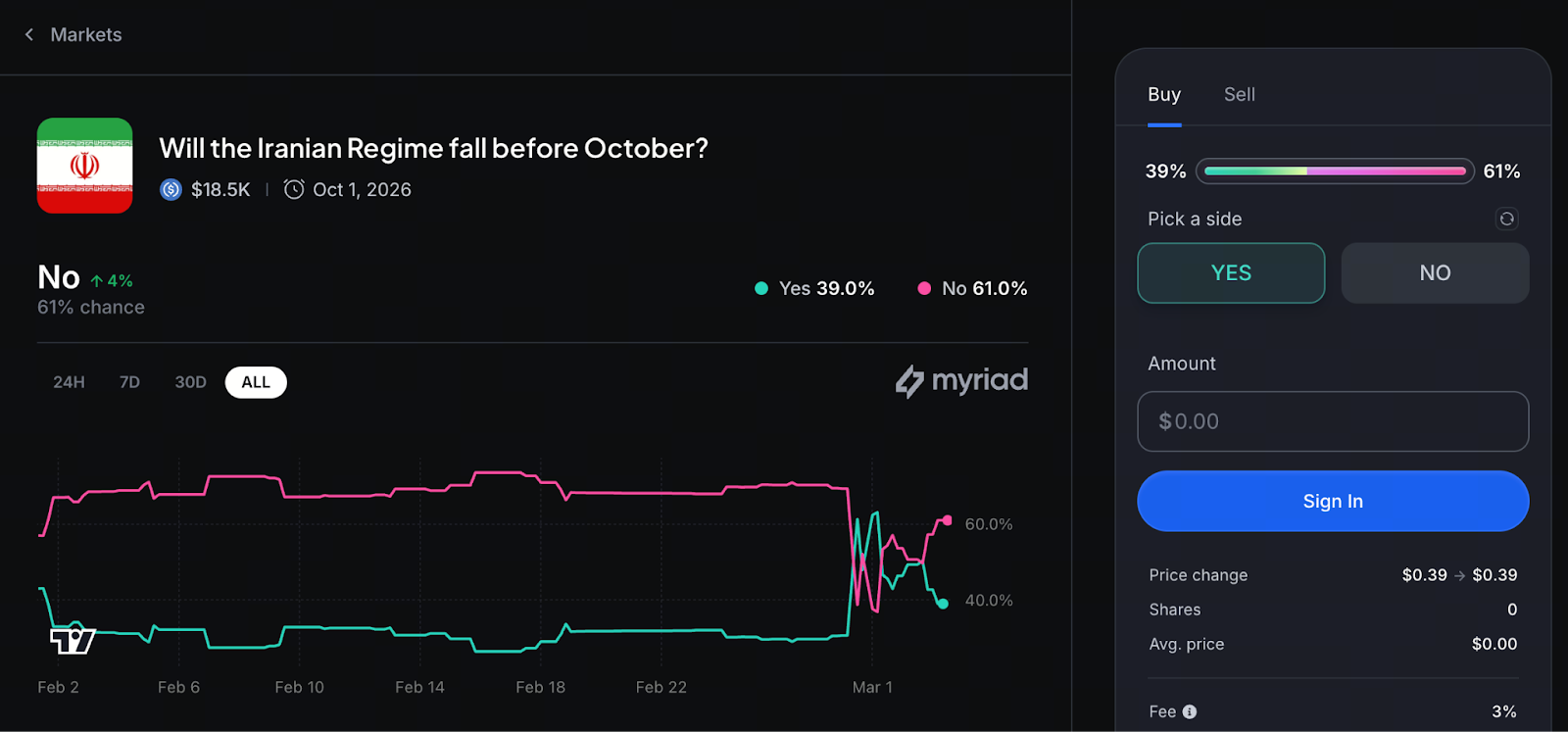
After the conflict broke out, Bitcoin’s price briefly dropped before rebounding. Analysts point out that short-term volatility is mainly driven by market risk sentiment rather than any substantive issues on the mining supply side. As of press time, on the prediction market Myriad, the estimated probability of Iran’s regime collapsing before October had fallen to 39%, highlighting a clear cooling in market sentiment.
Iran’s Crypto Economy: Scale and Capital Flows
Blockchain analytics firm Chainalysis reported earlier this year that Iran’s crypto economy could reach $7.78 billion by 2025, with some activities linked to state-affiliated entities. Meanwhile, analytics firm Elliptic found that in the minutes following the initial military strike, outflows from Iranian exchanges surged 700%, reflecting investors’ rapid asset reallocation.
Summary
While heightened geopolitical risks have fueled market speculation, most experts agree that Iran’s mining activity is limited in scale and unlikely to pose a substantial threat to Bitcoin network operations. In the short term, price volatility is more likely to be driven by market sentiment and macro risk appetite than by any systemic collapse in hashrate supply.