As artificial intelligence and blockchain technologies continue to converge, decentralized AI ecosystems have become a major focus across the industry. Traditional AI platforms are typically controlled by a small number of large corporations that dominate data, computing power, and model resources, while decentralized protocols aim to break this monopoly.
Sentient was created against this broader backdrop. It is an open source, decentralized AI protocol platform designed to allow AI models, data, and participants to jointly build a transparent, incentive driven, and governable intelligence ecosystem. This article takes a deep look at how Sentient operates, the structure of its core protocols, and the key differences between Sentient and traditional centralized AI systems.
An Overview of Sentient’s Overall Protocol Architecture
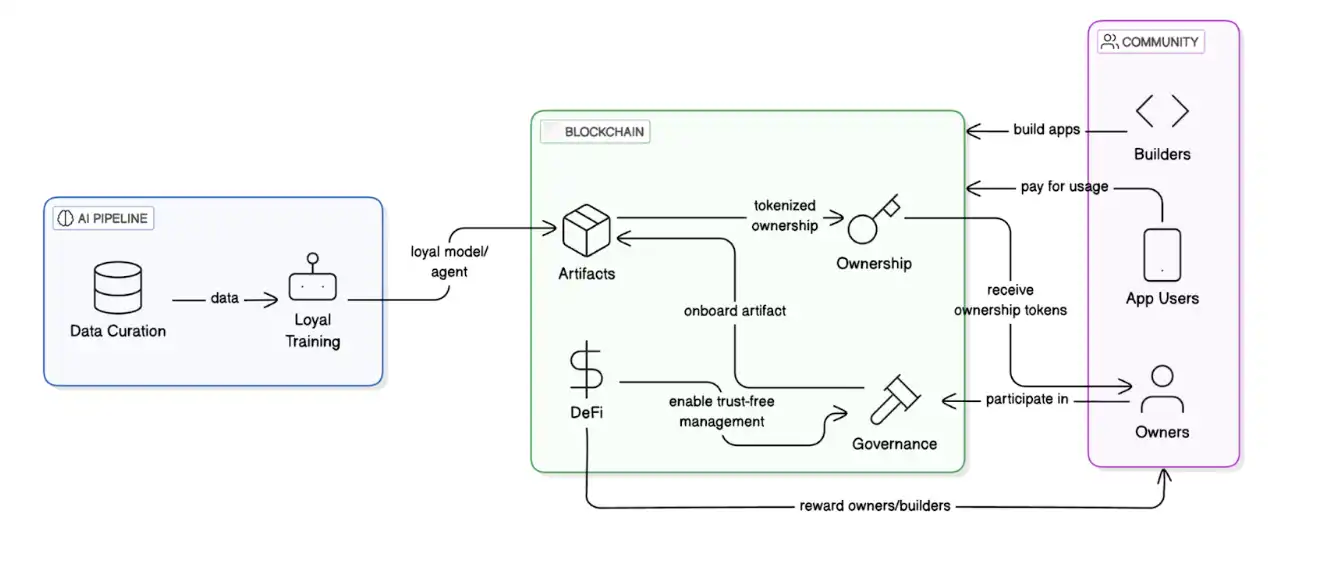
Image source: BlockBeats
The Sentient protocol consists of two core components: a blockchain system layer and an AI pipeline. The blockchain layer is responsible for decentralized governance, model ownership, and incentive distribution, while the AI pipeline handles model training, data preparation, and collaborative execution.
Blockchain Layer
- Governance module: Implements community driven decision making through a DAO framework.
- Ownership module: Records ownership of AI artifacts through tokenization.
- DeFi incentive infrastructure: Provides reward mechanisms for contributors and ecosystem participants.
- Protocol smart contracts: Serve as the foundational logic of the protocol, automatically executing economic and governance rules.
AI Pipeline
- Data curation: A community driven process for selecting and organizing data.
- Loyalty training: A training process designed to ensure that AI models align with community goals.
- Fingerprint model management: Uses model fingerprinting technology to create unique, traceable identifiers for each model, preventing misuse and unauthorized sharing.
This architecture not only enables decentralized governance but also establishes a clear chain of ownership and incentives, creating a fair economic model for model contributors, data providers, and infrastructure providers.
How the Sentient Network Enables Decentralized AI Collaboration
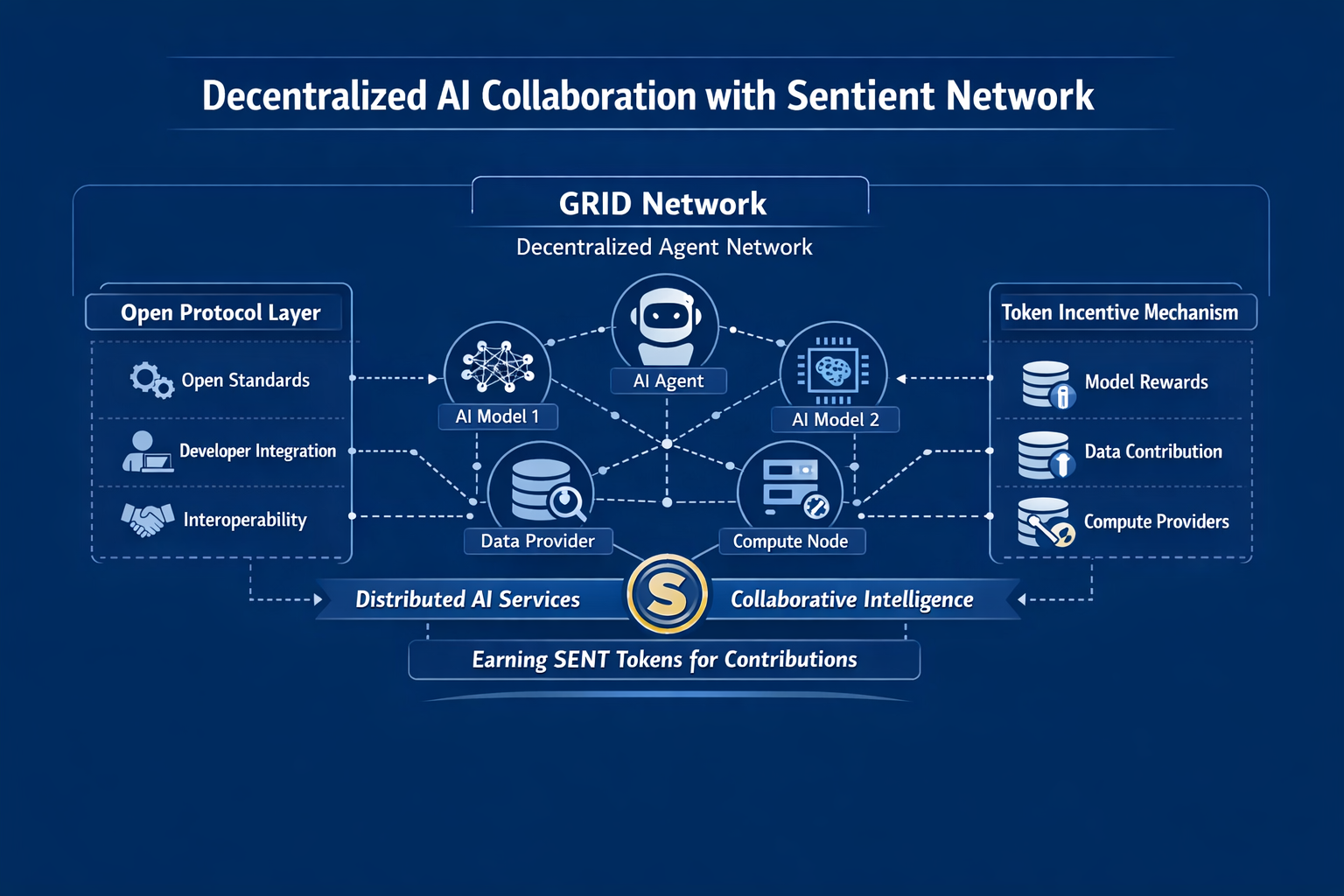
Decentralized AI collaboration is one of Sentient’s core objectives. Unlike traditional centralized models, Sentient is designed to promote collaborative development and interaction among multiple models, agents, and data providers.
Open Protocol Layer
At its core, the Sentient protocol functions as an open standard. Developers and researchers can connect their own models, data, and intelligent agents to the network, allowing these components to interoperate and execute collaboratively through the protocol.
GRID Network (Decentralized Agent Network)
Sentient’s GRID serves as the foundational layer of its decentralized intelligent network. It allows different AI entities to combine and collaborate, jointly delivering intelligent services in response to user requests. Rather than relying on a single large model, this multi agent collaboration resembles an open neural network, enhancing intelligence and responsiveness through distributed cooperation.
Economic Incentive Mechanism
Sentient’s protocol level incentive system, based on token economics, rewards model contributors, data providers, and infrastructure service providers. Ecosystem participants receive SENT token rewards based on their actual contributions, fostering a healthy environment for collaboration and innovation.
How Data, Models, and Compute Work Together in the Sentient Network
Within the Sentient network, AI models, training data, and computing resources operate collaboratively in an open and verifiable manner.
- On chain model registration and fingerprinting: Contributors submit model weights to the protocol, generating a unique fingerprint during the on chain process. These fingerprints can track model versions and detect unauthorized copying, ensuring that model usage is verifiable and properly authorized.
- Data curation and contribution mechanisms: Community members can contribute data and participate in its evaluation and selection. High quality data is incorporated into the training pipeline, improving model performance and alignment.
- Compute coordination and task allocation: To efficiently utilize distributed computing resources, the Sentient protocol coordinates multiple compute providers to jointly handle training and inference tasks. This approach is similar to distributed computing and helps overcome the limitations of single node compute capacity.
How Sentient Ensures Efficient Model Training and Data Usage
Ensuring efficiency in training and data utilization is a key challenge in decentralized environments. Sentient addresses this challenge through several mechanisms:
- Modular training workflows: By breaking training into parallelizable modules through data curation and loyalty training, contributions of data and compute can be effectively integrated.
- Fingerprint verification and reputation systems: Model fingerprinting allows the protocol to track model usage and performance history, establishing a contribution based reputation system that optimizes resource allocation.
- Intelligent task scheduling: The protocol automatically schedules training tasks based on compute availability, data quality, and model requirements, improving overall resource utilization.
The Role of On Chain Mechanisms in the Sentient Network
On chain mechanisms form the foundation of decentralized governance and resource allocation in Sentient.
- Transparent ownership records: Leveraging the immutability of blockchain, Sentient records ownership of models, data, and agents on chain, ensuring transparency and traceability.
- Automated incentive distribution via smart contracts: Smart contracts automatically collect usage fees, distribute revenue, and execute reward rules without centralized approval.
- DAO based governance participation: Sentient’s governance module allows community members to vote on protocol upgrades and parameter adjustments, enabling genuine community self governance.
Key Differences Between Sentient and Traditional Centralized AI Systems
Decentralized protocols and traditional centralized AI platforms differ significantly in both architecture and operation:
- Transparent model ownership versus black box control: Sentient provides on chain ownership records, while traditional GPT style models are typically closed source and centrally controlled.
- Open collaboration versus internal development: Sentient encourages community contribution and collaboration, whereas traditional companies often rely on closed, internal R&D.
- Token incentives versus commercial licensing fees: Sentient uses token based incentives, while centralized systems typically depend on licensing or subscription fees.
A Practical Example of Sentient’s Application Workflow
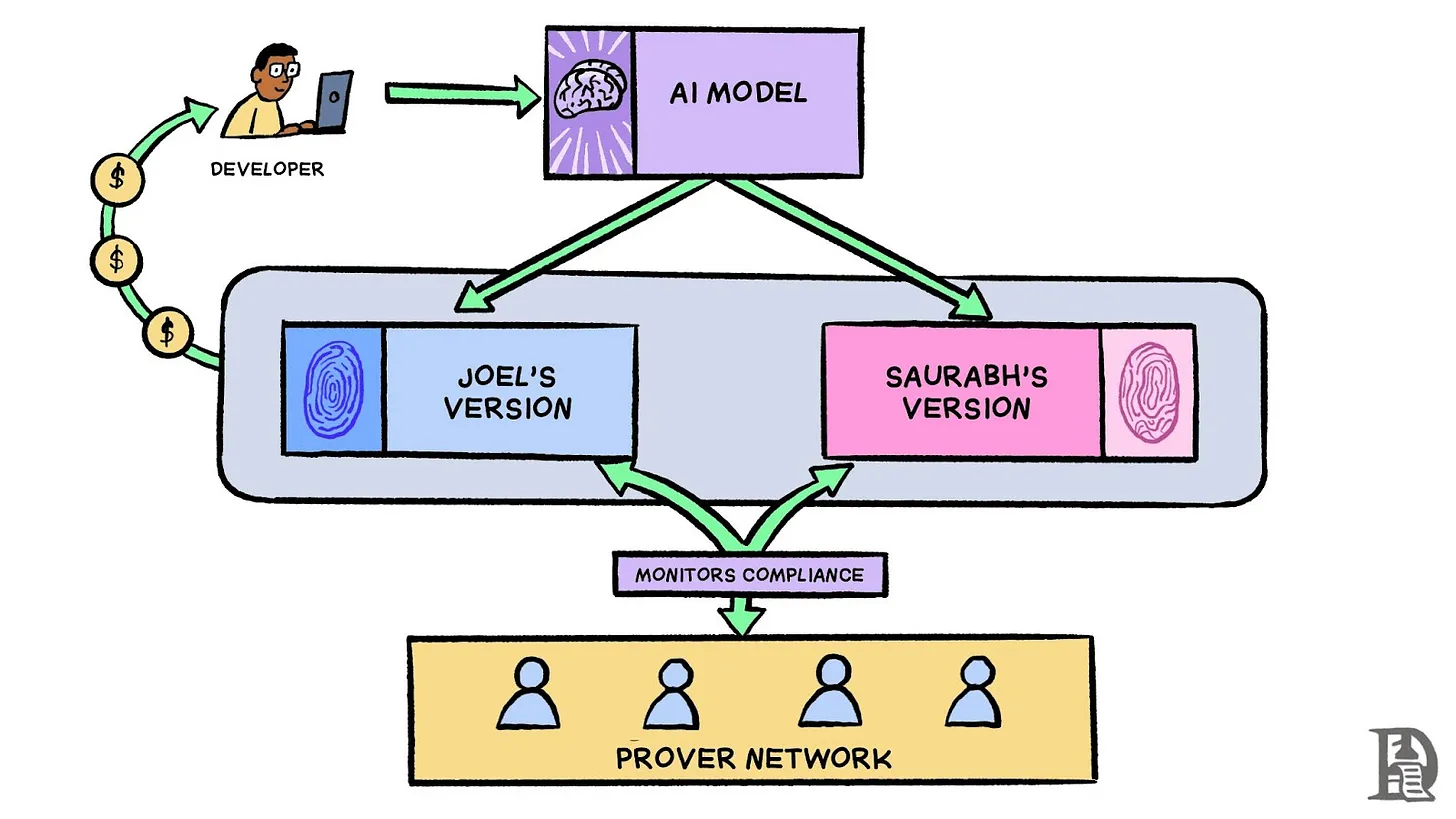
Image source: decentralised
Below is a typical application workflow within the Sentient protocol:
- Model contribution: Researchers upload new model weights to the protocol and generate a unique model fingerprint.
- Data curation: Community members evaluate and contribute training data, with high quality data added to the pool.
- Task scheduling: The protocol allocates compute resources based on availability to carry out training.
- Inference execution: End users submit inference requests, which are served through collaborative agent execution.
- Revenue distribution: Smart contracts automatically distribute usage fees to model contributors, data providers, and other participants.
Potential Future Technical Upgrade Directions for the Sentient Protocol
Looking ahead, the Sentient protocol may evolve in several directions:
- More efficient collaboration protocols: Developing more optimized agent collaboration mechanisms to improve distributed task execution performance.
- Enhanced privacy protection: Integrating advanced privacy preserving computation and zero knowledge proof technologies to strengthen data security.
- Cross chain interoperability: Supporting collaborative ecosystems for data and model resources across multiple blockchains.
- Adaptive intelligent scheduling mechanisms: Further improving resource allocation intelligence based on reputation and efficiency metrics.
Conclusion
The Sentient protocol represents a new paradigm for decentralized AI collaboration. By combining blockchain and AI coordination mechanisms, it enables transparent model ownership, community governance, open collaboration, and fair incentives. Compared with traditional centralized AI systems, Sentient emphasizes openness, transparency, and participant rights, making the AI ecosystem more democratic and sustainable. As the technology matures and the ecosystem expands, Sentient has the potential to become a key piece of infrastructure for decentralized Artificial General Intelligence (AGI).