Why Multi-Asset Trading Matters in Today’s Market Environment
Global markets have recently experienced heightened volatility and correlation in single assets, driven by geopolitical tensions, inflation swings, and central bank policy expectations. Multi-asset trading empowers investors to diversify risk and seize opportunities across various markets. With a unified platform, investors can seamlessly switch between gold, forex, indices, commodities, and stocks to respond to price movements triggered by different macroeconomic signals.
Gate TradFi: Core Architecture and Trading Logic
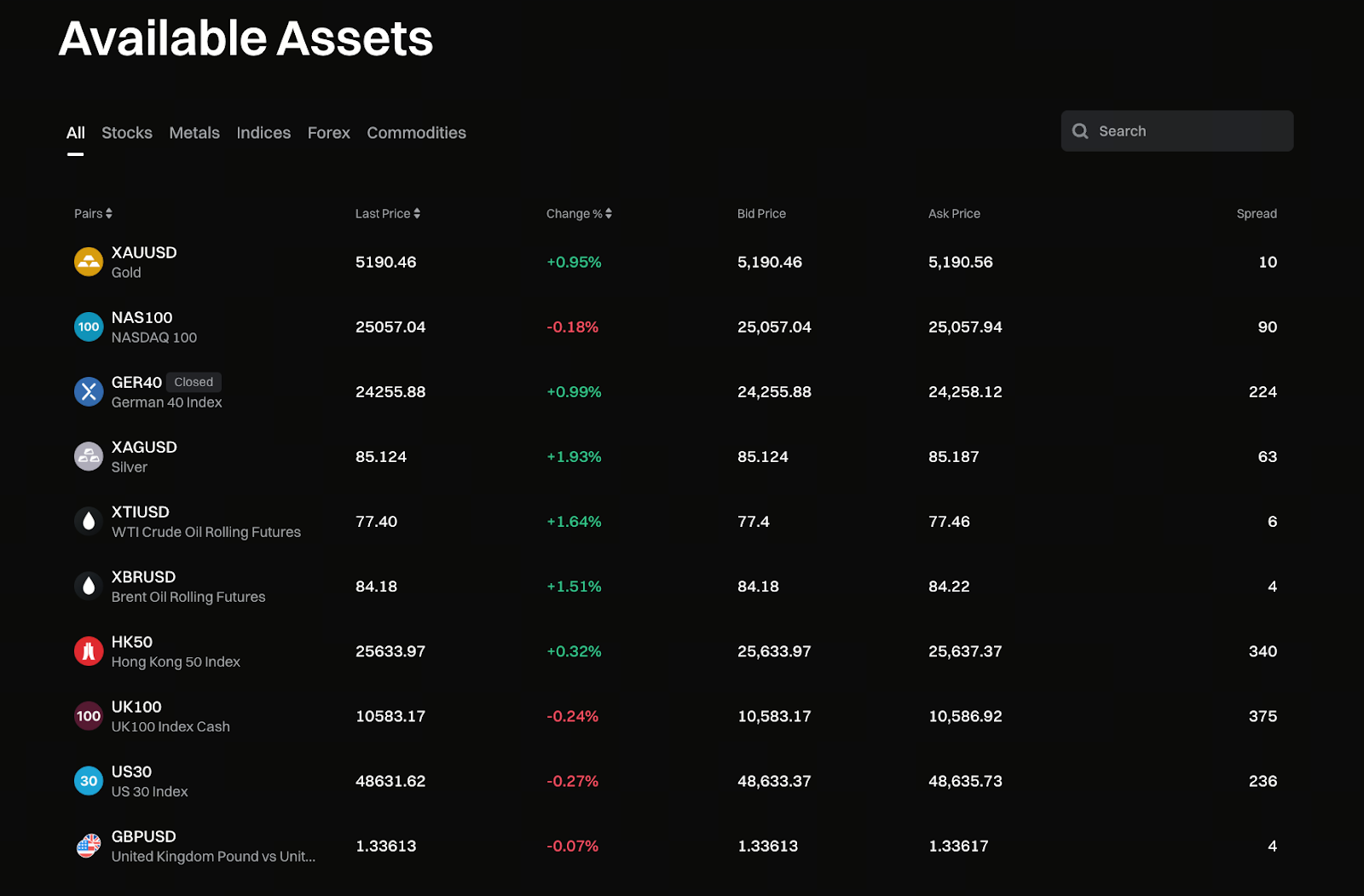
Figure: https://www.gate.com/tradfi
Gate TradFi integrates traditional financial asset trading into the crypto trading ecosystem, allowing users to access multi-market trading from a single account without additional account registration. Key highlights include:
- Broad asset coverage: gold, forex, indices, commodities, stock CFDs, and more.
- CFD trading model: trade price movements via CFDs without physical settlement.
- Unified account and fund management: assets like USDT can be used directly for TradFi collateral and trading; account balances and positions are displayed in one interface.
- Risk control design: combines margin and leverage management, offering a comprehensive toolbox for hedging and risk management.
These features enable users to execute cross-market strategies efficiently in volatile conditions.
Supported Asset Classes and Trading Scenarios
- Precious metals: CFD trading in gold and other metals, ideal for hedging during periods of heightened risk aversion.
- Forex: major currency pairs, capturing volatility driven by macroeconomic and interest rate cycles.
- Indices: global core indices reflecting macroeconomic trends and market sentiment.
- Commodities: price fluctuations in crude oil, precious metals, and other major commodities.
- Stock CFDs: covers trending tech stocks and other assets, suitable for short- and medium-term trend strategies.
All of these assets are traded via CFDs, enabling investors to participate in price movements without holding the underlying assets.
Practical Strategies for Cross-Market Hedging and Portfolio Optimization
- Diversified allocation: combine gold, forex, and indices within a single account to hedge against different risk factors.
- Macro hedging: leverage the correlation between forex and commodities to hedge before and after geopolitical events or policy announcements.
- Trend hedging: integrate stock DIF/index trends with the safe-haven properties of precious metals to build multi-asset follow/reverse strategies.
- Risk budgeting: set leverage and exposure for each asset based on individual risk tolerance, and adjust dynamically to control volatility.
Tip: In highly volatile markets, prudent use of high leverage, robust stop-loss settings, and enhanced risk management parameters are key to achieving stable long-term returns.
Unified Account: Fund Management Advantages
- Simplified fund transfers: manage crypto assets and TradFi positions in one account, reducing cross-account transfer costs.
- Unified reporting and transparency: cross-market profit and loss, margin, and risk exposure are clearly visible, streamlining asset allocation decisions.
- Consistent experience across devices: TradFi is accessible on both app and web, with synchronized data ensuring seamless operations.
Future Outlook: Gate TradFi’s Role in Shaping the Cross-Market Financial Ecosystem
As global financial markets become increasingly interconnected, cross-market trading capabilities will be a key competitive advantage. Gate TradFi’s roadmap may include expanding asset classes, enhancing cross-market hedging tools, and introducing intelligent trading assistance and data analytics—helping users maintain clear trading strategies in complex market environments.