I. What Is Capital Utilization Rate?
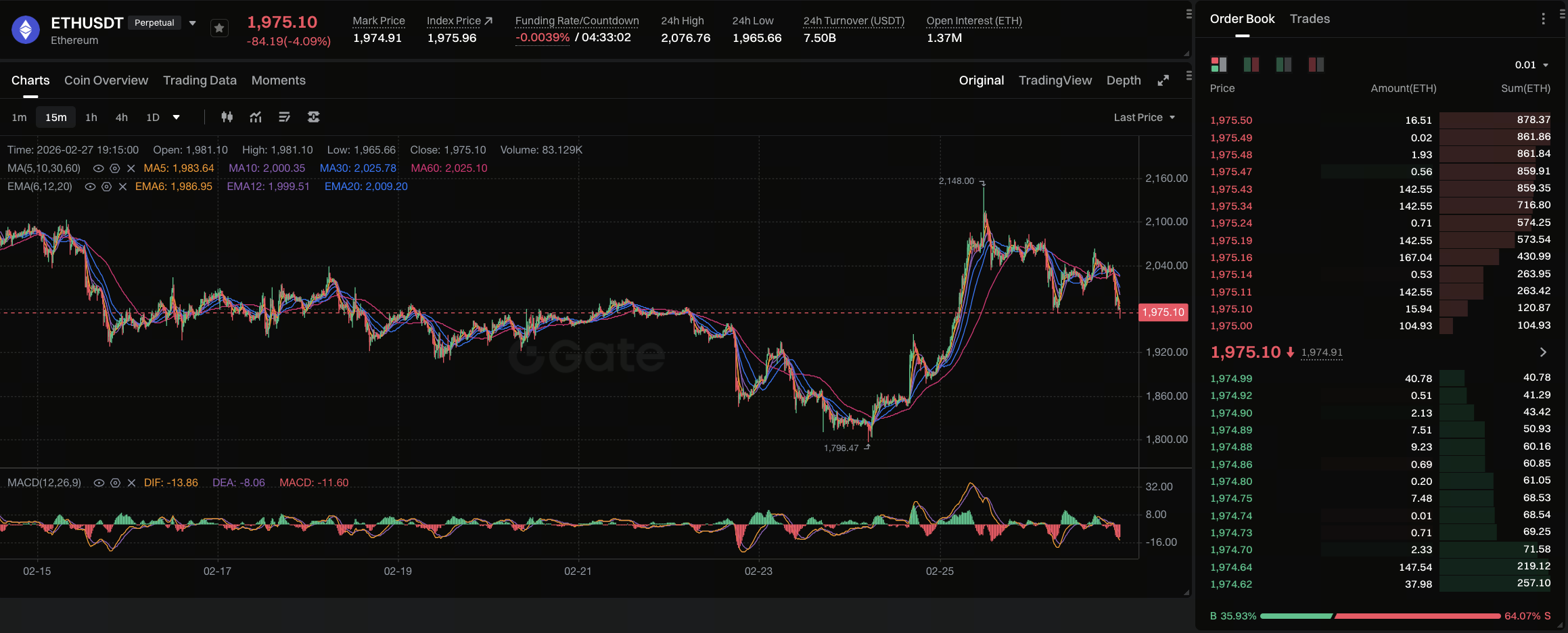
Chart: https://www.gate.com/futures/USDT/ETH_USDT
Capital utilization rate refers to the amount of trading volume you can control with each unit of capital. In the spot market, if you have $1,000 USDT, you are limited to buying assets worth $1,000 USDT. In contract trading, however, the margin mechanism allows you to control a larger position with a smaller amount of capital. This is the essence of improved capital efficiency.
The core principle behind Gate’s contract trading is to let users participate in broader market movements with a smaller principal, thanks to the margin system.
II. Why Contract Trading Increases Capital Efficiency
Gate’s contract system allows traders to open positions by depositing only a portion of the required margin.
For example:
- With 10x leverage, you can theoretically use $100 USDT to control a $1,000 USDT position
- With 20x leverage, your position size increases even further
This means that the same price movement can result in larger swings in profit and loss. It’s crucial to recognize that while capital efficiency improves, risk rises in tandem.
III. Margin Mechanism in Gate Contract Trading
Gate’s contract trading feature divides margin into:
- Initial margin
- Maintenance margin
Initial margin determines whether you can open a position; maintenance margin decides if your position will be forcibly liquidated. The system calculates your risk rate in real time and displays the estimated liquidation price.
This data is provided to help traders manage their positions—not just to decorate the interface.
IV. The Real Relationship Between Leverage and Capital Efficiency
Many beginners mistakenly believe that higher leverage always leads to greater returns. Structurally, leverage only changes how capital is used—it does not affect market volatility itself.
The impact of high leverage is:
- Expanded profit potential
- Narrowed margin for error
In Gate contract trading, choosing the right leverage ratio is more important than simply chasing high multiples.
V. Common Misconceptions About Improving Capital Utilization Rate
Common issues among beginners in real trading include:
- Allocating all account funds to a single high-leverage position
- Disregarding changes in risk rate
- Increasing position size during unrealized losses, which amplifies risk
Boosting capital efficiency is a tool—not a guaranteed profit mechanism. Without proper risk planning, higher efficiency can actually accelerate losses.
VI. How Beginners Can Balance Efficiency and Risk
When using Gate’s contract trading feature, consider the following principles:
- Keep your single position’s share of your account balance within reasonable limits
- Choose leverage that matches market volatility
- Maintain some available margin as a buffer
- Regularly check your risk rate and liquidation price
The key to contract trading is not maximizing capital usage, but optimizing efficiency within a manageable risk range. When you treat capital utilization rate as a strategic tool rather than a shortcut to profits, your trading decisions become more rational.