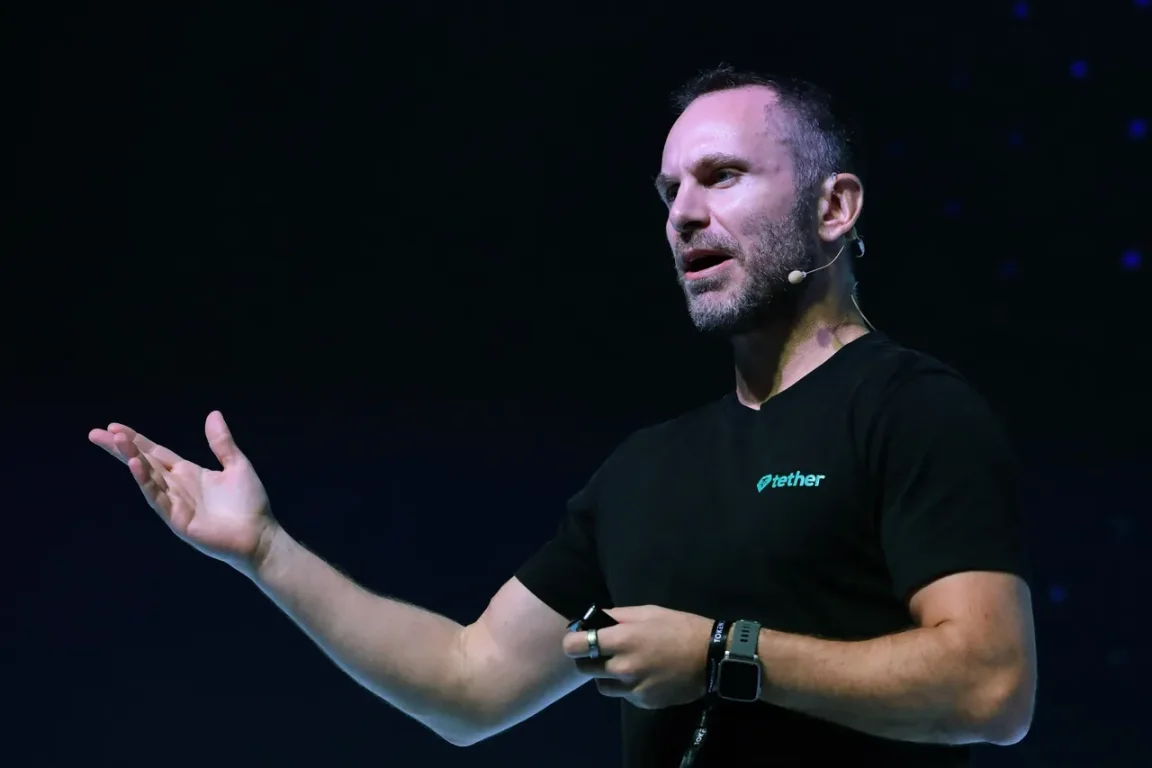
Inside a dimly lit banquet hall in San Salvador, El Salvador’s capital, billionaire and Tether Holdings SA CEO Paolo Ardoino delivered a series of grim forecasts. With storm clouds looming in the background, Ardoino predicted global geopolitical chaos, the collapse of monetary systems, and societal breakdown. He stated that Tether is preparing for this impending "doomsday."
Despite these dire warnings, the company behind the world’s most popular stablecoin is undergoing rapid expansion. As a "digital dollar," USDT supports global cryptocurrency trading and capital flows. Tether reported profits exceeding $10 billion last year—an extraordinary return for a company with just 300 employees—and is swiftly investing cash to acquire stakes in businesses worldwide. With Trump’s return to the White House, Tether now has formal access to the world’s wealthiest and most developed financial markets.
During a January conference in San Salvador, Ardoino told Bloomberg, "Tether is almost like a fusion of Google and Blackstone. We have a vast financial division capable of generating real positive impact." Last year, Tether relocated its global headquarters to this Central American capital.
Today, Ardoino places the US at the heart of Tether’s expansion strategy, backed by Trump administration allies, including Commerce Secretary Howard Lutnick, a longtime banking partner whose family business also holds shares in Tether. In January, Tether launched a new stablecoin for the US market and intensified its lobbying efforts in Washington. The company is also attracting global investors, aiming for a $500 billion valuation, which would rank it among the world’s most valuable private enterprises.
This represents a dramatic reversal of fortune. Bloomberg reports that Tether was a target of federal investigations during President Biden’s administration. Since 2021, its flagship token USDT and affiliated exchange Bitfinex have been banned from operating in New York.
Critics argue that USDT remains highly popular in underground criminal activity, and renewed conflict in the Middle East has drawn attention to its use within Iran’s Islamic Revolutionary Guard Corps. Despite sweeping financial sanctions, USDT continues to underpin Iran’s flourishing crypto economy. In January, research firm TRM Labs published a case study revealing how the Revolutionary Guard processed roughly $1 billion in crypto transactions between 2023 and 2025, "the vast majority of which utilized USDT."
Tether stated, "Tether places a high priority on fraud, consumer harm, and USDT misuse, maintaining a zero-tolerance policy for illegal activity." The company added it works with law enforcement worldwide and, at the request of authorities, has frozen approximately $4 billion in USDT.
Nearly half of these funds were blacklisted at US request, and the US government has publicly acknowledged Tether’s cooperation. By pausing regulatory actions and granting pardons to crypto fraudsters, the US government has signaled a significant reduction in pressure on the crypto industry.
Meanwhile, with support from Tether, its peers, and Treasury Secretary Scott Bessent, US lawmakers are accelerating legislation to promote stablecoin adoption. Bessent testified that demand for dollar-pegged stablecoins will increase demand for US Treasuries, thereby reducing borrowing costs. According to The New York Times, Tether also plans to support a new political spending group ahead of this year’s midterm elections and may participate through its newly established US subsidiary. An entity called "Tether America" has signed on as a donor for the Trump White House banquet hall project.
Beyond apocalyptic predictions and political maneuvering, Tether’s trading and fundraising activities have raised fresh questions about the foundation of its business model. The company has not fully disclosed its investment portfolio—now comprising over 140 investments and considered central to its strategic operations. Sources indicate that in the latest funding round, Tether provided more financial data after prospective investors requested greater transparency.
Bloomberg, through public documents and statements, identified more than twenty companies in Tether’s expanding portfolio. Many focus on crypto and payments; others—including Tether’s largest disclosed investments—span commodities, media, artificial intelligence, and energy.
Bloomberg reported Thursday that Richard Heathcote, the company’s investment chief and architect of its portfolio, will soon hand over responsibilities to his deputy. Heathcote, formerly a broker at BGC Group under Cantor Fitzgerald, was instrumental in building Tether’s relationship with the Lutnick family’s investment bank.
Despite pledges of comprehensive audits over the years, Tether has yet to deliver. Accounting firm BDO conducts quarterly attestations of USDT’s assets. Last week, Deloitte certified the first reserve report from Anchorage Digital Bank, which issues Tether’s new US-market token, USAT.
Sources say Tether has told investors it aims to complete a full audit by the end of 2026. Ardoino noted the company is in talks with the Big Four accounting firms: "I won’t make promises, but this is a very high priority, and progress is going smoothly."
He may have little choice. Last month, Democratic Senator Jack Reed singled out Tether, proposing a bill that would require foreign issuers of dollar-backed stablecoins to undergo audits. Arthur Wilmarth, Honorary Professor of Law at George Washington University and a longtime researcher of stablecoin systemic risk, said, "I’m not sure anyone is fully aware of Tether’s risk exposure. The key issue is that most of this information is opaque and hidden."
While Ardoino took center stage at the El Salvador event, US business head Bo Hines remained low-key. After the event, the 30-year-old former football player and ex-White House crypto adviser boarded a private jet back to Charlotte, North Carolina, where he is establishing Tether’s US headquarters.
Hines, together with former PayPal lobbyist Jesse Spiro, leads Tether’s US growth. The new token USAT aims to maintain a stable $1 value while complying with a law passed in 2025, which requires US-issued stablecoins to be backed by short-term Treasuries and imposes stricter marketing and compliance regulation.

In emerging markets, Tether users typically seek access to dollars or transfer funds domestically and internationally quickly and cheaply. In the US, stablecoins are more likely to be adopted in everyday commerce as tools to bypass banking and credit card delays and fees. Advocates claim this saves merchants and users costs, while skeptics worry about the lack of safeguards and the irreversible nature of transactions.
Tether also sees the US as fertile ground for future investment. In his keynote in El Salvador, Ardoino highlighted Tether’s stake in the popular video platform Rumble, calling it "a real case for defending truth." The company plans to integrate its stablecoin to facilitate payments for Rumble’s millions of monthly users.
"We’re now investing in other US platforms," Ardoino said. He declined to specify target assets but added the goal is to increase monthly active users of US digital platforms by several million, laying the foundation for USAT as an "inter-platform payment system."
As Tether pivots to the US, it is clearly hedging both ways. In Ardoino’s most extreme scenario, the dollar loses its dominance—but Tether survives thanks to its expanding footprint and holdings in gold and Bitcoin. Of course, another possibility is the dollar remains the global reserve currency for the foreseeable future, in which case Tether’s strong business and political influence in the US will be advantageous.
Tether’s fate is now more closely intertwined with the US. The company is one of the largest holders of US Treasuries. According to its latest disclosure, 63% of its $193 billion year-end reserves are in US Treasuries. Tether says it is the 17th largest holder of US debt and the biggest non-sovereign holder, a fact that unsettles some policymakers.
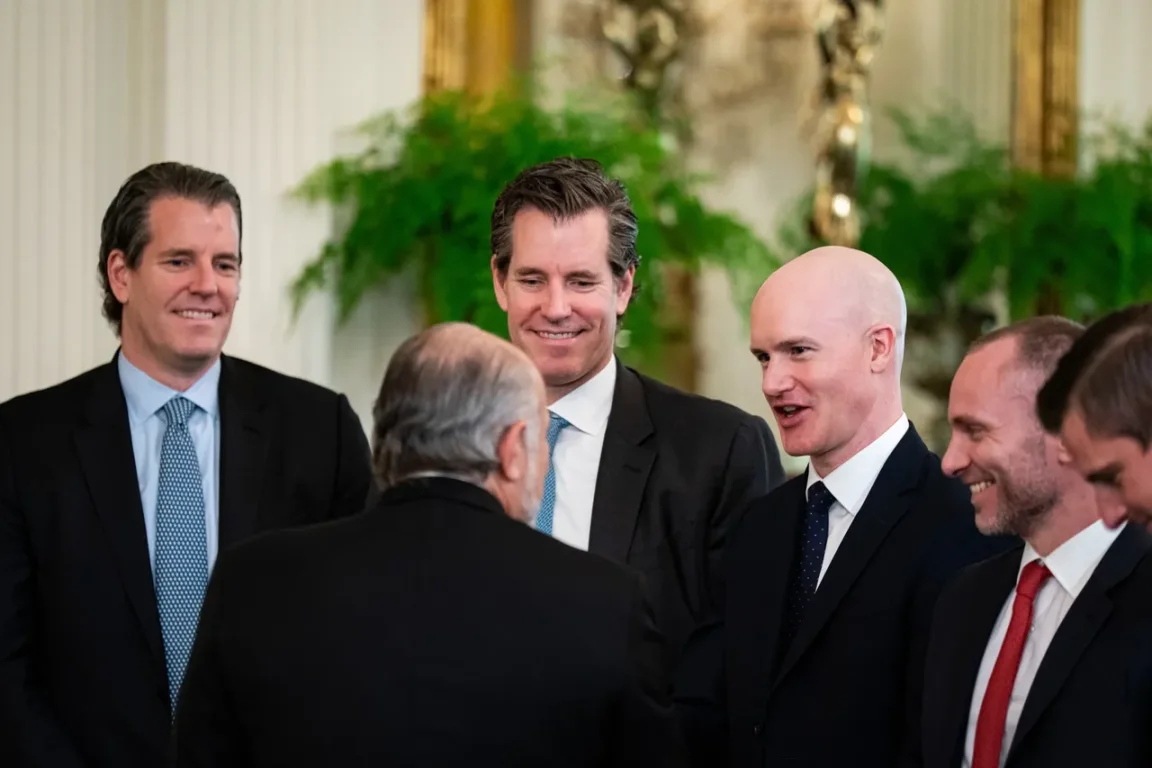
In July 2025, at the White House signing ceremony for cryptocurrency legislation, Gemini’s Winklevoss brothers, Coinbase CEO Brian Armstrong, Paolo Ardoino, and Commerce Secretary Lutnick are seen conversing.
Carole House, former White House National Security Council Special Advisor for Cybersecurity and Critical Infrastructure under the Biden administration, commented, "Reportedly, Tether holds over $100 billion in US Treasuries, making it one of the world’s largest holders, yet it lacks the direct oversight we apply to domestic institutions of comparable size."
Treasury yields have fueled Tether’s recent investment deals. According to a source, potential investors asked about the impact of falling interest rates. The source added that Tether believes each 25-basis-point cut by the Federal Reserve requires issuing an additional $10 billion in tokens to maintain unchanged profits.
Meanwhile, the US market has seen a surge of competitors, and overall demand for USDT and other stablecoins has plateaued in recent months, mirroring the broader crypto market downturn. The International Monetary Fund warned in 2025 that stablecoin runs could trigger a Treasury market selloff.
Despite this, Tether’s strong capital position continues to attract new banking partners beyond Cantor Fitzgerald. Morgan Stanley, Brazil’s BTG Pactual, and First Abu Dhabi Bank are advising on fundraising, according to sources. These banks declined to comment.
Further signs show the company is seeking traditional hallmarks of legitimacy. Last year, Ardoino appointed Simon McWilliams as CFO. He also hired Ben Habbel as chief business officer to streamline internal structure; Habbel is a luxury real estate investor who recently acquired London’s Nobu Hotel in Shoreditch. A senior precious metals trader from HSBC Holdings has joined to help manage Tether’s expanding gold reserves. Last year, Tether purchased 70 tons of gold, surpassing the disclosed purchases of nearly all central banks.
With its relatively small staff, Tether may be the world’s most profitable company per capita. Ardoino is quick to emphasize its streamlined structure and 99% profit margin. Even so, he acknowledges the need for expansion: in the past 18 months, the workforce has tripled and hiring continues. Its closest competitor, Circle Internet Group, had about 880 employees in June 2024, while its stablecoin USDC had a circulation of just $32 billion.
Ardoino stated that compliance is Tether’s largest department, with nearly 50 people monitoring transactions and coordinating with law enforcement as needed. Yet the team is much smaller than those at banks or even some crypto rivals.
Beyond its core business, Tether’s leadership is known for its closed nature. Ardoino and COO Claudia Lagorio are married, and several executives hold multiple roles at Tether and its affiliate Bitfinex.
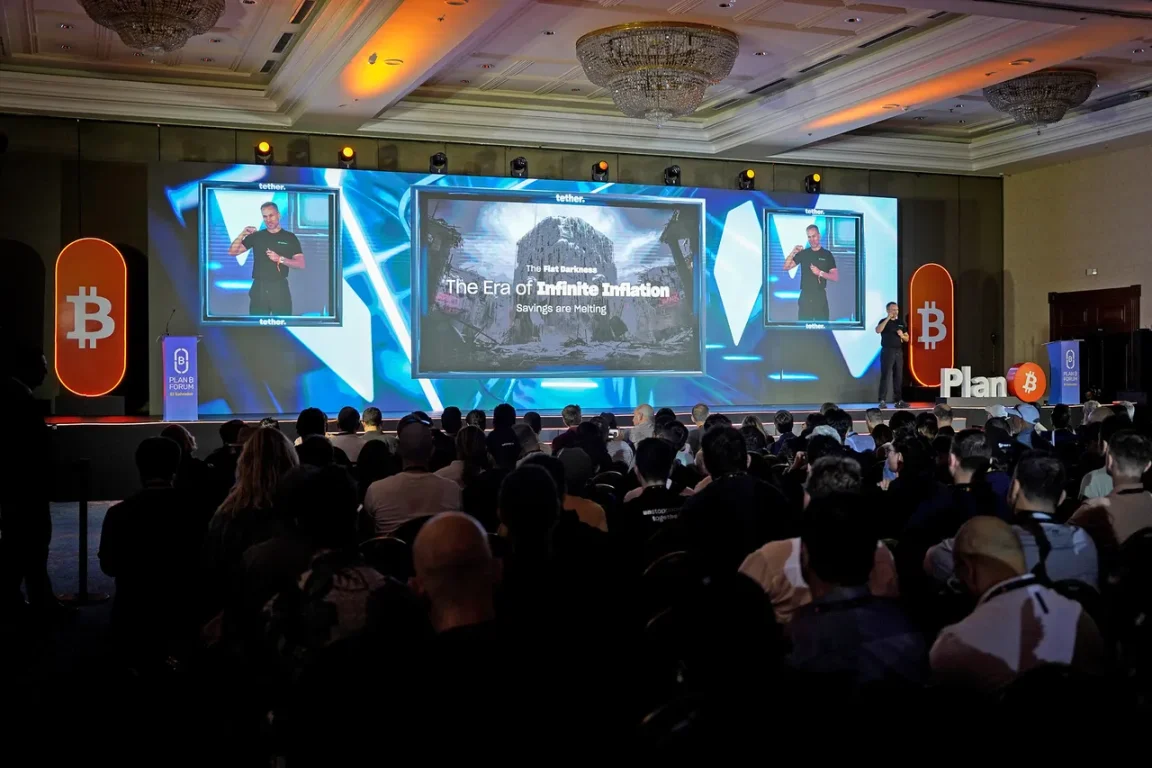
Paolo Ardoino at the Plan B Forum Bitcoin conference in San Salvador in January
Even as he seeks new funding, Ardoino is cautious about deeper outside involvement in Tether. He’s uneasy about the prospect of going public and reporting to investors every quarter. "I don’t want to spend every three months optimizing profits," he said. "I want to optimize the company’s impact on society."
Unlike many early tech companies, most Tether employees do not receive stock options, according to sources familiar with its compensation structure. Even if Tether completes fundraising at a record private valuation, they do not benefit. The fundraising process has been delayed by several months compared to initial expectations, but Ardoino says he’s not in a rush. With substantial profits, the company doesn’t need the capital and can wait for its target valuation.
Whether investors share Ardoino’s vision for Tether and the future of humanity remains to be seen. Yet Tether’s expanding investment portfolio, US Treasuries and gold reserves, and its influence on US politics have made it impossible to view the company as a niche crypto product.
George Washington University Professor Wilmarth said, "A few years ago, there was no connection between crypto and traditional finance, so it might not have been a problem. But now, things are completely different—the two are more tightly linked than ever."
Statement:
-
This article is reprinted from [TechFlow], copyright belongs to the original authors [Ryan Weeks, Todd Gillespie, Annie Massa, Bloomberg]. If you have any objections to this reprint, please contact the Gate Learn team, who will process it promptly according to relevant procedures.
-
Disclaimer: The views and opinions expressed in this article are those of the authors and do not constitute investment advice.
-
Other language versions of this article are translated by the Gate Learn team. Without mention of Gate, copying, distributing, or plagiarizing translated articles is not permitted.