Image: https://www.gate.com/price/futures/category-metals/usdt
Metals Market Enters a New Phase of Active Trading
Recently, global metals markets have seen a marked resurgence in trading activity. As capital continues to move across different asset classes, metals are once again capturing investors’ attention, with trading volumes and market interest rising in tandem.
Both traditional safe-haven assets like gold and silver, as well as industrial metals that closely track the economic cycle, have exhibited frequent price swings. This renewed market activity has made metals a focal point for investors once more.
Core Drivers of Market Volatility
Several factors are fueling the current surge in metals market volatility.
First, the pace of global economic growth varies by region, leading to ongoing adjustments in expectations for future demand. In addition, shifts in supply chains and energy costs continue to shape the outlook for metals production and supply.
Moreover, changing risk appetites in global capital markets are causing funds to move quickly between risk assets and safe-haven assets, amplifying price volatility.
Capital Flows Drive Rapid Market Shifts
A key recent trend is the faster pace of market rotation. Some assets experience sharp gains in a short time, after which capital quickly shifts to other sectors, leading to swift price corrections or technical rebounds.
In this environment, traders need to react quickly to market changes rather than rely solely on long-term holding strategies. The accelerated trading pace also raises the bar for trading efficiency and execution speed.
Trading Advantages with Gate’s Metals Section
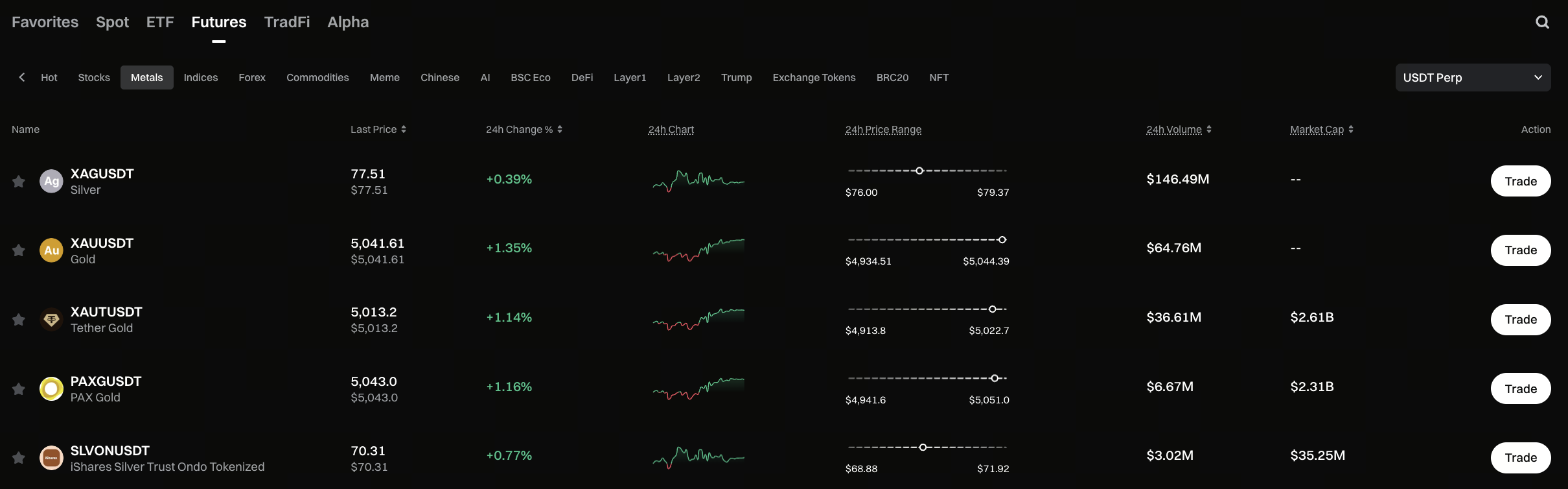
Gate’s dedicated metals section offers investors a more streamlined and efficient trading environment, allowing users to follow and participate in metals markets through a single, unified interface.
By integrating trading options, traders can switch between instruments and execute strategies more quickly, minimizing delays from operating across multiple platforms. This convenience delivers a clear advantage in trading efficiency during periods of rapid market movement.
Additionally, Gate’s stable trading system enables users to manage positions and risk more effectively when markets are volatile.
Risks and Opportunities in Volatile Markets
High volatility typically means more trading opportunities, but also greater risks. Rapid price movements can generate profits, but misjudgment can just as easily lead to losses.
For this reason, investors should manage position sizes prudently and adjust strategies flexibly in line with market rhythms to balance risk and reward.
The Role of Metals in Portfolio Diversification
From an asset allocation standpoint, metals have long played a vital role in diversifying portfolio risk. Metals often behave differently from other asset classes across economic cycles.
As trading methods evolve, investors now have more options for accessing metals markets. With streamlined trading channels, users can more flexibly incorporate metals into their portfolios, enhancing overall strategy diversification.