AI-Driven Energy Demand Surge: How Will Power Grids Support More Hashrate?
AI technology is reshaping the world at an unprecedented pace. As demand for hash power continues to soar, AI’s reliance on energy is increasing exponentially. In recent years, global data centers and supercomputers have seen their electricity consumption climb by over 15% annually, placing an ever-growing strain on power grids.
 Image credit: Joseph Ayoub
What’s Driving the Growth in Power Demand?
-
Computational Demand: From deep learning to machine learning algorithm training, every AI model update requires vast computing resources, which directly drives significant increases in electricity consumption.
-
High-Energy Data Centers: The training, inference, and storage needs of AI models are prompting data centers worldwide to expand. Traditional power supply methods can no longer keep up with this surging demand.
By 2028, the United States is projected to face an electricity shortfall of about 45 GW. This trend isn’t limited to the US—globally, the rapid expansion of AI is pushing power grids to their limits, making energy supply a critical bottleneck for intelligent technology development.
Green Energy: The Fundamental Solution for AI-Era Power Needs
With mounting pressure on global energy supplies, green energy stands out as the core solution. Renewable sources like solar, wind, and hydropower are essential for ensuring sustainable long-term energy, especially as AI applications and smart devices become ubiquitous.
Why Is Green Energy the Future Mainstream?
-
Energy Transition Trends: With global policy support and increased environmental awareness, green energy investments will gradually overtake traditional sources. The rise of AI and electric vehicles demands massive power, and renewables will become the backbone of these industries.
-
Cost Advantage: The cost of solar and wind power generation continues to fall year after year. In the coming years, clean energy will become not just an environmentally responsible choice, but also the most cost-competitive energy source.
Investment Opportunities
-
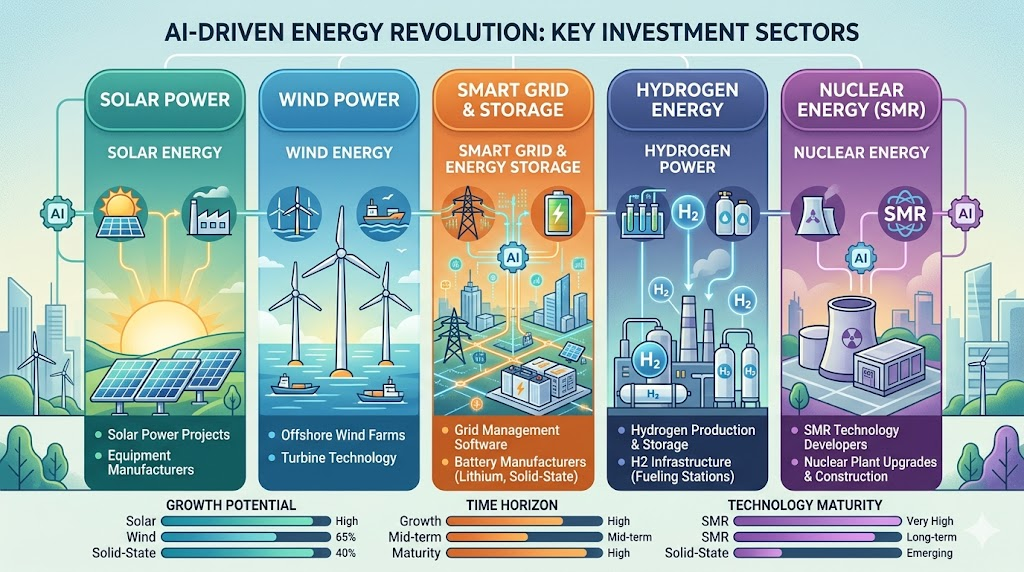
Solar Power Generation: As solar technology matures and its adoption expands, investing in solar projects and equipment manufacturers offers substantial return potential.
-
Offshore Wind Power: The vast potential of offshore wind remains largely untapped. In the coming years, offshore wind projects will represent the largest investment opportunity in the wind sector.
-
Energy Storage: The intermittent nature of green energy calls for advances in storage technology. Investing in energy storage solutions—such as lithium batteries and solid-state batteries—is essential to smoothing out renewable energy fluctuations.
Smart Grids and Virtual Power Plants: Boosting Power Dispatch and Distribution Efficiency
As energy demand accelerates, single-source power generation can no longer meet the needs of the marketplace. Smart grids and virtual power plants are emerging as key drivers of grid management efficiency.
Core Advantages of Smart Grids
-
Dynamic Demand Regulation: Smart grids can monitor electricity demand in real time and use advanced algorithms to precisely manage power loads, optimizing distribution.
-
Integration of Renewables: Smart grids coordinate inputs and outputs from multiple energy sources, maximizing the use of wind, solar, and other renewables while balancing shortfalls in traditional supply.
The Rise of Virtual Power Plants
Virtual power plants link distributed energy production units—such as home solar systems and EV batteries—enabling centralized energy dispatch. Not only do they improve power use efficiency, but they also empower consumers and small producers to become “energy producers” themselves.
Investment Opportunities
-
Smart Grid Technology Companies: As governments and enterprises ramp up investment in smart grids, technology providers in this space are poised for rapid growth.
-
Virtual Power Plant Platforms: Investing in virtual power plant platform companies—especially those offering energy management software and hardware—offers high return potential in this emerging field.
Energy Storage Technology: The Key to Managing Power Fluctuations
With the proliferation of renewables, ensuring stable supply has become a central challenge for the energy sector. Energy storage technology is the key to meeting this challenge. Storage not only stabilizes grid supply during peak periods but also helps balance the intermittent output of renewables.
Trends in Energy Storage Technology
-
Battery Storage: Lithium batteries, prized for their efficiency and sustainability, are the top choice for storage. As battery technology continues to advance, storage costs are falling and market demand is set to grow.
-
Solid-State Battery Breakthroughs: Solid-state batteries have dramatically improved storage system safety and efficiency, making them the ideal choice for future energy storage solutions.
Investment Opportunities
-
Lithium Battery Manufacturers: As the leading technology in the storage market, lithium battery producers will benefit from surging global demand.
-
Solid-State Battery Technology Firms: As solid-state battery technology commercializes, related tech companies are expected to experience rapid growth in the coming years.
Hydrogen Energy: A Supplemental Power Source for the AI Era
As electric vehicles and renewables gain widespread adoption, hydrogen energy is emerging as a highly efficient power source. It is especially valuable for sectors that are hard to electrify directly, making hydrogen a crucial supplemental energy option.
Advantages of Hydrogen Energy
-
High Efficiency: Hydrogen’s high energy density makes it more efficient than traditional fossil fuels.
-
Green Hydrogen: With advances in hydrogen production technology, hydrogen is becoming increasingly eco-friendly, making it an ideal energy source for AI-driven industrial production and transportation.
Investment Opportunities
-
Hydrogen Production and Storage Technology: Investing in companies focused on hydrogen production, transport, and storage—especially those achieving breakthroughs in low-carbon hydrogen production—offers significant upside.
-
Hydrogen Infrastructure: As hydrogen adoption grows, infrastructure like refueling stations and transport networks will also present new investment opportunities.
##*Nuclear Energy: A Reliable Supplement for Stable Power in the AI Era
While nuclear energy has faced safety concerns, technological advances—particularly the development of Small Modular Reactors (SMRs)—are helping nuclear find its place in meeting AI-driven power needs. Compared to traditional large nuclear plants, SMRs offer shorter construction times, greater flexibility, and enhanced safety.
Nuclear Energy Investment Opportunities
-
SMR Technology Companies: As global interest in small modular reactors increases, related technology companies are set for new growth opportunities.
-
Nuclear Infrastructure Construction: Investing in nuclear plant upgrades and SMR projects will be a key focus in the years ahead.
Conclusion: New Opportunities and Risks in Energy Investment
With the ongoing advancement of AI technology, the energy market is undergoing a profound transformation. From green energy and energy storage to smart grids, hydrogen, and nuclear power, investors can seize future opportunities by aligning with technological progress and market demand across these sectors.
Still, risks must not be overlooked. Rapid technological change, policy shifts, and market volatility can all impact returns. Investors should remain vigilant, conduct thorough research, and implement robust risk controls to achieve sustainable returns in the AI-driven energy revolution.