Why This Title?
Since last year, I’ve published numerous articles analyzing the global trend of asset MEME-ification. In essence, assets are increasingly becoming short-term speculative symbols, diverging sharply from their underlying fundamentals and instead being driven by sweeping narratives. This phenomenon continues to gain momentum.
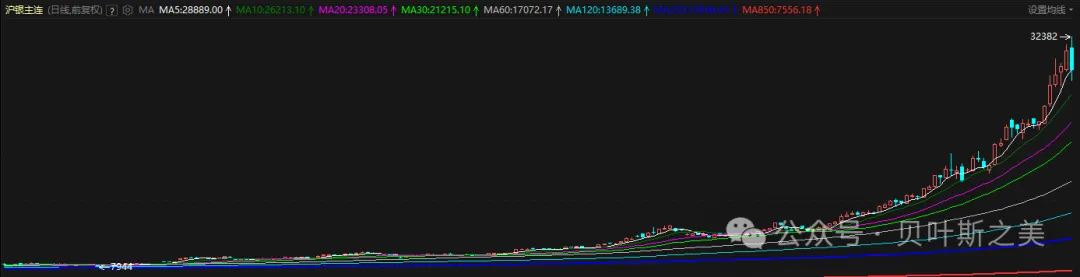
We are witnessing a new world where investment cycles have been compressed to the extreme. Asset pricing, volatility, and timeframes are all dramatically shortened—primarily due to AI. This reflects the most intense aspects of human nature: herd-driven FOMO, rapid swings between extreme optimism and pessimism, and price surges and crashes that deviate significantly from the mean, all within increasingly shorter periods. The new world is not simply “more MEME assets”; it is defined by “cycle compression + narrative-driven regimes.” At its core, MEME-ification means short-term narratives now overshadow fundamentals across all asset classes. I use the term “new world” because this shift is no longer about “a few more MEME stocks”—it’s about:
1. All assets rapidly converging toward MEME mode
- Gold/Silver: While the long-term logic centers on currency, geopolitics, and inflation, from 2023–2026, prices are driven by major narratives such as debasement, war, sanctions, and de-dollarization. The price path now resembles a composite of macro narrative, social media, and ETF flows.
- Memory/HBM/DRAM: Slogans like “HBM shortage until 2027” and “Micron is the purest AI memory play” have transformed cyclical stocks into TSLA/NVDA-style MEMEs. Although the long-term logic remains bit growth, process technology, and CapEx cycles, the 2024–2025 market is propelled by the “AI golden age” MEME.
- Software—Microsoft/SAP/NOW: Traditionally focused on steady growth and subscriptions, these companies are now being re-rated by the meta-narrative that “AI will consume all SaaS and LLM+Agent will replace traditional software.”
The “MEME-ification trend” I previously discussed has evolved: assets are now short-term symbols, each backed by a standardized narrative template.
2. Cycles haven’t disappeared—they’ve been radically compressed
In this “new world,” cycles have shifted from a 10-year duration to 2–3 years or even three mini-cycles within a single year. Typical manifestations include:
- DRAM/HBM: Price increases over two years now match an entire previous cycle; Micron surged 3–4x in just eight months, and “peak-cycle & oversupply risk” discussions have already started.
- Gold: Up 2.5x in three years, then another 80% rally, with several 15–20% corrections before new highs.
- Silver: The gold/silver ratio moved from 120 to 48 in nine months—a historic re-rating.
In other words, cycles haven’t vanished—they’ve been broken into compressed mini-cycles layered with narratives. What used to be a 10-year cycle is now three to four ±30–50% mini-cycles within three years. The essence of the “new world” is simple:
Both bull and bear cycles have been compressed to the extreme.
From a trading and reflexivity perspective: In the short term, all assets are traded as MEMEs—purely symbolic games. Long term, fundamentals, cash flow, and supply-demand still prevail. In between, a new phenomenon emerges: high-frequency, narrative-driven re-rating mini-cycles. The “new world” title highlights that this isn’t just a handful of volatile stocks—it’s a fundamental shift in the asset pricing regime. From another angle, within the same 3–5-year long-term logic, you now experience three to five highly compressed mini-cycles instead of a single major cycle. Navigating this well means your capital performs far more “effective work” in the same timeframe, dramatically improving efficiency. If not, you risk being ground down by repeated 30–50% surges and crashes, reduced to a “fee + behavioral loss machine.” I’ll break down two typical chains below: Precious metals—gold/silver’s super rally that “rewrites history almost monthly”; Memory—HBM/DRAM price action and Micron/Korean firms’ ultra-short-cycle bull runs, entering the “golden age + reflexive expectations” combination ahead of schedule.
I. Precious Metals: From “Long Bull Market” to “High-Frequency Extreme Segments” in Gold/Silver
1. Gold: The classic 10-year cycle compressed into 2–3 years of consecutive surges
How extreme has this gold rally been? From October 2022 to October 2025, gold climbed roughly 2.5x, with Morgan Stanley labeling it “the strongest global major asset this cycle.” In just the first five months of 2025, gold jumped from around $2,600 to $3,300 per ounce (+25%), matching a full year’s traditional gains in five months. The rally continued throughout 2025—Business Insider reported that from early 2025 to early 2026, gold rose approximately 87%, crossing the $5,000 threshold for the first time. By January 2026, Barron’s quoted gold at $5,540 per ounce, up another 27% since the year began. Demand structure also became “extreme”: WGC reported global gold demand at 5,002 tons in 2025, a record high, with investment demand surging 84% year-over-year to 2,175 tons—ETF and physical investment led the way. Historically, a bull market like 2001–2011 saw gold climb gradually over a decade, with significant corrections in between. This cycle, in less than three years, gold surged 2.5x plus another 80–90%, with corrections lasting just 1–2 months and 10–15% “tactical resets” quickly overtaken by new highs. The drivers are clearly multi-dimensional:
- Inflation and the debasement trade
- Geopolitical risks (war, tariffs, financial sanctions)
- Central bank and sovereign de-dollarization allocations
- Hedging demand from the “AI bubble” and crowded US equities
Key takeaway: The macro long-term logic persists, but each price swing is steeper—“major cycles now consist of multiple steep short cycles strung together.”
2. Silver: A volatility amplifier layered on top of gold
Gold’s ascent has been “orderly,” but this silver cycle is a “chaos amplifier”:
- From mid-2025 to early 2026, silver prices doubled, briefly surpassing $60 per ounce to set a new record. CME data shows silver’s annualized volatility in 2025 was about 32%.
- In early 2026, the 30-day volatility index was around 28.5%—slightly below the 40%+ peak in 2011, but already among the highest in major commodities.
Exchanges repeatedly raised margin requirements for silver futures, forcing leveraged positions to add collateral or close out, which further amplified volatility. The extreme compression of the gold/silver ratio is a classic example of cycle compression: In April 2025, the ratio surged to 100–120:1 (extremely high, meaning silver was very cheap); in just nine months, it compressed to ~48:1, near a 15-year low. Historically, moving the gold/silver ratio from extreme high to low took years; this time, a full swing happened in less than a year.
3. “New World” Summary for Precious Metals
Structural long-term logic: High debt, high deficits, de-dollarization, and geopolitical risk strengthen gold’s long-term status; green transition, electronics, and solar add industrial resilience for silver. But cycle performance has fundamentally changed:
- Major bull markets now consist of multiple steep mini-cycles
- Gold’s 2.5x + 80% rally wasn’t a slow climb—it packed 3–4 rounds of 20–40% surges and 10–20% rapid corrections into three years.
- Silver adds another layer: price doubled, volatility above 30%, ratio 120→48—what used to take 5–10 years was completed in nine months.
Implications for capital: If you simply hold gold/silver ETFs as a long-term hedge, the strategy still works; but if you seek “active management + higher capital efficiency,” today’s market offers both “more opportunities and more pitfalls.” Within one macro logic, you may get 3–4 highly tempting ±30–50% swings, but each comes with high leverage, margin adjustments, and extreme sentiment.
II. Memory
HBM/DRAM Supercycle: “One Year of Price and Stock Gains Compressed from Three Years”
The memory sector is a real-world experiment in super volatility and structural transformation.
1. Prices: Two years match the magnitude of a full previous upcycle
- DRAM/DDR/HBM prices surged: In 2025, DRAM prices rose about 60%, with forecasts for another 30–40% increase in 2026, especially for DDR4/DDR5. From September to November 2025, Samsung’s 32GB DDR5 contract price jumped from about $149 to $239—a 60% rise in two months; other module sizes rose 30–50%.
- HBM: SEMI projects HBM equipment investment to grow another 15% per year in 2025 and 2026; HBM prices reached record highs and continue to climb; Samsung expects shortages to persist until at least 2027.
Traditionally, a full memory price upcycle meant prices doubled over 2–3 years, with minor corrections in between. Now, some products see 60% gains in two months, 60% in a year, and another 30–40% projected over the next two years. The drivers are clear: explosive AI data center demand for GPU/HBM/DDR5; Samsung, SK Hynix, and Micron actively cut legacy DDR4 and standard DRAM capacity, shifting production to HBM and high-end products, squeezing general DRAM supply.
2. Stock Price: Micron rose 3–4x in one year, then immediately entered “peak-cycle risk” discussions
Micron is the standard example: From April 7, 2025 low at $61.54 to December 10, 2025 high at $264.75, the stock gained about 330% in eight months; 2025 year-to-date gain was 206%. In early 2026, it pulled back about 10–15% from the highs, but many brokerages continued raising target prices—Bernstein called it “the biggest price upcycle in history,” viewing it as a key beneficiary of the “AI memory golden age.” Analyst forecasts: Micron FY2026 EPS up 149% year-over-year, FY2027 up another 27%. This reflects consensus on “price surge + prolonged supply tightness.” At the same time, some analysts warn: Current gross margins are near “peak cycle,” FY2026 CapEx raised to $20 billion—strong reflexivity, possibly sowing seeds for the next oversupply cycle. Compared to traditional memory cycles: Previously, a full cycle took 3–5 years—price, profit, valuation, expansion, oversupply, purge; now, in less than a year, you go from cycle bottom to price surge, record profits, peak CapEx, and oversupply/valuation concerns. Extreme compression: The fundamental cycle itself is shortened—suppliers ramp up $20 billion CapEx as soon as prices rise; after 2–3 quarters of high profits, the market immediately flags peak risk, causing stock price, valuation, and expectations to complete a full “bull frenzy, overheating, next-cycle worries” in just 1–2 years.
III. The Same “New World Mechanism” Drives Both Chains
In summary, the “new world” we now face is the result of at least three mechanisms layered together:
1. Information half-life has shrunk dramatically
AI/LLM and high-frequency information/alternative data mean any CapEx decision, capacity reduction, central bank gold buying/selling, or ETF flow is reflected in the market’s risk models and narratives within hours. The result: The market no longer allows “three years to slowly discover the truth”; pricing-in now happens in 3–6 months or even weeks. Gold and memory sectors are symmetrical: Financial repression leads to the “debasement trade” being priced in within three years; the AI CapEx boom drives memory “golden age” expectations to be priced in within two quarters.
2. Leverage and derivatives seal the “price–position–risk” loop into a high-frequency closed circuit
Index and single-stock 0DTE, short-term commodity options, CFDs, leveraged ETFs, high-frequency CTA/vol-target—all make any price momentum quickly trigger reflexive passive acceleration. Exchanges and clearinghouses use margin adjustments and risk controls as “brakes.” For example, COMEX raised margin requirements for silver futures, forcing some positions to reduce or close, ending acceleration phases faster. The result: Sentiment in one direction is amplified by derivatives, leverage, and risk models, while corrections and margin calls force rapid resets. The market now features a series of short, violent swings, driven by a high-frequency closed loop.
3. Real-world supply response has accelerated, increasing reflexivity frequency
In memory, manufacturers completed large-scale capacity shifts from DDR4 to HBM/DDR5 in less than a year; SEMI forecasts HBM equipment investment up 15% annually in 2025/26, NAND investment up 45% in 2025, continuing through 2027. CapEx means the next supply-side reflexivity comes faster, not as a slow climb. In precious metals, miners can’t ramp up capacity as quickly due to geology and project constraints, but financial supply (ETF shares, derivative positions) can adjust rapidly, making “financial supply” itself a high-frequency variable. Both real and financial world feedback cycles have shortened, stacking together to create the ±50% swings now observed. To summarize: From “asset pricing” to “asset MEME-ification”—Old World vs. New World: What determines price? Old World (textbook):
- Long term: discounted cash flow/supply-demand
- Medium term: earnings expectations/interest rates/risk appetite
- Short term: noise trading and technical factors, treated as local disturbances
New World (recent observations):
- Short term: Assets increasingly resemble “narrative tokens,” dominated by grand stories (AI, de-dollarization, energy transition, rearmament) and trading structures (options, leverage, passive funds)
- Fundamentals become a “long-term judge” that only asserts itself in 3–5 years
- The 6–12 months in between are dominated by strong MEME/narrative dynamics
Here’s the core conclusion of the MEME-ification trend: Assets are increasingly seen as speculative symbols in the short term, not as entitlements to cash flow. Three main drivers for MEME-ification—narrative bandwidth explosion (LLM, social, self-media):
- Information production costs approach zero; meta-narratives like “AI golden age,” “de-dollarization,” “HBM shortage until 2027,” and “AI devouring all software” can synchronize globally within hours.
- Derivatives and leverage structures: 0DTE, short-term options, leveraged ETFs, CFDs—sentiment, position, and price are sealed into a high-frequency closed loop; simple trading templates (structured products, gamma squeeze, FOMO call buying) become mass behavior.
- Liquidity and passive funds: Passive ETFs, style/theme ETFs, CTA/vol-targets make price, weighting, and passive buy/sell structures widespread, with much stronger resonance than a decade ago.
Key features of the new world: Cycle and amplitude—cycles are compressed to the extreme; what once took 5–10 years now runs three cycles in 2–3 years: inflection, peak, 30–50% retracement, narrative shift, new rally. It’s not about abandoning fundamentals, but about the compression of cycles driven by fundamentals, narrative, and structure. Capital operating on old, slow metrics can easily be outpaced by this new rhythm.
The “brand new investment world” we must embrace is defined by more cycles and greater amplitude per cycle, with structural long-term logic (gold, silver, memory, AI) still intact. Information, derivatives, and real supply have all compressed the rhythm, packing 3–5 mini-cycles into 3–5 years.
If managed well, within the same long-term logic, you use predefined Role, Seat, Gate, and Cycle rules to treat these mini-cycles as reusable resources, genuinely boosting capital efficiency and seat-year output—instead of being trapped in “perpetual busyness and long-term futility” by 0DTE and volatility.
End of article.
Statement:
- This article is republished from [BayeCrest]. Copyright belongs to the original author [BayeCrest]. If you have any objections to this republication, please contact the Gate Learn team, and the team will process your request promptly according to established procedures.
- Disclaimer: The views and opinions expressed in this article are solely those of the author and do not constitute investment advice.
- Other language versions of this article are translated by the Gate Learn team. Unless Gate is mentioned, translated articles may not be copied, distributed, or plagiarized.