MrCryptoExpert

vip
Age 0.2 Year
Peak Tier 0
No content yet
#CrudeOilPriceRose
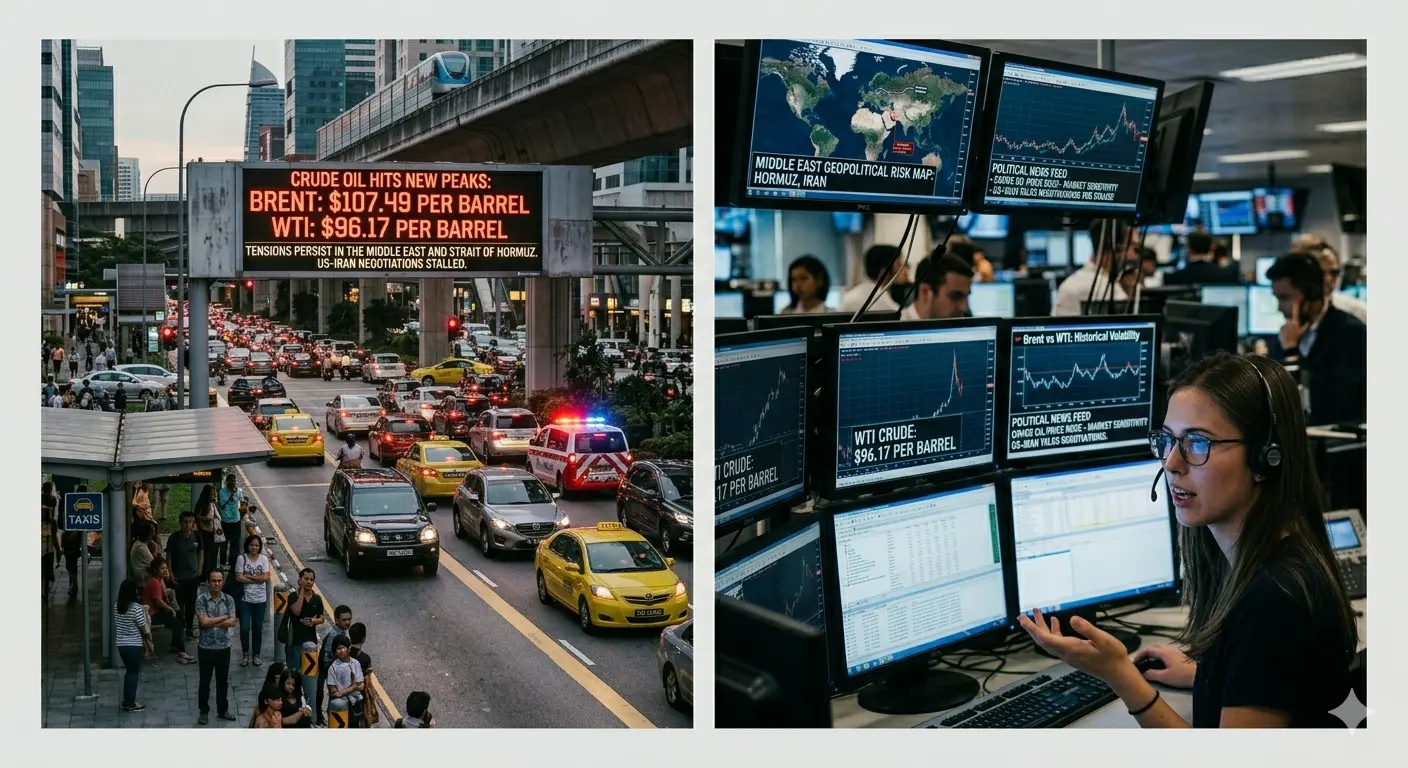
Global crude oil prices have continued to rise sharply, reflecting ongoing geopolitical tensions, supply uncertainty, and tightening conditions in global energy markets. The recent upward movement in both Brent and WTI benchmarks highlights how sensitive oil markets have become to developments in the Middle East, especially around the Strait of Hormuz and stalled US-Iran negotiations. As of the latest trading session, Brent crude is trading around $107.49 per barrel, while West Texas Intermediate (WTI) is near $96.17 per barrel, both showing strong weekly gains driven by su
MrFlower_XingChen
#CrudeOilPriceRose
Global crude oil prices have continued to rise sharply, reflecting ongoing geopolitical tensions, supply uncertainty, and tightening conditions in global energy markets. The recent upward movement in both Brent and WTI benchmarks highlights how sensitive oil markets have become to developments in the Middle East, especially around the Strait of Hormuz and stalled US-Iran negotiations. As of the latest trading session, Brent crude is trading around $107.49 per barrel, while West Texas Intermediate (WTI) is near $96.17 per barrel, both showing strong weekly gains driven by supply risk premiums and market uncertainty.
This price increase is not happening in isolation. It is the result of a combination of geopolitical instability, restricted shipping routes, and reduced confidence in near-term supply stability. The ongoing tensions between the United States and Iran have created fears of disruption in one of the world’s most important oil transportation corridors. Even without a full supply shutdown, the risk of interference in the Strait of Hormuz is enough to push global oil prices higher as markets begin pricing in potential worst-case scenarios.
At the same time, oil markets are being influenced by expectations of prolonged negotiation breakdowns. The lack of progress in diplomatic talks has increased uncertainty, leading traders and institutional investors to build in higher risk premiums. This means that prices are not only reacting to actual supply and demand conditions but also to expectations of future instability. In such environments, oil often becomes highly reactive, with sharp intraday movements triggered by political headlines or security developments.
Supply-side constraints are also reinforcing the upward trend. While global production has not collapsed, the market remains tight due to disciplined output from major producers and limited spare capacity in key regions. When supply buffers are thin, even small disruptions or perceived risks can have an outsized impact on price levels. This is especially true in a market already sensitive to geopolitical shocks.
Another major factor supporting the rise in crude oil prices is demand resilience. Despite global economic uncertainty, energy consumption has remained relatively strong, particularly in emerging economies and industrial sectors. Transportation demand, refining activity, and seasonal consumption patterns are all contributing to sustained baseline demand, preventing prices from correcting lower even during short-term volatility.
Financial positioning has also played a key role in amplifying price movements. As uncertainty increases, institutional investors often shift capital into commodities like oil as a hedge against inflation and geopolitical risk. This influx of speculative and hedging activity can accelerate price trends, making oil markets more volatile and responsive compared to more stable commodity cycles.
The current price levels—Brent near $107.49 and WTI around $96.17—also reflect a broader market repricing of global risk. Earlier in the month, oil was trading significantly lower, but rapid escalation in geopolitical tensions pushed prices upward in a relatively short period of time. This demonstrates how quickly sentiment can shift in energy markets when supply security is questioned.
Beyond immediate pricing, the rise in crude oil has wider macroeconomic implications. Higher energy costs feed directly into global inflation, affecting transportation, manufacturing, and consumer prices. This creates additional pressure on central banks, which must balance inflation control with economic growth concerns. As oil remains a core input across nearly all sectors, sustained price increases tend to ripple through the entire global economy.
Market participants are now closely watching whether current price levels can sustain momentum or whether they represent a temporary spike driven by geopolitical stress. If tensions ease or diplomatic progress resumes, oil prices could stabilize or retreat from current highs. However, if uncertainty continues or escalates further, prices may remain elevated or even push higher in the short term.
Overall, the rise in crude oil prices reflects a market operating under heightened geopolitical tension and structural uncertainty. With Brent at approximately $107.49 and WTI near $96.17, the energy sector is clearly pricing in risk rather than stability. Until there is clearer resolution in global political and supply conditions, oil markets are likely to remain volatile, reactive, and highly sensitive to every new development.
repost-content-media
  • Reward
  • Comment
  • Repost
  • Share
#EthereumFoundationUnstakes$48.9METH
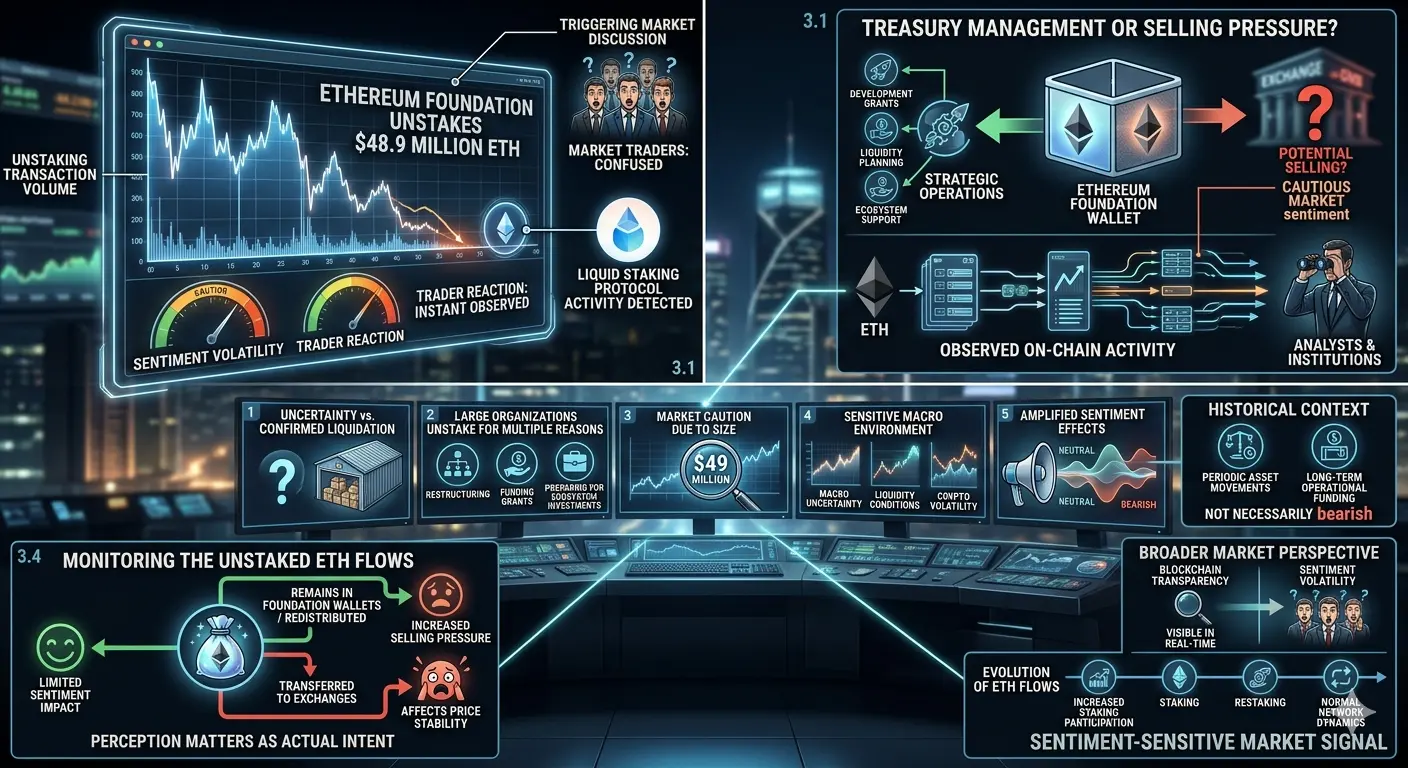
The Ethereum Foundation has reportedly unstaked around $48.9 million worth of ETH, triggering strong discussion across the crypto market as traders try to understand whether this move signals strategic treasury management or potential selling pressure. The transaction was first observed through on-chain activity linked to staking withdrawal systems, particularly involving liquid staking protocols such as Lido, where large-scale ETH staking and unstaking flows are common.
This development immediately attracted attention because the Ethereum Foundation is on
ETH-1.97%
MrFlower_XingChen
#EthereumFoundationUnstakes$48.9METH
The Ethereum Foundation has reportedly unstaked around $48.9 million worth of ETH, triggering strong discussion across the crypto market as traders try to understand whether this move signals strategic treasury management or potential selling pressure. The transaction was first observed through on-chain activity linked to staking withdrawal systems, particularly involving liquid staking protocols such as Lido, where large-scale ETH staking and unstaking flows are common.
This development immediately attracted attention because the Ethereum Foundation is one of the most influential entities in the Ethereum ecosystem. Any movement of funds from its wallets is closely monitored by traders, analysts, and institutions, as it can sometimes reflect broader strategic decisions regarding funding, development allocation, or ecosystem support activities.
At the core of market reaction is uncertainty rather than confirmed selling. In crypto markets, unstaking does not automatically mean liquidation. Large organizations often unstake assets for multiple reasons, including treasury restructuring, liquidity planning, funding development grants, or preparing for future ecosystem investments. However, because of the size of the transaction—nearly $49 million—market participants naturally become cautious.
The timing of this move is also important. Ethereum has been trading in a relatively sensitive macro environment, where liquidity conditions, macroeconomic uncertainty, and broader crypto volatility are already influencing price behavior. In such conditions, large on-chain movements tend to amplify sentiment effects, even if the underlying intent is neutral or operational rather than bearish.
Market participants are now closely watching where the unstaked ETH flows next. If the funds remain within foundation-controlled wallets or are redistributed into staking again, the impact on market sentiment may remain limited. However, if significant portions are transferred to exchanges, traders may interpret that as a potential increase in selling pressure, which could temporarily affect price stability.
Despite short-term speculation, it is important to understand that the Ethereum Foundation has historically engaged in periodic asset movements tied to operational funding and ecosystem development. These actions are typically long-term in nature and not necessarily connected to immediate market direction. However, in fast-moving markets, perception often matters as much as actual intent.
From a broader market perspective, this event highlights how sensitive crypto remains to large wallet activity. Unlike traditional markets where institutional flows are partially opaque, blockchain transparency means that every major transaction is visible in real time. This creates both advantages in transparency and challenges in sentiment volatility, as traders often react instantly to visible movements without full context.
Ethereum itself continues to operate within a broader ecosystem of staking, restaking, and liquidity mechanisms that make large-scale ETH flows more common than in earlier market cycles. As staking participation has increased significantly over time, periodic unstaking events are part of normal network dynamics, even when they involve high-value amounts.
Overall, the Ethereum Foundation’s $48.9 million unstaking event is best understood as a sentiment-sensitive market signal rather than a confirmed bearish action. The actual market impact will depend on subsequent wallet behavior, broader liquidity conditions, and overall crypto market direction in the coming days.
For now, the situation remains under observation, with traders focusing more on follow-up movements than the initial unstaking itself.
repost-content-media
  • Reward
  • Comment
  • Repost
  • Share
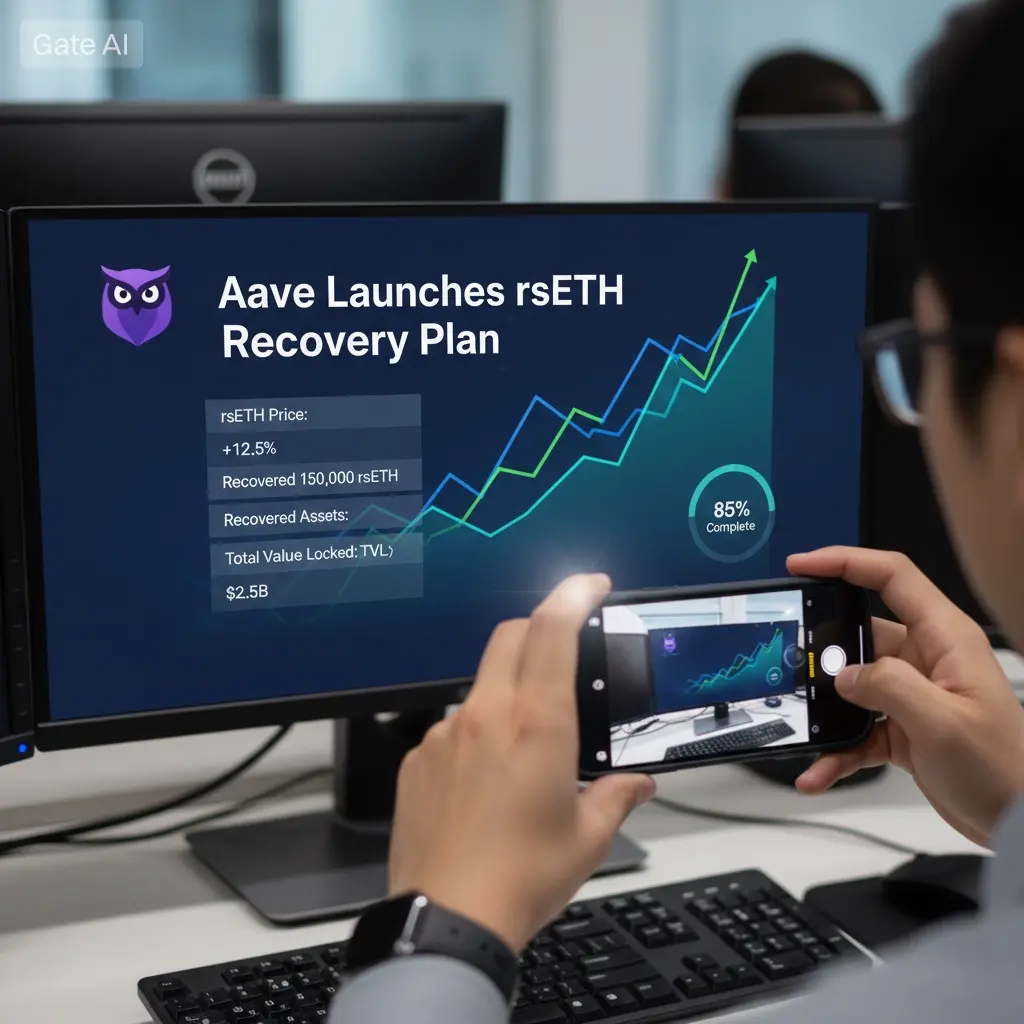
#AaveLaunchesrsETHRecoveryPlan
Aave has officially launched a coordinated rsETH recovery plan following the massive DeFi disruption caused by the KelpDAO bridge exploit. This incident, which created one of the largest liquidity shocks in recent DeFi history, forced Aave and multiple ecosystem partners to respond quickly in order to stabilize markets, contain bad debt exposure, and restore confidence across lending protocols.
The recovery plan comes after the rsETH exploit led to the minting of unbacked tokens that were used as collateral inside Aave markets. Once these assets entered the syst
AAVE2.14%
ETH-1.97%
MrFlower_XingChen
#AaveLaunchesrsETHRecoveryPlan
Aave has officially launched a coordinated rsETH recovery plan following the massive DeFi disruption caused by the KelpDAO bridge exploit. This incident, which created one of the largest liquidity shocks in recent DeFi history, forced Aave and multiple ecosystem partners to respond quickly in order to stabilize markets, contain bad debt exposure, and restore confidence across lending protocols.
The recovery plan comes after the rsETH exploit led to the minting of unbacked tokens that were used as collateral inside Aave markets. Once these assets entered the system, they created significant stress on liquidity pools, especially in WETH lending markets. In response, Aave immediately froze affected rsETH markets to prevent further damage and began evaluating the scale of the exposure across different deployments.
The core objective of the recovery plan is to close the remaining gap created by the exploit and restore proper backing to rsETH positions. Early estimates suggested a large imbalance, but coordinated actions such as asset freezes, partial recoveries, and external support proposals have already reduced the deficit significantly. The plan is now focused on consolidating these efforts into a structured repayment and stabilization framework.
A major component of the recovery strategy is the involvement of a broader coalition often referred to as “DeFi United.” This includes multiple major protocols contributing capital, liquidity support, and credit facilities to prevent systemic collapse. In parallel, proposals within Aave governance have included allocations from the treasury—such as significant ETH contributions—to directly support the recovery process and reduce outstanding risk exposure.
In addition to treasury support, other ecosystem participants have also stepped in. Various protocols and liquidity providers have pledged ETH contributions, while some networks have offered credit lines to help stabilize affected positions. Combined efforts from different contributors are intended to distribute the burden rather than forcing Aave alone to absorb the full impact of the exploit.
Another important element of the recovery plan is asset management and controlled unfreezing. Aave governance is carefully reviewing which markets can be safely reopened and which positions require continued restrictions. The goal is to gradually restore normal lending activity without triggering further instability or liquidity withdrawals. This cautious approach reflects how sensitive DeFi markets remain after large-scale stress events.
From a risk perspective, this recovery effort is not just about fixing a single incident but also about strengthening the overall system. The rsETH exploit exposed weaknesses in cross-chain infrastructure and collateral validation mechanisms. As a result, Aave and other protocols are expected to introduce stricter asset onboarding standards, improved risk modeling, and enhanced monitoring of bridge-based tokens.
Market sentiment has been mixed during this phase. On one side, the rapid response from Aave and ecosystem partners has helped prevent a deeper liquidity crisis and reduced panic-driven withdrawals. On the other side, the event has highlighted how interconnected DeFi protocols are, where a failure in one system can quickly cascade into multiple lending platforms and liquidity pools.
Despite the scale of the disruption, the recovery process has shown signs of coordination and resilience. Partial recoveries, governance participation, and cross-protocol support have all contributed to narrowing the financial gap. This has reduced systemic risk compared to the initial shock phase, where uncertainty was significantly higher.
Overall, the Aave rsETH recovery plan represents a critical stress response mechanism in decentralized finance. It demonstrates how modern DeFi ecosystems handle large-scale failures not through centralized intervention, but through coordinated governance, treasury action, and multi-protocol collaboration. While challenges remain, the ongoing recovery process shows that the system is actively adapting to absorb shocks and evolve stronger risk controls for the future.
repost-content-media
  • Reward
  • Comment
  • Repost
  • Share
#WCTCTradingKingPK
WCTC S8 Trading King PK: The Ultimate Test of Skill, Discipline, and Market Intelligence
The WCTC Trading King PK is one of the most intense and competitive events in the WCTC S8 Global Trading Competition hosted on Gate, created to celebrate the platform’s 13th anniversary. Unlike traditional trading contests that only reward large profits or high trading volume, this format focuses on something far more challenging and realistic—real-time performance against another trader. With a massive prize pool of up to 1.6 million USDT, it has quickly become one of the most attracti
MrFlower_XingChen
#WCTCTradingKingPK
WCTC S8 Trading King PK: The Ultimate Test of Skill, Discipline, and Market Intelligence
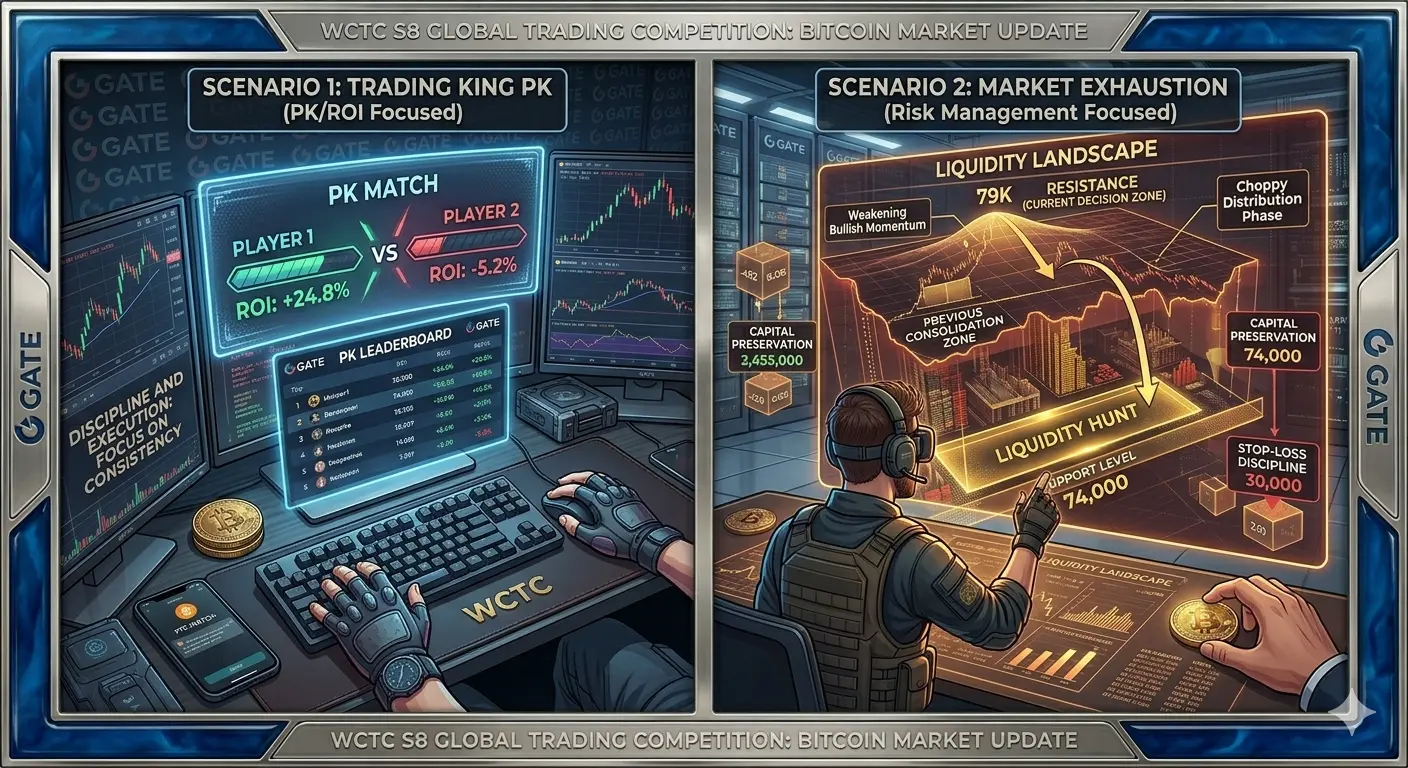
The WCTC Trading King PK is one of the most intense and competitive events in the WCTC S8 Global Trading Competition hosted on Gate, created to celebrate the platform’s 13th anniversary. Unlike traditional trading contests that only reward large profits or high trading volume, this format focuses on something far more challenging and realistic—real-time performance against another trader. With a massive prize pool of up to 1.6 million USDT, it has quickly become one of the most attractive opportunities for traders who want to prove their skill under pressure.
What makes this competition unique is its 1v1 head-to-head structure, where traders are directly matched against each other. Every participant competes based on return on investment (ROI) rather than absolute profit, which completely changes the dynamics of trading. In this system, a small account is just as powerful as a large account if the trader can generate better percentage returns. This removes the advantage of capital size and shifts the focus entirely toward strategy, timing, and execution. It creates a fair battlefield where discipline and decision-making matter more than money.
The competition runs over a defined period, giving traders multiple weeks to participate in battles and improve their ranking. Each match is live and constantly updating, meaning you can see your opponent’s performance in real time. This creates an environment filled with pressure, excitement, and urgency. Every trade you take can immediately impact your position in the leaderboard. Because of this, traders are forced to think carefully before entering positions, making it not just a test of technical skill but also of emotional control.
Success in the WCTC Trading King PK is heavily dependent on strategy rather than aggression. Many beginners assume that taking large risks will help them climb faster, but in reality, the most successful participants are those who focus on consistent, high-quality setups. Traders often rely on clear technical patterns such as breakouts from consolidation zones, continuation moves in strong trends, and reversals at major support or resistance levels. These setups provide structure and reduce uncertainty, allowing traders to enter the market with confidence instead of emotion.
Another critical factor in this competition is risk management, which often separates winners from losers. Even the best strategy can fail without proper control of losses. Successful traders typically risk only a small percentage of their capital on each trade, ensuring that no single loss can significantly damage their overall performance. Stop-loss discipline is essential, as holding losing positions or moving stops out of fear can quickly destroy a trader’s ROI. In a competitive environment where every percentage point matters, capital preservation becomes just as important as profit generation.
Market timing also plays a significant role in determining outcomes. Cryptocurrency markets are highly volatile, but not all hours provide equal opportunity. Periods of high liquidity, such as overlaps between major global trading sessions, often create stronger price movements and better trading opportunities. However, these periods also come with increased risk, requiring traders to balance aggression with caution. Understanding when to trade and when to stay out of the market is often what distinguishes top performers from average participants.
Beyond technical strategies, psychology is one of the most important elements in the PK competition. Competing directly against another trader in real time creates emotional pressure that can lead to impulsive decisions. Many traders struggle with revenge trading after a loss or overconfidence after a win. The most successful participants maintain emotional stability by sticking strictly to their plan, avoiding unnecessary trades, and accepting losses as part of the process. In this environment, mental discipline is often more valuable than technical knowledge.
The competition also encourages participation beyond trading itself. Traders can engage in community activities, share battle results, publish strategies, and interact with other participants. These additional elements create a learning environment where traders can improve by observing others and refining their own methods. It also adds a social dimension to the competition, making it more than just individual battles.
Overall, the WCTC Trading King PK is not just a contest—it is a complete trading simulation under pressure. It forces participants to combine technical analysis, risk management, and psychological strength in a real-world competitive setting. While the prize pool is a major attraction, the real value lies in the experience itself. Traders learn how to perform under stress, how to manage risk effectively, and how to stay consistent in unpredictable market conditions. Whether a participant finishes at the top of the leaderboard or not, the lessons gained from this competition can significantly improve their long-term trading skills and mindset.
#GateSquare
#ContentMining
#CreaterCarnival
repost-content-media
  • Reward
  • Comment
  • Repost
  • Share
#比特币Breaks79K
Bitcoin Breaks 79K — Current Market Update & Next Possible Move Toward $74K
Bitcoin is currently trading in a critical zone after pushing above the $79,000 area, but the market is now showing clear signs of hesitation. Price is moving around the $77K–$79K range, where strong resistance is repeatedly rejecting upward momentum. This behavior suggests that the market is no longer in a strong impulsive phase and is instead entering a decision zone where direction will soon be defined.
The recent price action shows that although buyers managed to push BTC higher, the strength of each
BTC-1.17%
MrFlower_XingChen
#比特币Breaks79K
Bitcoin Breaks 79K — Current Market Update & Next Possible Move Toward $74K
Bitcoin is currently trading in a critical zone after pushing above the $79,000 area, but the market is now showing clear signs of hesitation. Price is moving around the $77K–$79K range, where strong resistance is repeatedly rejecting upward momentum. This behavior suggests that the market is no longer in a strong impulsive phase and is instead entering a decision zone where direction will soon be defined.
The recent price action shows that although buyers managed to push BTC higher, the strength of each new move is weakening. This is often seen when a market is approaching exhaustion after a strong rally. Instead of clean breakouts, Bitcoin is now forming choppy movements with lower momentum, indicating that buyers are struggling to maintain control at higher levels.
From a structure perspective, Bitcoin appears to be building a potential distribution phase under resistance. This means that while price is still elevated, selling pressure is gradually increasing as early buyers begin to secure profits. If this continues, the market may fail to hold above the $79K resistance zone and start rotating downward.
Your projected downside target of $74,000 becomes a key area of interest in this scenario. This level aligns with a previous liquidity zone where the market earlier built strong consolidation. In many cases, after a strong upward move, Bitcoin returns to such zones to retest demand and fill inefficiencies left behind during the rally. If sellers take control, this area becomes a natural magnet for price.
Currently, the market is showing early warning signals such as weakening bullish momentum, reduced breakout strength, and repeated rejection from the same resistance zone. If these conditions continue, BTC could form lower highs on smaller timeframes, which is usually the first step toward a deeper corrective move.
However, the drop toward $74K would likely not happen in a straight line. Instead, the market would go through sideways consolidation, fake pumps, and liquidity traps before any major move unfolds. These phases are designed to confuse both buyers and sellers, making timing extremely important.
Sentiment is also playing a major role. After the breakout above $79K, many traders are still expecting continuation upward, which increases the risk of late long positions. If momentum fails, these positions can quickly turn into exits, adding further pressure on the downside.
In conclusion, Bitcoin is currently in a high-risk resistance zone. While the broader trend is still not fully broken, short-term structure is showing weakness. If selling pressure continues and $79K is not reclaimed with strong volume, the market may gradually move toward the $74,000 support zone as the next major liquidity target.
#GateSquare
#ContentMining
#CreaterCarnival
repost-content-media
  • Reward
  • Comment
  • Repost
  • Share
#WHCADinnerShootingIncident
Breaking Security Shock at Washington Hilton
A serious security incident occurred during the White House Correspondents’ Dinner (WHCA) at the Washington Hilton in Washington, D.C., creating widespread panic and emergency evacuation of top U.S. officials, including the President and First Lady. The event, which is one of the most high-profile political-media gatherings in the United States, was suddenly disrupted when shots were fired near the security screening area outside the main ballroom.
According to early verified reports, the incident happened on the evenin
MrFlower_XingChen
#WHCADinnerShootingIncident
Breaking Security Shock at Washington Hilton
A serious security incident occurred during the White House Correspondents’ Dinner (WHCA) at the Washington Hilton in Washington, D.C., creating widespread panic and emergency evacuation of top U.S. officials, including the President and First Lady. The event, which is one of the most high-profile political-media gatherings in the United States, was suddenly disrupted when shots were fired near the security screening area outside the main ballroom.
According to early verified reports, the incident happened on the evening of April 25, 2026, when the suspect allegedly breached or rushed past a security checkpoint and opened fire near the entrance screening zone. Guests inside the ballroom were quickly alerted, and emergency protocols were activated immediately. Attendees were instructed to take cover, and many remained under tables while security personnel responded.
Law enforcement confirmed that the suspect was taken into custody at the scene after being confronted by security forces. One officer was injured but survived due to protective equipment, and no confirmed fatalities have been reported. Authorities also stated that multiple weapons were recovered, and investigations are ongoing to determine how the individual was able to get so close to a highly secured political event.
The White House and Secret Service responded quickly by evacuating President Donald Trump, First Lady Melania Trump, Vice President JD Vance, and other senior officials from the venue. The evacuation was described as fast and controlled, reflecting the high-level security protocols in place for such events. Despite the chaos, officials confirmed that all primary protectees were safe.
This incident has raised major concerns about event security protocols at large political gatherings, especially those held in public-access venues like hotels. Officials and security analysts are now questioning how gaps in screening procedures may have allowed the suspect to approach a restricted area. The situation has already triggered calls for a full security review and possible restructuring of future event locations.
The broader political impact is also significant. The WHCA dinner is traditionally a symbolic event bringing together media and government leadership in a relaxed environment, but this incident has shifted attention toward safety and risk management at such gatherings. Discussions are already underway about whether future events should be moved to more secure federal facilities rather than public hotels.
Authorities continue to investigate the suspect’s background, motive, and planning process. Early statements suggest that the act may have been targeted, but officials have not yet confirmed a clear motive. Investigators are also reviewing surveillance footage, witness statements, and digital evidence to build a complete timeline of events.
In the aftermath, political leaders across different parties have condemned the incident and expressed relief that the situation did not result in mass casualties. The event has also reignited debate about rising political tensions and the importance of strengthening security at high-profile government functions.
Overall, the WHCA dinner shooting incident stands as a major security breach that has shocked Washington and raised urgent questions about safety, preparedness, and the future of large-scale political events in the United States.
  • Reward
  • Comment
  • Repost
  • Share
#WCTCTradingKingPK
🏆 WCTC Trading King PK 2026 — The Ultimate Test of Real Traders
In the fast-paced world of crypto, many trading events come and go — but WCTC Season 8 by Gate.io stands out as a true global battlefield. This championship is not just about profits; it’s about proving your ability to perform under pressure, manage risk, and stay consistent in unpredictable market conditions. Launched in April 2026 as part of Gate.io’s 13th anniversary, this event brings together traders from around the world to compete for both recognition and a massive reward pool.
📊 Competition Structure
MrFlower_XingChen
#WCTCTradingKingPK
🏆 WCTC Trading King PK 2026 — The Ultimate Test of Real Traders
In the fast-paced world of crypto, many trading events come and go — but WCTC Season 8 by Gate.io stands out as a true global battlefield. This championship is not just about profits; it’s about proving your ability to perform under pressure, manage risk, and stay consistent in unpredictable market conditions. Launched in April 2026 as part of Gate.io’s 13th anniversary, this event brings together traders from around the world to compete for both recognition and a massive reward pool.
📊 Competition Structure — Where Skill Meets Strategy
WCTC Season 8 is designed to test every dimension of a trader’s ability.
⚔️ Team Competition
This format emphasizes collaboration. Traders work together, combining strategies, managing risk collectively, and executing trades as a unit. It rewards coordination, planning, and disciplined teamwork.
👤 Individual Competition
A true test of personal skill. Traders compete based on profit percentage, drawdown control, and consistency. Here, your success depends entirely on your own decisions and execution.
🔥 1v1 Trading King PK
The most intense format — direct head-to-head battles. Every move matters, and emotional control becomes critical. One mistake can cost everything, while one smart trade can secure victory.
💰 800,000 USDT Prize Pool — Rewarding Performance
With a massive 800,000 USDT prize pool, this competition attracts serious traders.
🥇 Top performers receive major rewards
🥈 Tier-based prizes for consistent traders
🎁 Mystery chests, bonuses, and special reward rounds
This ensures that not only winners, but also disciplined and consistent participants are rewarded.
📈 Beyond Profits — Real Market Experience
WCTC is more than a competition — it’s a real-world trading simulation under extreme conditions.
Participants develop:
Fast decision-making skills
Emotional discipline during volatility
Strong execution under pressure
These are the qualities that separate average traders from professionals.
⚠️ Risk Awareness — Discipline is Key
Trading in a competitive environment increases risk significantly. Common mistakes include:
Overtrading
Revenge trading
Misuse of high leverage
Successful traders focus on:
✔️ Strict risk management
✔️ Using stop-loss effectively
✔️ Protecting capital over chasing profits
🎯 Winning Mindset — Consistency Over Hype
Winning WCTC is not about one big trade — it’s about sustained performance.
Disciplined traders grow steadily
Emotional traders often lose after short-term wins
True champions:
👉 Stick to their strategy
👉 Control their emotions
👉 Focus on long-term consistency
🚀 Final Insight
WCTC Trading King PK 2026 is not just a competition — it’s a platform to prove your trading identity on a global stage. It challenges you to refine your strategy, strengthen your mindset, and perform when it matters most.
📌 In the end, the market rewards not the fastest traders — but the most disciplined ones.
#GateSquare
#ContentMining
#CreaterCarnival
repost-content-media
  • Reward
  • Comment
  • Repost
  • Share
#比特币Breaks79K
April delivered one of the cleanest structural breakouts we’ve seen in over a year. Bitcoin pushed to ~$79K, closed a multi-month range, and is now consolidating just below resistance — not with hype, but with controlled order flow and real liquidity behind the move.
Here’s a refined breakdown of what’s actually happening under the surface:
📊 Liquidity First, Price Second
This move didn’t start with price — it started with capital.
Stablecoin expansion (especially Tether) signaled fresh liquidity entering the system. That liquidity didn’t rotate into alts — it waited.
Once BTC
BTC-1.17%
MrFlower_XingChen
#比特币Breaks79K
April delivered one of the cleanest structural breakouts we’ve seen in over a year. Bitcoin pushed to ~$79K, closed a multi-month range, and is now consolidating just below resistance — not with hype, but with controlled order flow and real liquidity behind the move.
Here’s a refined breakdown of what’s actually happening under the surface:
📊 Liquidity First, Price Second
This move didn’t start with price — it started with capital.
Stablecoin expansion (especially Tether) signaled fresh liquidity entering the system. That liquidity didn’t rotate into alts — it waited.
Once BTC cleared the key resistance near $77K:
A large cluster of short positions got liquidated
Spot buyers stepped in aggressively
Result: a clean breakout candle, not a chaotic spike
That’s the difference between engineered moves vs emotional pumps.
🐋 Whale Accumulation Defined the Base
While retail debated tops, larger players were building positions.
Accumulation between $73K–$76K created a strong foundation before the breakout.
At the same time:
Institutional flows (especially ETF demand) stayed consistently positive
Smart money didn’t wait for confirmation — they created it
This explains why dips were shallow and quickly bought.
🚪 $79K = Transition Zone, Not Final Resistance
Right now, the market is compressing — and that usually leads to expansion.
Two levels matter:
Above ~$79.3K daily close → opens a fast move toward ~$82.5K
Below ~$76.8K → likely revisit of ~$74K base
This is a decision zone, not a trend reversal point.
📈 Why This Cycle Feels Different
Compared to previous breakouts:
2024 → leverage-driven, fast but fragile
2026 → spot-driven, slower but stronger
The presence of ETFs and real liquidity changes the structure:
👉 Less noise
👉 More sustained trends
👉 Harder to fade breakouts
This is what a macro-liquidity regime looks like.
⚙️ Trade Approach (Balanced, Not Emotional)
Your playbook already reflects something many traders miss — controlled participation.
A rational framework here is:
Take partial profits into strength (reduces emotional pressure)
Keep core spot exposure intact (ride the trend)
Use small hedges instead of flipping bearish
This isn’t about predicting every move — it’s about staying positioned without overexposure.
🔍 Key Metrics to Watch (Next Few Days)
Instead of staring at candles, focus on drivers:
ETF net inflows (must stay positive)
Stablecoin dominance (declining = risk-on)
If both continue → probability favors continuation
🎯 Answer to Your Question
Between taking partials at $79K vs waiting for $80K confirmation:
Aggressive traders → scale out near resistance (like you did)
Conservative traders → wait for confirmed breakout above $80K
Neither is “right” — it depends on risk tolerance.
But the strongest approach is usually a mix of both:
👉 Take some off into strength
👉 Add only on confirmed continuation
🚀 Final Thought
This move isn’t about a single level — it’s about a shift in behavior.
Bitcoin is no longer reacting only to crypto narratives — it’s moving with global liquidity flows.
And in that environment:
📌 Breakouts matter more than predictions
📌 Discipline matters more than speed
You don’t need to be a hero at the top — just consistent in the trend.
repost-content-media
  • Reward
  • Comment
  • Repost
  • Share
#CryptoMarketsRiseBroadly
The current market isn’t just about one asset moving — it’s a broad-based expansion across the entire crypto ecosystem. When multiple sectors rise together, it usually signals something deeper than short-term hype: liquidity is entering the market at scale.
At the center of this move is Bitcoin, which continues to lead as the primary driver of market direction. Its recent strength has created confidence, pulling capital into other major assets like Ethereum and beyond.
📊 What’s Driving the Broad Market Rise?
💧 Liquidity Expansion
An increase in stablecoin supply —
BTC-1.17%
ETH-1.97%
SOL-2.41%
MrFlower_XingChen
#CryptoMarketsRiseBroadly
The current market isn’t just about one asset moving — it’s a broad-based expansion across the entire crypto ecosystem. When multiple sectors rise together, it usually signals something deeper than short-term hype: liquidity is entering the market at scale.
At the center of this move is Bitcoin, which continues to lead as the primary driver of market direction. Its recent strength has created confidence, pulling capital into other major assets like Ethereum and beyond.
📊 What’s Driving the Broad Market Rise?
💧 Liquidity Expansion
An increase in stablecoin supply — especially Tether — is providing fresh fuel. This capital typically enters through BTC first, then rotates outward.
🏦 Institutional Participation
Spot ETF flows and institutional exposure are stabilizing the market structure. This creates stronger trends and fewer panic-driven drops compared to past cycles.
🔄 Capital Rotation
Once BTC consolidates, funds begin flowing into:
Large caps (ETH, SOL)
Mid caps
Eventually smaller altcoins
This rotation is a classic sign of a healthy bull phase rather than a single-asset rally.
📈 Market Structure Right Now
We’re seeing a layered bullish structure:
BTC breaks resistance
BTC consolidates near highs
Altcoins start outperforming
Market sentiment shifts to risk-on
If this structure holds, it often leads to a sustained uptrend rather than a quick spike.
⚠️ But Not All Gains Are Equal
A broad market rise doesn’t mean every coin is strong.
Some moves are liquidity-driven (strong)
Others are hype-driven (fragile)
Smart traders focus on:
✔️ Volume-backed breakouts
✔️ Strong market structure
✔️ Relative strength vs BTC
🎯 Key Signals to Watch
To confirm if this rally continues:
BTC holding above key breakout levels
ETH gaining strength against BTC
Stablecoin dominance declining
Consistent inflows into major assets
If these align → trend continuation is likely
🚀 Final Insight
#CryptoMarketsRiseBroadly isn’t just a headline — it reflects a shift in market conditions.
This is what early-to-mid bull phases look like:
👉 Liquidity expands
👉 Confidence builds
👉 Participation increases
But the edge still belongs to those who stay disciplined.
📌 In a rising market, it’s easy to make money — but only structured traders keep it.
repost-content-media
  • Reward
  • Comment
  • Repost
  • Share
#WHCADinnerShootingIncident
The White House Correspondents' Dinner shooting incident (April 25, 2026) has quickly evolved from a security shock into a broader macro-sentiment trigger across global financial markets. While the immediate situation was contained — with Donald Trump and other officials safely evacuated — the deeper impact lies not in casualties, but in what the event represents: a sudden reminder that political risk remains an active and unpredictable force in market dynamics.
At a time when markets were already navigating fragile confidence due to geopolitical tensions and liqui
BTC-1.17%
MrFlower_XingChen
#WHCADinnerShootingIncident
The White House Correspondents' Dinner shooting incident (April 25, 2026) has quickly evolved from a security shock into a broader macro-sentiment trigger across global financial markets. While the immediate situation was contained — with Donald Trump and other officials safely evacuated — the deeper impact lies not in casualties, but in what the event represents: a sudden reminder that political risk remains an active and unpredictable force in market dynamics.
At a time when markets were already navigating fragile confidence due to geopolitical tensions and liquidity transitions, this incident injected a new layer of uncertainty. Financial markets are not purely driven by data or fundamentals; they are deeply influenced by perception, reaction speed, and risk anticipation. A high-profile breach at one of the most secured political gatherings in the world signals something beyond a localized event — it introduces the idea that stability itself can be questioned, even if only temporarily.
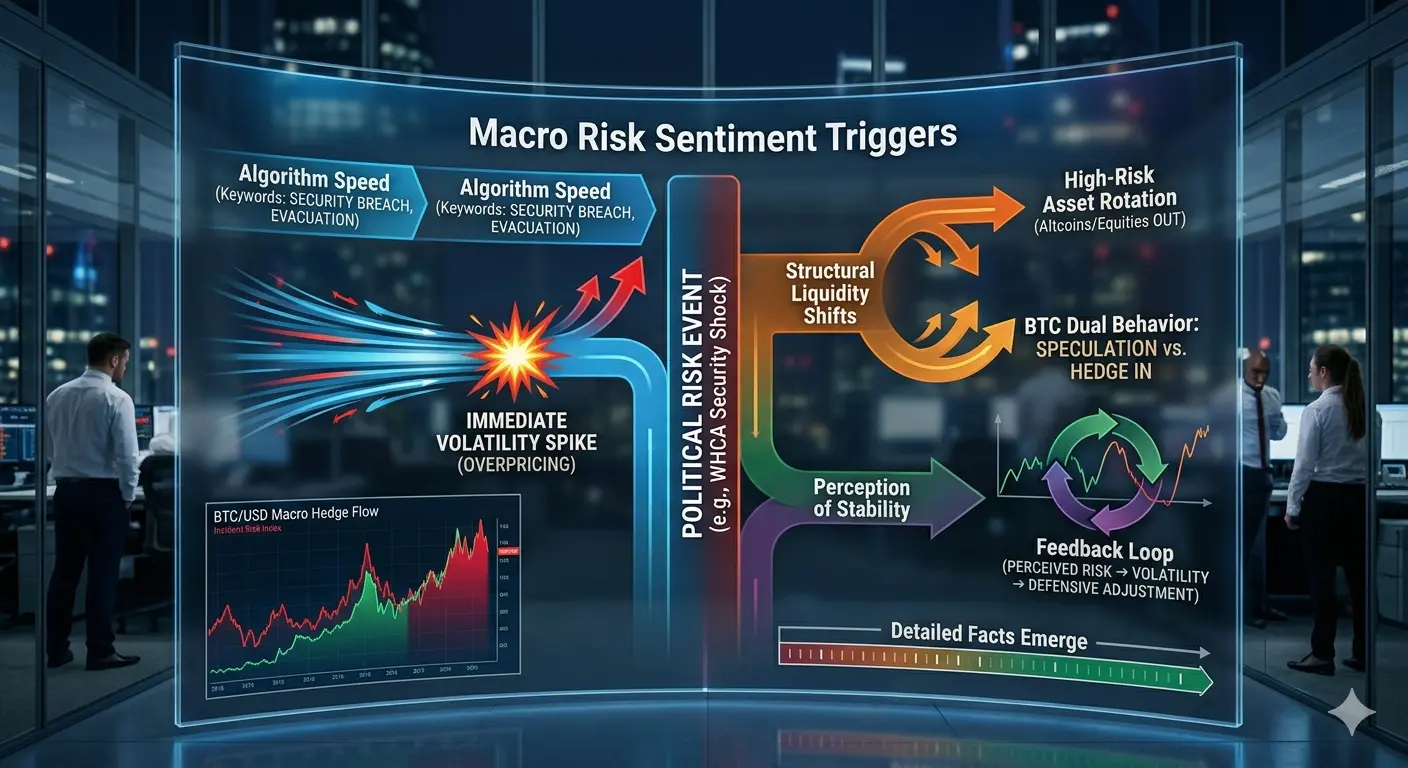
From a macro perspective, events like this tend to trigger what traders call a “risk reflex”. This reflex is not about long-term repositioning immediately, but about short-term protection and rapid adjustment. Capital begins to shift — sometimes subtly, sometimes aggressively — into assets perceived as relatively safer or more resilient under uncertainty. In this cycle, Bitcoin continues to show a unique dual behavior. On one side, it remains a risk asset influenced by liquidity and speculation; on the other, it increasingly behaves like a macro hedge against instability, especially in moments when traditional systems appear vulnerable.
This duality explains why market reactions often look “mixed” rather than directional. Instead of a clean risk-off move, we see simultaneous flows: some capital reducing exposure to high-risk altcoins, while other capital rotates into BTC or remains active in high-liquidity instruments. This creates a market environment where volatility increases without immediate clarity, and price action becomes more reactive than predictive.
Another critical dimension is the speed of information and sentiment transmission. In modern markets, headlines do not need to be fully analyzed before they impact price. The initial reaction often comes from algorithms, large funds, and fast-moving traders who respond to keywords like “security breach,” “political violence,” or “evacuation.” By the time detailed facts emerge, markets may have already priced in a layer of risk — sometimes overpricing it. This is why volatility spikes tend to occur before narrative stability returns, not after.
In the context of 2026, this matters even more because markets are currently operating within a liquidity-driven regime. Unlike previous cycles dominated purely by leverage, the current environment is shaped by institutional flows, ETF participation, and stablecoin expansion. This means that when a geopolitical shock occurs, the reaction is not just emotional — it is also structural. Liquidity can reposition faster, and large players can adjust exposure without needing extreme price moves. As a result, the market may absorb shocks more efficiently, but it will still reflect them through short-term volatility and rotation.
The psychological layer cannot be ignored. Traders do not wait for confirmation of long-term impact — they respond to uncertainty itself. This creates a feedback loop where:
Perceived risk increases
Short-term volatility expands
Traders adjust positions defensively
Price overshoots before stabilizing
This pattern has repeated across multiple geopolitical events, and the WHCADinnerShootingIncident fits directly into that framework. It is not necessarily the start of a sustained downturn, but it is a trigger for temporary repricing of risk expectations.
Looking forward, the key question is not whether the event itself will have lasting consequences, but whether it becomes part of a larger chain of instability signals. If similar incidents or escalating tensions follow, markets may begin to shift from temporary volatility into broader risk repricing, where capital allocation strategies change more permanently. On the other hand, if stability returns quickly and no further disruptions occur, this event is likely to remain a short-lived volatility spike — significant in the moment, but limited in long-term structural impact.
For crypto markets specifically, this reinforces an important reality: they are no longer isolated from global events. Assets like Bitcoin now sit at the intersection of liquidity, macroeconomics, and geopolitical sentiment. This means their reaction to events will often appear complex — rising during uncertainty in some cases, falling in others — depending on how traders interpret the balance between risk and opportunity.
Ultimately, the deeper takeaway is that markets today are anticipatory systems. They move not just on what has happened, but on what could happen next. The WHCADinnerShootingIncident highlights how quickly external shocks can enter that system, influence behavior, and then fade — or evolve — depending on the broader context.
In this environment, traders and investors are not just analyzing charts; they are constantly evaluating stability, perception, and reaction timing. And as this incident shows, even a contained event can momentarily reshape all three.
#GateSquare
#ContentMining
#CreaterCarnival
repost-content-media
  • Reward
  • Comment
  • Repost
  • Share
#TopCopyTradingScout
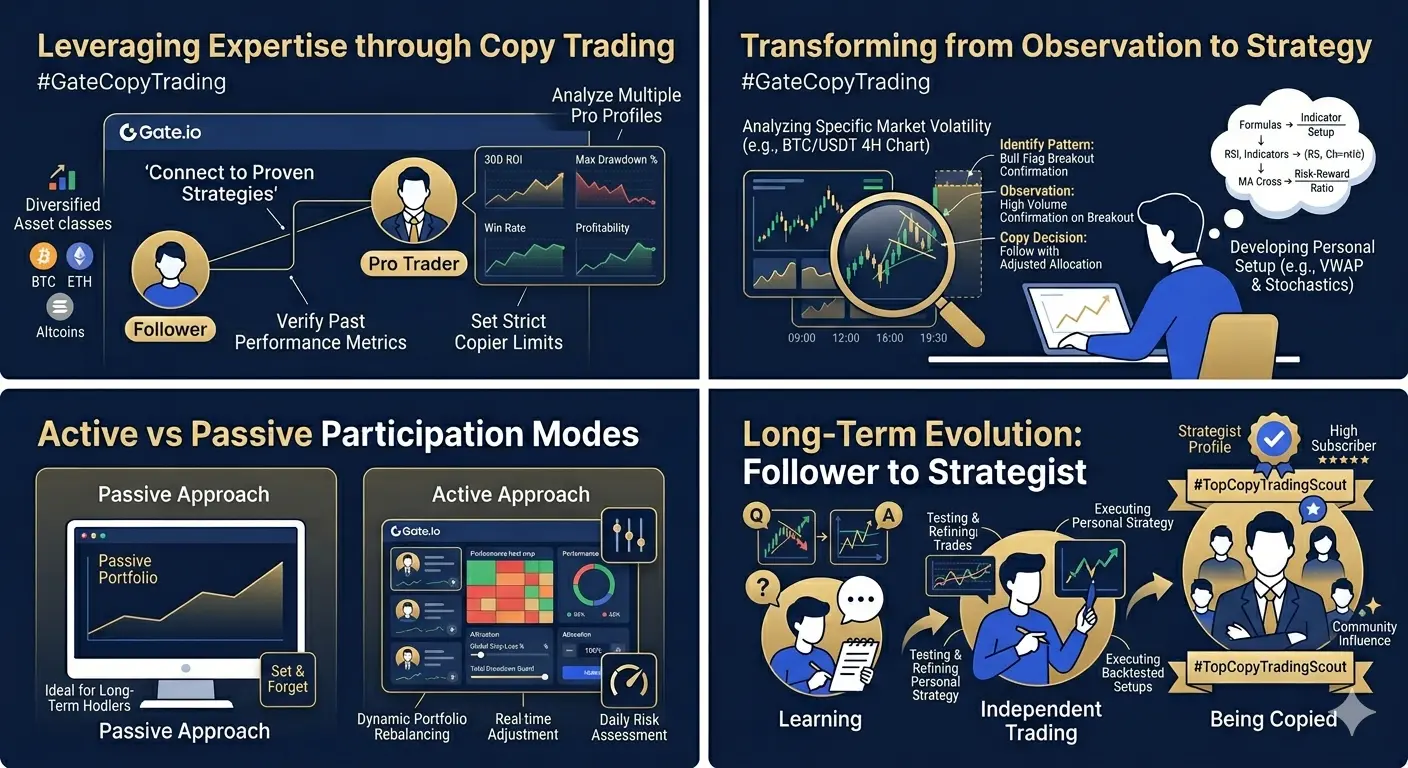
📊 #GateCopyTrading
Copy Trading Mastery — Turning Observation into Strategy and Profit
In today’s fast-moving crypto landscape, platforms like Gate.io have transformed how individuals participate in trading through copy trading ecosystems. Campaigns such as #TopCopyTradingScout are not just reward-driven promotions — they represent a shift toward data-driven participation, where users evolve from passive investors into analytical decision-makers.
At its core, copy trading is about leveraging proven expertise. Instead of navigating volatile markets blindly, users gain acc
BTC-1.17%
MrFlower_XingChen
#TopCopyTradingScout
📊 #GateCopyTrading
Copy Trading Mastery — Turning Observation into Strategy and Profit
In today’s fast-moving crypto landscape, platforms like Gate.io have transformed how individuals participate in trading through copy trading ecosystems. Campaigns such as #TopCopyTradingScout are not just reward-driven promotions — they represent a shift toward data-driven participation, where users evolve from passive investors into analytical decision-makers.
At its core, copy trading is about leveraging proven expertise. Instead of navigating volatile markets blindly, users gain access to experienced traders whose strategies, execution, and discipline have already been tested under real conditions. But the true edge lies not in copying trades — it lies in understanding the logic behind them.
📊 Understanding the Real Opportunity — Beyond Rewards
Most participants initially join for bonuses or incentives, but that’s only the surface. The deeper value of copy trading lies in its ability to:
Expose users to real-time trading decisions
Provide insight into professional risk management
Build pattern recognition through repeated observation
This transforms trading from guesswork into a structured learning process. Over time, users begin to recognize market behavior, identify setups, and understand why certain trades succeed while others fail.
📈 Defining a True Top Trader — The Metrics That Matter
One of the biggest misconceptions in copy trading is equating high returns with high skill. In reality, sustainability matters more than spikes.
A top trader typically demonstrates:
Consistent profitability over time
Controlled drawdowns (limited losses)
Balanced risk-to-reward ratios
Stable trading frequency (not overtrading)
A trader making +200% with massive risk exposure is far less reliable than one delivering steady, controlled growth. The goal is to identify repeatable performance, not temporary success.
🧠 Copy Trading as a Learning Engine
Copy trading is often misunderstood as passive income, but in reality, it can be one of the most effective educational tools in trading.
By following experienced traders, users can:
Observe entry and exit timing
Understand position sizing
Learn how professionals react to volatility
However, the key is active observation. Simply copying trades without analysis limits growth. The real advantage comes when users begin asking:
👉 Why was this trade taken?
👉 Why was risk adjusted here?
👉 What market condition influenced this decision?
This mindset turns copy trading into a training ground for independent trading.
💡 Risk Management — The Foundation of Survival
No matter how skilled a trader is, losses are unavoidable. This makes risk management the most critical element in copy trading.
Effective practices include:
Diversifying across multiple traders
Allocating limited capital per trader
Setting stop-loss thresholds
Avoiding overexposure during volatile conditions
The objective is not to eliminate risk — it is to control it consistently. Without this, even the best strategies can lead to significant losses.
📊 Adapting to Market Conditions — Strategy Alignment
Markets are not static, and neither are trading strategies. Different traders excel under different conditions:
Trend-followers perform best in bullish or bearish momentum
Range traders succeed in sideways markets
Scalpers thrive in high volatility
Understanding the current structure of assets like Bitcoin helps users select traders whose strategies align with market behavior. This alignment significantly improves performance consistency.
⚖️ Active vs Passive Participation — Choosing Your Approach
Copy trading offers two primary approaches:
Passive Approach:
Minimal monitoring
Long-term following of selected traders
Suitable for beginners or low-time users
Active Approach:
Regular performance evaluation
Dynamic allocation adjustments
Switching traders based on conditions
While passive strategies are simpler, active participation generally leads to better optimization and risk control. The choice depends on experience level and time commitment.
💬 Community Power — Collective Intelligence
Campaigns like #TopCopyTradingScout emphasize sharing insights, and this is more powerful than it appears.
A strong trading community enables:
Exchange of strategies and observations
Identification of reliable traders
Early detection of changing market patterns
Collective knowledge often reveals patterns that individuals might miss, creating a collaborative advantage.
📊 Visibility & Influence — Building a Trading Identity
In modern trading ecosystems, visibility plays a major role. Traders who consistently perform well and share insights gain followers, credibility, and influence.
For participants, this means:
Opportunity to build a personal brand
Increased engagement and recognition
Potential long-term growth beyond the campaign
This adds a new dimension where trading is not just financial — it’s also social and reputational.
🧩 Common Pitfalls — What to Avoid
Many users struggle due to avoidable mistakes:
Chasing high returns without risk analysis
Allocating too much capital to one trader
Ignoring market conditions
Reacting emotionally to short-term losses
Frequently switching traders without strategy
Avoiding these mistakes requires patience and a focus on long-term consistency over short-term excitement.
🔮 Long-Term Vision — From Follower to Strategist
The ultimate goal of copy trading is not dependency — it’s evolution.
With time and experience, users can:
Develop their own strategies
Transition into independent trading
Even become traders others choose to copy
This progression highlights the real power of copy trading as both an income tool and a skill-building platform.
🏁 Final Conclusion
The #GateCopyTrading ecosystem is more than a promotional campaign — it’s a structured pathway into professional trading. Through careful selection, disciplined risk management, and continuous learning, users can transform their approach from reactive to strategic.
Rewards may attract attention, but knowledge and discipline create sustainability.
repost-content-media
  • Reward
  • Comment
  • Repost
  • Share
#IranProposesHormuzStraitReopeningTerms
The Strait of Hormuz has once again moved to the center of global macro attention in 2026, and this time the implications stretch far beyond regional politics. What appears on the surface as a diplomatic proposal from Iran to the United States is, in reality, a powerful signal that touches every major layer of the financial system — from energy pricing and inflation expectations to central bank policy and the direction of crypto markets. When nearly one-fifth of the world’s oil supply flows through a single narrow passage, any disruption or reopening is
BTC-1.17%
ETH-1.97%
SOL-2.41%
MrFlower_XingChen
#IranProposesHormuzStraitReopeningTerms
The Strait of Hormuz has once again moved to the center of global macro attention in 2026, and this time the implications stretch far beyond regional politics. What appears on the surface as a diplomatic proposal from Iran to the United States is, in reality, a powerful signal that touches every major layer of the financial system — from energy pricing and inflation expectations to central bank policy and the direction of crypto markets. When nearly one-fifth of the world’s oil supply flows through a single narrow passage, any disruption or reopening is not just a headline; it is a structural shift in global liquidity conditions.
The recent proposal to reopen the strait and restore secure oil passage comes after months of tension that began with its partial closure earlier in the year. That disruption sent shockwaves through global supply chains. Oil prices surged aggressively, with benchmarks like Brent Crude pushing toward extreme levels as traders priced in both immediate shortages and long-term geopolitical risk. But the true impact was not limited to energy markets alone. Shipping routes were forced into costly detours, insurance premiums for tankers surged to crisis levels, and the broader cost structure of global trade shifted almost overnight. This created a ripple effect that extended directly into inflation expectations across major economies.
Higher energy costs translate quickly into higher consumer prices. Transportation becomes more expensive, production costs rise, and supply chains lose efficiency. As inflation expectations climbed, central banks — particularly the Federal Reserve — found themselves under renewed pressure. Just as markets were beginning to anticipate a softer monetary stance later in 2026, the energy shock reintroduced the possibility of prolonged tight policy. Interest rates staying higher for longer is not just a monetary decision; it becomes a constraint on liquidity across all risk assets.
This is where the connection to crypto becomes critical. Assets like Bitcoin do not operate in isolation anymore. They are deeply embedded within global liquidity cycles. When oil prices rise and inflation expectations strengthen, the US dollar typically gains defensive strength. A stronger dollar, combined with tighter financial conditions, tends to suppress risk appetite. In such an environment, capital often rotates out of high-volatility assets — especially altcoins — and into perceived safe havens such as cash, bonds, or commodities like gold. This dynamic creates what can be described as an “invisible ceiling” for crypto markets, where bullish momentum struggles to sustain itself despite strong technical setups.
That is why a genuine reopening of the Strait of Hormuz would represent far more than a geopolitical de-escalation. It would be a macro catalyst. If oil prices begin to decline meaningfully — for example, falling back below key psychological thresholds — the entire narrative shifts. Inflation fears would begin to ease, reducing pressure on central banks to maintain aggressive policies. The Federal Reserve could regain flexibility, and the US dollar might weaken slightly as defensive demand fades. This combination creates a fertile environment for liquidity to expand again, which historically benefits risk assets, including crypto.
In such a scenario, capital does not move randomly — it follows a pattern. The first destination is usually Bitcoin, as institutional participants treat it as the most secure entry point within the crypto ecosystem. Once confidence builds, flows expand into Ethereum, reflecting a shift toward infrastructure and smart contract exposure. Only after this initial phase does capital typically rotate into higher-beta assets like Solana and other altcoins, where volatility — and potential upside — increases significantly. This layered capital rotation is what often defines the early stages of a broader market expansion.
However, there is a critical layer of complexity that cannot be ignored. The Strait of Hormuz is not just an economic corridor; it is a strategic leverage point. For Iran, control over this passage provides significant negotiating power on the global stage. This raises an important question: is the reopening proposal a genuine step toward stability, or a tactical move designed to maintain influence while keeping markets uncertain? The behavior of shipping companies and insurers offers valuable insight here. Despite diplomatic signals, tanker traffic has not fully normalized, and risk premiums remain elevated. This suggests that institutional players are not yet convinced by headlines alone.
In modern markets, confirmation matters more than narrative. Traders and investors increasingly rely on real-world indicators rather than political statements. In this case, the true signal lies in observable changes: sustained tanker flow through the strait, declining insurance costs, and consistent evidence of normalized logistics. Without these confirmations, any market rally driven purely by optimism risks becoming a temporary liquidity spike rather than a sustainable trend.
From a trading and investment perspective, this environment demands patience and discipline. Reacting to headlines without confirmation often leads to positioning errors, especially in a market already sensitive to macro variables. A structured approach focuses on alignment: lower oil prices, stabilizing geopolitical signals, and supportive monetary expectations. When these factors converge, they create a high-probability environment for risk assets to perform. Until then, maintaining flexibility — whether through reduced exposure or holding liquidity in stable instruments — remains a rational strategy.
Ultimately, the significance of #IranProposesHormuzStraitReopeningTerms goes far beyond a single diplomatic development. It highlights a broader transformation in how markets operate in 2026. Financial systems are now deeply interconnected, where a disruption in one region can cascade across asset classes globally. The Strait of Hormuz has become more than a physical chokepoint; it is a macro switch capable of influencing inflation, policy, and investor behavior simultaneously.
The market is not just asking whether the strait will reopen. It is asking what that reopening represents. If it signals genuine de-escalation, the result could be a powerful wave of liquidity expansion and renewed risk appetite. If it proves to be temporary or strategic, volatility may persist, and markets will continue to trade defensively.
In this environment, the edge belongs not to those who react first, but to those who wait for clarity. Because when confirmation finally arrives, the move that follows is often not just significant — it is transformative.
repost-content-media
  • Reward
  • Comment
  • Repost
  • Share
#WHCADinnerShootingIncident
When geopolitical risk hits without warning, markets don’t just react — they reveal their underlying structure. The April 25 incident at the White House Correspondents' Dinner in Washington quickly moved beyond a political headline and became a real-time stress test for global assets. What followed in crypto markets provided one of the clearest signals of 2026: Bitcoin is evolving into a macro-sensitive asset, not just a speculative instrument.
The initial reaction was sharp and mechanical. As headlines broke, BTC dropped rapidly from the $79K region toward $77K, t
BTC-1.17%
ETH-1.97%
SOL-2.41%
MrFlower_XingChen
#WHCADinnerShootingIncident
When geopolitical risk hits without warning, markets don’t just react — they reveal their underlying structure. The April 25 incident at the White House Correspondents' Dinner in Washington quickly moved beyond a political headline and became a real-time stress test for global assets. What followed in crypto markets provided one of the clearest signals of 2026: Bitcoin is evolving into a macro-sensitive asset, not just a speculative instrument.
The initial reaction was sharp and mechanical. As headlines broke, BTC dropped rapidly from the $79K region toward $77K, triggering a cascade of liquidations across leveraged positions. This type of move is typical in high-speed markets where algorithms and short-term traders respond instantly to uncertainty. Nearly hundreds of millions in leveraged exposure were flushed out within minutes, and as expected, the pain was not evenly distributed. Higher-beta assets like Ethereum and Solana saw deeper percentage declines, reflecting their position further out on the risk curve.
This divergence is not случайный — it reflects a structural hierarchy within crypto itself. In moments of stress, capital does not exit evenly; it compresses toward perceived safety. Bitcoin, with its deeper liquidity and stronger institutional presence, increasingly acts as the first layer of defense, while altcoins absorb the majority of volatility. This pattern has repeated across multiple shocks, but in 2026 it is becoming more pronounced and more consistent.
However, the most important part of this event was not the sell-off — it was the speed and strength of the recovery. Within a short window after confirmation that the situation was contained and no broader systemic threat was unfolding, BTC reversed sharply. Buyers stepped in with conviction, absorbing sell pressure and pushing price back toward the $79K zone. This V-shaped recovery was not driven by retail emotion; it reflected deep liquidity and strategic positioning.
On-chain behavior added another layer of confirmation. Larger wallets — often associated with institutional or high-net-worth participants — were actively accumulating during the dip rather than reducing exposure. At the same time, the behavior of Tether provided a critical signal. Instead of capital leaving the crypto ecosystem, stablecoin supply expanded, indicating that funds were temporarily rotating into defensive positions before being redeployed.
This distinction is essential. In earlier market cycles, geopolitical shocks often triggered outright capital flight from crypto. In contrast, the current environment shows internal rotation — from risk assets into liquidity, and then back into opportunity. This shift reflects a more mature market structure where participants manage risk dynamically rather than exiting entirely.
Institutional flows reinforced this narrative. Spot exposure to Bitcoin remained stable, with continued inflows signaling confidence despite short-term volatility. Large capital did not interpret the event as a long-term threat; instead, it treated the move as temporary dislocation within an otherwise intact trend. This behavior is a defining feature of mature markets — the ability to absorb shocks without structural breakdown.
Derivatives markets told a similar story. Volatility expanded quickly as uncertainty spiked, but positioning did not flip bearish. Instead, traders continued to structure upside exposure while hedging near key downside levels. This created a clearly defined range where risk was managed rather than abandoned. It also established important technical zones that now act as reference points for future price action.
Beyond price and positioning, there is a deeper implication that extends into policy and regulation. Events like this shift political attention toward security and stability, which can indirectly affect financial frameworks. Legislative efforts around crypto, such as regulatory clarity initiatives, may face delays as priorities shift. This introduces a different kind of uncertainty — not immediate market volatility, but long-term structural timing risk for institutional adoption.
What makes this moment significant is not just the reaction, but what it confirms. Crypto markets are no longer isolated from global events. They are integrated into the broader financial system, responding to the same signals that drive traditional markets: geopolitical risk, liquidity conditions, and macro expectations.
And within that system, Bitcoin is carving out a distinct role. It is not purely a risk asset, nor purely a safe haven — it is a hybrid instrument, reacting to fear while also attracting capital during uncertainty. With each event like this, that identity becomes clearer and more established.
The WHCADinnerShootingIncident ultimately served as a real-time experiment. Panic appeared, liquidity responded, and structure held. The market did not collapse — it adapted. And in doing so, it demonstrated a key truth of 2026:
Markets no longer wait for stability to return.
They price uncertainty instantly — and then move forward.
#GateSquare
#ContentMining
#CreaterCarnival
repost-content-media
  • Reward
  • Comment
  • Repost
  • Share
#CrudeOilPriceRose
Oil pushing back above $105 isn’t just another commodity move — it’s a macro signal being priced in real time. With Brent Crude trading in the $105+ zone and West Texas Intermediate approaching the high-$90s, the market is clearly not reacting to supply-demand data alone. This is a risk-premium driven rally, where fear, uncertainty, and geopolitical tension are embedded into every barrel.
The ongoing disruption around the Strait of Hormuz remains the core driver. With a significant portion of global oil flow effectively constrained, markets are forced to price in worst-case
BTC-1.17%
ETH-1.97%
SOL-2.41%
MrFlower_XingChen
#CrudeOilPriceRose
Oil pushing back above $105 isn’t just another commodity move — it’s a macro signal being priced in real time. With Brent Crude trading in the $105+ zone and West Texas Intermediate approaching the high-$90s, the market is clearly not reacting to supply-demand data alone. This is a risk-premium driven rally, where fear, uncertainty, and geopolitical tension are embedded into every barrel.
The ongoing disruption around the Strait of Hormuz remains the core driver. With a significant portion of global oil flow effectively constrained, markets are forced to price in worst-case scenarios. What’s important here is that physical supply hasn’t fully disappeared — confidence in supply has. That distinction is what separates a structural shortage from a risk-premium spike.
From a price-action perspective, your levels align with how professional traders read these conditions. The breakout zone around $103 has now turned into a key support base, while the $105–$107 range reflects an active battle between profit-taking and continued fear-driven buying. Above that, the magnet level near $112 becomes increasingly relevant if geopolitical uncertainty persists. But the intraday spikes toward extreme levels tell a deeper story: liquidity is thin, and price is moving faster than underlying demand justifies.
📊 Why This Matters Beyond Oil — The Macro Chain Reaction
Oil at elevated levels doesn’t stay contained within energy markets. It feeds directly into inflation expectations, which in turn influences central bank behavior — especially the Federal Reserve.
Higher oil → higher inflation expectations
Higher inflation → tighter or prolonged monetary policy
Tighter policy → reduced liquidity
Reduced liquidity → pressure on risk assets
This is where crypto enters the equation. Assets like Bitcoin are no longer isolated; they react to the same macro forces shaping equities and bonds. The recent hesitation near the $79K zone reflects exactly this dynamic — not just technical resistance, but macro pressure from rising energy costs.
⚖️ Short-Term Pressure vs Medium-Term Opportunity
The key insight in your view is the distinction between immediate impact and delayed effect.
Short-Term (Bearish Pressure):
Rising oil reinforces inflation fears
Central banks stay cautious
Risk appetite slows
Crypto faces resistance and consolidation
Medium-Term (Bullish Rotation):
Sustained geopolitical stress often pushes capital into alternative assets
Confidence in traditional systems weakens
Liquidity eventually rotates into non-sovereign stores of value
Historically, this second phase is where crypto benefits most — not during the panic, but after the system begins adjusting to it.
🔄 Trading the Reaction, Not the Headline
This is where your approach stands out. You’re not trading oil directly — you’re trading how markets react to oil. That’s a more advanced lens.
When crude spikes sharply:
Retail panic increases
Funding rates flip negative
Over-leveraged positions get cleared
That creates asymmetric opportunities in assets like Ethereum and Solana, especially on spot entries rather than leverage.
This is essentially exploiting the gap between emotional reaction and structural reality.
🎯 Scenario Mapping — What Comes Next
Two clear macro paths are forming:
📉 Scenario 1: De-escalation
Hormuz reopens
Oil drops below $100
Inflation expectations cool
Liquidity improves
Crypto breaks upward momentum
📈 Scenario 2: استمرار Risk Premium
Hormuz remains constrained
Oil grinds toward $110+
Inflation pressure persists
Central banks stay tight
Crypto consolidates or moves sideways
Neither scenario is about prediction — both are about preparation and positioning.
🧠 Final Insight
#CrudeOilPriceRose isn’t really about oil. It’s about how global liquidity reacts to uncertainty.
Markets in 2026 are deeply interconnected:
👉 Energy drives inflation
👉 Inflation drives policy
👉 Policy drives liquidity
👉 Liquidity drives crypto
And in that chain, timing matters more than direction.
📌 The smartest traders aren’t trying to guess where oil goes next — they’re preparing for how everything else will react when it gets there.
#GateSquare
#ContentMining
#CreaterCarnival
repost-content-media
  • Reward
  • Comment
  • Repost
  • Share
#AaveLaunchesrsETHRecoveryPlan
The rsETH exploit incident in April 2026 has quickly become one of the most important stress tests in decentralized finance history, not because of the size of the attack alone, but because of the coordinated response it triggered across multiple protocols. The issue originated in the Kelp DAO ecosystem, where a vulnerability in the rsETH bridge allowed an attacker to mint unbacked assets and inject them into lending markets. Those assets were then used across platforms like Aave, turning a bridge-level exploit into a system-wide liquidity concern. What followed
AAVE2.14%
ETH-1.97%
MNT-1.97%
ARB-1.88%
MrFlower_XingChen
#AaveLaunchesrsETHRecoveryPlan
The rsETH exploit incident in April 2026 has quickly become one of the most important stress tests in decentralized finance history, not because of the size of the attack alone, but because of the coordinated response it triggered across multiple protocols. The issue originated in the Kelp DAO ecosystem, where a vulnerability in the rsETH bridge allowed an attacker to mint unbacked assets and inject them into lending markets. Those assets were then used across platforms like Aave, turning a bridge-level exploit into a system-wide liquidity concern. What followed was not a collapse of confidence, but an unusually coordinated attempt to contain and repair the damage.
At the center of the crisis was a fundamental DeFi risk pattern: composability turning a localized exploit into a systemic exposure event. The attacker was able to leverage inflated rsETH positions as collateral and extract real value in ETH-denominated assets, creating a shortfall that exceeded hundreds of millions of dollars across lending positions. Importantly, the core lending protocol itself was not compromised at the smart contract level. Instead, the weakness emerged from external collateral integrity assumptions — a reminder that in DeFi, security is not only about code, but also about dependencies between protocols.
What makes this incident stand out is the response framework that emerged almost immediately. Instead of fragmented reactions, the ecosystem began forming what has been referred to as a “DeFi United” recovery structure. This was not a formal organization, but a coordinated alignment of incentives among major participants in the decentralized finance space. The goal was straightforward but ambitious: restore rsETH collateral integrity, stabilize affected markets, and prevent cascading losses for users who had deposited assets into lending pools.
The response quickly expanded beyond any single entity. Multiple protocols and organizations contributed capital, credit facilities, and technical coordination. Among the most significant commitments was a proposal from Aave DAO, suggesting the allocation of a substantial portion of its treasury — approximately 25,000 ETH — to the recovery effort. This alone represents one of the largest coordinated treasury interventions in DeFi history, signaling a shift in how decentralized protocols approach crisis management.
Alongside this, other ecosystem participants contributed in different ways. Liquid staking and infrastructure players such as Lido Finance participated with staked ETH contributions, while Mantle provided a large credit facility to help bridge liquidity gaps during recovery. Additional contributions from smaller protocols, infrastructure providers, and security-focused organizations created a multi-layered support structure designed to stabilize the system while governance processes unfolded.
A particularly important element of the recovery effort involved frozen assets and cross-chain coordination. Security mechanisms on networks such as Arbitrum allowed a significant amount of ETH tied to exploiter-controlled addresses to be frozen, preventing further extraction of value. These assets were then proposed to be redirected into a controlled multisignature structure, jointly overseen by participating entities and security auditors. This introduces a hybrid model of decentralized governance and emergency centralized coordination — a controversial but increasingly practical approach during crisis scenarios.
From a financial structure perspective, the numbers highlight both the scale of the problem and the progress of mitigation. Initial shortfalls were reduced significantly through a combination of frozen funds, partial liquidations, and external commitments. However, a remaining gap still requires bridging liquidity solutions and coordinated governance approval. The mechanism being proposed includes temporary liquidity bridging while long-term collateral restoration is finalized through governance votes across multiple layers of decision-making.
The broader significance of this event lies not in the exploit itself, but in what it reveals about DeFi’s evolving risk architecture. Historically, similar incidents would often result in fragmented responses, liquidity withdrawal, and long-term trust erosion. In this case, however, the ecosystem response demonstrates a shift toward collective risk absorption mechanisms, where protocols increasingly recognize that isolated failures can threaten shared liquidity infrastructure.
This introduces a new concept in decentralized finance: proto-insurance through governance coordination. Rather than relying solely on external insurance products or centralized bailout mechanisms, DeFi protocols are beginning to use their own treasuries, liquidity reserves, and governance frameworks to stabilize system-wide shocks. While still experimental and not without controversy, this approach suggests a maturation phase where protocols act less like isolated platforms and more like interconnected financial institutions with shared systemic responsibility.
From a market perspective, the incident also reinforces an important truth about DeFi capital flows. Liquidity is not static; it is highly sensitive to perceived structural risk. When collateral integrity is questioned, capital tends to withdraw or reposition rapidly. However, when recovery mechanisms are visible and credible, confidence can stabilize just as quickly. This dynamic creates a feedback loop where trust becomes a tradable variable in decentralized markets.
Ultimately, the rsETH recovery plan is not just about closing a financial gap — it is about defining how decentralized systems respond under stress. The collaboration between Aave, Lido Finance, Mantle, and others shows that DeFi is beginning to develop its own internal crisis-response infrastructure. That infrastructure is still evolving, but it represents a critical step toward long-term resilience.
In the broader context of crypto markets, this event highlights a key transition: decentralized finance is no longer just an experimental financial layer. It is becoming a system capable of coordinated defense, collective governance action, and rapid liquidity stabilization under stress. That evolution marks an important milestone in the journey from fragmented protocols to a more integrated financial ecosystem.
#GateSquare
#ContentMining
#CreaterCarnival
repost-content-media
  • Reward
  • Comment
  • Repost
  • Share
#USMilitaryMaduroBettingScandal
The USMilitaryMaduroBettingScandal (2026) has emerged as one of the most controversial intersections between national security and modern digital finance. The case revolves around allegations that a U.S. military serviceman used confidential operational intelligence linked to Venezuela and Nicolás Maduro to gain financial advantage in prediction-style markets. What makes this situation particularly significant is not just the alleged misconduct itself, but the environment in which it occurred — a world where geopolitical events can now be directly traded in rea
MrFlower_XingChen
#USMilitaryMaduroBettingScandal
The USMilitaryMaduroBettingScandal (2026) has emerged as one of the most controversial intersections between national security and modern digital finance. The case revolves around allegations that a U.S. military serviceman used confidential operational intelligence linked to Venezuela and Nicolás Maduro to gain financial advantage in prediction-style markets. What makes this situation particularly significant is not just the alleged misconduct itself, but the environment in which it occurred — a world where geopolitical events can now be directly traded in real time through digital platforms.
According to federal prosecutors, Master Sgt. Gannon Ken Van Dyke, a member of U.S. Special Forces, allegedly had access to classified information related to a sensitive military operation involving Venezuela. Prosecutors claim that before the information became public, he opened positions on an event-based prediction market tied to outcomes involving Maduro’s political and military future. These positions reportedly turned a relatively small initial amount into several hundred thousand dollars in profit once the real-world developments unfolded. If proven, this would represent a serious breach of both military ethics and federal financial laws.
The core issue in this case is not only financial gain, but misuse of privileged access to non-public information. In traditional financial systems, insider trading laws are well established in stock and commodities markets. However, this case introduces a more complex question: how do those rules apply when financial instruments are tied to political events, military operations, or global conflicts? Prediction markets and blockchain-based event trading platforms have created new categories where information asymmetry can directly translate into financial opportunity.
The scandal has also highlighted the rapid evolution of decentralized and digital betting ecosystems. Platforms that allow users to trade outcomes of geopolitical events, elections, or military developments operate in a legal grey zone in many jurisdictions. While they are often marketed as “information markets,” they can resemble speculative trading environments where accurate non-public information provides a significant advantage. This case has intensified debate over whether these systems require stricter oversight or clearer regulatory classification.
From a legal perspective, authorities have reportedly charged the individual with offenses including wire fraud, commodities fraud, misuse of classified information, and unauthorized financial gain through non-public intelligence. These charges reflect the seriousness with which governments treat any potential leakage or exploitation of national security data, especially when it intersects with financial systems that can be accessed globally through digital platforms.
Beyond the legal dimension, the case has created a broader discussion within financial and security communities about how closely geopolitical events and market behavior are now linked. In earlier eras, military developments and financial markets operated in relatively separate spheres. Today, however, digital infrastructure allows real-world events to be instantly reflected in tradable instruments, blurring the line between information, speculation, and security-sensitive intelligence.
Another important implication is the increasing visibility of digital transactions. Even in blockchain-based systems, investigators are often able to trace wallet activity, exchange flows, and behavioral patterns that suggest unusual positioning before major events. This has challenged the long-held assumption that decentralized systems automatically provide anonymity, especially when combined with traditional investigative tools and institutional surveillance.
Ultimately, the USMilitaryMaduroBettingScandal represents more than an isolated legal case. It reflects a structural shift in how information, finance, and geopolitics interact in the digital age. When classified intelligence can potentially influence market positions, and when global events are tradable assets, the boundaries between security, ethics, and finance become increasingly difficult to separate.
The long-term impact of this case may not be limited to legal consequences for one individual. It could influence how governments regulate prediction markets, how military institutions handle internal data security, and how financial platforms design safeguards against information misuse. In that sense, the scandal is not just about what happened — but about what is now possible in modern financial systems.
repost-content-media
  • Reward
  • Comment
  • Repost
  • Share
ETH Evergreen Tree is a high-performance copy trading profile characterized by +29.72% ROI, an exceptional 97.05% win rate, and a low 4.60% drawdown. The strategy reflects strong risk management, consistent execution, and a steady growth pattern, making it suitable for traders seeking stable and controlled returns. Overall, it represents a low-risk, high-consistency model ideal for long-term copy trading strategies.
MrFlower_XingChen
🚀 ETH Evergreen Tree — High-Performance Copy Trading Analysis
ETH Evergreen Tree is a high-performance copy trading profile characterized by +29.72% ROI, an exceptional 97.05% win rate, and a low 4.60% drawdown. The strategy reflects strong risk management, consistent execution, and a steady growth pattern, making it suitable for traders seeking stable and controlled returns. Overall, it represents a low-risk, high-consistency model ideal for long-term copy trading strategies.
repost-content-media
  • Reward
  • Comment
  • Repost
  • Share
Live Market Analysis
live-cover
0 views
Ended • No Replay
  • Reward
  • Comment
  • Repost
  • Share
#DriftProtocolHacked $BTC
The crypto market has once again been shaken as reports emerge that Drift Protocol has suffered a potential security breach. Incidents like these highlight a recurring issue within the decentralized finance (DeFi) space — vulnerabilities that can be exploited despite advanced blockchain technology.
Early details suggest that attackers may have leveraged smart contract weaknesses or exploited system loopholes, putting user funds and platform integrity at risk. While investigations are ongoing, the team behind Drift Protocol is expected to release an official statement
BTC-1.17%
post-image
  • Reward
  • Comment
  • Repost
  • Share
  • Pin