PopulusEuphratica

vip
Age 1.6 Year
Peak Tier 1
Not seeking big profits, only aiming for small losses, playing it safe and steadily making profits.
Most on-chain products are not lacking in revenue, but are too cumbersome in the process.
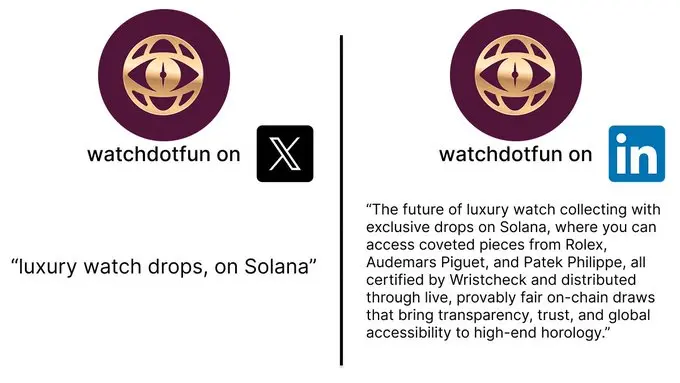
@watchdotfun has instead done something even lighter, hiding the act of making money within entertainment experiences.
On the user side, there is almost no barrier to participation—engaging with content, joining activities, or entering lotteries—all of these actions are the entry points.
The system behind the scenes accomplishes two things: recording your participation and converting that participation into rewards. This is the essence of watch to earn.
It’s not about making you work, but about ma
View Original
post-image
  • Reward
  • Comment
  • Repost
  • Share
On-chain users actually don't lack opportunities; they lack peace of mind.
@TermMaxFi compresses complex problems into a simple choice.
How long do you want? How much return do you want? Deposit assets, choose the term, lock in the interest rate, and leave the rest to the protocol.
The key to this experience is certainty: no need for repeated operations, no need for frequent adjustments, no need to monitor the market.
User perception is only one thing: time is flowing, and returns are accumulating.
This is not a product that stimulates trading; it is a product that encourages holding
View Original
post-image
  • Reward
  • Comment
  • Repost
  • Share
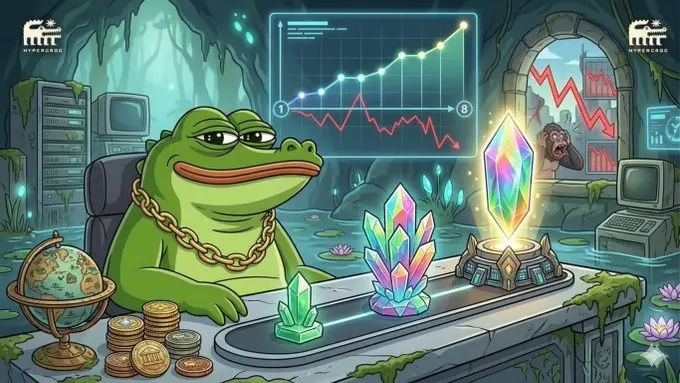
After observing @Hypercroc_xyz for a period of time, you'll find that its rhythm does not depend on market fluctuations but on participation density.
The core of the project is simple, building a revenue entry point around the Hyperliquid ecosystem, converting deposited assets into accumulative XP, and continuously stacking weights through NFTs and time dimensions.
This design essentially extends the user lifecycle.
What's more interesting is that it does not follow the traditional DeFi high-yield narrative but maintains activity through everyday mechanisms, such as point farming, commun
View Original
post-image
  • Reward
  • Comment
  • Repost
  • Share
In the past, when discussing blockchain infrastructure, the most talked-about aspects were performance, Gas fees, and consensus efficiency.
But as AI becomes the new technological mainline, this evaluation system has started to become a bit outdated.
The truly critical issue has shifted to a new dimension. Can the chain support data-intensive computing?
The value of @0G_labs begins to show here. Its proposed modular AI chain concept is essentially upgrading blockchain from a transaction network to a data network.
Traditional blockchain is more like a ledger system, where each transacti
0G1.18%
View Original
post-image
  • Reward
  • Comment
  • Repost
  • Share
If we view the on-chain world as a developing financial system, then stablecoins are its unit of account.
The special feature of @FIH_USD1 is that it attempts to make this unit closer to traditional financial standards.
Reserves mainly consist of US dollar deposits and government bonds, emphasizing full collateralization and convertibility, making it more suitable for supporting large-scale capital flows.
But more importantly, its positioning is not only to serve transactions but also to facilitate cross-border settlements and future RWA scenarios.
As stablecoins begin to enter real as
USD1-0.01%
View Original
post-image
  • Reward
  • Comment
  • Repost
  • Share
After observing for a period of time, you’ll find that @watchdotfun’s design approach is restrained, but very clear.
It doesn’t take a complex DeFi route; instead, it establishes a participation loop in the most direct way.
There are fixed weekly watch drops—tickets can be purchased or obtained through social tasks; the on-chain process is verifiable, and the results are open and transparent.
This is crucial—fairness is built into the system rather than relying on narratives.
The underlying supply chain is also standardized—for example, the watches are procured by partner(s), with auth
View Original
post-image
  • Reward
  • Comment
  • Repost
  • Share
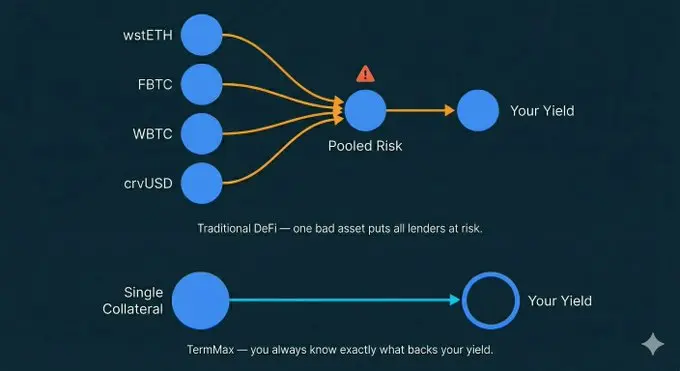
I've always believed that the biggest problem with DeFi is not low returns, but unpredictability.
@TermMaxFi specifically aims to address this issue.
It achieves this through fixed-term lending, allowing users to lock in their returns or costs at the outset, avoiding the risk of interest rate fluctuations caused by supply and demand in traditional lending protocols.
This design directly changes the way funds are used.
You no longer need to frequently rebalance your portfolio, nor do you need to monitor the interest rate curve; you only need to make a choice that is closer to traditiona
View Original
post-image
  • Reward
  • Comment
  • Repost
  • Share
If we observe @zksync within the evolution path of financial infrastructure, we find that it is closer to a network inflection point rather than a purely technological stage.
Historically, infrastructure has never been about perfecting functions first, but about forming connections first.
SWIFT addresses the transmission of information between banks, Visa solves the connectivity issues of payment networks.
Their commonality lies in that once connections reach scale, standards will in turn constrain participants.
ZKsync is experiencing a similar process, but the underlying trust shifts
ZK4.81%
ETH-1.63%
View Original
post-image
  • Reward
  • Comment
  • Repost
  • Share
  • Pin