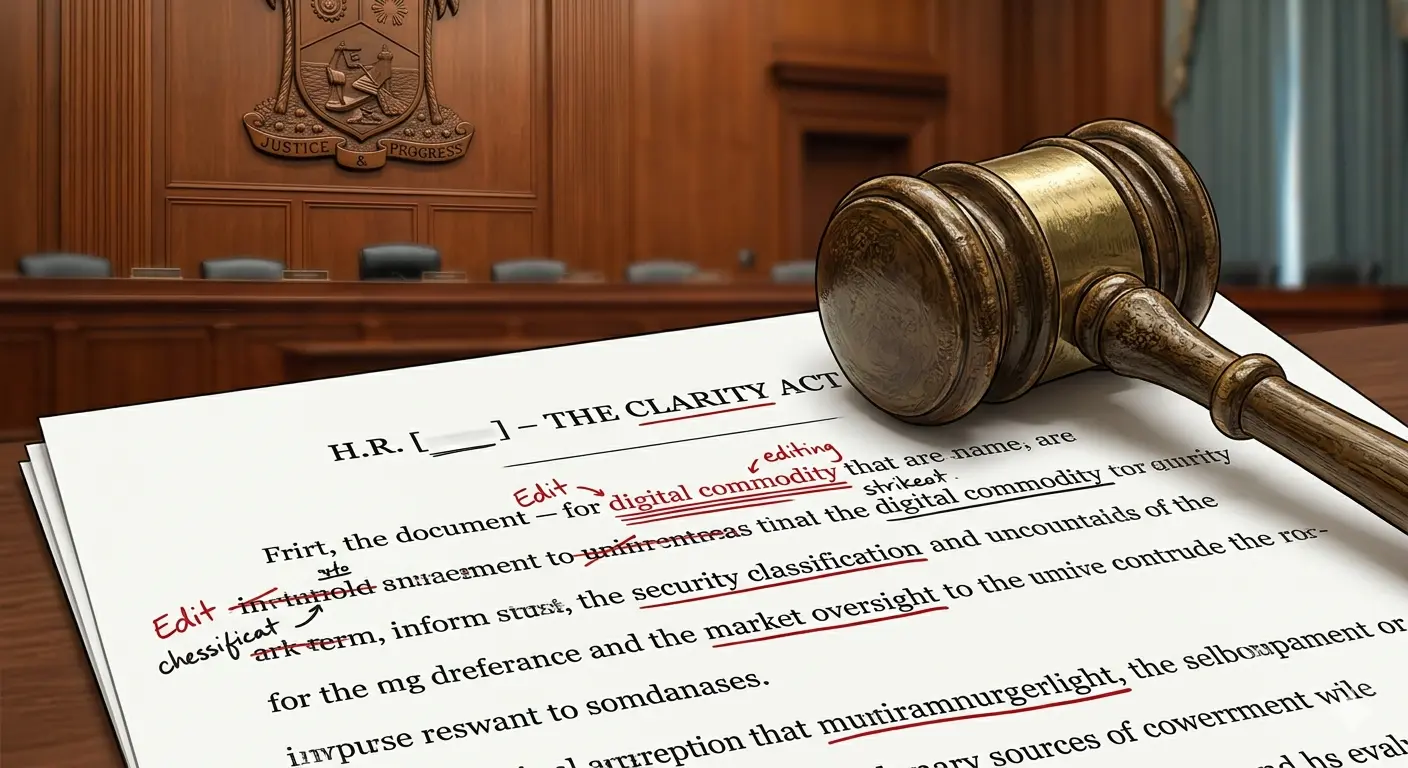
#CLARITYActHeadedForMarkup
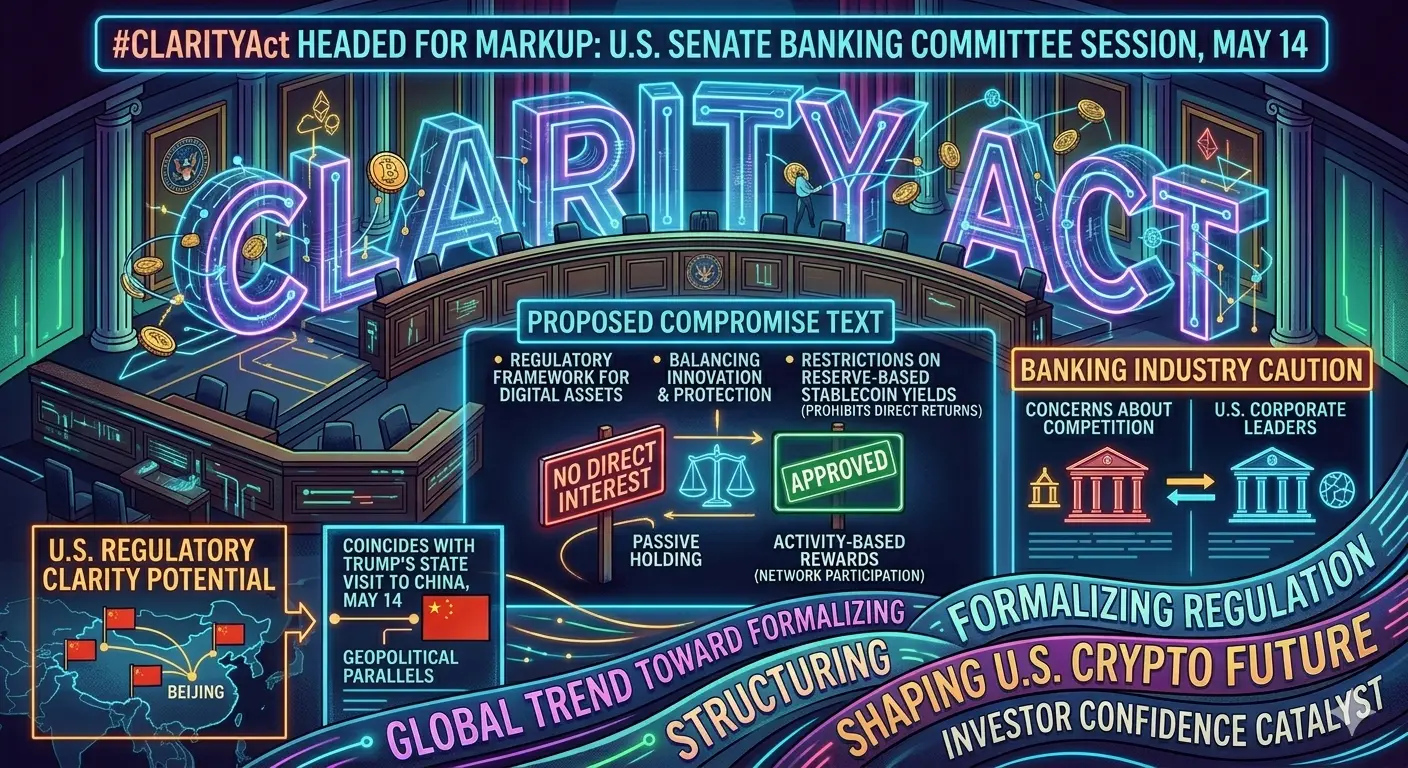
The U.S. Senate Banking Committee is preparing to hold a key markup session on the CLARITY Act compromise text on May 14, marking an important step forward in the ongoing effort to define a clearer regulatory framework for digital assets in the United States. This development comes after months of negotiations between lawmakers, regulators, and industry stakeholders, all of whom have been attempting to balance innovation in the crypto sector with consumer protection and financial stability concerns.
One of the most notable elements of the proposed compromise is the restriction on reserve-based stablecoin yields, which would prohibit issuers from offering direct interest-like returns simply for holding stablecoins. However, the bill still allows activity-based rewards, meaning users could potentially earn incentives tied to network participation or platform usage rather than passive holding. This distinction is designed to reduce systemic risks while still preserving innovation within crypto-based financial products.
The banking industry continues to express caution regarding the proposed framework. Traditional financial institutions have raised concerns about competition from stablecoin issuers and the potential for regulatory arbitrage if crypto firms operate under lighter constraints compared to banks. Despite this resistance, the legislative momentum suggests that lawmakers are increasingly willing to establish a formal structure for digital asset regulation rather than leaving the industry in prolonged uncertainty.
\text{Regulatory Momentum} = \text{Clarity Act Progress} + \text{Stablecoin Restrictions} - \text{Banking Resistance}
The timing of the markup is also politically and geopolitically significant. It coincides with the first day of President Trump’s state visit to China on May 14, a development that adds an additional layer of global attention to U.S. policy decisions. While the two events are unrelated in formal terms, their overlap highlights how financial regulation and international diplomacy are increasingly unfolding in parallel on the global stage.
For the crypto industry, the CLARITY Act is being closely watched as a potential turning point in U.S. regulatory clarity. One of the biggest challenges for digital asset markets over the past several years has been the lack of consistent legal definitions and regulatory guidance. This has created uncertainty for exchanges, stablecoin issuers, institutional investors, and developers building blockchain-based financial infrastructure.
If passed in a broadly acceptable form, the bill could provide clearer boundaries for how stablecoins operate within the U.S. financial system. This includes defining what types of yield mechanisms are permissible and how issuers must structure their reserves. Such clarity could help reduce regulatory risk and encourage greater institutional participation in crypto markets.
At the same time, the restriction on reserve-based yields reflects growing concern among policymakers about shadow banking risks within the stablecoin sector. Regulators are particularly cautious about products that resemble traditional savings accounts without being subject to the same oversight and insurance frameworks. The compromise attempt is therefore aimed at allowing innovation while preventing financial instability.
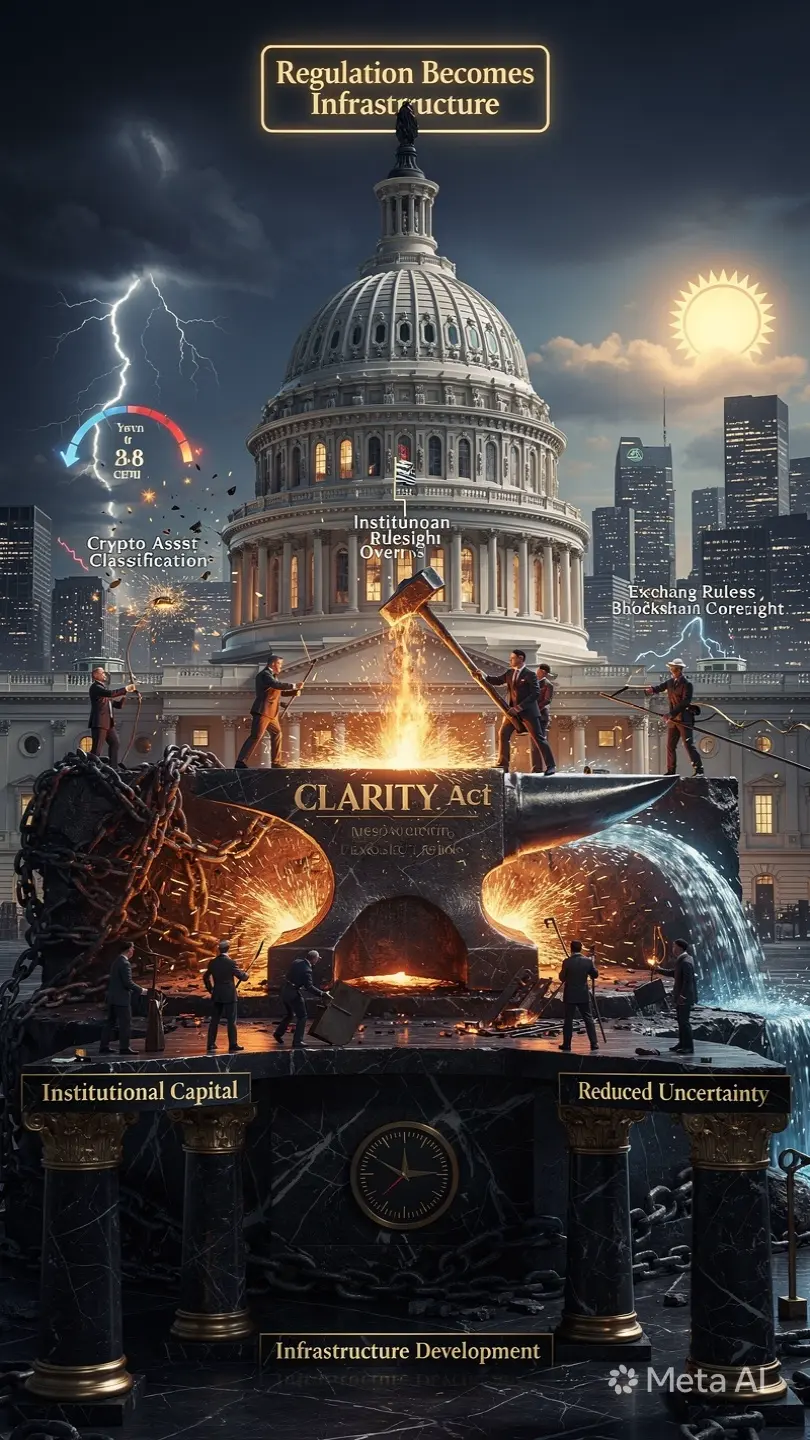
Market participants are also interpreting the legislative progress as a potential catalyst for increased confidence in digital assets. Regulatory clarity often plays a key role in attracting long-term capital, especially from institutions that require well-defined legal frameworks before entering new asset classes. As a result, developments surrounding the CLARITY Act are being closely monitored by both traditional finance and crypto-native firms.
However, the bill still faces political negotiation risks. While progress is evident, the banking lobby’s concerns could influence final amendments, particularly around competitive fairness and systemic risk protections. The outcome of these discussions will likely determine how expansive or restrictive the final version of the legislation becomes.
From a broader perspective, the CLARITY Act represents part of a larger global trend toward formalizing crypto regulation. As digital assets become more integrated into mainstream finance, governments are increasingly moving away from enforcement-based approaches toward structured regulatory frameworks. This shift reflects the reality that crypto is no longer a niche market but a growing component of global capital flows.
The overlap between regulatory developments in the United States and major geopolitical events, such as the U.S.–China diplomatic engagement, also highlights how interconnected financial policy has become with global macro strategy. Investors are increasingly treating regulatory clarity as a key driver of market sentiment alongside interest rates and liquidity conditions.
Overall, the upcoming markup of the CLARITY Act represents a significant step in shaping the future of U.S. crypto regulation. While the final outcome is still uncertain, the direction of travel is clear: policymakers are moving toward establishing a more defined structure for stablecoins and digital assets. If successful, this could mark one of the most important regulatory milestones for the crypto industry in recent years.
#GateSquareMayTradingShare
The U.S. Senate Banking Committee is preparing to hold a key markup session on the CLARITY Act compromise text on May 14, marking an important step forward in the ongoing effort to define a clearer regulatory framework for digital assets in the United States. This development comes after months of negotiations between lawmakers, regulators, and industry stakeholders, all of whom have been attempting to balance innovation in the crypto sector with consumer protection and financial stability concerns.
One of the most notable elements of the proposed compromise is the restriction on reserve-based stablecoin yields, which would prohibit issuers from offering direct interest-like returns simply for holding stablecoins. However, the bill still allows activity-based rewards, meaning users could potentially earn incentives tied to network participation or platform usage rather than passive holding. This distinction is designed to reduce systemic risks while still preserving innovation within crypto-based financial products.
The banking industry continues to express caution regarding the proposed framework. Traditional financial institutions have raised concerns about competition from stablecoin issuers and the potential for regulatory arbitrage if crypto firms operate under lighter constraints compared to banks. Despite this resistance, the legislative momentum suggests that lawmakers are increasingly willing to establish a formal structure for digital asset regulation rather than leaving the industry in prolonged uncertainty.
\text{Regulatory Momentum} = \text{Clarity Act Progress} + \text{Stablecoin Restrictions} - \text{Banking Resistance}
The timing of the markup is also politically and geopolitically significant. It coincides with the first day of President Trump’s state visit to China on May 14, a development that adds an additional layer of global attention to U.S. policy decisions. While the two events are unrelated in formal terms, their overlap highlights how financial regulation and international diplomacy are increasingly unfolding in parallel on the global stage.
For the crypto industry, the CLARITY Act is being closely watched as a potential turning point in U.S. regulatory clarity. One of the biggest challenges for digital asset markets over the past several years has been the lack of consistent legal definitions and regulatory guidance. This has created uncertainty for exchanges, stablecoin issuers, institutional investors, and developers building blockchain-based financial infrastructure.
If passed in a broadly acceptable form, the bill could provide clearer boundaries for how stablecoins operate within the U.S. financial system. This includes defining what types of yield mechanisms are permissible and how issuers must structure their reserves. Such clarity could help reduce regulatory risk and encourage greater institutional participation in crypto markets.
At the same time, the restriction on reserve-based yields reflects growing concern among policymakers about shadow banking risks within the stablecoin sector. Regulators are particularly cautious about products that resemble traditional savings accounts without being subject to the same oversight and insurance frameworks. The compromise attempt is therefore aimed at allowing innovation while preventing financial instability.
Market participants are also interpreting the legislative progress as a potential catalyst for increased confidence in digital assets. Regulatory clarity often plays a key role in attracting long-term capital, especially from institutions that require well-defined legal frameworks before entering new asset classes. As a result, developments surrounding the CLARITY Act are being closely monitored by both traditional finance and crypto-native firms.
However, the bill still faces political negotiation risks. While progress is evident, the banking lobby’s concerns could influence final amendments, particularly around competitive fairness and systemic risk protections. The outcome of these discussions will likely determine how expansive or restrictive the final version of the legislation becomes.
From a broader perspective, the CLARITY Act represents part of a larger global trend toward formalizing crypto regulation. As digital assets become more integrated into mainstream finance, governments are increasingly moving away from enforcement-based approaches toward structured regulatory frameworks. This shift reflects the reality that crypto is no longer a niche market but a growing component of global capital flows.
The overlap between regulatory developments in the United States and major geopolitical events, such as the U.S.–China diplomatic engagement, also highlights how interconnected financial policy has become with global macro strategy. Investors are increasingly treating regulatory clarity as a key driver of market sentiment alongside interest rates and liquidity conditions.
Overall, the upcoming markup of the CLARITY Act represents a significant step in shaping the future of U.S. crypto regulation. While the final outcome is still uncertain, the direction of travel is clear: policymakers are moving toward establishing a more defined structure for stablecoins and digital assets. If successful, this could mark one of the most important regulatory milestones for the crypto industry in recent years.
#GateSquareMayTradingShare