x402 Protocol: The Self-Paying Engine of the AI Economy

Beginner
Quick Reads
Last Updated 2026-03-28 04:39:23
Reading Time: 1m
x402 is an open protocol that allows AI, websites, and APIs to automate payments, transforming the isolated request-response model into a smart closed loop: request >> payment >> response.

Three-Decade-Old Code Awakens

In 1997, internet engineers introduced a mysterious status code to the HTTP standard: 402 Payment Required. Although it was designed as a gateway for future online payments, technological limitations kept it unused for nearly thirty years. In 2025, Coinbase, together with Cloudflare, Google, Visa, and other tech leaders, revived this code and gave it a new purpose. The x402 protocol isn’t a simple replica—it’s a foundational revolution for the internet, introducing a long-awaited payment protocol for AI, websites, and APIs.

What Is x402?

(Source: Coinbase)

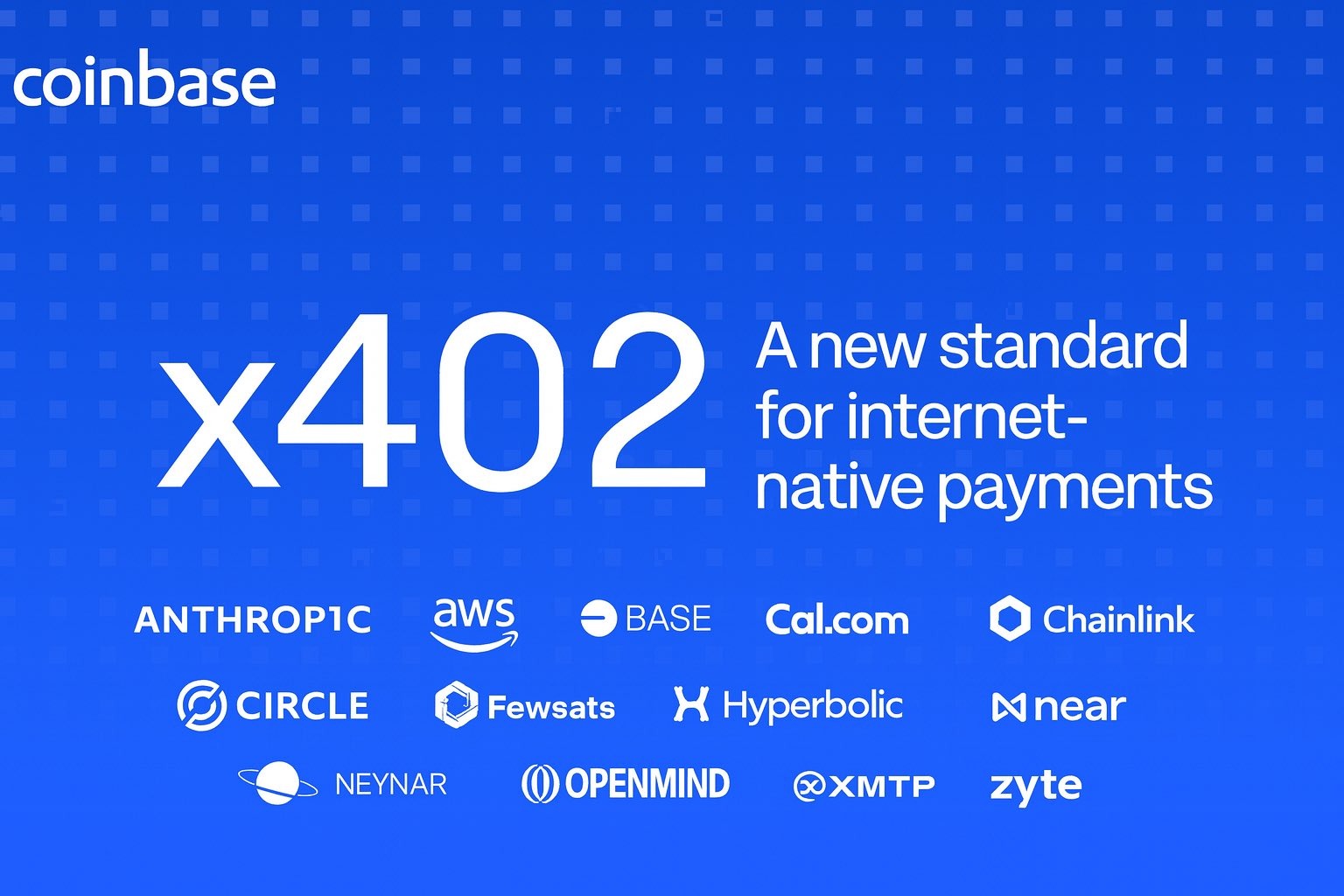
x402 is an open protocol that enables AI, websites, and APIs to execute payments automatically. It upgrades the traditional request → response model into an intelligent closed loop: request → payment → response.

When an AI or user accesses a paid service, the process works as follows:

  1. First, the server sends a prompt: This service costs $0.10 (USDC).
  2. The AI or client completes payment automatically.
  3. After payment, the requested service or data is delivered instantly.

No login, credit card binding, or manual intervention is needed. AI can independently choose to purchase data, access services, or initiate new tasks—a key step toward enabling AI-driven economic transactions.

Technical Core of x402

The x402 protocol does not reinvent the wheel; instead, it skillfully integrates existing technologies into a practical solution. Its architecture is built around three core layers:

  1. Native HTTP Support
    x402 operates directly atop the HTTP protocol, requiring no changes to the internet’s infrastructure. Any website, API, or AI agent supporting HTTP can seamlessly integrate payment capabilities.
  2. Payment Authorization Layer
    This module verifies payment authorization and transaction validity and facilitates on-chain settlement. For developers, integration is straightforward; no additional wallet or payment SDK is required.
  3. Blockchain Interface Layer
    While currently based on the Base chain, x402 supports multi-chain compatibility and cross-chain scalability. Future payments will not be restricted to any single blockchain.

Why Is x402 a Payment Revolution?

Traditional payment systems, like credit cards, are plagued by high fees, delays, and risk:

  • Typical transaction fees are around $0.30 plus 3% per transaction
  • Settlement can take several days
  • Chargeback risks can last up to 120 days

By contrast, x402 transactions on the Base chain cost as little as $0.0001, with final settlement occurring in roughly two seconds. These transactions are irreversible and free from fraud risks, making x402 the ideal solution for micropayments and real-time transactions between AI agents—especially for small data exchanges or API calls between AI agents.

x402 Use Cases

x402 gives AI genuine autonomy and transactional capabilities. Consider these scenarios:

  • AI autonomously purchases paid news articles for research
  • Smart assistants pay small API fees to perform instant tasks
  • Automated agents exchange data and instantly settle payments with each other

These transactions do not require user credit card input or third-party payment gateways. With x402, payments are built into the internet itself, rather than being an external add-on.

To learn more about Web3, register at: https://www.gate.com/

Summary

x402 is more than a technical breakthrough—it’s a historic milestone. Thirty years ago, engineers left the 402 status code dormant; now, it marks the start of collaboration between AI, Web3, and online payments. In the digital future, AIs, APIs, and users will all have the freedom to create, exchange, and deliver value.

Author: Allen
Disclaimer
* The information is not intended to be and does not constitute financial advice or any other recommendation of any sort offered or endorsed by Gate.
* This article may not be reproduced, transmitted or copied without referencing Gate. Contravention is an infringement of Copyright Act and may be subject to legal action.

Related Articles

AI-Native Settlement Layers: How United Stables Is Building the Next Financial Rail
Beginner

AI-Native Settlement Layers: How United Stables Is Building the Next Financial Rail

Stablecoins were originally designed as dollar substitutes within exchanges, primarily used for asset pricing and trade settlement. As on-chain financial ecosystems have matured, their role has expanded beyond simple payments to include collateral assets, cross-chain liquidity mediums, and unified settlement units. In particular, as AI systems and automated agents begin to participate directly in economic activity, demand has risen sharply for programmable value units capable of instant settlement. This shift is pushing stablecoins toward the role of foundational financial infrastructure.
2026-03-25 03:16:17
DePIN Identity Network and Real World Applications: How Humanity Protocol Brings on-chain Identity Into the Physical World
Beginner

DePIN Identity Network and Real World Applications: How Humanity Protocol Brings on-chain Identity Into the Physical World

Most Web3 identity systems remain confined to on-chain environments and struggle to achieve meaningful adoption in real world settings. Through a DePIN architecture and physical verification hardware, Humanity Protocol aims to bring decentralized identity into access control systems, hospitality, public services, and offline events, allowing on-chain identity to function not just as a digital credential, but as foundational infrastructure for real world access.
2026-03-25 07:40:53
Gold Price Forecast for the Next Five Years: 2026–2030 Trend Outlook and Investment Implications, Could It Reach $6,000?
Beginner

Gold Price Forecast for the Next Five Years: 2026–2030 Trend Outlook and Investment Implications, Could It Reach $6,000?

Analyze current gold price trends alongside authoritative five-year forecasts, integrating an evaluation of market risks and opportunities. This gives investors insight into the potential trajectory of gold prices and the main drivers expected to shape the market over the next five years.
2026-03-25 18:13:30
Aster vs Hyperliquid: Which Perp DEX Will Prevail?
Beginner

Aster vs Hyperliquid: Which Perp DEX Will Prevail?

Aster and Hyperliquid are the two representative protocols of the "purpose-built L1 path" within the current decentralized perpetual exchange (Perp DEX) sector. As a pioneer in the field, Hyperliquid has built a deep liquidity moat through its highly mature order book architecture and strong community consensus. Conversely, Aster, as a rising challenger, seeks to leapfrog the competition in high-performance trading through more aggressive multi-chain aggregation logic, private transaction modules, and an underlying execution environment optimized for 2026 market demands.
2026-03-24 11:58:33
Aerodrome Tokenomics: How ve(3,3) Powers Base's Most Profitable DEX
Beginner

Aerodrome Tokenomics: How ve(3,3) Powers Base's Most Profitable DEX

AERO is the native token of Aerodrome Finance, a core decentralized exchange and liquidity protocol in the Base ecosystem. It is primarily used for liquidity incentives and ecosystem operations. veAERO is a governance NFT that users receive by locking AERO, representing both voting power and the right to share protocol revenue. Through a dual track structure of AERO as a utility token and veAERO as a governance credential, Aerodrome separates liquidity usage value from long term governance power, allowing participants to act as liquidity providers, governance decision makers, and revenue sharers within the same system.
2026-03-25 06:40:31
The ve(3,3) Flywheel Explained: How AERO Tokenomics Powers Aerodrome’s DeFi Economy
Beginner

The ve(3,3) Flywheel Explained: How AERO Tokenomics Powers Aerodrome’s DeFi Economy

In the competition for DeFi liquidity, high-inflation mining alone is no longer enough to build lasting advantages. Aerodrome applies the ve(3,3) economic model to redesign token emissions, voting mechanisms, and revenue distribution, creating a liquidity flywheel centered on governance and cash flow. This article examines AERO tokenomics, the veAERO locking mechanism, and protocol revenue models to explain how Aerodrome builds a sustainable DeFi economic system.
2026-03-25 06:41:58





