The stock market just erased $800 billion in value, as “AI taking over the world” becomes a widely accepted consensus. This view is so obvious that trades based on what’s “obvious” rarely succeed.
This doomsday scenario spreads because it taps into deep instincts. It frames AI not as a productivity tool, but as a macroeconomic destabilizer—triggering a negative feedback loop: layoffs reduce consumption, reduced consumption drives more automation, and automation accelerates further layoffs.
The clear reality is that AI isn’t just another software feature or efficiency booster. It’s a sweeping capability shock, simultaneously impacting every white-collar workflow. Unlike any previous revolution, AI is becoming adept at “everything” all at once.
But what if the doomsday scenario is flawed? It assumes demand is fixed, productivity gains don’t expand markets, and adaptation can’t outpace disruption.
We believe there’s an alternative path that’s severely underestimated. Signs that look like early systemic collapse—such as Anthropic “takedowns”—may actually signal the start of the largest productivity expansion in history.
Before diving in, bookmark this article and revisit it over the next 12 months. While the following analysis isn’t inevitable, it’s crucial to remember humanity always finds ways to recover—and free markets consistently self-correct.
Anthropic “Takedowns” Are Real
First, we can’t ignore the market. Anthropic is disrupting the world through Claude, and Fortune 500 companies have lost hundreds of billions in market value.
This story has played out several times already in 2026: Anthropic launches a new AI tool, Claude makes significant advances in programming and workflow automation, and within hours, the target industry’s market collapses.
If you haven’t been following, here are some examples:
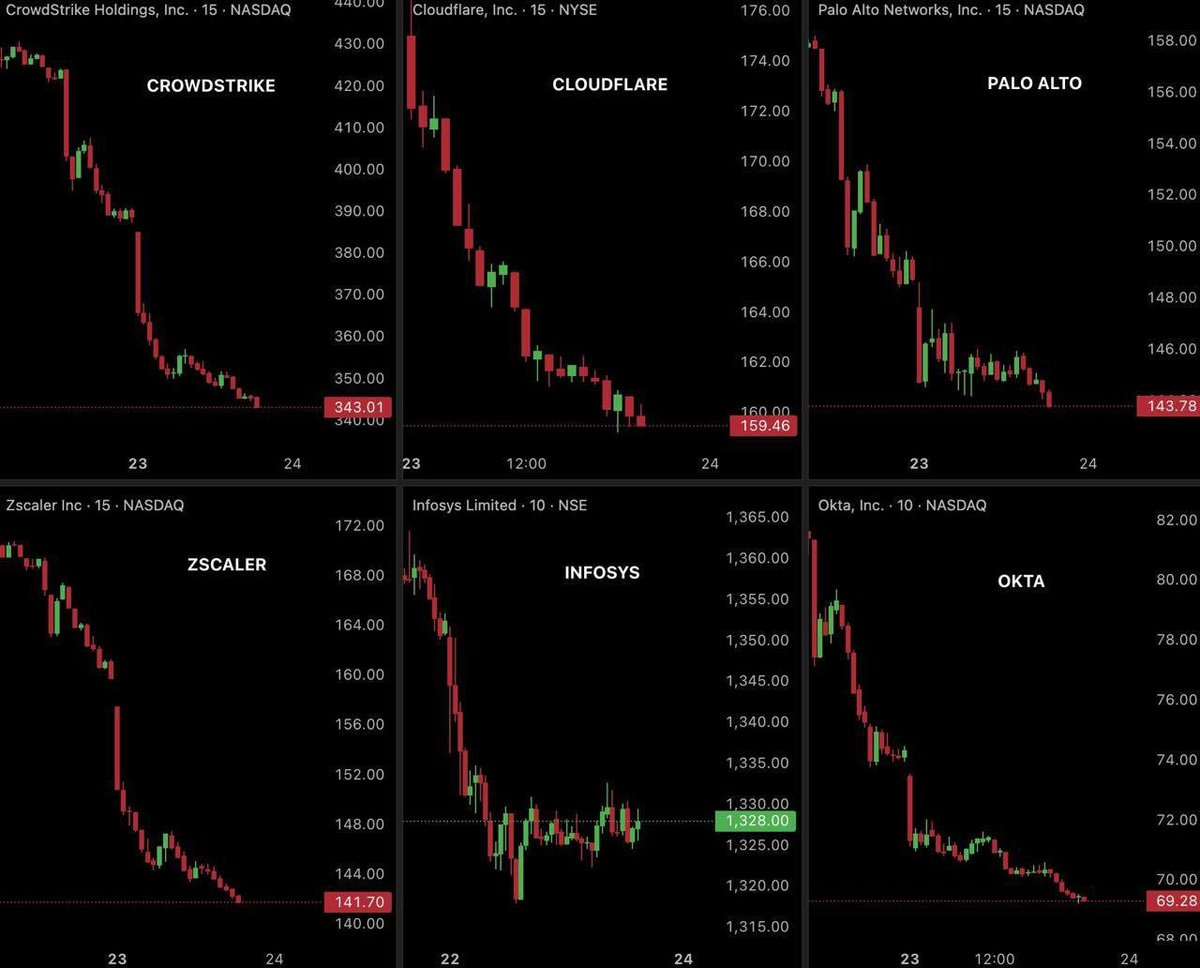
Stock reactions to Claude announcements
- IBM ($IBM) just had its worst day since October 2000 after Anthropic announced Claude can simplify COBOL code.
- Adobe ($ADBE) is down 30% year-to-date as generative AI compresses creative workflows.
- The cybersecurity sector collapsed after “Claude Code Security” launched.
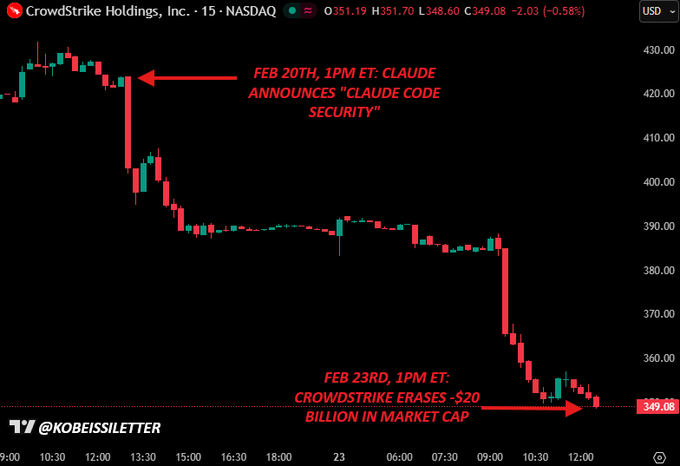
In the examples above, CrowdStrike ($CRWD) shares plummeted almost immediately after Claude announced “Claude Code Security.”
At 1:00 PM ET on February 20, Claude launched “Claude Code Security,” an automated AI tool that scans codebases for vulnerabilities.
Just two trading days later, CrowdStrike ($CRWD) lost $20 billion in market value after the announcement.
These reactions aren’t irrational. The market is pricing in real-time profit compression. When AI replicates workers’ tasks, pricing power shifts to buyers. This is a direct and very real impact.
Commoditization isn’t collapse. It’s how technology reduces costs and broadens access—PCs commoditized computing, the internet commoditized distribution, the cloud commoditized infrastructure, and AI is commoditizing cognition.
Traditional workflows will undoubtedly see margin compression. The real question is whether lower cognitive costs trigger economic collapse or enable explosive expansion.
The “Doom Loop” Assumes Demand Is Fixed
Bears create a simplified linear model: AI improves, companies cut jobs and wages, purchasing power declines, companies invest in AI again to protect profits, and the cycle repeats. This assumes a stagnant economy.
History proves otherwise. When production costs collapse, demand rarely stays flat—it expands. As computing costs fell, we didn’t just consume the same computing at lower prices. We consumed exponentially more and built entirely new industries.
As shown below, today’s PCs are 99.9% cheaper than they were in 1980.
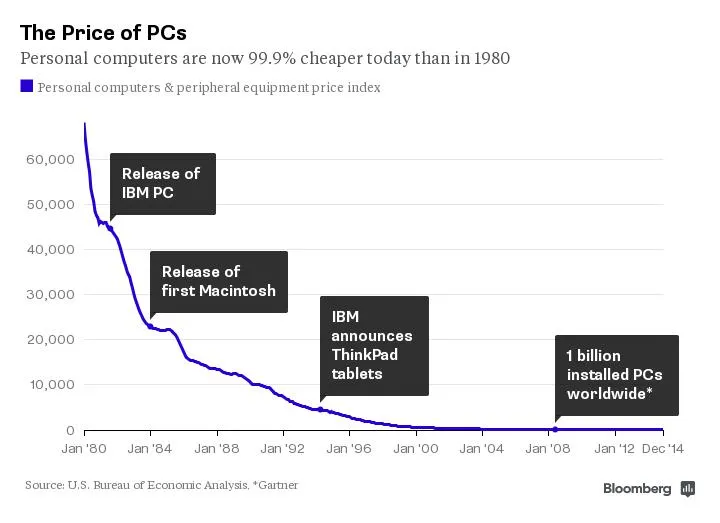
Caption: PC price trends, 1980–2015
AI reduces costs across every industry, and when service costs drop, purchasing power rises regardless of wage growth.
The doom loop only dominates if AI replaces labor without materially expanding demand. If cheap computing and productivity create new categories of consumption and economic activity, optimism prevails.
The Real Shock Is Price Collapse, Not Unemployment
It’s easier for investors to sell the “obvious” layoff narrative, but the price compression happening in the service sector is the bigger story. Knowledge work is expensive because knowledge is scarce—a simple but true fact. When knowledge becomes abundant, prices for knowledge work fall.
Consider medical administration, legal documentation, tax filing, compliance checks, marketing production, basic programming, customer service, and educational tutoring. These services absorb massive economic resources because they require trained human attention. AI reduces the marginal cost of this attention.
As shown below, the US service sector contributes nearly 80% of US GDP.
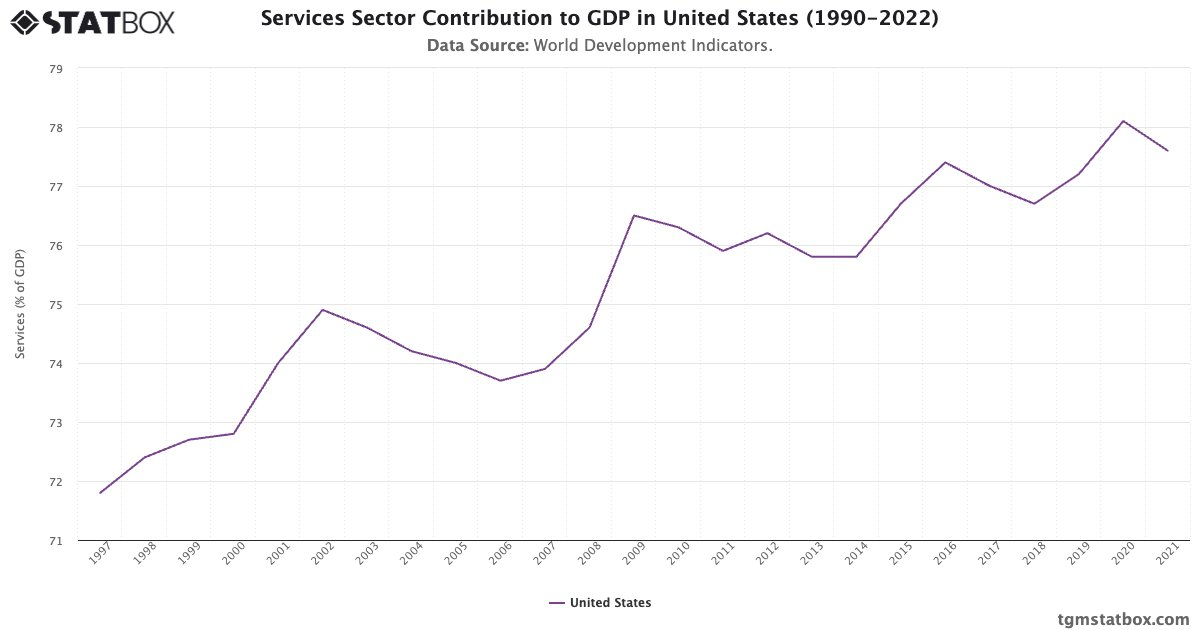
If operating costs fall, small businesses become more accessible; if service costs drop, more households participate. In many ways, AI’s progress acts as an “invisible” tax cut.
Companies relying on high-cost cognitive labor may take a hit, but the broader economy benefits from lower service inflation and higher real purchasing power.
From “Ghost GDP” to “Abundance GDP”
Bears’ arguments hinge on “Ghost GDP”—output visible in data but not benefiting households. The optimistic counterpoint is “Abundance GDP,” where output growth combines with lower living costs.
“Abundance GDP” doesn’t require nominal incomes to soar; it requires prices to fall faster than incomes. If AI lowers essential service costs for many, even with slower wage growth, real gains increase. Productivity improvements don’t vanish—they’re passed through via lower prices.
This may explain why productivity has outpaced wage growth for over 70 years:
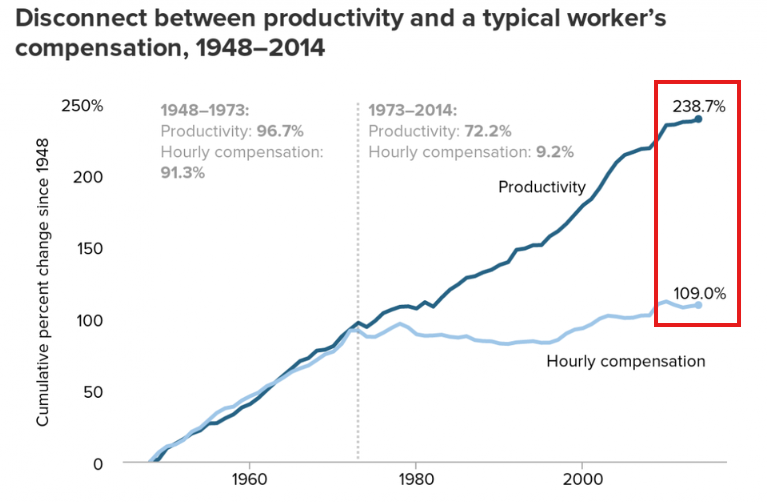
The internet, electricity, mass manufacturing, and antibiotics all expanded output and lowered costs, despite disruptive and volatile transitions. In hindsight, these changes permanently improved living standards.
A society that spends less time navigating complex systems and paying for redundant services becomes functionally wealthier.
Labor Markets Are Restructuring, Not Disappearing
A core concern is that AI disproportionately impacts white-collar jobs, which drive discretionary spending and housing demand. This is true and reasonable, especially given the large wealth gap.
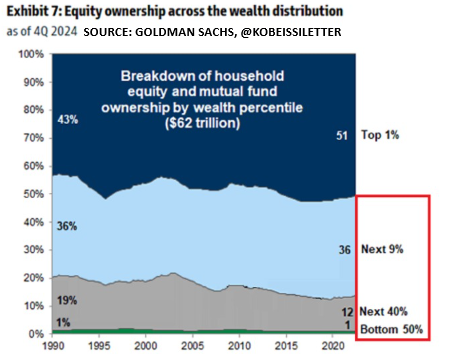
However, AI faces bigger challenges in physical dexterity and human identity. Skilled trades, hands-on healthcare, advanced manufacturing, and experience-driven industries maintain structural demand. Often, AI complements rather than replaces these roles.
More importantly, AI lowers the entrepreneurial barrier. When accounting, marketing, support, and programming can be automated, starting a small business is easier. We’re optimistic about small enterprises.
In fact, AI’s removal of entry barriers may help address today’s wealth gap.
The internet eliminated some job categories but created new ones. AI may follow a similar pattern—compressing certain white-collar functions while expanding self-directed economic participation elsewhere.
Continuing with the modular compilation of Part 3 (final section). This section examines the evolution of SaaS business models, AI’s reshaping of market structure, real productivity data, and an overlooked angle: how AI-driven abundance may reduce global conflict.
The “Death” of SaaS Narrative
AI is clearly pressuring traditional SaaS (Software as a Service) business models. Procurement teams negotiate harder, and some long-tail software products face structural challenges. But SaaS is just a delivery mechanism—not the final destination for value creation.
The next generation of software will be adaptive, agent-driven, outcome-based, and deeply integrated. Winners won’t be static tool providers, but those who adapt best to change.
Each technological shift rearranges the stack, and companies pricing static workflows will struggle. Those with data, trust, compute, energy, and validation may thrive.
Margin compression at one layer doesn’t mean the digital economy collapses—it signals transformation.
AI Business Restructures Markets
Bears argue agentic commerce will destroy intermediaries and eliminate fees. To some extent, that’s true. As friction decreases, extracting fees gets harder.
As shown below, even before AI reached its current state, stablecoin trading volumes were surging. Why? Markets always favor efficiency.
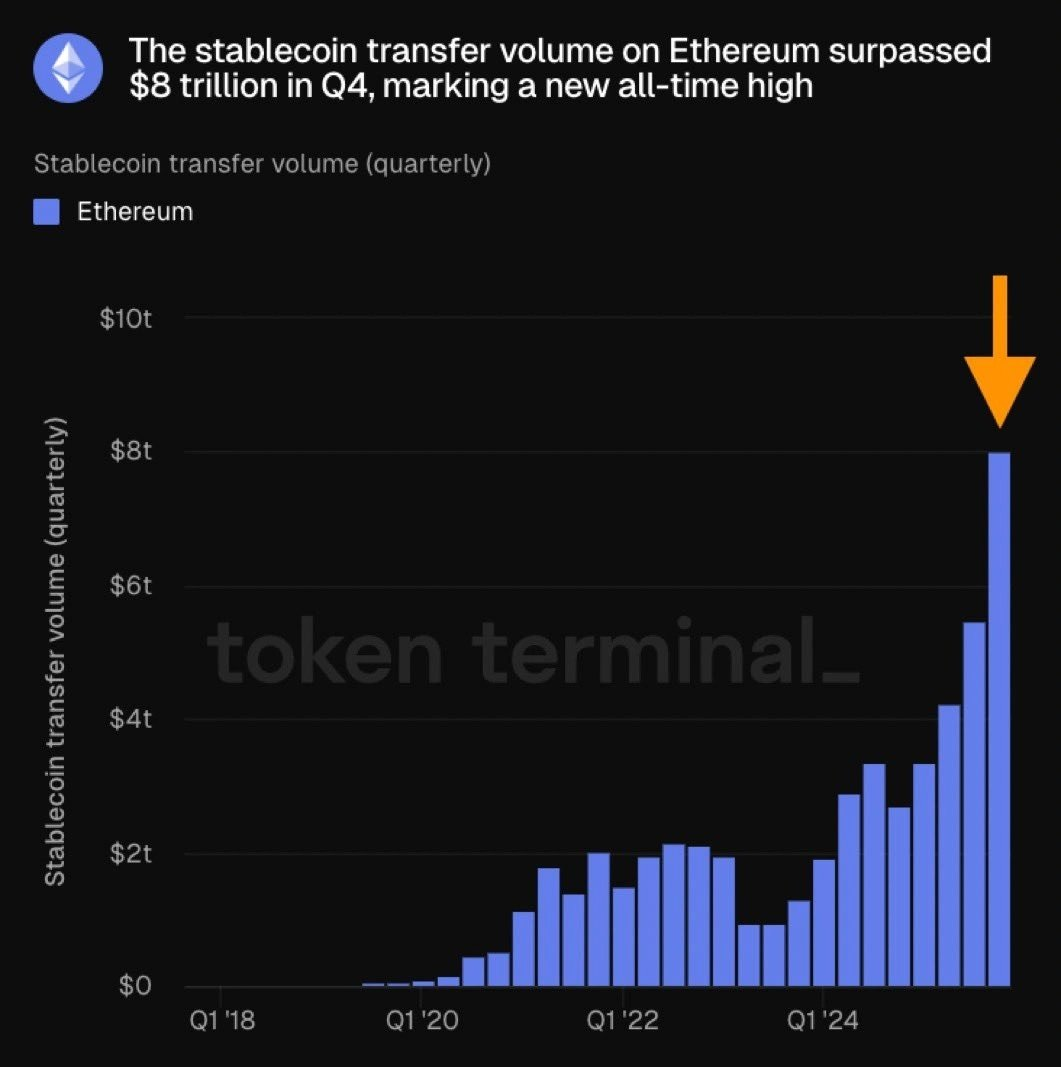
Lower systemic friction expands transaction volume. When price discovery improves and transaction costs drop, more economic activity happens. This is a bullish trend.
Agents acting for consumers may compress platform profits built on “habit,” but they can simultaneously boost demand by reducing search costs and increasing efficiency.
Productivity Is the Key Variable
Ultimately, productivity determines optimistic outcomes. If AI delivers sustained gains in healthcare, government, logistics, manufacturing, and energy optimization, humanity benefits and barriers to entry fall.
Even sustained 1–2% productivity growth creates massive compounding effects over a decade.
AI-driven macroeconomic shifts have already produced some of the best investment opportunities in history. This is the area we’ve spent countless hours studying and staying ahead of.
As shown below, productivity is already accelerating under AI’s influence. In Q3 2025, US labor productivity growth hit its strongest pace in two years:
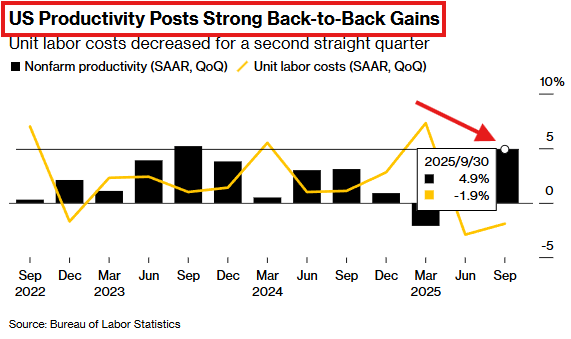
Pessimists assume productivity gains flow entirely to AI model builders and don’t translate into broader benefits. Optimists believe price compression and new markets will distribute gains more widely.
Abundance Reduces Conflict, Not Just Costs
One of the least discussed impacts of AI-driven abundance is geopolitics. For much of modern history, wars were fought over scarce resources: energy, food, trade routes, industrial capacity, labor, and technology. When resources are limited and growth feels zero-sum, nations compete. Abundance changes everything.
If AI materially lowers production costs for energy, manufacturing design, logistics, and services, the global economic pie grows. As productivity rises and marginal costs fall, economic growth becomes less dependent on taking advantage from others. This could end wars and usher in the most peaceful era in human history.
The same applies to economic wars—like the year-long trade war we’re currently experiencing.
Tariffs are tools for protecting domestic industries from cost competition in a resource-constrained world. But if AI collapses production costs everywhere, why do we need tariffs? In a high-abundance environment, protectionism becomes economically inefficient.
Historically, periods of rapid technological advancement tend to reduce global conflict. Post–World War II industrial expansion lessened the incentive for major powers to confront each other directly.
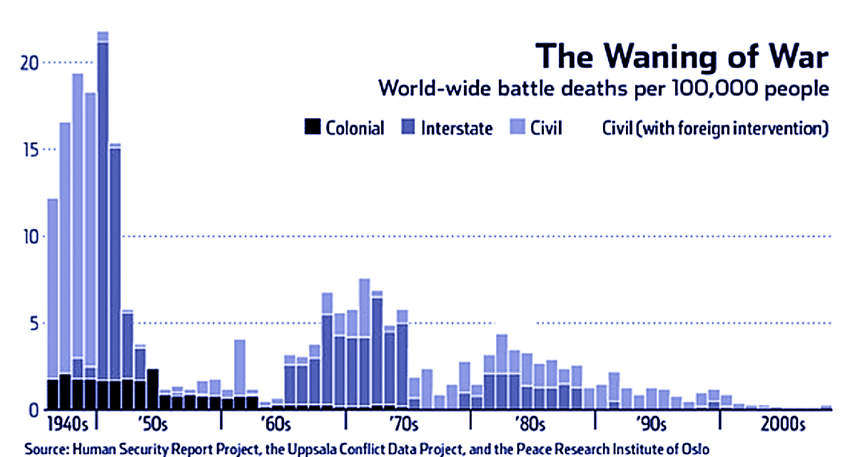
AI-driven abundance may accelerate this dynamic. If energy management is more efficient, supply chains are more resilient, and production is localized via automation, nations become less vulnerable. As economic security rises, geopolitical aggression becomes less rational.
The most optimistic AI outcome isn’t just higher productivity or stock indexes—it’s a world where economic growth is no longer zero-sum.
Conclusion: What If the World Doesn’t End?
AI amplifies outcomes. If institutions fail to adapt, it magnifies vulnerabilities; if productivity outpaces disruption, it magnifies prosperity.
Anthropic “takedowns” are signals that workflows are being repriced and cognitive labor is becoming cheap—a clear transformation.
But transformation isn’t collapse. Every major technological revolution seemed disruptive at its outset.
The most underestimated possibility today isn’t utopia—it’s abundance. AI may compress rents, reduce friction, and restructure labor markets, but it could also deliver the largest real productivity expansion in modern history.
The difference between a “global intelligence crisis” and “global intelligence boom” is not capability, but adaptation.
And the world always finds ways to adapt.
Ultimately, those who stay objective and follow process during times of volatility are entering the best trading environment in history.
Disclaimer:
- This article is reprinted from [TechFlow], with copyright belonging to the original author [The Kobeissi Letter]. If you have concerns about this reprint, please contact the Gate Learn team, who will address them promptly according to relevant procedures.
- Disclaimer: The views and opinions expressed in this article are solely those of the author and do not constitute investment advice.
- Other language versions are translated by the Gate Learn team. Without reference to Gate, reproduction, distribution, or plagiarism of translated articles is prohibited.