Secure Integration of TradFi and Crypto: New Opportunities and Challenges for Financial Security in 2026

Beginner
Quick Reads
Last Updated 2026-03-25 23:44:37
Reading Time: 1m
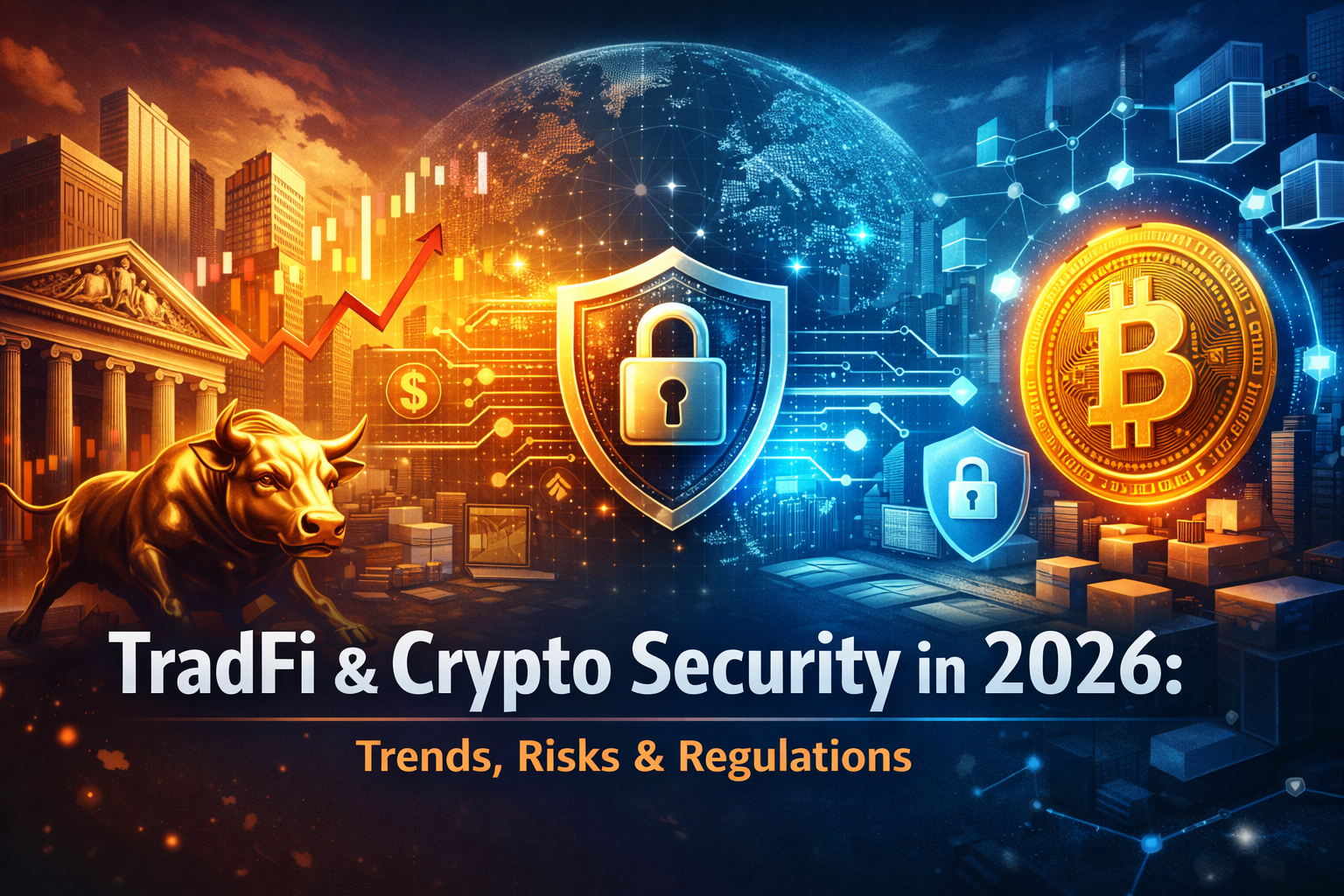
In 2026, secure integration between TradFi and crypto is gaining momentum. Stricter regulatory oversight and advancing technology are fueling innovation in traditional financial encryption security. This article examines the latest policies, market trends, and security risks.

The Era of Secure Integration Between TradFi and Crypto

As the cryptocurrency market matures, more traditional financial institutions are adopting blockchain technology. For instance, major financial firms have launched tokenized deposit solutions, driving asset tokenization and expanding institutional investment opportunities. Simultaneously, leading crypto exchanges and financial institutions have introduced integrated products—such as TradFi offerings that blend traditional assets like precious metals with crypto derivatives—creating diverse entry points for investors.

These developments not only highlight the accelerating convergence of TradFi and Crypto, but also bring traditional financial encryption and security requirements to the forefront. When traditional financial assets and blockchain systems share core infrastructure, security risks become cross-domain, demanding the parallel evolution of new security solutions and regulatory frameworks.

The Impact of Recent Policies and Regulation on TradFi Crypto Security

In early 2026, regulators worldwide are advancing new policies to strengthen oversight of crypto transactions, fund flows, and security standards. India’s FIU has rolled out stricter KYC and anti-money laundering (AML) requirements, including live selfie and geo-tagged identity verification to curb illegal activity and enhance on-chain security.

In Europe, as MiCA regulations near implementation, French financial authorities have noted that some crypto companies lack proper licenses, raising compliance and security standards across the blockchain sector.

These regulatory upgrades are designed not only to standardize the market, but also to directly shape the security boundaries between TradFi and Crypto. Only by strictly meeting compliance requirements can institutions build reliable bridges for trading and settlement between traditional finance and crypto assets.

Market Trends: Where Traditional Financial Institutions Meet Crypto Technology

From a market perspective, banks and financial institutions are accelerating their adoption of blockchain technology. BNY Financial has launched tokenized deposit services, offering institutional clients flexible and secure asset management solutions. Exchanges like Binance now provide perpetual contracts for traditional assets, enabling investors to trade gold and silver around the clock.

These products essentially integrate crypto liquidity with established risk management structures, but they also introduce new security challenges. Institutions must ensure robust protection for on-chain asset private keys, trade matching, and clearing systems—especially when handling large-scale institutional funds.

Technical Perspective: Advancing TradFi Crypto Security

Technically, traditional perimeter-based security models can no longer meet the demands of the evolving financial ecosystem. Blockchain and FinTech security frameworks are shifting toward zero trust architectures, multi-factor authentication, and distributed key management—each playing a critical role in strengthening TradFi Crypto security.

For example, smart contracts can enforce access control policies, while on-chain auditing and cross-chain verification significantly boost system defenses against internal threats and external attacks.

Future Trends and Investor Security Strategies

Looking ahead to 2026 and beyond, the landscape of traditional financial encryption security will be shaped by several key factors:

  • Greater regulatory clarity: As MiCA and similar global regulations advance, security compliance will become the gateway for institutional participation in crypto markets.
  • Standardization of technology: Industry-wide collaboration is driving cross-chain security protocols and audit mechanisms to become standard practice.
  • Growth of institutional-grade security solutions: Services such as cold wallet custody and smart contract audits are becoming integral to mainstream institutional offerings.

For individual investors, understanding the fundamentals of TradFi Crypto security and adopting the following strategies is essential:

  • Choose compliant exchanges and custody services;
  • Regularly back up private keys and implement layered asset management;
  • Stay alert to security vulnerabilities and scams.

In summary, secure integration between TradFi and Crypto is not just a technical challenge—it’s the result of evolving regulation, market dynamics, and risk management practices. In a rapidly changing financial landscape, prioritizing security is key to embracing the future.

Author: Max
Disclaimer
* The information is not intended to be and does not constitute financial advice or any other recommendation of any sort offered or endorsed by Gate.
* This article may not be reproduced, transmitted or copied without referencing Gate. Contravention is an infringement of Copyright Act and may be subject to legal action.

Related Articles

AI-Native Settlement Layers: How United Stables Is Building the Next Financial Rail
Beginner

AI-Native Settlement Layers: How United Stables Is Building the Next Financial Rail

Stablecoins were originally designed as dollar substitutes within exchanges, primarily used for asset pricing and trade settlement. As on-chain financial ecosystems have matured, their role has expanded beyond simple payments to include collateral assets, cross-chain liquidity mediums, and unified settlement units. In particular, as AI systems and automated agents begin to participate directly in economic activity, demand has risen sharply for programmable value units capable of instant settlement. This shift is pushing stablecoins toward the role of foundational financial infrastructure.
2026-03-25 03:16:17
DePIN Identity Network and Real World Applications: How Humanity Protocol Brings on-chain Identity Into the Physical World
Beginner

DePIN Identity Network and Real World Applications: How Humanity Protocol Brings on-chain Identity Into the Physical World

Most Web3 identity systems remain confined to on-chain environments and struggle to achieve meaningful adoption in real world settings. Through a DePIN architecture and physical verification hardware, Humanity Protocol aims to bring decentralized identity into access control systems, hospitality, public services, and offline events, allowing on-chain identity to function not just as a digital credential, but as foundational infrastructure for real world access.
2026-03-25 07:40:53
Gold Price Forecast for the Next Five Years: 2026–2030 Trend Outlook and Investment Implications, Could It Reach $6,000?
Beginner

Gold Price Forecast for the Next Five Years: 2026–2030 Trend Outlook and Investment Implications, Could It Reach $6,000?

Analyze current gold price trends alongside authoritative five-year forecasts, integrating an evaluation of market risks and opportunities. This gives investors insight into the potential trajectory of gold prices and the main drivers expected to shape the market over the next five years.
2026-03-25 18:13:30
Aster vs Hyperliquid: Which Perp DEX Will Prevail?
Beginner

Aster vs Hyperliquid: Which Perp DEX Will Prevail?

Aster and Hyperliquid are the two representative protocols of the "purpose-built L1 path" within the current decentralized perpetual exchange (Perp DEX) sector. As a pioneer in the field, Hyperliquid has built a deep liquidity moat through its highly mature order book architecture and strong community consensus. Conversely, Aster, as a rising challenger, seeks to leapfrog the competition in high-performance trading through more aggressive multi-chain aggregation logic, private transaction modules, and an underlying execution environment optimized for 2026 market demands.
2026-03-24 11:58:33
Aerodrome Tokenomics: How ve(3,3) Powers Base's Most Profitable DEX
Beginner

Aerodrome Tokenomics: How ve(3,3) Powers Base's Most Profitable DEX

AERO is the native token of Aerodrome Finance, a core decentralized exchange and liquidity protocol in the Base ecosystem. It is primarily used for liquidity incentives and ecosystem operations. veAERO is a governance NFT that users receive by locking AERO, representing both voting power and the right to share protocol revenue. Through a dual track structure of AERO as a utility token and veAERO as a governance credential, Aerodrome separates liquidity usage value from long term governance power, allowing participants to act as liquidity providers, governance decision makers, and revenue sharers within the same system.
2026-03-25 06:40:31
The ve(3,3) Flywheel Explained: How AERO Tokenomics Powers Aerodrome’s DeFi Economy
Beginner

The ve(3,3) Flywheel Explained: How AERO Tokenomics Powers Aerodrome’s DeFi Economy

In the competition for DeFi liquidity, high-inflation mining alone is no longer enough to build lasting advantages. Aerodrome applies the ve(3,3) economic model to redesign token emissions, voting mechanisms, and revenue distribution, creating a liquidity flywheel centered on governance and cash flow. This article examines AERO tokenomics, the veAERO locking mechanism, and protocol revenue models to explain how Aerodrome builds a sustainable DeFi economic system.
2026-03-25 06:41:58





