У міру розвитку децентралізованих фінансів у секторі деривативів торгові системи мають поєднувати високочастотне зіставлення, низьку затримку та безпеку на блокчейні. Повністю ончейн-моделі забезпечують прозорість, але їх обмежують продуктивність і вартість, що стимулює появу гібридних торгових архітектур.
У цьому контексті edgeX вирізняється як представник Perp DEX-рішення. Відокремлюючи процес зіставлення від блокчейна, але зберігаючи ончейн-розрахунки та зберігання активів, edgeX пропонує торгову модель, що поєднує ефективність і перевірюваність. Такий підхід стає фундаментальною тенденцією у побудові інфраструктури децентралізованої торгівлі деривативами.
Огляд роботи edgeX: як завершується торгівля
Типова торгівля на edgeX проходить шість етапів:
- Створення ордера: Користувач визначає ціну, кількість і кредитне плече, після чого підписує операцію у гаманці.
- Надсилання ордера: Ордер спрямовується до офчейн-системи зіставлення, а не безпосередньо в блокчейн.
- Зіставлення ордерів: Механізм зіставлення парує ордери на купівлю та продаж за пріоритетом ціни й часу.
- Підтвердження торгівлі: Система формує історію торгівлі та оновлює статус позиції користувача.
- Розрахунок ризику: Обчислюються маржа, нереалізований PnL і ризик ліквідації.
- Ончейн-розрахунок: Результати передаються у смарт-контракт для переказу коштів і фінального підтвердження.
Ця гібридна модель — офчейн-зіставлення разом із ончейн-розрахунком — дозволяє edgeX забезпечувати ефективність торгівлі та перевірювану безпеку активів.
Основна архітектура edgeX: Виконавчий рівень EDGE Stack
edgeX реалізує багаторівневу архітектуру, в основі якої — виконавчий рівень (EDGE Stack).
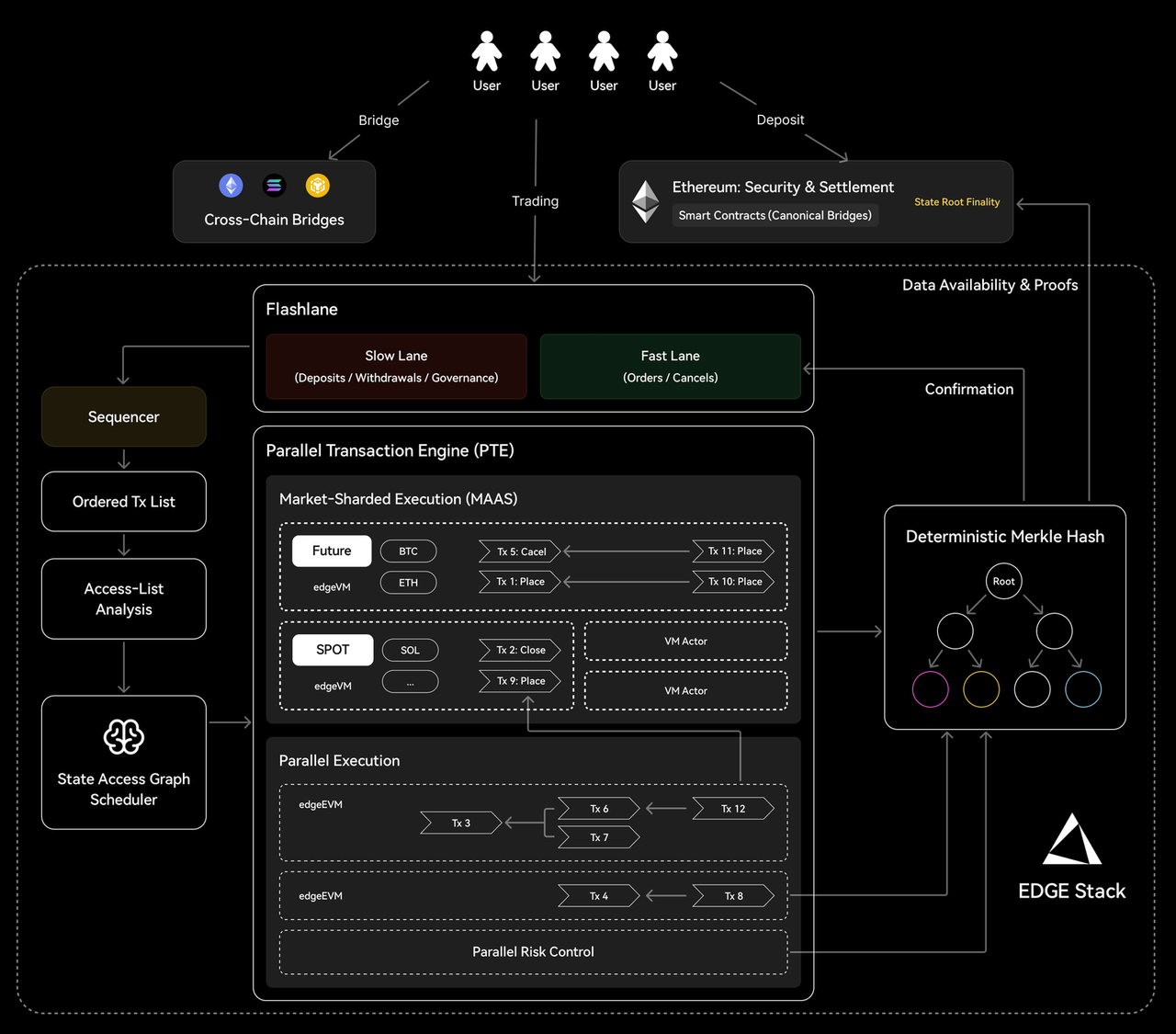
Джерело зображення: edgeX Docs
Ключові компоненти: рівень користувацького інтерфейсу, рівень виконання зіставлення та рівень ончейн-розрахунків. Користувачі взаємодіють із системою через фронтенд або API; механізм зіставлення обробляє ордери офчейн, а блокчейн підтверджує стан і здійснює переказ активів.
Такий підхід дозволяє перенести ресурсоємні операції — як-от зіставлення — в офчейн-системи, передаючи у блокчейн лише ключові результати. Це забезпечує баланс між ефективністю та безпекою.
Зіставлення ордерів: як edgeX забезпечує ефективне виконання
edgeX застосовує модель книги ордерів для зіставлення, де покупці та продавці створюють глибину ринку, розміщуючи мейкер-ордери. Механізм зіставлення парує ордери за пріоритетом ціни й часу.
Офчейн-зіставлення дозволяє обробляти ордери з мінімальною затримкою, забезпечуючи швидкість, порівнянну з централізованими біржами. Це критично для високочастотної торгівлі безстроковими ф'ючерсами, де зміни ціни мають відображатися в реальному часі.
На відміну від моделей автоматизованого маркет-мейкера (AMM), книга ордерів спирається на активних постачальників ліквідності. Така структура дає перевагу у ціновому відкритті та контролі прослизання.
Виконання та розрахунок торгівлі: від зіставлення до фінального підтвердження
Після зіставлення ордерів система формує історію торгівлі та переходить до виконання й розрахунку.
Позиція користувача оновлюється відповідно до ціни виконання, розраховуються зміни маржі та нереалізований PnL. Ці дані надсилаються в ончейн-смарт-контракт, який завершує переказ коштів і фінальне підтвердження стану.
Ончейн-розрахунок гарантує перевірюваність усіх результатів торгівлі та підтримує механізми ліквідації — наприклад, запуск ліквідації при недостатній маржі. Цей етап є ключовим для поєднання офчейн-виконання з ончейн-безпекою.
Механізм “Zero Gas”: як edgeX реалізує модель комісій
edgeX підвищує зручність користування завдяки механізму “zero Gas” або “абстракції Gas”, що спрощує оплату ончейн-комісій.
Зазвичай платформа сплачує ончейн-комісії замість користувачів або включає їх у торгову комісію. Тому користувачам не потрібно окремо сплачувати Gas.
Загальна структура комісій edgeX базується переважно на торгових комісіях (модель Мейкер/Тейкер) і ставках фінансування для розподілу витрат і підтримки ринкової рівноваги.
Джерела ліквідності та ринкова структура edgeX
Ліквідність на edgeX формується переважно за рахунок мейкер-ордерів у книзі ордерів, які розміщують як маркет-мейкери, так і звичайні трейдери.
Маркет-мейкери постійно розміщують мейкер-ордери, збільшуючи глибину книги ордерів, зменшуючи прослизання і підвищуючи ефективність торгівлі. Торгова активність також впливає на загальний рівень ліквідності, створюючи динамічну ринкову структуру.
Порівняно з AMM-моделлю, яка залежить від пулів ліквідності, модель книги ордерів базується на активній участі. Це забезпечує гнучкий розподіл ліквідності, хоча за екстремальних ринкових умов може спостерігатися недостатня глибина.
Дохідність та механізми стимулювання edgeX
Модель стимулювання edgeX зосереджена на торговій активності та наданні ліквідності.
Торгові комісії є основним джерелом доходу; частину комісій можуть спрямовувати на стимулювання маркет-мейкінгу або винагородження активних користувачів. Додатково токен-стимули можуть заохочувати довгострокову участь, розподіляючи винагороди між постачальниками ліквідності або трейдерами.
Така структура покликана узгодити поведінку учасників у децентралізованому середовищі, підтримуючи ринкову активність і стабільність системи.
Підсумок
edgeX демонструє переваги гібридної архітектури — офчейн-зіставлення для високопродуктивної торгівлі разом із ончейн-розрахунком для безпеки активів і перевірюваних результатів. Його наскрізний процес — від надсилання ордера до розрахунку — показує, як децентралізовані біржі деривативів можуть поєднувати ефективність із децентралізацією.
Розуміння цього механізму дає системну основу для аналізу роботи Perp DEX і порівняння різних торгових протоколів.
Поширені запитання
Чи є процес торгівлі edgeX повністю ончейн?
Ні. edgeX використовує гібридну модель: офчейн-зіставлення з ончейн-розрахунком.
Чому edgeX використовує офчейн-зіставлення?
Щоб підвищити швидкість торгівлі та знизити затримку, підтримуючи високочастотну торгівлю.
Чи означає “zero Gas” від edgeX відсутність комісій?
Ні. Комісії зазвичай інтегровані у торгову комісію або сплачуються платформою.
Звідки надходить ліквідність edgeX?
Переважно з мейкер-ордерів, які розміщують маркет-мейкери та трейдери у книзі ордерів.
Як edgeX гарантує достовірність торгових результатів?
Завдяки ончейн-розрахунку та виконанню смарт-контрактів, що забезпечує перевірюваність результатів.