MasterChuTheOldDemonMasterChu

vip
Age 0.5 Year
Peak Tier 6
Learn and Play | Diamond Hand
#TradFi交易分享挑战 What recent news events are affecting the trends of gold and crude oil? How should we analyze the bullish or bearish outlook for gold in the near future?
On Friday, international spot gold maintained a low rebound trend, with the price dipping to a low of $4,489 per ounce during the day before oscillating higher, reaching a high of $4,595.26 per ounce, and finally closing at $4,539.93 per ounce, showing an overall pattern of oversold correction with a slightly strong oscillation.
Overall, short-term spot gold is influenced by falling oil prices, while medium-term depends on
View Original
Ryakpanda
#TradFi交易分享挑战 What recent news events have impacted the trends of gold and crude oil? How should the outlook for gold's bullish and bearish movements be assessed?
On Friday, international spot gold maintained a low rebound trend, with the price dipping to a low of $4,489 per ounce during the day before oscillating higher, reaching a high of $4,595.26 per ounce, and finally closing at $4,539.93 per ounce, showing an overall pattern of oversold correction and oscillation leaning stronger. Overall, short-term spot gold is affected by falling oil prices, while medium-term depends on the evolution of inflation and interest rate expectations. The high-interest-rate environment continues to weigh on non-yield assets, but the buffering effect of falling energy prices cannot be ignored. The global markets showed clear consolidation characteristics in May, with investors weighing multiple variables. As a traditional safe-haven asset, gold’s positioning in the current environment requires a dynamic assessment based on macroeconomic data.
Last night, several key U.S. data releases simultaneously sent pressure signals: core PCE rose to 3.3%, indicating persistent inflation; GDP was revised down to 1.6%, reflecting economic slowdown; initial jobless claims slightly increased, also showing the job market beginning to cool. The combination of these three signals has raised concerns about stagflation risk, which often provides support for gold. On the market, gold prices once fell to a two-month low, then quickly rebounded slightly, recovering the $4,500 level from around $4,366, with the highest approaching $4,600. The main reason for the rebound was market reports suggesting the U.S. and Iran might reach a 60-day memorandum, but the White House and Vice President Vance denied this, only expressing optimism about peace prospects. Therefore, in the short term, gold’s trend mainly depends on news; if the agreement is confirmed, safe-haven sentiment may weaken, but uncertainty will still support gold prices. If the news is false, gold may face renewed pressure. If the situation remains deadlocked, gold is likely to stay oscillating. In the medium to long term, the logic for gold remains unchanged: weaponization of the dollar and de-dollarization will continue to drive central banks to buy gold, providing a bottom support. Meanwhile, inflation pressures combined with economic slowdown could lower real interest rates, which is positive for gold. The market only focuses on nominal interest rates but ignores real interest rates; even if the nominal rate looks high, higher inflation can keep real rates negative, eroding bond purchasing power. To sum up, short-term gold will fluctuate more due to geopolitical news, but in the medium to long term, stagflation, declining real interest rates, central bank purchases, and de-dollarization remain core supports for gold’s strength.
Next Monday’s gold market analysis:
Technical analysis of gold: On the daily chart, two bullish candles formed, marking a strong rebound after reaching a new low in the phase, ending the previous unilateral weakness pattern. Currently, gold prices are above the 5-day moving average, with the slopes of the 5-day and 10-day moving averages slowing down, indicating diminishing bearish momentum. On indicators, MACD’s green bars have significantly shrunk, with the fast and slow lines turning upward from low levels, and KDJ and RSI showing bullish crossovers and divergence at low levels, signaling a clear short-term bullish correction. However, medium- and long-term moving averages still exert resistance, and the daily chart has not yet entered a unilateral rally, mainly showing oscillation correction.
On the 4-hour chart, the bottoming process is complete, with reversal confirmed; short-term moving averages have formed a bullish crossover and are rising steadily, supporting the price. MACD below zero has formed a golden cross with increasing volume, indicating sufficient short-term bullish momentum. However, after touching around $4,594, the price faced slight resistance, and the upward pace slowed, suggesting that next Monday will likely see continued oscillation and correction. On the 1-hour short-term chart, after the rebound, gold entered a consolidation phase, with short-term moving averages converging and entangling, indicating a balanced battle between bulls and bears. Key support is concentrated around $4,510–$4,500, serving as a critical defensive level; resistance is at $4,595–$4,600, and a breakout above could extend toward $4,650.
Overall, for next Monday, the short-term trading strategy recommended by Jin Shengfu is mainly to sell on rebounds and buy on dips, with a focus on resistance at 4465–4470 and support at 4480–4450. Position sizes and stop-losses should be carefully controlled, with strict stop-loss settings; avoid fighting against the trend. $XAUUSD

repost-content-media
  • Reward
  • 24
  • Repost
  • Share
Crypto_Buzz_with_Alex:
Diamond Hands 💎
View More
$FIL Dead Storage or Sleeping Giant?
Filecoin is currently trading under the heavy weight of a $1.00 round number, but the network is quietly transforming from a speculative storage play into verifiable infrastructure for the AI era. The pivot is real, and the chart is compressing in a way that suggests a big move is brewing.
🔹 The fundamental shift is from bootstrapping supply to driving paid, on-chain storage deals. The Filecoin Onchain Cloud, launched in late 2025, is creating a programmable, verifiable storage layer that directly ties FIL usage to service payments. Integrations with AI pr
FIL0.64%
User_any
$FIL Dead Storage or Sleeping Giant?
Filecoin is currently trading under the heavy weight of a $1.00 round number, but the network is quietly transforming from a speculative storage play into verifiable infrastructure for the AI era. The pivot is real, and the chart is compressing in a way that suggests a big move is brewing.
🔹 The fundamental shift is from bootstrapping supply to driving paid, on-chain storage deals. The Filecoin Onchain Cloud, launched in late 2025, is creating a programmable, verifiable storage layer that directly ties FIL usage to service payments. Integrations with AI projects like AethirCloud and SingularityNET are beginning to connect Filecoin to the booming compute economy. This is no longer about speculative capacity—it is about actual, revenue-generating enterprise usage.
🔹 The tokenomics model, often cited as a headwind, is also a subtle strength. While miner rewards and investor unlocks continue, the real metric to watch is the locked-to-circulating supply ratio. FIL is collateralized for storage deals, removing it from the liquid float. As more enterprises onboard and lock up tokens, the effective circulating supply shrinks, creating a supply-side squeeze that analysts often overlook.
🔹 The technical picture is a classic compression setup. The daily RSI at 46.9 shows neutral momentum, neither overbought nor oversold. Both the 15-minute and 4-hour timeframes are flashing MACD bottom divergence, a signal that selling momentum is exhausting. The price is hovering near the lower end of its range, with immediate resistance sitting at the 78.6% Fibonacci retracement level of $0.973. A decisive break above $1.25 would signal a meaningful recovery, but the current coiling action suggests that the market is preparing for a sharp directional move.
🔹 The upcoming Korean exchange resumption, following the network upgrade halt, could provide a near-term liquidity boost. Standard upgrade halts often precede renewed interest, especially if the upgrade delivers on its promise of improved network efficiency.
The gap between Filecoin's improving fundamentals and its subdued market price is widening. The AI data narrative is gaining traction, the lock-up ratio is climbing, and the chart is coiling. How are you reading this: a value play building a foundation, or a trade that still needs a catalyst to justify a position?
⚠️ Not financial advice.
repost-content-media
  • Reward
  • 21
  • Repost
  • Share
Crypto_Buzz_with_Alex:
Diamond Hands 💎
View More
Ultimately, short-term trading is a "probability game" 🎲.
No matter how perfect your chart is, a sudden negative news event can instantly invalidate the support level 💥.
Many people are obsessed with technical indicators, actually trying to find a bit of "control" in an unordered market, but the cruel truth is that randomness accounts for most of the short-term fluctuations 🌪️.
Don't be too hard on yourself; since it's like flipping a coin, focus your energy on "how to flip"—that is, position management and discipline 🛡️.
Spend less time looking at hourly noise, and more on the overall tre
View Original
post-image
  • Reward
  • 33
  • Repost
  • Share
HelalChowdhury:
LFG 🔥
View More
#TradeCFDWinGold
Gold has once again attracted widespread global attention as fear-driven capital flows continue to rise across major financial sectors. In recent weeks, well-funded fund groups, macro-focused trading desks, and high-volume CFD professionals have increased their exposure to gold-related positions, while yields in several major economies remain weak.
Latest inflation data, softer employment figures, and slowing industrial growth have introduced a new wave of uncertainty. As central banks shift towards a more dovish policy outlook, many large capital groups are moving away from
PAXG-0.72%
View Original
discovery
#TradeCFDWinGold
Gold once more pulled huge global focus as fear-driven capital flow kept rising across major financial sectors. During recent weeks, deep-pocket fund groups, macro-focused deal desks, plus high-volume CFD pros all raised exposure toward gold-linked positions while yield pressure stayed weak across several major economies.
Fresh inflation data, softer labor figures, plus slowing industrial growth created a new wave of uncertainty. As central bank outlooks shifted toward a softer policy path, many large capital groups began moving away from higher-risk assets and back toward defensive value stores.
This flow helped gold keep strong upside pressure.
Professional traders did not view this move as a short-term emotional spike. Instead, many pro-level analysts saw several layers supporting the rally at the same time:
- lower yield pressure,
- rising geopolitical fear,
- slowing global growth,
- currency weakness across key regions,
- plus rising demand from long-term reserve buyers.
Large liquidity pools also increased activity near key technical zones. Skilled chart readers pointed toward repeated volume expansion during breakout phases, while dip-buy flow stayed strong during short pullback periods.
For experienced CFD traders, this type of structure often signals controlled institutional accumulation rather than random crowd-driven momentum.
Another key factor driving attention toward gold came from rising uncertainty surrounding future rate policy. Many macro desks now believe liquidity conditions could ease further if economic slowdown pressure continues building through coming months.
When liquidity outlook improves, gold often benefits from stronger capital rotation.
Yet professional traders remain careful.
Experienced market participants understand that sharp rallies can create emotional buying traps for inexperienced traders. Because of this, disciplined CFD professionals focus heavily on:
- entry precision,
- leverage control,
- volatility measurement,
- plus strict loss management.
Most high-level traders avoid chasing aggressive green candles during peak excitement phases. Instead, they wait for:
- pullback confirmation,
- volume stability,
- support retests,
- plus cleaner risk-reward structure.
This calm approach separates professional execution from emotional crowd behavior.
Gold volatility also increased due to rising geopolitical concerns across several regions. Global supply-chain stress, shipping disruption fears, plus energy-market instability all helped strengthen defensive capital flow into precious metals.
At the same time, AI-driven trading systems and algorithmic flow models accelerated short-term momentum during high-volume sessions. Fast-execution systems reacted instantly to macro headlines, creating rapid intraday swings that rewarded disciplined traders while punishing emotional decision-making.
This new environment demands far more than simple chart watching.
Modern CFD professionals now combine:
- macroeconomic analysis,
- liquidity mapping,
- volatility tracking,
- flow monitoring,
- plus psychological discipline
before entering large positions.
The biggest misconception among new traders is believing profit comes from predicting every move correctly.
Real professionals think differently.
They understand survival comes first.
Capital protection, controlled exposure, and emotional stability remain the foundation of long-term success.
Right now, gold sits at the center of one of the most important macro shifts in recent years. If global slowdown pressure deepens and policy easing expectations continue rising, bullish momentum could remain active far longer than many retail participants expect.
However, skilled traders also know no rally moves forever in a straight line.
Sharp pullbacks, liquidity sweeps, and sudden volatility spikes remain part of every major trend cycle.
That is why elite CFD traders focus less on excitement and more on structure.
Because in modern markets, long-term success rarely belongs to the loudest crowd.
It usually belongs to the calmest risk manager in the room.
repost-content-media
  • Reward
  • 41
  • Repost
  • Share
HelalChowdhury:
LFG 🔥
View More
#TradFi交易分享挑战 World Platinum Investment Council: Iran conflict causes platinum market to see supply surplus for the first time in six quarters
The World Platinum Investment Council states that the Iran conflict has led to a supply surplus in the platinum market for the first time in six quarters. The organization says that in the first quarter of this year, affected by the Iran conflict, the platinum market experienced its first supply surplus in six quarters. Investment demand has shrunk, combined with high energy prices, increasing the likelihood of inflation and rate hikes.
Spot platinum pr
XPTUSD-0.16%
View Original
Ryakpanda
#TradFi交易分享挑战 World Platinum Investment Council: Iran conflict causes platinum market to see supply surplus for the first time in six quarters
The World Platinum Investment Council states that the Iran conflict has led to a supply surplus in the platinum market for the first time in six quarters. The organization says that in the first quarter of this year, affected by the Iran conflict, the platinum market experienced its first supply surplus in six quarters. Investment demand has shrunk, combined with high energy prices, increasing the likelihood of inflation and rate hikes.
Spot platinum prices surged 127% in 2025, reaching a historic high of $2,919 per troy ounce in January this year. Afterwards, the upward momentum driven by gold prices was insufficient, and platinum prices fell back to around $2,000. Additionally, at the end of February, Middle East conflicts erupted, and investors sold precious metals to cover margin calls.
In the first quarter, platinum market supply surplus was 268k ounces, compared to a deficit of 658k ounces in the same period last year. Market demand decreased by 31% year-on-year, down to 1.5 million ounces; net investment outflows were 225k ounces, and demand from automotive manufacturing and jewelry also weakened. Meanwhile, total platinum supply increased by 18% year-on-year to 1.7 million ounces. Last year, floods in South Africa severely impacted local platinum output, but this year's supply levels have rebounded.
The World Platinum Investment Council, citing data from Metal Focus Consulting, released a quarterly report stating that mine platinum production increased by 22%, and high market prices also boosted platinum recycling by 7%. The organization predicts that the current supply and demand trend will reverse, and the platinum market will remain in a state of deficit for the fourth consecutive year in 2026. The annual supply gap has been revised upward from the previous estimate of 240k ounces to 297k ounces. Regarding mining rights and investment mines, the "Kuangqi Tong" mini-program forecasts that in 2026, mine output will remain stable, platinum recycling is expected to increase by 9%, and overall supply will slightly rise by 2% to 7.4 million ounces. Demand for the year is expected to decrease by 9%, totaling 7.7 million ounces. Jewelry and investment demand will decline sharply by 12% and 54%, respectively, and automotive demand will fall by 2%. To fill the supply gap, unallocated inventories used for market regulation will decrease by 15%, down to 170,000 ounces, with stock levels insufficient to cover three months of global consumption. $XPTUSD
repost-content-media
  • Reward
  • 38
  • Repost
  • Share
HelalChowdhury:
LFG 🔥
View More
🔥 Micron overnight hits trillions! Don't sell off if you missed out!
What scene did the US stock market show last night? Micron MU +19.29% forcibly breaks through a $1 trillion market cap, semiconductor stocks hit five consecutive gains, the NASDAQ and S&P reach new highs—this is not a rebound, it's a declaration of war in the AI super cycle! 💣
I've been long on US stocks on the platform for a long time; those who didn't get in are not watching the market, they're watching the show. When you think "I'll wait for a pullback before entering," the big players have already left you behind by eig
MU0.96%
NAS1000.4%
SPX-0.54%
View Original
post-image
post-image
  • Reward
  • 41
  • Repost
  • Share
HelalChowdhury:
LFG 🔥
View More
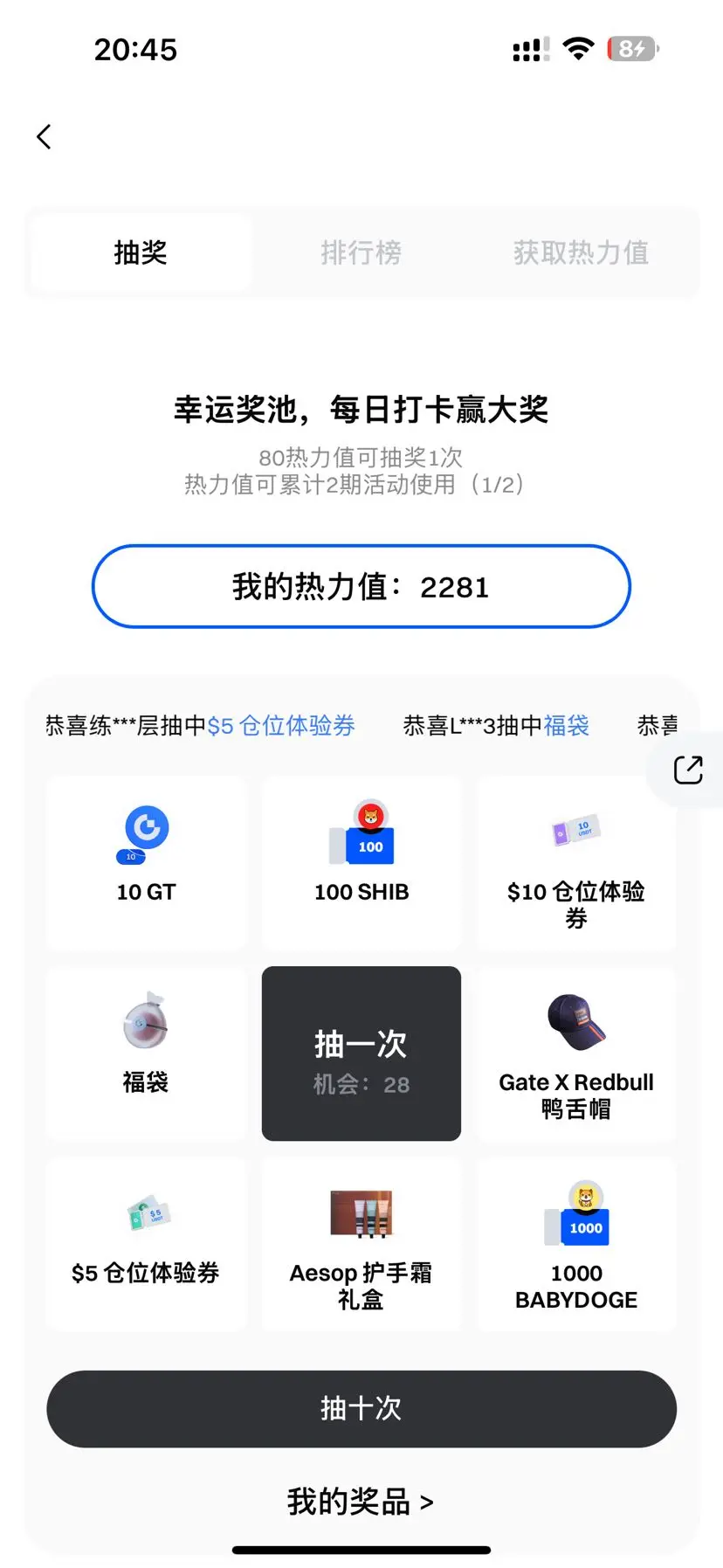
🔥 Live Lucky Draw Carnival Issue 22 is now live, the prize pool has been refreshed!
🎁 This issue's prize pool goodies
10 GT | 100 SHIB | $10 Position Experience Voucher | Lucky Bag
Gate × Redbull Baseball Cap | $5 Position Experience Voucher | Aesop Hand Cream Gift Set | 1000 BABYDOGE
📌 Extra Benefits
🏆 Top 10 users by heat value can receive additional peripheral rewards
📅 Consecutive sign-ins will also earn 10 additional peripherals
🎰 How to Participate
Watch the live stream to earn heat value, 80 heat value = 1 draw
Sign-in, comment, share, and follow can all accumulate heat value
👉 J
GT0.43%
SHIB1.43%
View Original
post-image
post-image
  • Reward
  • 46
  • 1
  • Share
HelalChowdhury:
LFG 🔥
View More
🎁 100% Win Rate! The 1️⃣ 9️⃣th Community Growth Points Lottery Carnival is now open!
Complete interactions to enter the draw! Gold bars, jerseys, and more await you! 👇
https://www.gate.com/activities/pointprize?now_period=19
🌟 Participation Guide:
1️⃣ Enter the venue: Tap 【Square】 on your personal homepage ➡️ Click the growth points badge next to your avatar to enter 【Community Center】.
2️⃣ Earn points: Post, comment, like, chat—easily accumulate growth points!
🎁 Every 300 points directly enter the draw!
10g pure gold bars, Inter Milan jerseys, VIP experience cards, and other luxury prizes
BTC-0.14%
ETH-0.58%
HYPE0.86%
View Original
post-image
  • Reward
  • 37
  • Repost
  • Share
HelalChowdhury:
LFG 🔥
View More
#TradFi交易分享挑战
‍# Trading CFD for Gold Giveaway
Today’s Gold Market Analysis
Core Market Trends‌
‌Intraday Trajectory‌:
Asian session fluctuated upward from‌ $4536‌, reaching a high of‌ $4552‌ ( +0.35% ), influenced by news of progress in US-Iran talks.
Currently trading in the‌ $4532.96–$4579.86/ounce‌ range, a slight increase of 0.3% from the previous close of‌ $4536‌, showing a tug-of-war pattern of “geopolitical conflict easing + dollar suppression.”
‌Volume Characteristics‌:
COMEX gold futures main contract trading volume decreased by 18% year-over-year, market awaits tonight’s Federal R
View Original
LittleGodOfWealthPlutus
#TradFi交易分享挑战
‍# Trading CFD to Receive Gold
Today’s Gold Market Analysis
Core Market Trends‌
‌Intraday Trajectory‌:
Asian session fluctuated upward from‌ $4536‌, reaching a high of‌ $4552‌ ( +0.35% ), influenced by news of progress in US-Iran talks.
Currently trading in the‌ $4532.96–$4579.86/ounce‌ range, a slight increase of 0.3% from the previous close of‌ $4536‌, showing a tug-of-war pattern of “geopolitical conflict easing + dollar suppression.”
‌Volume Characteristics‌:
COMEX gold futures main contract trading volume decreased by 18% year-over-year, with the market awaiting guidance from tonight’s Federal Reserve officials’ speeches.
‌Technical Indicators’ Bull-Bear Signal‌
‌Momentum Structure‌:
‌MACD(12,26)‌: Histogram turns positive but slope remains flat (+0.82), fast and slow lines are clustered below zero, indicating an imminent decision.
‌RSI(14)=47.3‌: Neutral zone with weak oscillation, no signs of overbought/oversold pressure.
‌Bollinger Bands Converging‌: Channel narrows to‌ $4520–$4570‌ (20-day minimum range), indicating a breakout is near.
‌Cycle Resonance‌:
‌Quarterly EMA(60)= $4500‌: Coincides with weekly cloud baseline, forming a strong support level.
‌Fibonacci Key Levels‌: Retraced from May high of‌ $4577‌, with 38.2% at‌ $4545‌ as the intraday center, and 61.8% at‌ $4520‌ as the bullish line of defense.
‌Key Support and Resistance Levels‌
‌Bearish Fortress (Resistance)‌:
‌$4560‌: 20-day moving average + May downtrend line resistance, breaking above opens space to‌ $4600‌.
‌$4577‌: May 25 high, concentrated gamma resistance zone in options.
‌Bullish Barrier (Support)‌:
‌$4520‌: Bollinger lower band + 61.8% Fibonacci retracement, the intraday dividing line between strength and weakness.
‌$4500‌: Quarterly moving average + central bank gold purchase cost anchor zone, with less than 10% probability of breaking below this ultimate defense.
‌Market Outlook: Triple-Drive Logic and Risk Warnings‌
▶️ Short-term Catalysts (24-48 hours)
‌Federal Reserve Policy Play‌:
If Fed Governor Waller signals a delay in rate cuts at 22:00 today (current 68% probability of a September cut), gold prices may dip back to‌ $4520‌.
Conversely, if emphasizing‌ recession risks‌, hedge funds’ short covering will push prices up to‌ $4560‌.
‌Geopolitical Powder Keg‌:
Attacks on Red Sea shipping increase oil premiums; if conflict spreads to the Strait of Hormuz, gold will surge directly past‌ $4600‌.
▶️ Medium-Long Term Structural Support
‌Central Bank Gold Buying Hegemony‌:
Global central banks net purchased 244 tons of gold in Q1 (+15% YoY), with China increasing holdings for 18 consecutive months, making‌ $4500‌ a new value center.
Polish central bank announced an additional 100 tons by 2026; institutional models show central bank buying triggers below‌ $4300‌.
‌Inflation Reversal Expectations‌:
US 5-year inflation expectations rose to 2.48% (New York Fed data), weakening real interest rate suppression.
⚠️ Downside Risk Alerts
‌Dollar Black Swan‌: If US Q1 GDP revision exceeds expectations (initial 3.1%), the dollar index may rally to 104, suppressing gold to‌ $4480‌.
‌Algorithmic Trading Flash Crash‌: There are‌ 2.7 million ounces of algorithmic sell orders‌ below‌ $4520‌, and technical breakdowns could trigger a 2% flash crash.
‌Trading Strategies‌:
‌Aggressive‌:
Buy lightly at‌ $4545‌ with small positions, stop-loss‌ at‌ $4515‌ (0.7% tolerance for breakdown), target‌ $4560→$4577‌.
‌Conservative‌:
If retesting‌ $4520‌ and stabilizing, add positions, betting on central bank support, with a target of‌ $4600‌ (about 6% upside).
‌Breakout Chase‌:
Volume breakout above‌ $4577‌ to chase the rally, aiming for‌ $4620‌ (March high + Gann angle resistance).
repost-content-media
  • Reward
  • 47
  • Repost
  • Share
HelalChowdhury:
LFG 🔥
View More
#DailyPolymarketHotspot
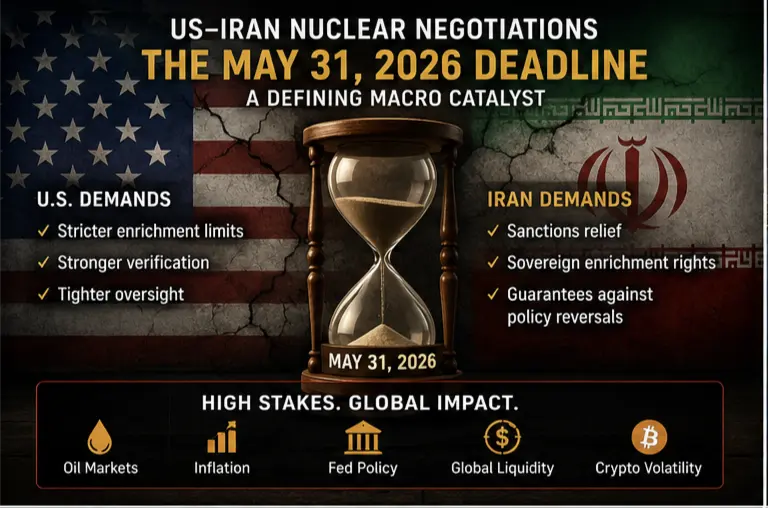
The deadline for the US-Iran nuclear negotiations on May 31, 2026, is approaching and is rapidly becoming one of the most important macro catalysts in the global financial markets this quarter. Initially seeming just another routine diplomatic cycle, it has now evolved into a high-risk geopolitical event that could simultaneously impact the oil market, inflation expectations, Federal Reserve policy direction, global liquidity conditions, and the entire crypto market structure.
Market forecasts show increasing skepticism about reaching an agreement. Current positions in
BTC-0.14%
BZ1.48%
View Original
CryptoDiscovery
#DailyPolymarketHotspot
The approaching May 31, 2026 deadline for US–Iran nuclear negotiations is rapidly becoming one of the most important macro catalysts for global financial markets this quarter. What initially appeared to be another routine diplomatic cycle has now evolved into a high-stakes geopolitical event capable of influencing oil markets, inflation expectations, Federal Reserve policy direction, global liquidity conditions, and the entire crypto market structure simultaneously.
Prediction markets are signaling growing skepticism toward a successful agreement. Current positioning across Polymarket and broader derivatives markets suggests traders increasingly expect negotiations to fail or become delayed beyond the official deadline. This rising uncertainty is already creating defensive positioning across risk assets.
Bitcoin is currently trading near the $77,000–$78,000 region after multiple volatile swings between $74,000 and $80,000 throughout recent sessions. The market is now entering a compression phase where geopolitical headlines are directly influencing liquidity flows, leverage exposure, and institutional risk allocation.
The core issue remains the widening gap between both sides.
The United States continues demanding stricter uranium enrichment limits, stronger international verification systems, and tighter oversight mechanisms. Iran, meanwhile, insists on sanctions relief, sovereign enrichment rights, and guarantees against future policy reversals similar to the post-JCPOA breakdown period.
This is no longer simply a diplomatic disagreement.
It is becoming a macroeconomic risk event.
If negotiations collapse completely, markets may immediately begin pricing higher probabilities of regional escalation near the Strait of Hormuz — one of the most strategically important energy corridors in the world. Nearly 20% of global oil transportation passes through this route, meaning even limited disruptions could rapidly impact global inflation expectations.
That transmission mechanism matters enormously for crypto.
Higher oil prices → stronger inflation pressure → delayed Federal Reserve easing → stronger USD → tighter liquidity → increased pressure on speculative assets.
This entire chain reaction directly affects Bitcoin and broader digital asset markets.
Oil markets are already reacting cautiously. Energy traders continue monitoring tanker activity, shipping insurance costs, military deployments, and diplomatic signaling from both Washington and Tehran. Brent crude volatility has expanded sharply as traders prepare for either supply disruption risks or a sudden de-escalation scenario.
Bitcoin’s current market structure reflects this uncertainty perfectly.
Institutional ETF inflows remain relatively stable, long-term holders continue accumulating selectively, and exchange reserves remain historically low compared to previous cycles. However, leveraged traders are becoming increasingly defensive as macro volatility rises.
Current BTC structure:
• Immediate support: $76,000–$76,500
• Major liquidity zone: $74,000–$75,000
• Critical macro support: $72,000–$73,000
• Immediate resistance: $78,500–$80,000
• Breakout trigger: $82,000+
As long as Bitcoin holds above the broader $72K–$75K structure, the market still technically remains inside a macro recovery cycle rather than a confirmed bearish reversal.
But the next directional move will likely depend on geopolitical resolution speed.
SCENARIO 1 — NO DEAL / ESCALATION RISK
If negotiations fail:
• Oil could surge toward $95–$115
• Inflation expectations rise globally
• Fed rate cuts get delayed further
• Treasury yields strengthen
• USD liquidity tightens
• Crypto volatility expands aggressively
In this environment, Bitcoin could temporarily revisit $68K–$72K liquidity zones before stabilizing.
However, there is another important angle many traders overlook.
In prolonged geopolitical instability scenarios, Bitcoin increasingly behaves as a sovereign-neutral asset outside traditional financial systems. This creates a dual-market reaction where BTC initially sells off with risk assets but later attracts defensive capital seeking alternative stores of value.
That dynamic has become increasingly visible during recent macro cycles.
SCENARIO 2 — DIPLOMATIC BREAKTHROUGH / DEAL REACHED
If negotiations succeed:
• Oil prices likely retrace sharply
• Inflation pressure eases
• Fed easing expectations improve
• Global liquidity conditions stabilize
• Risk appetite returns across markets
Under this scenario:
• Bitcoin could rapidly reclaim $82K–$85K
• Altcoins may outperform during liquidity rotation
• Institutional inflows could accelerate again
• Market sentiment would shift from defensive to expansionary
A confirmed de-escalation could reopen the path toward:
$90K → $100K → potentially $120K+ later in the cycle.
One of the biggest structural developments supporting Bitcoin long-term remains institutional integration.
Spot Bitcoin ETFs continue transforming BTC from a speculative retail asset into a recognized macro financial instrument. Pension funds, asset managers, sovereign wealth entities, and corporate treasuries are now participating in digital asset exposure through regulated financial channels.
At the same time, global liquidity cycles remain deeply connected to crypto performance.
Bitcoin no longer trades in isolation.
It now reacts directly to:
• Federal Reserve policy
• Oil market volatility
• Bond yields
• USD strength
• Geopolitical stress
• Institutional capital flows
• Global liquidity expansion and contraction
This marks a major evolution in crypto market maturity.
The market structure of 2026 is fundamentally different from previous cycles dominated purely by retail speculation.
Today’s crypto environment operates as part of the broader global macro system.
And that is exactly why the US–Iran negotiations matter so much.
This is not only a geopolitical story.
It is a liquidity story.
It is an inflation story.
It is a Federal Reserve story.
And ultimately — it is a Bitcoin volatility story.
For now, traders appear positioned cautiously:
• Neutral funding rates
• Reduced leverage exposure
• Increased stablecoin positioning
• Elevated hedging activity
• Defensive portfolio structures
Markets are waiting for clarity.
Because once geopolitical uncertainty resolves — either positively or negatively — volatility expansion could become extremely aggressive across oil, equities, bonds, and crypto simultaneously.
The next few days may determine whether Bitcoin enters another macro expansion phase above $90K… or experiences one final large liquidity sweep before the broader bullish cycle resumes.
In periods like this, survival, patience, and disciplined positioning matter far more than emotional prediction.
Because in modern markets, liquidity moves faster than narratives.
And macro uncertainty always reaches crypto eventually.#DailyPolymarketHotspot
repost-content-media
  • Reward
  • 32
  • Repost
  • Share
HelalChowdhury:
LFG 🔥
View More
#TradFi交易分享挑战 SpaceX is about to IPO, sparking a frenzy: why that sky-rocketing space communications stock is actually a “high-end rent collector”
Recently, the entire space sector seems to have fallen into a capital carnival. With news that Elon Musk’s SpaceX is about to go public sweeping across Wall Street, everyone’s attention has been tightly fixed on the starry sky above. In this carnival, AST SpaceMobile, the leader in space communications (stock code: ASTS), has become a darling of capital.
When many people see low-orbit satellite communications, their first reaction is: isn’t this ju
ASTS53.31%
T0.72%
View Original
Ryakpanda
#TradFi交易分享挑战 SpaceX is about to go public, sparking a frenzy: Why is that soaring space communications stock actually a "high-level rent collector"?
Recently, the entire space sector seems to have fallen into a capital frenzy. As the news of Musk's SpaceX upcoming IPO sweeps through Wall Street, everyone's attention is firmly drawn to the starry sky overhead. In this carnival, the leader in space communications, AST SpaceMobile (stock code: ASTS), has become a darling of capital.
Many people’s first reaction to low Earth orbit satellite communications is: Isn’t this just another “new disruptor” trying to grab a piece of the traditional ground telecom operators’ pie? Wrong. The most attractive part of ASTS is precisely that it doesn’t compete with traditional operators for business, but instead lines up to let these ground giants pay it.
1 Core Business Model: The “Shared Tower” in the Sky
Traditional satellite communications (like current Starlink) usually require you to buy a dedicated “big dish” receiver or replace your expensive satellite phone. But ASTS is playing the game of Direct-to-Cell (satellite direct connection to ordinary smartphones). It deploys a giant antenna network in low Earth orbit, acting as a “shared tower in the sky.”
It doesn’t apply for long, expensive, and extremely difficult ground spectrum licenses itself, but directly partners with operators: “I provide the technology and space antennas, you provide the spectrum licenses and ready users, and we add a ‘space roaming package’ to existing mobile plans, splitting the profits 50/50.”
For operators (like AT&T, Verizon, Vodafone), they don’t need to spend hundreds of billions on R&D or rockets; overnight, they can claim to users that they’ve achieved “100% global coverage without blind spots.” High-end business users and outdoor adventurers will no longer be reluctant to cancel their plans. This isn’t about destroying jobs; it’s about giving ground giants a new wave of growth.
2 Latest Financials and Stock Price: The Madness Behind the Data
This B2B2C business model’s logic is directly reflected in recent real cash:
Financial Highlights: As BlueBird satellites are gradually deployed, ASTS’s recent financial reports show its losses are narrowing as commercialization advances. More importantly, the company has received huge prepayments, non-dilutive capital support, and strategic investments from multiple top global operators. This comprehensive “big brother endorsement” proves the feasibility of its space-based base station model commercially.
Sensory-stimulating stock price: Coupled with the financial report release and the upcoming SpaceX IPO sentiment catalyst, the market went completely crazy. In just two weeks after the May 11 financial report, ASTS’s stock price soared from around $70 to $105 last Friday (May 22), an almost 50% terrifying increase! This abrupt surge is the most enthusiastic vote of confidence from capital for its “space relay station” monopoly status.
In an era where the ceiling of space has been thoroughly redefined, ASTS is not a tech workshop but a “high-level rent collector” sitting in space, collecting rent from ground giants.
repost-content-media
  • Reward
  • 27
  • Repost
  • Share
HelalChowdhury:
LFG 🔥
View More
#StockTradingChallengeUpTo17000U
The ticket stock trading challenge has a maximum prize pool of 17,000 USDT, encompassing three main tracks: spot trading, futures, and Contracts for Difference (CFD). This challenge is not just about the prize pool but also symbolizes the accelerated advancement of the tokenized equity revolution, which is reshaping global capital flows.
The competition runs from 17:00 (UTC+8) on May 25, 2026, to 17:00 (UTC+8) on June 15, 2026, giving participants approximately 21 days to compete across multiple independent tracks. The structure allows rewards to stack across
ONDO-6.66%
GUSD-0.14%
AAPLON0.21%
TSLAX-0.66%
View Original
HighAmbition
#StockTradingChallengeUpTo17000U
The Gate Stock Trading Challenge Up To 17000U is a comprehensive trading competition that spans three major tracks: spot, futures, and CFD. This challenge represents more than just a prize pool; it signals the acceleration of the tokenized equity revolution that is reshaping how global capital flows between traditional finance and crypto markets.
The challenge runs from May 25, 2026 at 17:00 UTC+8 through June 15, 2026 at 17:00 UTC+8, giving participants approximately 21 days to compete across multiple independent tracks. The structure allows rewards to stack across different activity categories, meaning a single user can earn rewards from spot trading, futures trading, CFD leaderboard ranking, and ecosystem tasks simultaneously. This stacking mechanism is what enables the theoretical maximum of 17,000 USDT for one individual.
Activity One covers newcomer tasks designed to onboard new users into the stock trading ecosystem. New users who register during the event period and complete KYC verification can receive random stock token rewards valued between 2 and 10 USDT by completing a CFD trade of at least 1,000 USDT. Additionally, existing users who invite friends to register and trade can earn the same 2 to 10 USDT random stock token reward per invited friend, with a maximum of 10 invitations. This means an inviter could potentially earn rewards from up to 10 successful invitations, while both the new user and the inviter benefit from each successful referral.
Activity Two focuses on spot trading milestones within the stock token section. Participants accumulate spot trading volume across stock tokens during the event period, and each threshold unlocks a corresponding USDT cash reward. Starting at 5,000 USDT in cumulative spot volume, participants earn 2 USDT. At 50,000 USDT volume, the reward increases to 10 USDT. Reaching 500,000 USDT unlocks 100 USDT. The 5,000,000 USDT milestone pays 300 USDT. At 10,000,000 USDT, the reward jumps to 800 USDT. And for traders who push beyond 50,000,000 USDT in cumulative spot volume, the reward reaches 1,500 USDT. Importantly, only the highest tier achieved is rewarded; lower tiers are not stacked within this single activity.
Activity Three targets futures trading within the stock contract section, including perpetual futures, copy trading, and quantitative bot-generated volume. Rather than cash, this track rewards participants with futures position experience vouchers, which function as trial funds that allow users to trade with allocated capital without risking their own money. The tiers begin at 50,000 USDT in cumulative futures volume for a 10 USDT voucher, rising through 1,000,000 USDT for 50 USDT, 5,000,000 USDT for 200 USDT, 20,000,000 USDT for 1,000 USDT, and culminating at 100,000,000 USDT for a 5,000 USDT voucher. As with spot trading, only the highest tier is awarded.
Activity Four is the CFD leaderboard competition, which is where the largest individual prizes are concentrated. Participants compete based on their cumulative CFD trading volume across stock-related CFD assets, and the top 100 traders by volume who also meet minimum thresholds share a prize pool of cash and CFD experience vouchers. The first place winner, provided they achieve at least 1,000,000,000 USDT in CFD volume, receives 2,000 USDT in cash. Second place with 500,000,000 USDT minimum earns 1,000 USDT cash. Third place with 100,000,000 USDT minimum gets 500 USDT cash. Ranks 4 through 10 each receive 1,000 USDT CFD vouchers, ranks 11 through 50 receive 400 USDT CFD vouchers each, and ranks 51 through 100 receive 200 USDT CFD vouchers each. This leaderboard structure makes CFD trading the most competitive and highest-rewarding track in the entire challenge.
Activity Five introduces ecosystem experience tasks that cover flash swaps, ETFs, staking products, and US treasury bond tokens. Each task offers a random cash reward between 2 and 10 USDT, limited to the first 500 users per task. The flash swap task requires completing at least 1,000 USDT in stock-related flash swap transactions. The ETF task requires at least 2,000 USDT in stock-related ETF trading. The ONDO series staking task requires participating with at least 1,000 USDT in ONDO-related yield products. And the GUSD US treasury bond task requires purchasing at least 1,000 USDT in GUSD-related products and maintaining the position for 24 hours. These ecosystem tasks are explicitly stackable with rewards from Activities One through Three, adding an extra layer of earning potential.
The broader context of this challenge extends well beyond the prize structure. Gate's TradFi division has evolved significantly, now supporting over 430 CFD products alongside 70 or more tokenized equities. Cumulative stock token trading volume has surpassed 14 billion USDT, and historical prize pools have exceeded 500,000 USDT. This scale reflects a fundamental shift in how digital finance platforms are bridging the gap between traditional equity markets and crypto-native trading environments.
The regulatory landscape is a critical catalyst accelerating this convergence. The SEC's Innovation Exemption, confirmed for rollout in January 2026 under Chair Paul Atkins' Project Crypto initiative, creates a regulatory sandbox that allows qualified crypto platforms to trade tokenized equities with reduced compliance burdens. This exemption enables 24/7 fractional trading of publicly traded stocks like Apple, Tesla, and Nvidia on blockchain rails, with near-instant settlement, while excluding traditional shareholder rights such as voting and dividends. In March 2026, the SEC approved Nasdaq's rule change to allow tokenized trading of Russell 1000 stocks and index ETFs, where conventional and tokenized stocks carry the same rights and trade on the same order books. Traditional exchanges like Nasdaq and CME Group have pushed back on investor protection grounds, but the structural direction is set: the merger of traditional finance and crypto markets is accelerating faster than most anticipated.
The tokenized treasury market provides additional evidence of this convergence
Tokenized US Treasuries have crossed 15.8 billion USDT in market value, nearly doubling since the start of 2026. Franklin Templeton's BENJI product has surpassed 2.05 billion USDT in assets under management, deployed across nine blockchains with peer-to-peer share transfers now live. This growth demonstrates that institutional capital is flowing into tokenized traditional assets at an unprecedented pace.
For participants in the Stock Trading Challenge, the strategic approach involves several considerations. First, because the three main tracks are independent and stackable, traders should aim to participate across spot, futures, and CFD simultaneously to maximize total rewards. Second, the CFD leaderboard requires extremely high volume to reach top positions, making it most competitive for users with significant capital and trading frequency. Third, ecosystem tasks with their 500-user cap should be completed early in the event period before slots fill up. Fourth, new users and inviters should leverage Activity One immediately upon registration to secure the baseline stock token rewards. Fifth, position experience vouchers from the futures track provide risk-free capital to explore leveraged trading, which can be strategically deployed after the event ends.
Several important restrictions apply. Participants must click the signup button on the event page and complete identity verification before their trading data is counted. API users, VIP 14 and above, market makers, corporate accounts, institutional accounts, agent accounts, and sub-accounts are excluded from participation.
Any form of batch registration, malicious volume inflation, self-dealing, wash trading, fake invitations, abnormal arbitrage, or exploitation of system vulnerabilities will result in disqualification and reward cancellation. Trading volume is calculated as the sum of buy and sell volumes, and each product category is tracked independently rather than combined into a total.
CFD trading carries particular risk considerations that participants must understand. CFD products involve leverage, which amplifies both gains and losses. The bidirectional nature of CFDs allows both long and short positions, but this flexibility comes with the risk of rapid capital depletion during volatile market conditions. Traditional assets and crypto assets both carry market volatility, leverage, liquidity, currency exchange, policy, and compliance risks. The challenge does not constitute investment advice or a promise of returns, and participants should approach each trading decision with full awareness of these risk factors.
The Stock Trading Challenge Up To 17000U ultimately represents a microcosm of the larger transformation happening in global finance. Tokenized equities have moved from a niche experiment to a rapidly scaling parallel market, and this challenge provides a structured incentive for traders to engage with every facet of that evolution. From spot stock tokens to leveraged CFD contracts to ecosystem products like flash swaps and treasury bonds, the challenge covers the full spectrum of the emerging TradFi landscape. For traders who approach it strategically, the combination of stackable rewards, competitive leaderboard prizes, and ecosystem bonuses creates a compelling opportunity to earn while learning to navigate the intersection of traditional and digital finance.@Gate_Square @Gate广场_Official #TradeCFDWinGold #DailyPolymarketHotspot
repost-content-media
  • Reward
  • 31
  • Repost
  • Share
HelalChowdhury:
LFG 🔥
View More
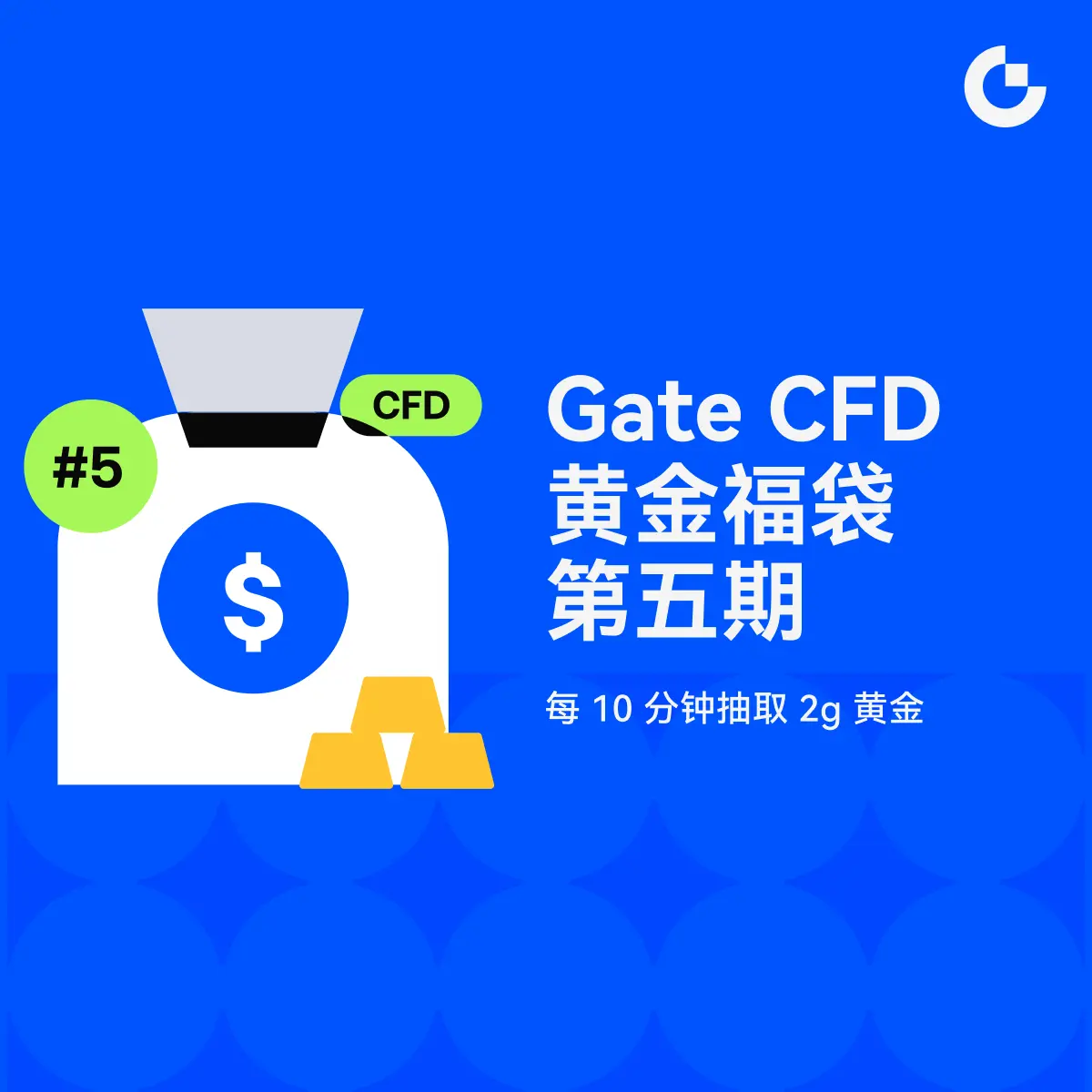
🥇 Gate TradFi Golden Lucky Bag Phase Five Returns Strongly
Very high chance of winning! Excellent gold prizes!
The Golden Lucky Bag series has already distributed over 5KG of gold
This phase continues with a total of 2,304g of gold rain
Every 10 minutes, 2g of gold is drawn, 1 person wins 1g of gold, and 10 people share an additional 1g of gold equally
A single transaction of ≥1,000 USDT unlocks 5 consecutive draw chances,
You can win repeatedly, trading nonstop, and drawing continuously!
⏰ Event time: May 25, 2026, 15:40 – June 9, 2026, 16:20 (UTC+8)
👉 Join now: https://www.gate.com/campai
View Original
post-image
  • Reward
  • 26
  • Repost
  • Share
HelalChowdhury:
LFG 🔥
View More
Recent market sentiment is switching extremely quickly. After gold prices experienced a one-way advance in Q1 of 2026, they fell deeply back to hover and consolidate near the $4,500 level, and the failed attempt to break through the historical high of $4,830 in April has been declared unsuccessful.
The core logic of the current market is undergoing a shift: the financial attributes (interest-rate environment) that had supported the earlier rally and the safe-haven attributes (geopolitical conflicts) have entered headwinds one after another. This is the direct reason why it is difficult for a s
GLDX2.22%
PAXG-0.69%
View Original
FatYa888
Recent market sentiment is switching extremely quickly. After experiencing a one-way advance in gold prices in Q1 of 2026, the price has undergone a deep pullback and is stabilizing near the 4,500 level. Attempts to break the April historical high of $4,830 have already been declared a failure.
At present, the core logic of the market is undergoing a change: the financial attribute (the interest-rate environment) that supported the earlier rise, and the safe-haven attribute (geopolitical conflicts), are both entering a headwind period one after another—this is the direct reason why it is difficult to form a trend-based upswing right now.
Macro downside pressure has become the dominant negative factor. The market has fully ruled out any possibility of rate cuts this year. The probability of a 25 basis point rate hike in December continues to rise. The US Dollar Index has stabilized at near a six-week high. The 10-year US Treasury yield has broken above 4.5%. The opportunity cost of holding gold keeps increasing, continuously draining away safe-haven buying.
The retreat of safe-haven demand at the margin is also a key variable. Although the situation in the Middle East has not yet been completely resolved, optimistic signals that the US and Iran are in the final stage of negotiations have partially weakened gold’s geopolitical buying momentum.
Long-term support still remains: global central banks continue to buy gold. In Q1, global central banks net purchased over 244 tons of gold. The People’s Bank of China has increased its gold reserves for 18 consecutive months. Central banks across countries view gold as a core asset in their de-dollarization strategies, providing solid bottom support for gold prices.
Signals on the screen are mixed, with both bulls and bears interwoven. On the daily chart, short-term moving averages are arranged in a bearish order, indicating that every rebound faces sell pressure from above. But the rise in the Relative Strength Index (RSI) is slowing down, suggesting the market is not undergoing a one-sided panic-driven selloff. In terms of technical ranges, the key support level below is $4,452, while the short-term rebound resistance above is $4,590. It is expected that the price this week will continue a choppy, slightly weaker pattern.
Overall, gold in the short term is still in the process of searching for a new balance as it bottoms out. In the near term, the focus is on guarding against further downside. Over the medium term, attention is on whether global central banks’ gold purchases can reassert their dominant role in pricing logic after absorbing the interest-rate negative factors.
#Polymarket每日热点 $XAUUSD
repost-content-media
  • Reward
  • 29
  • Repost
  • Share
HelalChowdhury:
LFG 🔥
View More
🚨 Bitcoin Market Update — What Could Change Everything in the Next 24 Hours 🚨
#PolymarketHundredUWarGodChallenge
Bitcoin is currently trading around 75.4K–75.5K USDT, with market structure indicating one of the most important compression zones this week. Smart money is actively positioning, while retail traders remain confused. 👀🔥
My BTCUSDT futures long position is in profit, and strong momentum is forming. The market is not experiencing random volatility; this is a liquidity game before the next breakout.
📊 Current Trading Setup: • Trading Pair: BTCUSDT Perpetual Contract
• Position: L
BTC-0.12%
View Original
Falcon_Official
🚨 BITCOIN MARKET UPDATE — NEXT 24 HOURS COULD CHANGE EVERYTHING 🚨
#PolymarketHundredUWarGodChallenge
Bitcoin is currently trading near 75.4K–75.5K USDT and the market structure is showing one of the most important compression zones of this week. Smart money is positioning aggressively while retail traders are still confused. 👀🔥
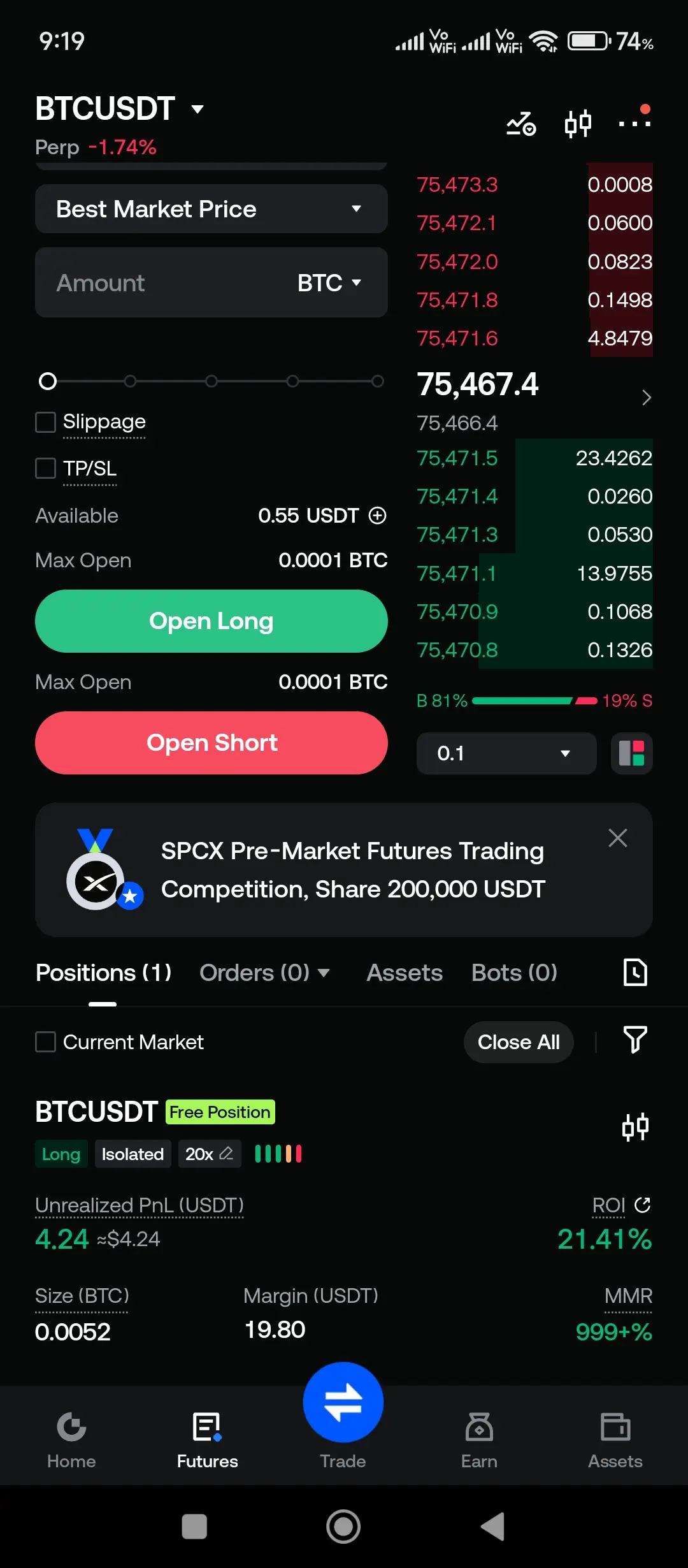
My BTCUSDT Futures Long is already in profit with strong momentum building. The market is not moving randomly right now this is a liquidity game before the next explosive move.
📊 Current Trade Setup: • Pair: BTCUSDT Perpetual
• Position: LONG 🟢
• Margin Mode: Isolated
• Leverage: 20x
• Position Size: 0.0052 BTC
• Margin Used: 19.80 USDT
• ROI Already Hit: +21.41% 🚀
• Entry Taken Around Major Demand Zone
📈 NEXT BTC MOVE ANALYSIS:
🟢 Bullish Scenario: If BTC holds above the 75.2K–75.3K support zone and breaks 75.8K with strong confirmation, Bitcoin could push toward:
🎯 76.2K
🎯 76.8K
🎯 77K+ possible expansion target
🔴 Bearish Scenario: If BTC loses the 75K psychological support zone, a liquidity sweep toward:
⚠️ 74.6K
⚠️ 74.2K
⚠️ 73.8K support retest
could happen before recovery.
⚡ Key Technical Factors:
✅ Strong buyer defense near support
✅ Possible short liquidations above resistance
✅ Volume compression before breakout
✅ Futures momentum still bullish
✅ Higher-low market structure intact
✅ Smart money accumulation signs visible
Bitcoin historically makes explosive moves after tight consolidation ranges like this. The next 12–24 hours are extremely important because volatility is building silently. Traders chasing candles late may get trapped while disciplined entries near support have the highest probability setup.
As long as BTC stays above 75K and breakout volume increases, the probability still favors upside continuation toward the 76K–77K region before any major correction. 📈🔥
Risk management always comes first. Discipline beats emotions in futures trading.
Who’s bullish on BTC for tomorrow? 👇🚀
repost-content-media
  • Reward
  • 37
  • Repost
  • Share
HelalChowdhury:
LFG 🔥
View More
💳 Gate Exclusive Chat Full Member Group|Platinum Card Whitelist Limited Giveaway!
A truly usable crypto credit card is here 👀
Visa Card|Supports Google Pay|Daily spending up to 500k USD
Up to 5% cashback on purchases, BTC / USDT / GT, your choice
VIP5+ only requires a passport, no address proof needed, apply directly ✅
🎁 This time we have prepared 10 whitelist spots, limited to Gate Exclusive Chat Full Member Group users!
🏆 Active Star ×5
May 23 - May 24, the 5 most active users in the full group, will directly receive
🎰 Lucky Draw ×5
Fill out the form to participate, 5 active community u
BTC-0.14%
GT0.43%
View Original
post-image
  • Reward
  • 41
  • Repost
  • Share
BlackoutCryptoBoy:
To The Moon 🌕
View More
🔥 Gate Plaza TradFi Trading Sharing, earn just by posting!
Share your trades to split a $30,000 huge prize pool, with a 100% chance to win on your first post as a newcomer!
🏷️ Today's coin tags: PDD, FUTU, UBER, BA, ORCL
📌 How to participate:
Post with #TradFi交易分享挑战 and meet any of the following:
🔹 Post with today's designated TradFi coin tag for discussion
🔹 Attach a single TradFi CFD trading card sharing your ideas that exceeds $10U
🎁 Great gifts: large position experience coupons, WCTC limited edition T-shirts, and more to boost your luck!
Details: https://www.gate.c
PDD1.87%
FUTU-0.86%
UBER0.05%
BA0.77%
View Original
post-image
  • Reward
  • 33
  • Repost
  • Share
BlackoutCryptoBoy:
Diamond Hands 💎
View More
📉 May 23 BTC Market Brief: Breakdowns and Downward Pressure, Weak Structure
💰 Current Price: $75,558.1 (24h -2.78%)
📊 24h Range: $75,189.3 - $77,858.6
💣 24h Liquidations: $578 million (Longs $524 million)
😨 Panic and Greed Index: 28 (Fear)
📰 Today’s Focus
1️⃣ Federal Reserve Waller turns hawkish, rate hike expectations rise, risk assets under pressure
2️⃣ US Bitcoin spot ETF continuous outflows, nearly $1.7 billion net outflow over the past 5 days
3️⃣ SEC approves Nasdaq to launch Bitcoin index options, compliance process accelerates
4️⃣ US advances the Digital Asset Market Clarity Act (
BTC-0.14%
View Original
post-image
  • Reward
  • 34
  • Repost
  • Share
BlackoutCryptoBoy:
Diamond Hands 💎
View More
If I have a Gate Platinum Card, my top priority is to use it to "nurture my AI army" 🤖☁️
If I have a Gate Platinum Card, I want to use it to handle all my AI subscriptions and cloud server expenses, tying the entire digital productivity to this card.
Like ChatGPT Plus, Claude, Midjourney, various API quotas, and my several VPS and cloud storage services that are constantly running, with automatic monthly payments. In the past, I spent this money somewhat "invisibly," but now I just put it all on the Platinum Card:
• Visa worldwide acceptance, rarely encountered rejection
• Supports Google Pay
BTC-0.14%
GT0.43%
View Original
post-image
  • Reward
  • 40
  • 1
  • Share
Crypto_Buzz_with_Alex:
This is really amazing explainations in this post very clear and easy to understand. This is really amazing explainations in this post very clear and easy to understand. This is really amazing explainations in this post very clear and easy to understand.
View More
#Gate广场披萨节 The Romantic Beginning of Pizza Day, the Epic Starting Point of Bitcoin
Bitcoin's story began in 2009, with a string of code and a white paper carrying Satoshi Nakamoto's vision of decentralized currency. However, great ideas require practical validation. On May 22, 2010, an ordinary transaction—exchanging 10,000 bitcoins for two pizzas—became a landmark moment in Bitcoin history, opening a romantic chapter for blockchain technology. This was not just a simple peer-to-peer transaction but the first step of Bitcoin moving from an abstract concept to the real world, igniting the ent
BTC-0.14%
ETH-0.58%
View Original
Ryakpanda
The Romantic Beginning of Pizza Day, the Epic Starting Point of Bitcoin
The story of Bitcoin began in 2009, with a string of code and a white paper, carrying Satoshi Nakamoto’s vision of decentralized currency. However, great ideas need practical validation. On May 22, 2010, a seemingly ordinary transaction—exchanging 10,000 bitcoins for two pizzas—became a landmark moment in Bitcoin history, opening a romantic chapter for blockchain technology. This was not just a simple peer-to-peer transaction; it was Bitcoin’s first step from an abstract concept to the real world, igniting the passion of countless tech enthusiasts, idealists, and changemakers.
This story embodies the pioneering spirit of Bitcoin’s early experiments and reflects the core principles of blockchain technology: trust, decentralization, and community-driven development. Through the stories of Laszlo Hanyecz and Jeremy Sturdivant, we see how ordinary people explored the unknown, giving life to Bitcoin through action.
On May 22, 2010, Laszlo Hanyecz, a programmer from Florida, posted on the Bitcoin forum BitcoinTalk with a simple but hopeful title: “I’ll pay 10,000 bitcoins for a couple of pizzas.” He wrote, “I want two large pizzas, with leftovers for the next day… I like common toppings like onions, peppers, sausage, mushrooms, tomatoes, and pepperoni, not fish or anything weird. If anyone’s interested, let me know.” This seemingly casual post inadvertently marked a milestone in blockchain history—the birth of “Bitcoin Pizza Day.”
At that time, Bitcoin was just an experimental digital currency, born 16 months after Satoshi Nakamoto’s white paper “Bitcoin: A Peer-to-Peer Electronic Cash System” in 2008. Its value was negligible; 1 bitcoin was worth about $0.004, so 10,000 bitcoins equaled $41. Bitcoin had no exchanges, no widespread recognition, and it was uncertain whether it could be used for real transactions. Most community members were cryptography enthusiasts, programmers, and libertarians, discussing technology and sharing code on BitcoinTalk, trying to turn the dream of decentralized money into reality. Laszlo’s post was made on May 18, initially unanswered, until four days later, when 19-year-old Jeremy Sturdivant (username Jercos) saw the opportunity. He paid about $25 with a credit card to order two pizzas from Papa John’s to Laszlo’s Florida home. Laszlo transferred 10,000 bitcoins from his wallet, completing the transaction. He excitedly updated the forum: “I successfully traded 10,000 bitcoins for pizza!” and shared a photo of his family sitting around the table, kids wearing “I <3 Bitcoin” T-shirts, smiling with pure joy.
This was not only Bitcoin’s first real-world product exchange but also proof of the feasibility of Satoshi’s “peer-to-peer electronic cash” concept. The transaction was completed over the decentralized Bitcoin network, without banks or third-party intermediaries, with two strangers reaching an agreement solely through code and trust. This event ignited early community enthusiasm, encouraging more people to try using Bitcoin and pushing it from theory into practice.
Laszlo’s technical adventurous spirit and Jeremy’s accidental role in history
In fact, Laszlo was not an ordinary user but a pioneer in the early Bitcoin community. As a programmer, he wrote the Bitcoin core code for MacOS in 2010, enabling more users to run Bitcoin nodes on Apple systems, strengthening network decentralization. He also pioneered the use of GPU (graphics processing units) for Bitcoin mining, elevating computational power from CPUs to new heights and significantly increasing mining efficiency. At that time, the mining reward was 50 bitcoins per block, and ordinary computers could participate. Laszlo accumulated a large number of bitcoins. To him, 10,000 bitcoins was just a “digital game coin,” far less interesting than using them practically.
Laszlo later revealed that in 2010, he spent about 100k bitcoins on pizza, worth billions of dollars in 2025. As Bitcoin’s price soared, these two pizzas became known as the “most expensive pizzas in history.” By July 2025, the value of 10,000 bitcoins exceeded $1.1 billion. Media and community often joke about this story, repeatedly asking Laszlo if he regrets it. He remains optimistic. In a 2018 interview with Cointelegraph, he said, “I don’t regret it at all. Bitcoin back then was like free money—I got it by writing code and mining, felt like I won a prize in a game.” In 2019, speaking to Bitcoin Magazine, he added, “The transaction itself was cool; my hobby paid for my dinner.” On CBS’s “60 Minutes,” he further explained, “Bitcoin had no real value at the time; the transaction made it real and motivated more people to participate.”
Laszlo’s laid-back attitude stems from his technical idealism. He is not a speculator but believes Bitcoin’s potential lies in circulation rather than hoarding. In a 2020 interview with CoinDesk, he said, “What’s the point of owning all the bitcoins if no one uses them? Its value depends on transactions and community.” It was this spirit that made Laszlo’s pizza transaction the starting point of Bitcoin’s success, proving it is not just “digital gold” but also a usable electronic cash.
The other party in the transaction, 19-year-old Jeremy Sturdivant, was also an early Bitcoin explorer. He paid about $25 with a credit card for the pizzas, receiving 10,000 bitcoins worth about $41 at the time. He quickly spent these bitcoins on travel and gaming, turning them into about $400, feeling he had made a tenfold profit. In a 2018 interview, he admitted he didn’t expect Bitcoin to skyrocket but had no regrets: “Participating in this historic moment was worth it. I feel like I’m part of the Bitcoin story.”
Jeremy’s involvement was unintentional but equally important. His actions reflected the collaborative and open spirit of the early Bitcoin community. BitcoinTalk was the hub for enthusiasts sharing code, discussing technology, and experimenting with transactions, exploring the boundaries of this emerging technology. Jeremy’s response not only facilitated the transaction but also demonstrated the community’s selflessness and experimental enthusiasm, adding a bright spot to Bitcoin’s early ecosystem.
The multiple impacts of Pizza Day become eternal
“Bitcoin Pizza Day” is more than just an amusing anecdote; it’s a turning point. It proved to the world that Bitcoin could serve as a medium of exchange, dispelling doubts about “digital currency being useless.” After the transaction, more attempts emerged: people used Bitcoin to buy coffee, books, domain services, and even second-hand goods. These small-scale transactions laid the foundation for Bitcoin’s early ecosystem, attracting more users and developers.
From a technical perspective, Pizza Day validated the security and decentralization of the Bitcoin blockchain. Laszlo’s 10,000 bitcoins were securely transferred over a peer-to-peer network, with the transaction permanently recorded on the blockchain, becoming an indelible part of history. This event also prompted reflection on Bitcoin’s economic model: the cap of 21 million coins and the mining mechanism gradually revealed its value driven by supply and demand. Laszlo’s transaction, seemingly insignificant at the time, provided the earliest real-world example of Bitcoin’s monetary properties.
Economically, Pizza Day spurred the development of Bitcoin infrastructure. In 2010, exchanges were not yet widespread, and price discovery mechanisms were almost nonexistent. Laszlo’s transaction sparked discussions about Bitcoin valuation, leading to the emergence of early exchanges like Mt. Gox. Although Mt. Gox later collapsed due to hacking, it provided initial liquidity for Bitcoin during 2010-2011, attracting more investors and users. Additionally, Pizza Day indirectly promoted the development of wallet software and payment tools, making Bitcoin transactions more convenient.
Culturally, Pizza Day became a symbol of the Bitcoin community, representing the ideals and adventurous spirit of early adopters. Every May 22, Bitcoin enthusiasts worldwide celebrate “Bitcoin Pizza Day,” with many merchants offering pizza discounts, hosting offline events, and reliving this romantic beginning. For example, in 2020, Pizza Hut and Domino’s in some regions accepted Bitcoin payments to honor this moment. Blockchain projects and crypto exchanges often use this day for promotional activities or NFT collectibles, such as a 2021 project that issued a “Pizza Day NFT” documenting the transaction screenshot.
Philosophically, Pizza Day embodies Bitcoin’s decentralization spirit. Laszlo and Jeremy, one in Florida and the other in California, never met but completed a trust transaction through the Bitcoin network. This peer-to-peer interaction without intermediaries was exactly what Satoshi Nakamoto envisioned. It challenged the traditional financial system’s monopoly on trust and foreshadowed blockchain’s potential in finance, governance, and social organization. Pizza Day is not just a transaction but the first real-world exercise of decentralization ideals.
Countless ordinary people taking their first step, the modern echo of Pizza Day
Today, Bitcoin has grown from an experimental project to a global financial phenomenon, with a market cap exceeding two trillion dollars, widely used for payments, investments, and cross-border transfers. Yet, the story of Pizza Day still reminds us that Bitcoin’s foundation lies in usage, not speculation. Laszlo’s transaction was not only a technological breakthrough but also a community-driven miracle. It inspired countless developers, entrepreneurs, and investors, fueling the rapid development of blockchain technology—from Ethereum’s smart contracts to DeFi (decentralized finance), NFTs, and Web3 exploration.
Moreover, the legacy of Pizza Day is deeply embedded in Bitcoin community culture. Every May 22, enthusiasts gather to eat pizza and share visions of blockchain’s future. Some merchants even launch “Pizza Day sets” accepting cryptocurrencies to commemorate this historic moment. In 2023, a blockchain foundation launched the “Global Pizza Day Challenge,” encouraging users to buy pizza with Bitcoin and share their experiences, attracting thousands of participants. Pizza Day also inspired other blockchain projects, such as decentralized platforms named after “Pizza,” symbolizing community collaboration and practical application.
Additionally, Pizza Day has sparked ongoing discussions about Bitcoin’s economic philosophy. Early communities saw Bitcoin as a medium of exchange rather than just a store of value. Laszlo’s transaction reminds us that Bitcoin’s true value lies in its liquidity and decentralization, not merely hoarding as “digital gold.” This idea remains relevant in 2025: as second-layer solutions like the Lightning Network mature, Bitcoin’s potential as a daily payment tool is resurging.
Laszlo and Jeremy’s stories are microcosms of the early Bitcoin community spirit. They weren’t motivated by wealth but by love for technology and curiosity, participating in this experiment. Laszlo, in a 2021 interview, joked, “If I had held onto those bitcoins, I might be rich, but so what? I’m happier knowing I made the first real-world transaction with Bitcoin.” Jeremy, in 2020, said, “I never thought I’d be part of history, but telling friends ‘I traded Bitcoin for pizza’ feels pretty cool.”
Their openness and optimism reflect the pure atmosphere of Bitcoin’s early days. The community was full of idealism, valuing technological potential over short-term gains. Pizza Day is not just a story about a transaction but a legend of trust, exploration, and community. Bitcoin’s success was not driven by speculation but by countless ordinary people taking their first step.
What do you think?
repost-content-media
  • Reward
  • 39
  • 1
  • Share
Crypto_Buzz_with_Alex:
This is really amazing explainations in this post very clear and easy to understand. This is really amazing explainations in this post very clear and easy to understand. This is really amazing explainations in this post very clear and easy to understand.
View More
  • Pinned