
# 30YearTreasuryYieldBreaks5%

43.53K

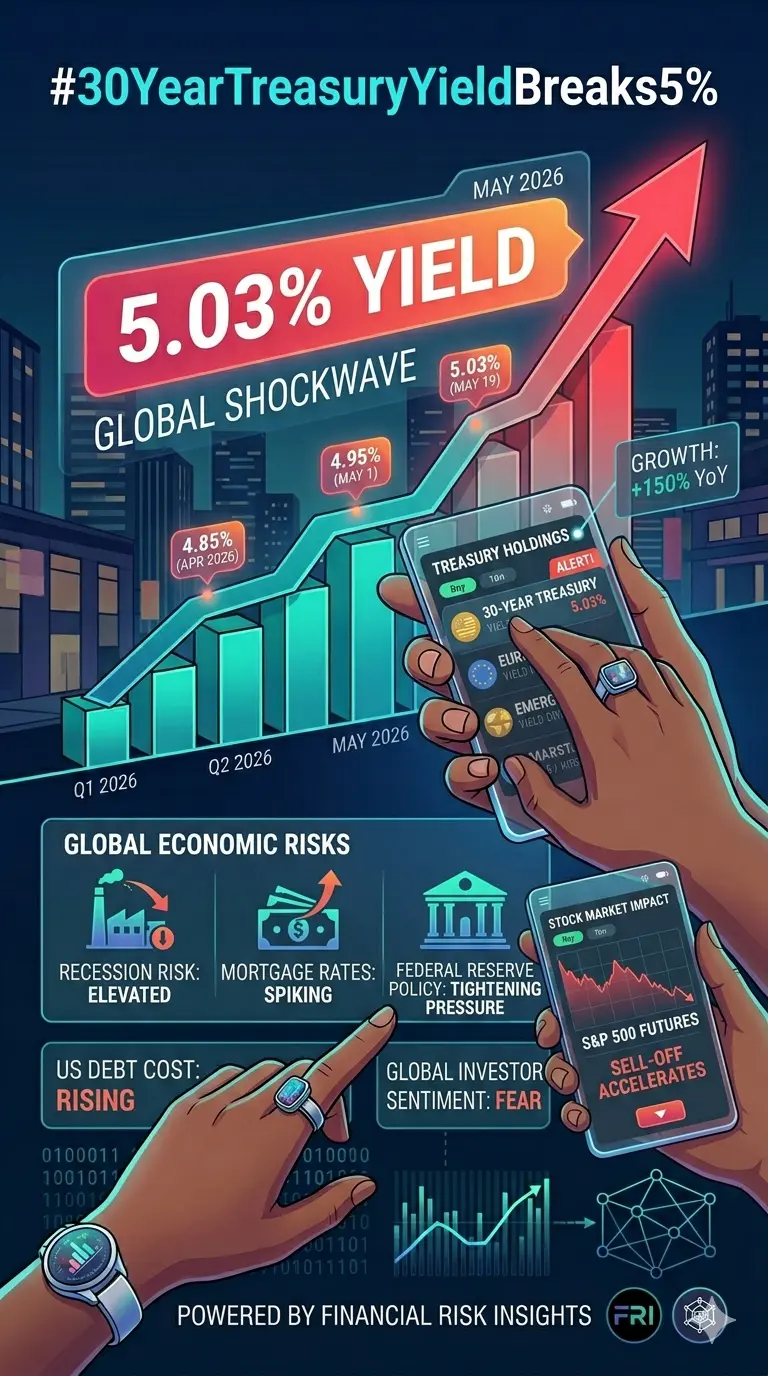
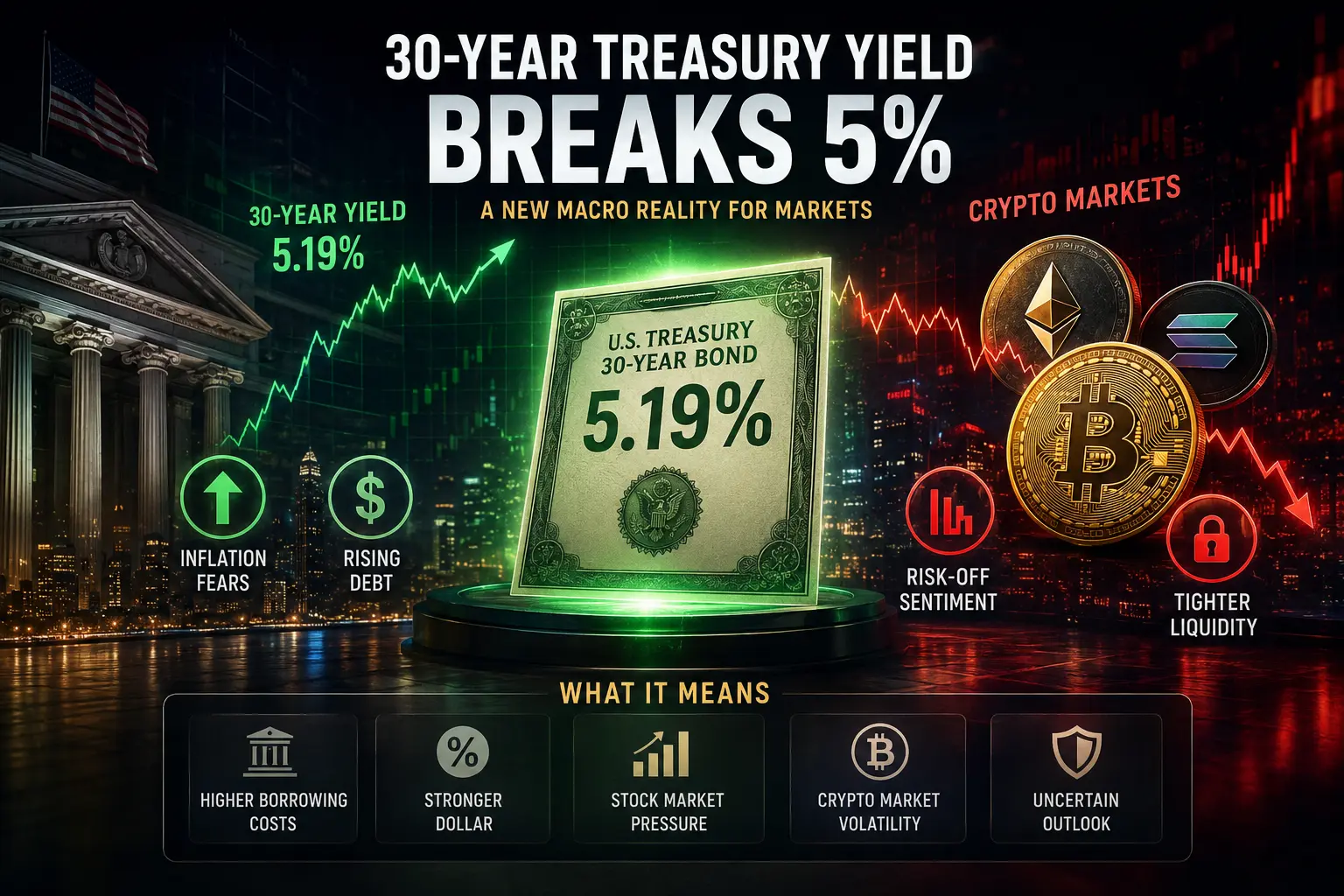
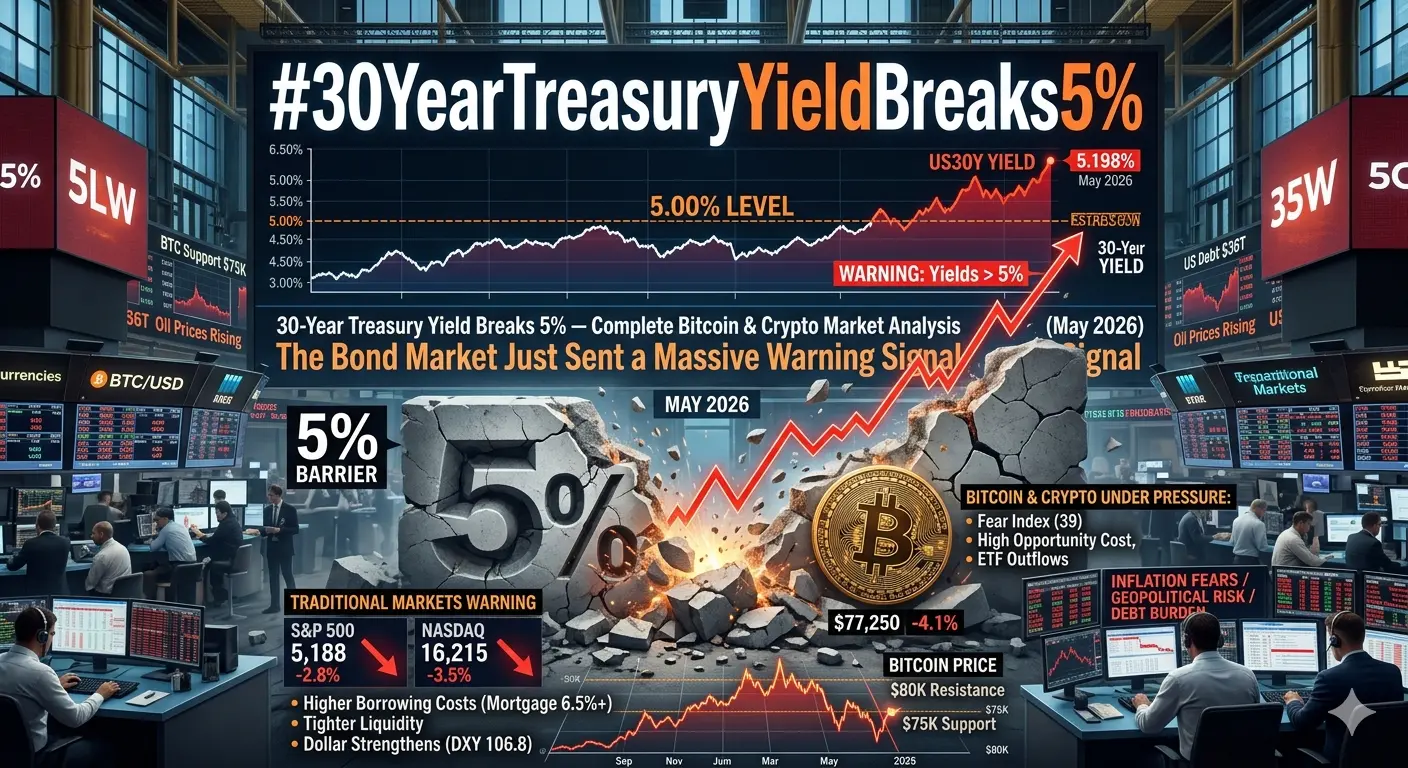
The 30-year Treasury yield surged to 5.16 percent on May 18, its highest level since 2007, with the 10-year yield breaking above 4.5 percent. April CPI rose 3.8 percent year over year while PPI surged 6 percent. Combined with energy price spikes from Middle East tensions, markets are now pricing in potential rate hikes before 2027. Bitcoin fell for the fifth consecutive day, and global risk assets remain under pressure as real yields climb.

#30YearTreasuryYieldBreaks5%
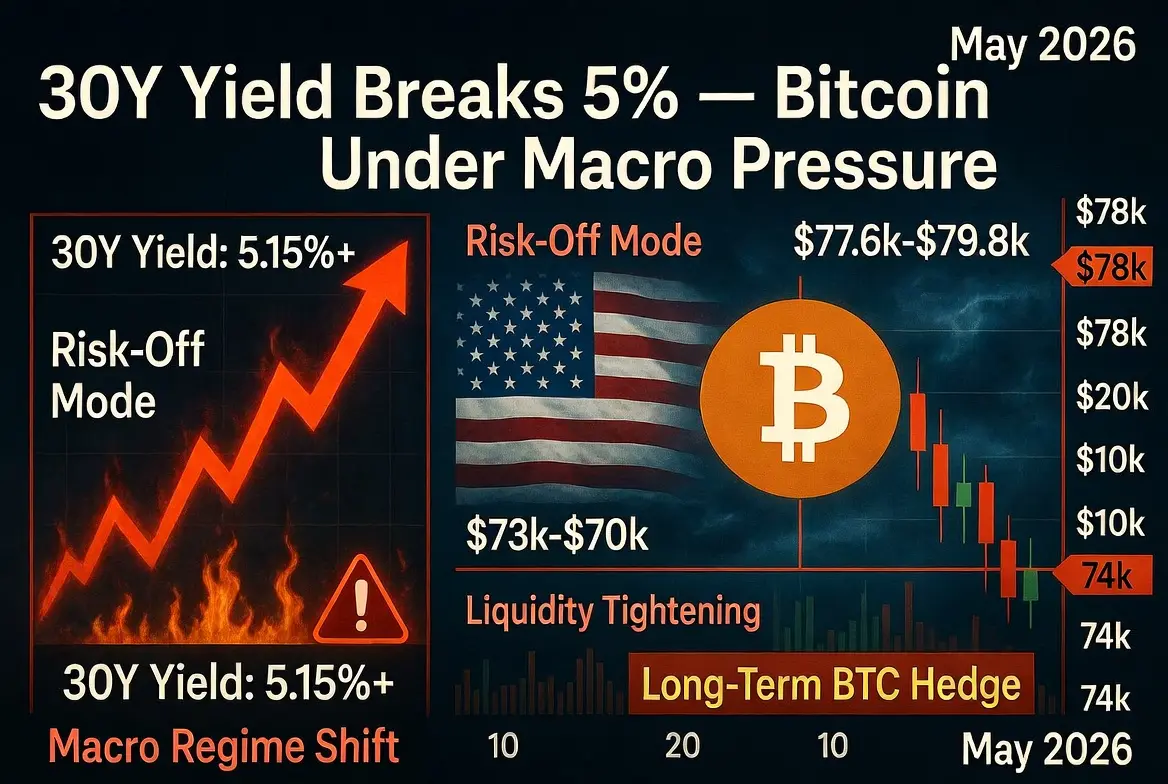
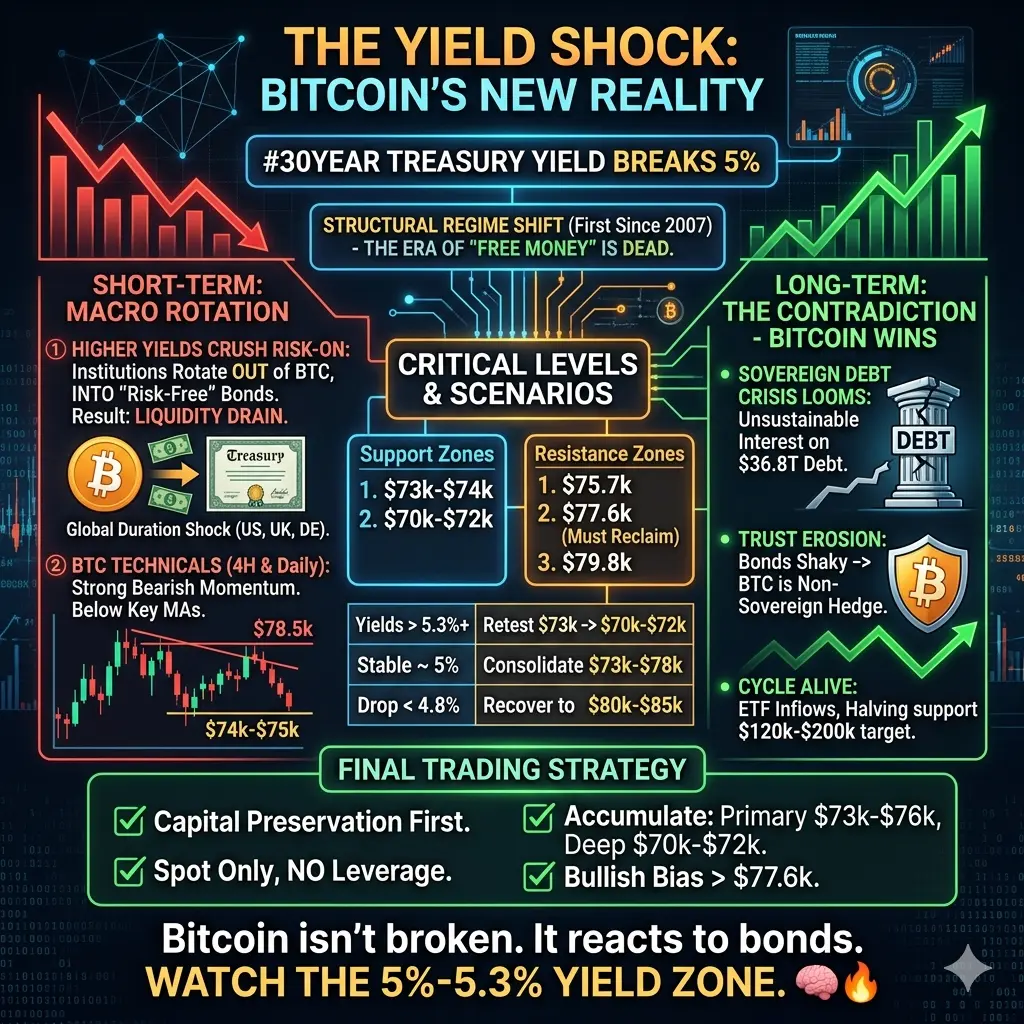
The 30-year US Treasury yield has pierced 5.15% . This is NOT a spike. It’s a structural regime shift – the first since 2007. The era of free money is dead. Here is exactly what happens to Bitcoin now.
---
📍 Point 1: Why 5% Yields Destroy "Risk-On" Assets
Higher yields = Higher risk-free return = Less reason to hold volatile assets.
· The New Anchor: 5%+ on a "risk-free" bond changes global capital allocation.
· The Cost: Holding BTC now has a 5%+ opportunity cost vs. Treasuries.
· The Liquidity Drain: US debt interest costs approach $1 Trillion/year. This sucks
BTC1.93%
post-image
  • Reward
  • 9
  • Repost
  • Share
BlackBullion_Alpha:
Ape In 🚀
View More
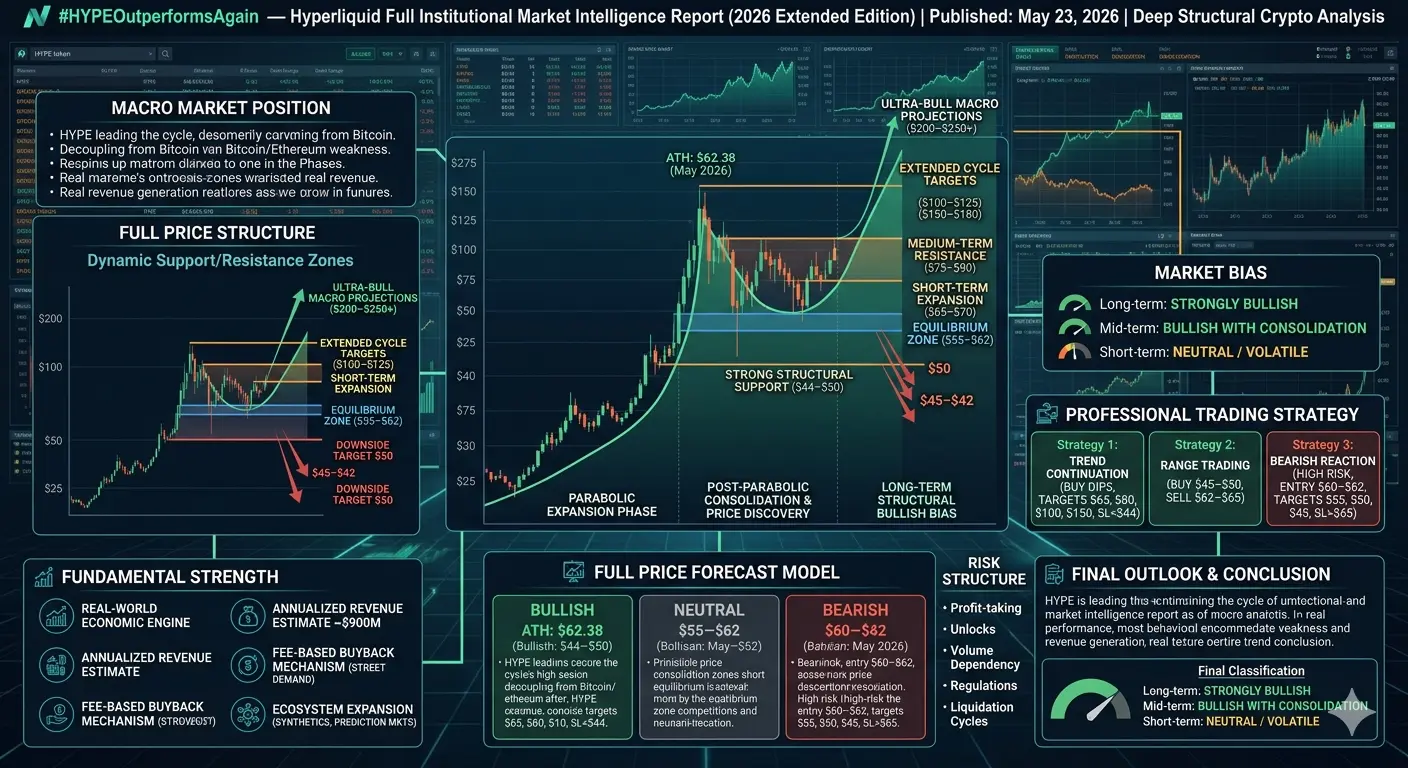
#DailyPolymarketHotspot #PlatinumCardCreatorExclusive #30YearTreasuryYieldBreaks5% | HYPE: Macro Decoupling & The 2026 Playbook 📈
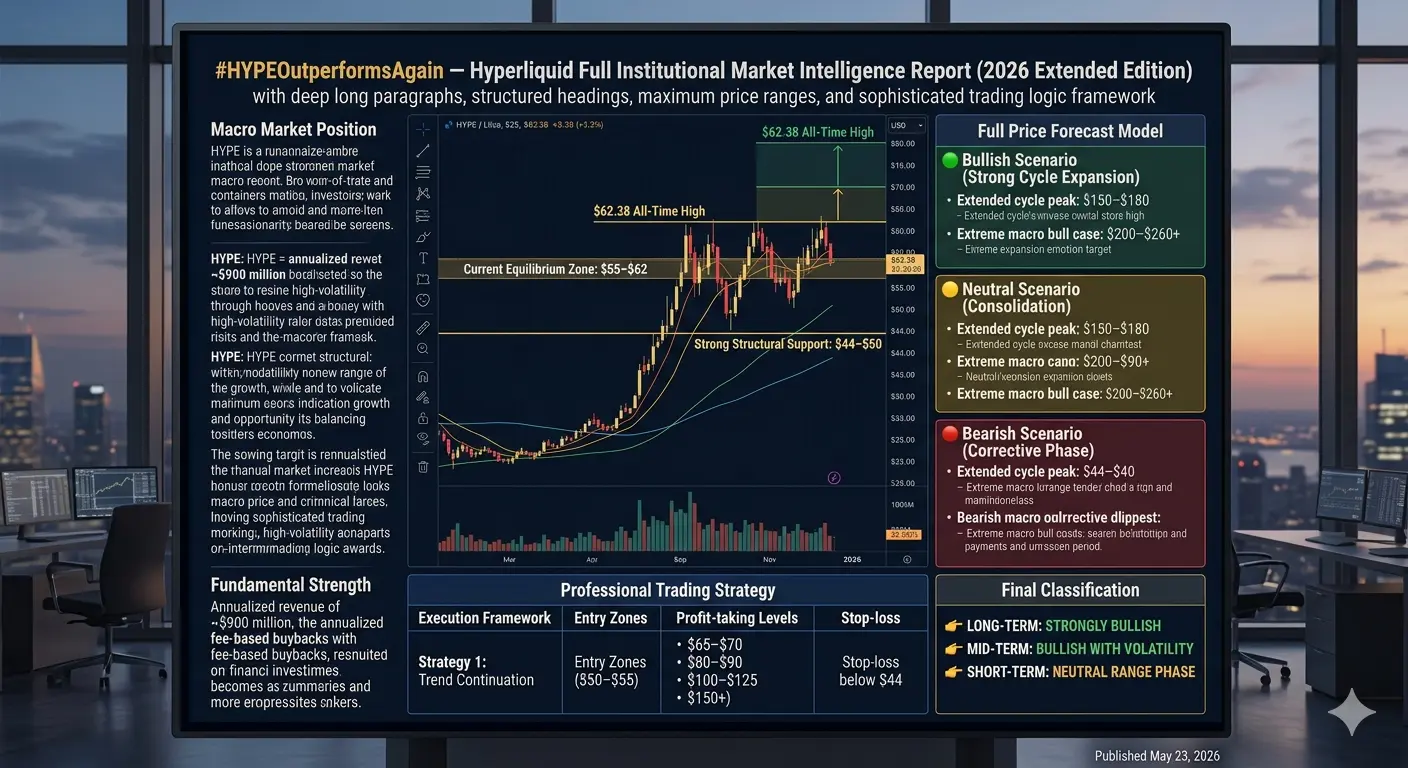
1. Macro Market Position & Decoupling
HYPE has established itself as a premier asset in the 2026 crypto cycle, shifting from a sentiment-driven altcoin to a hybrid of high-growth fintech equity and crypto-native infrastructure.
The 2026 Revaluation: The climb from ~$25 to an All-Time High (ATH) of $62.38 reflects structural dominance in decentralized perpetual futures.
Relative Strength: HYPE has actively decoupled from broader market weakness (BTC/ETH corrections)
HYPE9.9%
BTC1.93%
ETH2.69%
post-image
post-image
  • Reward
  • 5
  • Repost
  • Share
MasterChuTheOldDemonMasterChu:
Steadfast HODL💎
View More
#30YearTreasuryYieldBreaks5% | The Price of Money Just Changed
A 30-year Treasury yield above 5% is not just a bond-market statistic.
It is a repricing of global risk.
When the world’s benchmark long-duration asset resets higher, every speculative market — including crypto — must reassess liquidity, valuation assumptions, and positioning behavior.
MACRO RESET
The market is no longer debating rate cuts.
It is repricing duration risk.
A 5%+ long bond changes the psychology of capital allocation because investors suddenly receive meaningful “risk-free” yield again.
That matters for crypto.
Bitcoi
BTC1.93%
post-image
post-image
  • Reward
  • 3
  • Repost
  • Share
Yusfirah:
To The Moon 🌕
View More
#30YearTreasuryYieldBreaks5% Global markets are entering one of the most important macro phases of 2026, and I think many retail crypto traders still do not fully understand how dangerous rising Treasury yields can become for risk assets.
As of May 23, 2026, the U.S. 30-Year Treasury Yield remains elevated around 5.16%, while the 10-Year Treasury continues trading above 4.5%. These are levels the market has not comfortably handled in years, and the impact is now spreading across Bitcoin, altcoins, equities, real estate, and global liquidity flows.
What makes this situation even more serious i
BTC1.93%
post-image
post-image
  • Reward
  • 6
  • Repost
  • Share
MasterChuTheOldDemonMasterChu:
Just charge forward 👊
View More
#30YearTreasuryYieldBreaks5%
Global markets are entering one of the most important macro phases of 2026, and I think many retail crypto traders still do not fully understand how dangerous rising Treasury yields can become for risk assets.
As of May 23, 2026, the U.S. 30-Year Treasury Yield remains elevated around 5.16%, while the 10-Year Treasury continues trading above 4.5%. These are levels the market has not comfortably handled in years, and the impact is now spreading across Bitcoin, altcoins, equities, real estate, and global liquidity flows
BTC1.93%
Yusfirah
#30YearTreasuryYieldBreaks5% Global markets are entering one of the most important macro phases of 2026, and I think many retail crypto traders still do not fully understand how dangerous rising Treasury yields can become for risk assets.
As of May 23, 2026, the U.S. 30-Year Treasury Yield remains elevated around 5.16%, while the 10-Year Treasury continues trading above 4.5%. These are levels the market has not comfortably handled in years, and the impact is now spreading across Bitcoin, altcoins, equities, real estate, and global liquidity flows.
What makes this situation even more serious is that inflation pressure is not cooling fast enough. Recent CPI and PPI data continue showing stubborn inflation, while oil and energy markets remain unstable because of ongoing geopolitical tensions in the Middle East.
Just a few months ago, most traders were fully convinced that aggressive Fed rate cuts were coming in 2026. That expectation became one of the biggest reasons behind Bitcoin’s strong rally earlier this year.
But now the narrative is changing.
Instead of discussing multiple rate cuts, markets are increasingly preparing for a “higher for longer” environment. Some institutional analysts are even warning that if inflation stays persistent, the Federal Reserve may keep tightening conditions far longer than expected.
This is exactly why macro matters so much for crypto.
When Treasury yields rise aggressively, institutional money suddenly has safer alternatives offering attractive returns with far lower volatility. A 5%+ long-duration Treasury yield changes the entire risk-reward equation for large investors.
Why would major funds aggressively deploy billions into volatile crypto assets when government bonds are already offering strong returns with significantly less risk exposure?
That shift in capital flow creates pressure on speculative assets, especially highly leveraged sectors of the crypto market.
Personally, I still remain bullish on Bitcoin long term because I believe BTC continues strengthening its position as a global digital asset and liquidity hedge over time. But in the short term, I think this macro environment requires much more discipline than many traders are currently showing.
Right now, my focus is not aggressive overleveraging. My strategy is centered around:
• Preserving capital during uncertainty
• Reducing unnecessary leverage
• Waiting for high-probability setups
• Managing emotional trading decisions
• Respecting macroeconomic pressure instead of ignoring it
In my experience, traders often lose the most money during periods where macro conditions suddenly shift against market expectations. The market punishes complacency very quickly.
This is not the environment for blind FOMO buying or emotional revenge trading. Volatility remains extremely high, and liquidity conditions can change rapidly depending on inflation data, Federal Reserve commentary, bond yields, and geopolitical developments.
If inflation begins cooling later this year and Treasury yields stabilize, crypto markets could recover strong bullish momentum again. But until then, patience and risk management are more important than hype.
Protecting capital is also part of winning.
The traders who survive difficult macro environments are usually the same traders who dominate the next major bull cycle.
So what’s your strategy right now?
Reducing exposure? Holding strong conviction? Or buying the dip aggressively despite rising real yields?
#Bitcoin #CryptoMarket #RiskManagement

repost-content-media
  • Reward
  • 5
  • Repost
  • Share
MasterChuTheOldDemonMasterChu:
Just charge forward 👊
View More
#30YearTreasuryYieldBreaks5%
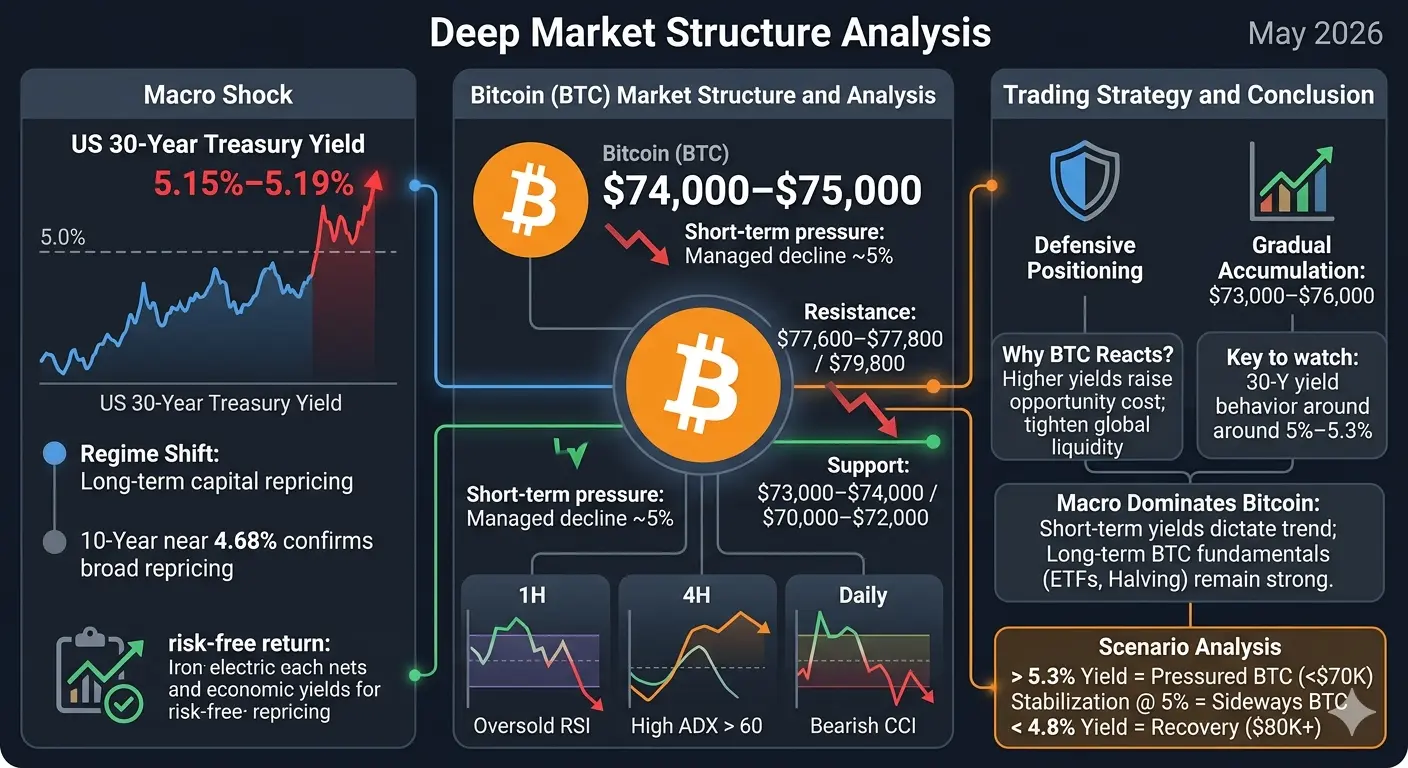
Macro Shock Overview: 5%+ 30Y Yield as a Structural Shift
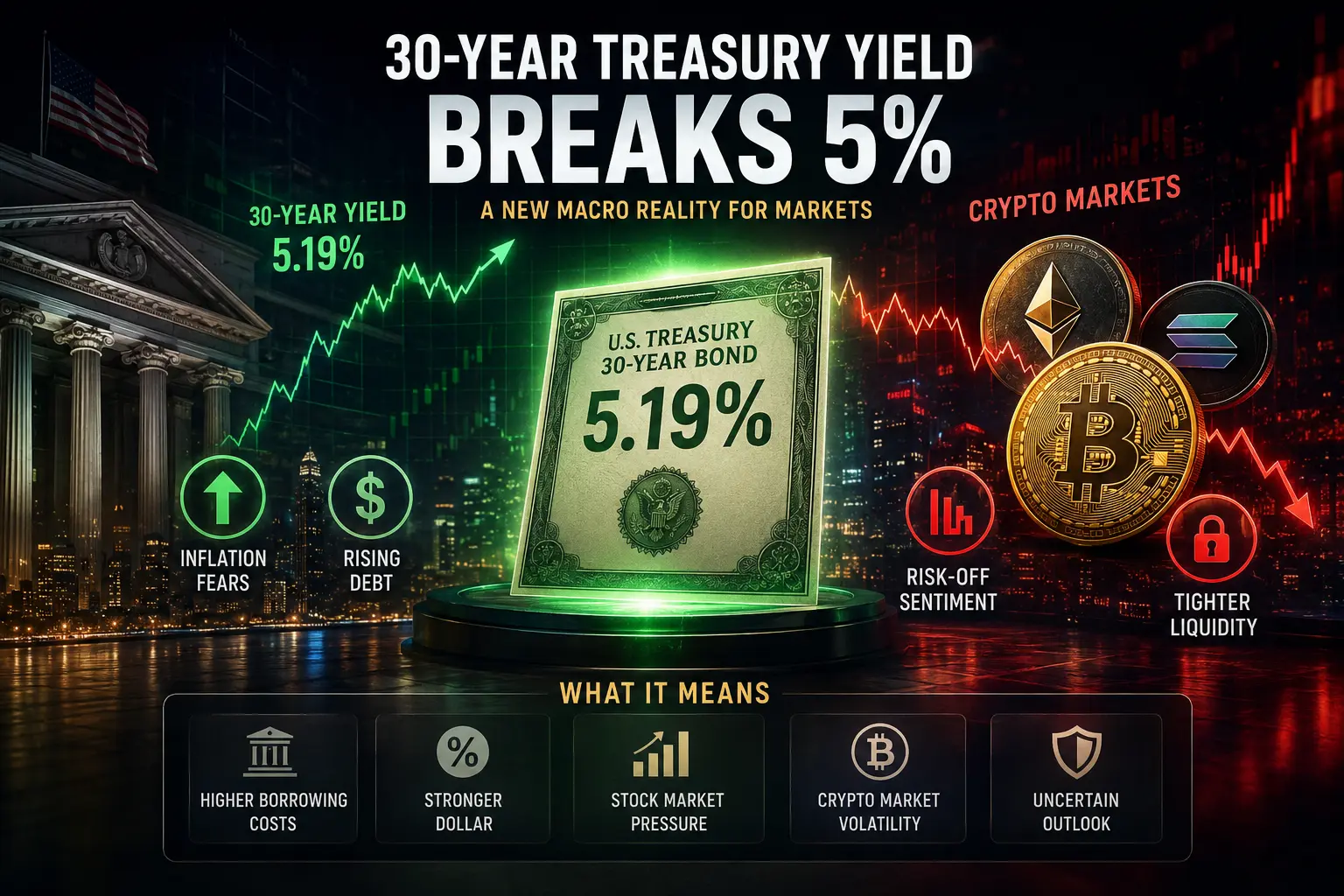
The US 30-year Treasury yield moving above 5% (currently ~5.15%–5.19%) represents a major global macro regime shift not seen since the pre-2007 era. It signals a full repricing of long-term capital, where the “risk-free” benchmark is no longer anchored at ultra-low levels.
The 10-year yield near 4.68% confirms this is not a temporary spike but a broad yield curve repricing. Markets are now adjusting to a world where long-duration money is structurally more expensive, and the era of near-zero long-term rate
BTC1.93%
post-image
post-image
  • Reward
  • 29
  • Repost
  • Share
ybaser:
2026 GOGOGO 👊
View More
#30YearTreasuryYieldBreaks5%
⚠️ 30-Year Treasury at 5.16% — This is the Macro Warning Signal Every Crypto Trader Needs to See
I'm going to be real with you right now because I think a lot of retail traders are underestimating what's happening in the bond market and it's going to hurt portfolios that aren't paying attention.
The 30-year Treasury yield just hit 5.16%. Highest level since 2007. The 10-year cracked above 4.5%. April CPI printed 3.8% year over year and PPI came in at a scorching 6%. Layer in energy price spikes from Middle East tensions and suddenly the Fed's next move isn't a cut
BTC1.93%
post-image
  • Reward
  • 10
  • Repost
  • Share
ybaser:
To The Moon 🌕
View More
#30YearTreasuryYieldBreaks5%
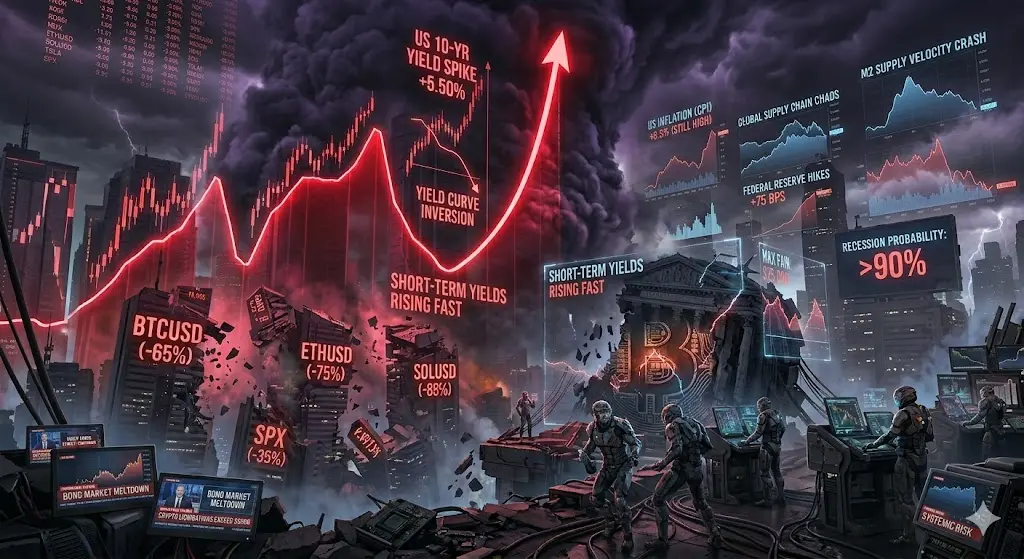
Global financial markets may now be entering one of the most fragile macroeconomic periods since the aftermath of the 2008 financial crisis as U.S. Treasury yields continue surging toward levels many investors believed would never return in the modern liquidity era. What initially appeared to be a temporary inflation problem has now evolved into a much deeper structural threat involving persistent price pressure, rising borrowing costs, geopolitical instability, sovereign debt concerns, and the growing realization that the age of ultra-cheap money may finally be e
MrFlower_XingChen
#30YearTreasuryYieldBreaks5%
Global financial markets are entering one of the most fragile and dangerous macroeconomic environments seen since the aftermath of the 2008 financial crisis as U.S. Treasury yields continue surging toward levels that many investors believed would not return for decades. The recent breakout in long-term Treasury yields is now sending shockwaves through equities, cryptocurrencies, commodities, emerging markets, and global liquidity conditions simultaneously. What initially appeared to be a temporary inflation problem has now evolved into a much larger structural threat involving persistent price pressure, tightening monetary conditions, geopolitical instability, sovereign debt concerns, and the growing possibility that the era of cheap money may finally be ending.
The biggest warning signal emerged when the U.S. 30-year Treasury yield surged above 5%, reaching levels not seen since 2007. At the same time, the benchmark 10-year Treasury yield pushed decisively above the critical 4.5% threshold, triggering widespread concern across institutional markets. These yield levels matter enormously because U.S. Treasuries form the foundation of the entire global financial system. Every major asset class — including stocks, real estate, technology companies, emerging market debt, venture capital, and cryptocurrencies — is ultimately priced relative to Treasury yields. When Treasury yields rise aggressively, borrowing costs increase throughout the economy, liquidity conditions tighten, and risk assets suddenly become less attractive compared to safer government debt instruments.
In simple terms, investors can now earn significantly higher returns with lower risk by simply holding U.S. government bonds. This dramatically changes global capital allocation behavior. For over a decade, investors operated inside an environment dominated by ultra-low interest rates and abundant liquidity. Cheap money pushed enormous amounts of capital into speculative assets, fueling massive rallies across technology stocks, startup funding, real estate, and crypto markets. But when Treasury yields suddenly climb above 5%, institutional investors begin reassessing whether the risk-reward profile of speculative assets still justifies aggressive exposure.
What makes the current situation especially dangerous is that the yield surge is not occurring in isolation. It is being driven by a combination of persistent inflation, rising producer costs, geopolitical instability, and deteriorating confidence in the Federal Reserve’s ability to quickly normalize conditions. Recent inflation data showed that consumer prices remain significantly above the Federal Reserve’s long-term target despite months of restrictive monetary policy. Even more concerning, Producer Price Index data has accelerated sharply, signaling that inflationary pressure remains deeply embedded within supply chains and production systems across the economy.
The surge in producer prices is particularly alarming because it suggests businesses continue facing higher operational and manufacturing costs. Historically, rising producer costs often eventually pass through to consumers in the form of higher retail prices, meaning inflation may remain persistent far longer than markets originally expected. Investors previously assumed inflation would gradually cool during 2026, allowing the Federal Reserve to pivot toward interest rate cuts and monetary easing. Instead, the latest data is forcing markets to rapidly reprice expectations toward a much more hawkish environment.
At the same time, geopolitical tensions across the Middle East are adding another dangerous layer of inflation risk through energy markets. Oil prices remain highly volatile as uncertainty surrounding regional military risks, shipping routes, supply chains, and Iran-related negotiations continues affecting global energy expectations. Rising oil prices influence nearly every part of the global economy because energy costs directly impact transportation, manufacturing, logistics, agriculture, food production, and consumer spending. This creates the possibility of a stagflationary environment where inflation remains elevated even as economic growth begins slowing — one of the most difficult scenarios for policymakers and investors to navigate.
As inflation fears continue intensifying, markets are now beginning to consider a scenario that many investors previously viewed as impossible: the possibility that the Federal Reserve may maintain restrictive rates far longer than expected or potentially even consider additional tightening before meaningful rate cuts arrive. This shift in expectations represents a major structural shock because much of the global risk-asset rally over the past year was built on the assumption that monetary easing would eventually return. That assumption is now rapidly collapsing under the weight of stronger inflation data and rising Treasury yields.
The crypto market has become one of the biggest victims of this macroeconomic repricing event. Bitcoin has experienced sustained selling pressure as rising real yields continue draining liquidity away from speculative markets. Higher yields are especially problematic for cryptocurrencies because digital assets do not generate traditional cash flows, dividends, or guaranteed income streams. When investors can suddenly earn attractive low-risk returns through Treasury bonds, the incentive to hold highly volatile speculative assets declines significantly.
Institutional investors are increasingly reducing exposure to higher-risk positions and rotating capital toward safer fixed-income opportunities. This shift is now becoming visible across the broader market structure. Bitcoin’s weakness is not simply a crypto-specific problem — it reflects tightening global liquidity conditions driven directly by macroeconomic forces. Altcoins have also experienced heavy volatility as leveraged traders unwind positions amid fears that high interest rates may remain elevated far longer than anticipated.
The rise in real yields is particularly important for understanding current market behavior. Real yields measure bond returns adjusted for inflation expectations and are considered one of the most critical indicators influencing risk assets. When real yields rise sharply, financial conditions tighten, valuation pressure increases, and speculative appetite typically weakens. Historically, periods of aggressively rising real yields have often coincided with major corrections across crypto markets, technology equities, growth stocks, and emerging market assets. This is why many macro-focused investors are watching Treasury markets more closely than individual crypto narratives right now.
Institutional participants now face an extremely complex macroeconomic environment. On one side, inflation remains too high for the Federal Reserve to comfortably ease monetary policy. On the other side, economic growth risks continue increasing as financing costs rise across the economy. Markets are effectively trapped between inflation fear and recession fear simultaneously — one of the most difficult conditions for policymakers to manage successfully.
The Federal Reserve itself is now under enormous pressure. If inflation continues accelerating while Treasury yields remain elevated, policymakers may be forced to maintain restrictive financial conditions far longer than markets currently hope. Some analysts have even begun discussing the possibility that the Fed may prioritize controlling inflation expectations even if it means tolerating slower economic growth, weaker labor markets, and higher financial stress across asset markets. Such an approach would likely continue pressuring liquidity-sensitive sectors including crypto, technology stocks, and highly leveraged investments.
For crypto traders and investors, the coming months may become critically important. Bitcoin’s recent weakness reflects growing caution as macroeconomic uncertainty dominates investor sentiment. Every new inflation report, Treasury auction, oil price movement, employment release, and Federal Reserve statement now has the potential to dramatically influence crypto volatility within hours. Unlike previous cycles where narratives alone could drive momentum, markets are now increasingly controlled by global liquidity conditions and macroeconomic expectations.
At the same time, some long-term Bitcoin supporters argue that persistent inflation, sovereign debt expansion, and weakening confidence in traditional monetary systems could eventually strengthen Bitcoin’s long-term role as an alternative financial asset. Their thesis is that continued debt growth, currency debasement risks, and monetary instability may eventually encourage investors to seek decentralized stores of value outside the traditional financial system. However, even many bullish Bitcoin supporters acknowledge that short-term liquidity conditions remain the dominant force driving market behavior right now.
The key issue moving forward is whether Treasury yields stabilize or continue climbing higher. If the 30-year yield remains above 5% while the 10-year Treasury continues trending upward, pressure on equities, housing markets, corporate financing, and crypto assets could intensify significantly. Global markets have become deeply dependent on cheap liquidity over the past decade, and the current environment suggests liquidity is becoming increasingly expensive and scarce.
Ultimately, the Treasury yield surge is no longer just a bond market story. It has evolved into a full-scale macroeconomic warning signal affecting nearly every corner of global finance. Persistent inflation, geopolitical instability, tightening liquidity conditions, sovereign debt concerns, and shifting Federal Reserve expectations are now colliding simultaneously, creating one of the most fragile market environments since the aftermath of the global financial crisis.
For Bitcoin and other risk assets, the next major phase will likely depend less on hype narratives and more on one central macroeconomic question: can global markets successfully adapt to an extended era of higher rates, tighter liquidity, and expensive capital — or is a much deeper correction still waiting ahead?
  • Reward
  • 10
  • Repost
  • Share
MasterChuTheOldDemonMasterChu:
DYOR 🤓
View More
#30YearTreasuryYieldBreaks5% 📊 📊
A major macro signal is hitting global markets as the 30-year U.S. Treasury yield breaks above 5%, reflecting rising long-term borrowing costs and shifting investor expectations. 🌍📉
🔥 Why this matters:
• Higher yields signal tighter financial conditions
• Borrowing becomes more expensive for governments and corporations
• Equity valuations often face pressure in high-rate environments
• Risk assets like crypto can see increased volatility
📈 Market impact overview:
• Stocks: potential downside pressure on growth sectors
• Bonds: renewed demand shifts along
BTC1.93%
post-image
post-image
  • Reward
  • 4
  • Repost
  • Share
AylaShinex:
LFG 🔥
View More
#30YearTreasuryYieldBreaks5% 30-Year Treasury Yields Above 5% What It Means for Crypto, Stocks, and Global Markets
The 30-year U.S. Treasury yield crossing above the psychologically significant 5% threshold marks a pivotal moment in global financial markets. This development carries profound implications for asset allocation, risk sentiment, and investment strategy across multiple sectors.
Significance of the 5% Level: The 5% yield level represents more than a mathematical threshold it embodies a fundamental reassessment of long-term economic expectations. Investors witnessing risk-free rates
BTC1.93%
post-image
  • Reward
  • 4
  • Repost
  • Share
ybaser:
To The Moon 🌕
View More
Load More