Perp DEX là gì? Tổng quan về các loại nền tảng phổ biến
Perp DEX (sàn giao dịch hợp đồng tương lai vĩnh viễn phi tập trung) là giao thức cho phép người dùng giao dịch hợp đồng tương lai vĩnh viễn trực tiếp trên blockchain. Khác với spot DEX, Perp DEX hỗ trợ giao dịch đòn bẩy và cả vị thế mua lẫn bán, sử dụng cơ chế tỷ lệ tài trợ để liên kết giá hợp đồng với thị trường giao ngay.
Hiện nay, các Perp DEX phổ biến được chia thành hai nhóm chính:
- Nền tảng vận hành bằng AMM, tiêu biểu như GMX và Gains Network. Các nền tảng này dựa vào pool thanh khoản để xác định giá; giao dịch đơn giản nhưng hiệu quả phát hiện giá và trượt giá khi giao dịch lớn còn hạn chế.
- Nền tảng dựa trên sổ lệnh, như dYdX và Hyperliquid, thực hiện khớp lệnh mua bán. Mô hình này gần với logic của các sàn tập trung, phù hợp với nhà giao dịch chuyên nghiệp và giao dịch tần suất cao.
Định vị tổng thể và triết lý thiết kế của Hyperliquid
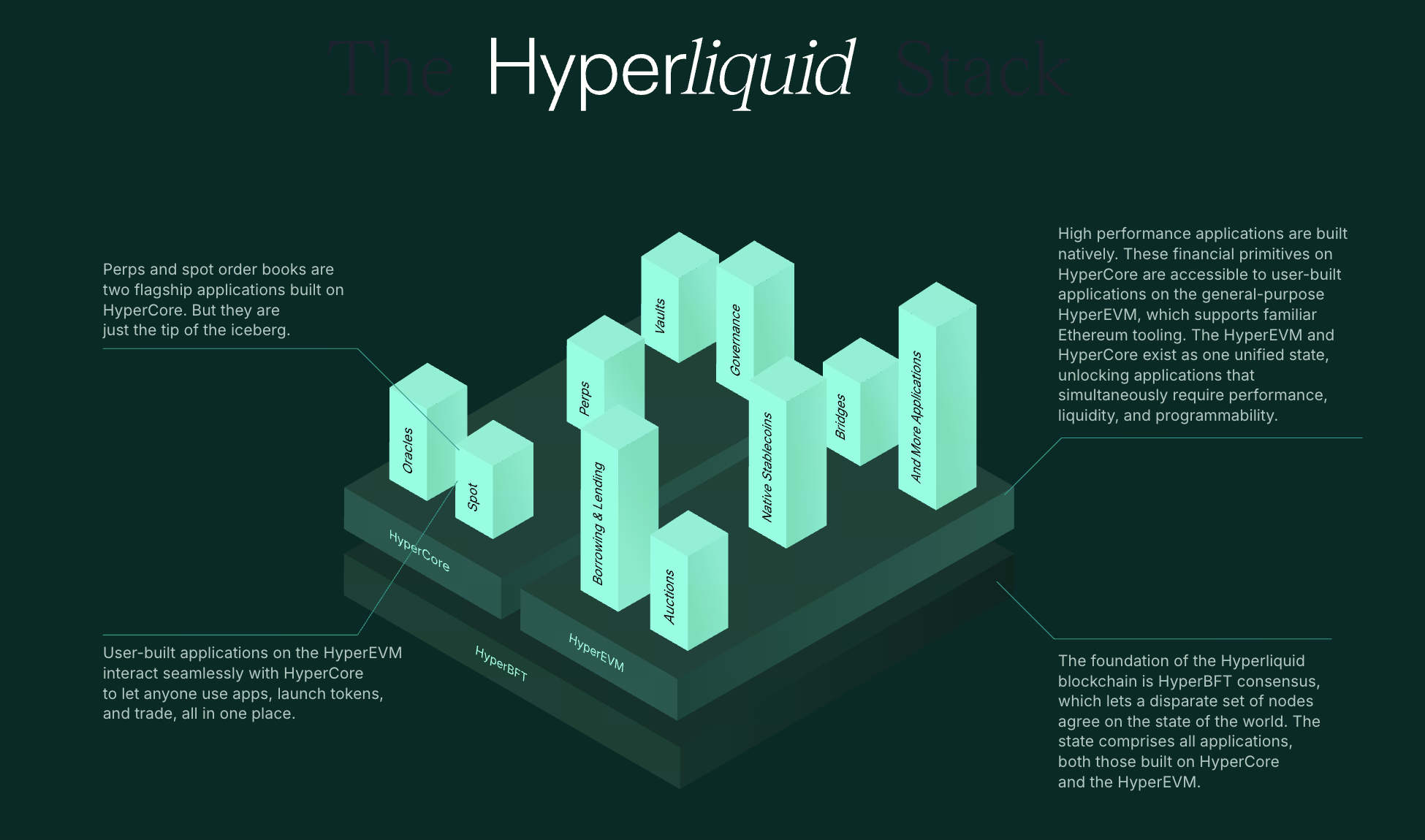
Nguồn: https://hyperfoundation.org/
Hyperliquid có định vị rất rõ ràng: xây dựng Perp DEX chuyên nghiệp, hoàn toàn on-chain nhưng trải nghiệm gần như CEX. Khác với nhiều giao thức phát triển trên blockchain đa năng, Hyperliquid phát triển Layer 1 riêng với hiệu năng cao, tùy biến sâu cho giao dịch phái sinh, gồm động cơ khớp lệnh, logic thanh lý và đồng bộ trạng thái.
Triết lý thiết kế này khiến Hyperliquid không ưu tiên “tính đa dụng”, mà chấp nhận giảm khả năng mở rộng hệ sinh thái để đổi lấy hiệu năng giao dịch cực cao và độ ổn định vượt trội. Đây là điểm đặc biệt quan trọng với các nhà giao dịch tần suất cao và vốn lớn.
Sổ lệnh on-chain và mô hình AMM
Mô hình AMM có ưu điểm đơn giản: chỉ cần pool thanh khoản là vận hành được, không cần hệ thống khớp lệnh phức tạp. Tuy nhiên, với giao dịch hợp đồng tương lai vĩnh viễn, mô hình này có những hạn chế rõ rệt:
- Trượt giá lớn với giao dịch khối lượng lớn
- Giá xác định bằng thuật toán, khó phản ánh cạnh tranh thị trường thực
- Hạn chế không gian cho chiến lược giao dịch chuyên nghiệp như tạo lập thị trường và arbitrage
Sổ lệnh on-chain gần với cấu trúc sàn truyền thống. Tất cả thao tác đặt, hủy, khớp lệnh trên Hyperliquid đều ghi nhận on-chain, giá do thị trường quyết định. Mô hình này giúp phát hiện giá hiệu quả hơn và tạo nền tảng cho chiến lược giao dịch cao cấp.
Ưu điểm của Hyperliquid về hiệu năng giao dịch
Hiệu năng là đặc điểm nổi bật của Hyperliquid. Đa số người dùng nhận thấy tốc độ xác nhận và khớp lệnh trên Hyperliquid nhanh hơn rõ rệt so với các Perp DEX xây dựng trên Ethereum rollup. Nguyên nhân chính gồm:
- Chuỗi riêng giúp giảm nút thắt hiệu năng của blockchain đa năng
- Cơ chế khớp lệnh và cập nhật trạng thái hiệu quả
- Môi trường giao dịch độ trễ thấp, phí gas thấp
Với nhà giao dịch chủ động, độ trễ thấp giảm trượt giá và kiểm soát rủi ro tốt hơn, đặc biệt trong thị trường biến động mạnh.
So sánh điểm khác biệt cốt lõi với các nền tảng như dYdX và GMX
| Tiêu chí so sánh |
Hyperliquid |
dYdX |
GMX |
| Loại nền tảng |
Perp DEX (sổ lệnh) |
Perp DEX (sổ lệnh + rollup) |
Perp DEX (AMM / pool thanh khoản) |
| Kiến trúc nền tảng |
Layer 1 riêng, chuyên biệt cho phái sinh |
Kiến trúc Cosmos / rollup |
Xây dựng trên Arbitrum / Avalanche |
| Mô hình giao dịch |
Sổ lệnh on-chain hoàn toàn |
Sổ lệnh (khớp lệnh một phần off-chain) |
Mô hình định giá AMM |
| Cơ chế phát hiện giá |
Sổ lệnh vận hành bởi thị trường |
Sổ lệnh vận hành bởi thị trường |
Oracle + pool thanh khoản |
| Độ trễ khớp lệnh |
Rất thấp, gần với trải nghiệm CEX |
Thấp, nhưng bị ảnh hưởng bởi rollup |
Thấp hơn, nhưng giao dịch lớn dễ trượt giá |
| Trải nghiệm giao dịch lớn |
Trượt giá rất thấp, sổ lệnh sâu |
Trượt giá thấp |
Trượt giá cao |
| Đối tượng người dùng phù hợp |
Nhà giao dịch chủ động, ngắn hạn |
Nhà giao dịch chủ động, tổ chức |
Nhà đầu tư giữ vị thế trung và dài hạn |
| Thiết kế đòn bẩy và rủi ro |
Logic rủi ro chuyên sâu, đa dạng |
Đa dạng, phù hợp tổ chức |
Tương đối đơn giản |
| Thanh toán và quyết toán |
Quyết toán on-chain, minh bạch cao |
Quy tắc khá hoàn thiện, logic bán tập trung |
Kiểm soát bằng tham số |
| Trải nghiệm người dùng |
Gần với CEX cho chuyên gia |
Chuyên nghiệp nhưng có chi phí học |
Đơn giản hơn |
| Nhóm người dùng mục tiêu |
Nhà giao dịch chuyên nghiệp, chủ động |
Nhà giao dịch chuyên nghiệp, tổ chức |
Người dùng DeFi phổ thông |
| Khả năng kết hợp DeFi |
Tương đối hạn chế |
Trung bình |
Cao |
| Mức độ phi tập trung |
Cao (thực thi hoàn toàn on-chain) |
Trung bình đến cao |
Cao |
So với dYdX, Hyperliquid cũng dùng mô hình sổ lệnh nhưng mức độ thực thi on-chain cao hơn. Các phiên bản đầu của dYdX dựa vào khớp lệnh off-chain, còn Hyperliquid từ đầu đã nhấn mạnh thực thi on-chain và minh bạch.
So với GMX, sự khác biệt càng rõ rệt. GMX hướng đến giao dịch thụ động, quản lý vị thế dài hạn, còn Hyperliquid phục vụ nhóm giao dịch chuyên nghiệp, tần suất cao, ngắn hạn.
Về nhóm người dùng, GMX chủ yếu thu hút người dùng DeFi phổ thông muốn sự đơn giản, còn Hyperliquid giống một sàn giao dịch chuyên nghiệp phi tập trung hơn.
Vì sao nhà giao dịch chuyên nghiệp ưu tiên chọn Hyperliquid
Nhà giao dịch chuyên nghiệp tập trung vào các yếu tố sau:
- Độ sâu và thanh khoản
- Độ chắc chắn khi khớp lệnh
- Cấu trúc phí dễ dự đoán
- Cơ chế thanh lý công bằng, minh bạch
Hyperliquid đáp ứng tốt các tiêu chí này. Sổ lệnh có độ sâu thực, khớp lệnh độ trễ thấp, quy tắc kiểm soát rủi ro rõ ràng phù hợp cho chiến lược phức tạp như giao dịch trong ngày, arbitrage, phòng ngừa rủi ro.
Giao diện và logic giao dịch Hyperliquid gần với CEX, giúp giảm chi phí học cho người dùng chuyên nghiệp chuyển từ nền tảng tập trung.
Những hạn chế và thách thức tiềm năng của Hyperliquid
Dù có nhiều ưu điểm, Hyperliquid vẫn đối mặt một số thách thức thực tế:
- Chuỗi riêng tạo hệ sinh thái khá khép kín, khả năng kết hợp với các giao thức DeFi lớn còn hạn chế.
- Mô hình sổ lệnh phụ thuộc vào nhà giao dịch chủ động; khi thị trường kém sôi động, độ sâu có thể giảm tạm thời.
- Khi khối lượng giao dịch tăng, việc cân bằng giữa ổn định hệ thống lâu dài và phi tập trung vẫn cần kiểm chứng theo thời gian.
Giới thiệu Gate Perp DEX
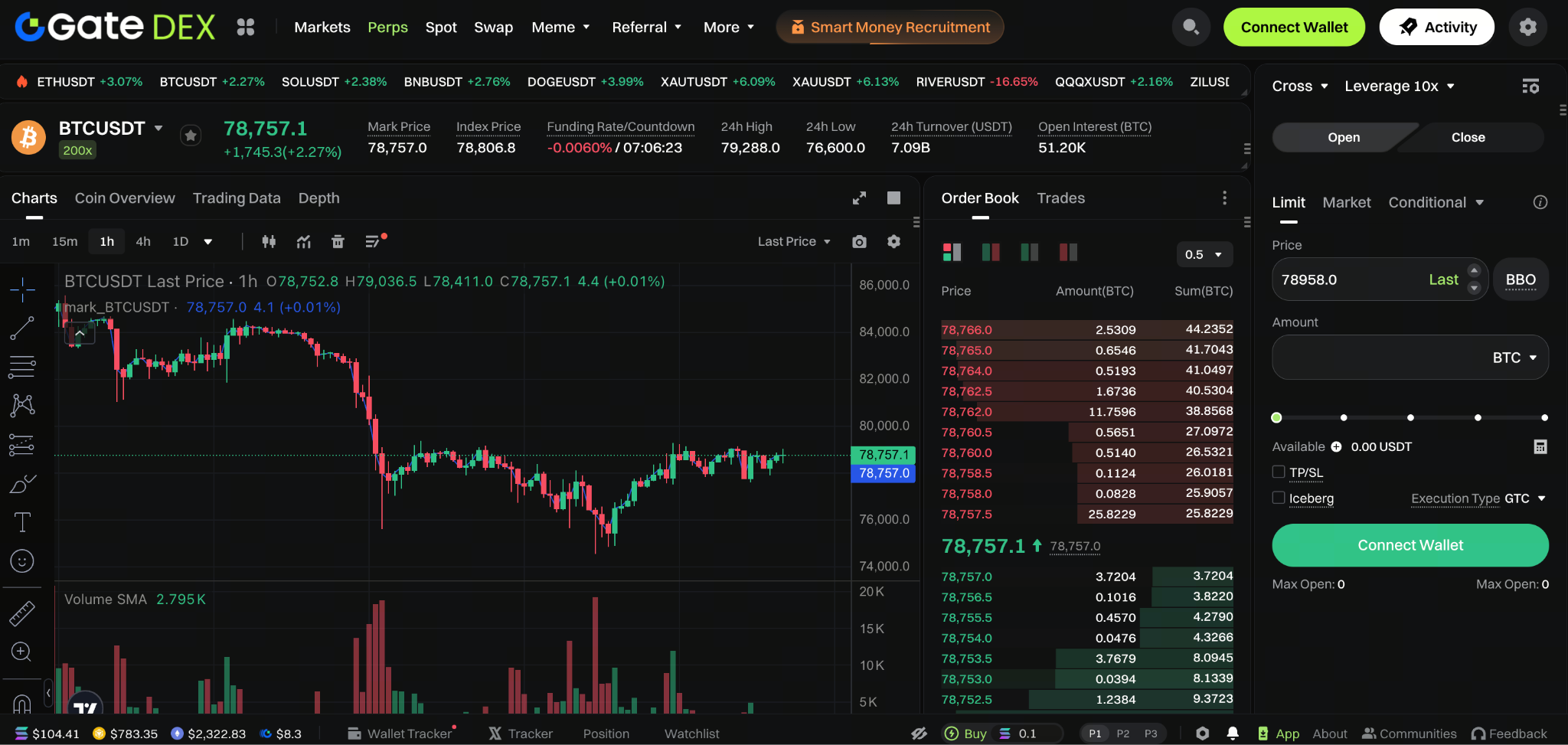
Nguồn: https://web3.gate.com/perps
Gate Perp DEX là nền tảng giao dịch hợp đồng tương lai vĩnh viễn phi tập trung do đội ngũ Gate phát triển, xây dựng trên mạng Gate Layer 2. Nền tảng này kết hợp ưu điểm hiệu năng của CEX với sự minh bạch, bảo mật của DEX. Nhờ kiến trúc Gate Layer thông lượng cao, nền tảng lý thuyết hỗ trợ trên 5.700 giao dịch mỗi giây (TPS), duy trì tốc độ giao dịch nhanh, độ trễ thấp ngay cả khi thị trường biến động mạnh. Sử dụng Layer 2 giúp giảm đáng kể chi phí giao dịch, tạo điều kiện cho giao dịch tần suất cao với phí thấp.
Gate Perp DEX áp dụng mô hình sổ lệnh on-chain để cải thiện độ sâu thị trường và hiệu suất chênh lệch giá. Nền tảng hỗ trợ nhiều loại lệnh như lệnh giới hạn, lệnh thị trường, lệnh cắt lỗ, chốt lời và cung cấp khả năng tương tác đa chuỗi, gồm nạp rút tài sản trên Ethereum, Solana, BNB Chain, Base. Chuyển tài sản giữa các chuỗi được thực hiện qua LayerZero, tăng cường thanh khoản.
Về đòn bẩy, nền tảng hỗ trợ mức đòn bẩy lên đến 200×, cung cấp cả cross-margin và isolated-margin, phù hợp với nhiều khẩu vị rủi ro và chiến lược giao dịch. Mọi giao dịch, luồng tiền đều ghi nhận on-chain thời gian thực, kiểm tra công khai, tài sản lưu ký bởi hợp đồng thông minh đã kiểm toán, tăng minh bạch và bảo mật.
Tổng thể, Gate Perp DEX thiết kế nhằm mang đến cho người dùng thị trường hợp đồng tương lai vĩnh viễn phi tập trung, truy cập trực tiếp qua ví Web3, cân bằng giữa hiệu năng, minh bạch, bảo mật, phục vụ đa dạng người dùng từ DeFi phổ thông đến nhà giao dịch chủ động.
Kết luận: Vị trí của Hyperliquid trong hệ sinh thái Perp DEX
Tổng thể, Hyperliquid giữ vị trí đặc biệt trong lĩnh vực Perp DEX. Thay vì là “sản phẩm DeFi đa dụng” cho mọi đối tượng, Hyperliquid tập trung phục vụ nhóm nhà giao dịch chuyên nghiệp, hoạt động mạnh.
Trong bối cảnh mô hình AMM vẫn chiếm ưu thế, thành công của Hyperliquid chứng minh tính khả thi của sổ lệnh on-chain và hạ tầng hiệu năng cao. Việc Hyperliquid có thể tiếp tục mở rộng thanh khoản, duy trì lợi thế công nghệ sẽ quyết định khả năng trở thành hạ tầng cốt lõi dài hạn của ngành Perp DEX.