У традиційних фінансах платежі зазвичай здійснюють пакетно: наприклад, під час щомісячної виплати зарплати, списання підписок або корпоративних розрахунків. Такий підхід має суттєві обмеження щодо ефективності, прозорості й використання капіталу. Zebec застосовує смартконтракти на блокчейні для автоматизації поступового виведення коштів, забезпечуючи реальний час і програмованість платежів для підвищення ефективності капіталу та зменшення ролі посередників.
З позиції інфраструктури Web3 Zebec розвиває не просто платіжний інструмент, а “шар безперервних розрахунків”. Інтегруючи платіжні можливості безпосередньо у блокчейн-протоколи й поєднуючись із DeFi, корпоративними системами та мультичейновими екосистемами, Zebec прагне трансформувати потоки капіталу на компонуємі фінансові примітиви, створюючи нові фундаментальні можливості для ончейн-економік.
Що таке Zebec (ZBCN)? Передумови та розвиток проєкту
 Джерело зображення: Офіційний сайт Zebec
Zebec базується на концепції “безперервних розрахунків”. Завдяки блокчейну та смартконтрактам він забезпечує постійний рух коштів, підтримуючи платежі та розрахунки в реальному часі без перерв.
За офіційними джерелами, Zebec розподіляє кошти у часі, а не через одноразові перекази. Такий механізм визначає платежі як “стріми” для точнішого управління капіталом.
Проєкт стартував на високопродуктивному публічному блокчейні для підтримки високочастотних і маловартісних транзакцій. Згодом він виріс у комплексну платіжну мережу з платежами, картками, корпоративними інструментами тощо.
ZBCN — основний токен Zebec Network, модернізована версія первинного ZBC. Він став новою токен-системою мережі без додаткової емісії.
Токеноміка і розподіл ZBCN
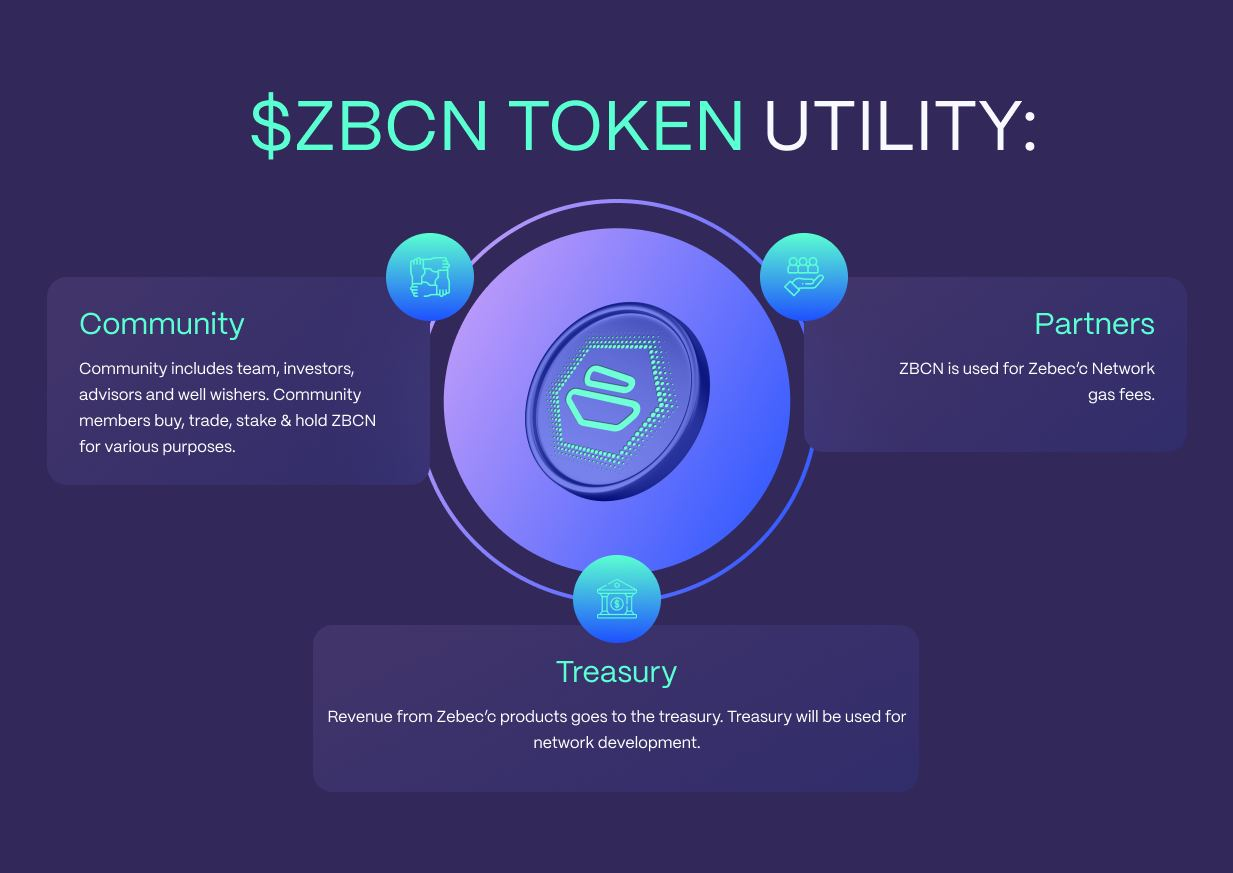
У екосистемі Zebec ZBCN — це токен “утиліті та управління” подвійного призначення, який насамперед використовується для роботи протоколу та взаємодії в екосистемі.
Офіційно визначені основні функції:
- Управління: Власники беруть участь у голосуванні за управління мережею, а вага голосу залежить від кількості токенів.
- Доступ до сервісів: Використовується для оплати стрімінгових платіжних сервісів у Zebec Network.
- Функціональна взаємодія: Дозволяє створювати, призупиняти та скасовувати платіжні стріми.
- Утилітарність екосистеми: Може застосовуватися для карток, інтеграцій застосунків й інших подібних сценаріїв.
Важливі моменти:
- ZBCN не надає права власності чи дивідендів.
- Не надає права власності на будь-яку юридичну особу.
- Його вартість визначається, головним чином, використанням мережі та участю в управлінні.
Також офіційні документи підтверджують: ZBCN вже перебуває в обігу, додаткових етапів публічного залучення коштів чи емісії не буде.
Ключові технології та можливості платформи Zebec
Технологічна основа Zebec — це “протокол стрімінгових платежів”, що використовує смартконтракти для автоматизації поступового виведення коштів у часі.
Основні механізми:
- Поступове виведення коштів: Користувачі встановлюють швидкість виведення, що дозволяє здійснювати безперервні платежі щосекунди або за індивідуальними інтервалами, а не одноразово.
- Контроль смартконтрактами: Уся логіка платежів реалізується ончейн-контрактами, що гарантує прозорість і незмінність правил.
- Інтерактивна платіжна система: Користувачі можуть створювати, призупиняти чи завершувати платіжні стріми та інтегрувати сторонні застосунки.
Додаткові можливості:
- Віртуальні платіжні картки (поєднують ончейн-активи з реальними витратами)
- Мультичейнова інтеграція
- Платіжні інтерфейси для зовнішніх застосунків
У сукупності ці можливості формують єдину платформу для “платежів і управління капіталом”.
Децентралізоване управління та участь спільноти Zebec
Управління Zebec здійснюється власниками ZBCN, а оновлення протоколу й зміни ухвалюються через ончейн-голосування.
Управління охоплює:
- Оновлення мережі й зміну параметрів
- Оптимізацію функцій і рішення щодо дорожньої карти
- Розподіл ресурсів екосистеми
Ключові риси моделі управління:
- Вага голосу прямо пропорційна кількості ZBCN, тому вплив визначає обсяг володіння.
- Правила протоколу змінюються за консенсусом спільноти, що дозволяє динамічне налаштування системи.
- Управління децентралізовано, базується на ончейн-механізмах, а не централізованих структурах.
Такий підхід забезпечує високу децентралізацію Zebec, але ефективність і рівень участі залежать від активності спільноти.
Сценарії використання Zebec у DeFi
Модель “стрімінгових платежів” Zebec має цінність у різних випадках:
- Миттєва виплата зарплати: Працівники отримують оплату в реальному часі відповідно до відпрацьованих годин, а не лише щомісяця.
- Підписки й оплата за використання: Користувачі сплачують за час користування, уникаючи зайвих передплачених платежів.
- Розподіл коштів DAO: Кошти виділяються безперервно за часом або прогресом завдань, що підвищує прозорість.
- Розподіл прибутку DeFi: Прибуток розподіляється безперервно, а не періодично.
- Інновації бізнес-моделей Web3: Доступні мікроплатежі та моделі повторюваних доходів — наприклад, підписки на контент чи білінг API.
Чим Zebec відрізняється від інших платіжних платформ
Zebec принципово змінює логіку платежів і розрахунків у порівнянні з традиційними системами:
| Порівняння |
Традиційні платіжні системи |
Zebec |
| Метод платежу |
Окремий платіж |
Стрімінговий платіж |
| Логіка розрахунків |
Пакетний розрахунок |
Миттєвий розрахунок |
| Програмованість |
Фіксовані правила, залежність від системи |
Налаштовується смартконтрактами |
| Рух коштів |
Одноразовий переказ |
Безперервне виведення коштів у часі |
| Залежність від посередників |
Залежить від банків/платіжних установ |
Децентралізовано, без посередників |
| Прозорість |
Централізовані розкриття |
Прозорість і перевірюваність на блокчейні |
| Гнучкість |
Низька, важко змінювати динамічно |
Висока гнучкість, можна призупинити або змінити в будь-який момент |
Завдяки цим структурним відмінностям Zebec не просто покращує платіжний досвід — він переосмислює рух капіталу, наближаючи його до програмованої фінансової інфраструктури.
Ризики, які слід враховувати при використанні Zebec
Попри інноваційну платіжну модель, Zebec має низку ризиків:
- Ризик смартконтрактів: Вразливості коду можуть вплинути на безпеку коштів.
- Ризик токена: ZBCN не надає права на прибуток; його цінність залежить від використання.
- Регуляторний ризик: Платіжні та стейблкоїн-сервіси залежать від політики.
- Ризик екосистеми: Вартість мережі визначає фактичний масштаб використання.
- Технічна складність: Платформа може бути складною для пересічних користувачів.
Zebec (ZBCN): подальший розвиток і потенціал ринку
Довгострокова мета Zebec — стати базовою “інфраструктурою миттєвих платежів”.
Можливі напрями розвитку:
- Мультичейнове розширення та кросчейнові платежі
- Інтеграція з традиційними платіжними системами (наприклад, карткові мережі)
- Поглиблені корпоративні платіжні рішення
- Поєднання стейблкоїнів із реальними активами
- Підтримка складних автоматизованих потоків коштів
Зі зростанням попиту на миттєві платежі й програмовані фінанси сектор Zebec має значний потенціал розвитку.
Висновок
Zebec (ZBCN) впроваджує механізм “стрімінгових платежів”, перетворюючи платежі з окремих транзакцій на безперервні грошові потоки й пропонуючи новий структурний підхід до блокчейн-платежів.
Головна цінність полягає у підвищенні ефективності капіталу, зменшенні залежності від посередників та гнучкій платіжній інфраструктурі для DeFi і Web3. Незважаючи на технічні й регуляторні виклики, розвиток Zebec у сфері миттєвих платежів має чітку стратегію й значний потенціал.
Поширені запитання
Q1: Яка функція ZBCN?
Використовується для голосування в управлінні, оплати комісій і доступу до функцій екосистеми.
Q2: У чому інновація Zebec?
Перетворює платежі з одноразових транзакцій на безперервні потоки капіталу.
Q3: Чи надає ZBCN дивіденди?
Ні, ZBCN не є часткою у власності чи правом на прибуток.
Q4: Кому підходить Zebec?
DAO, підприємствам, розробникам і всім, хто потребує миттєвих платежів.