Compared with traditional internet companies, Meta has a valuation logic with clear platform characteristics. Meta’s core value does not come from a single product alone, but from its vast social network, mature advertising system, growing content ecosystem, and artificial intelligence capabilities. To understand META stock, the key is to understand how Meta converts user attention into advertising revenue and uses AI technology to improve platform efficiency.
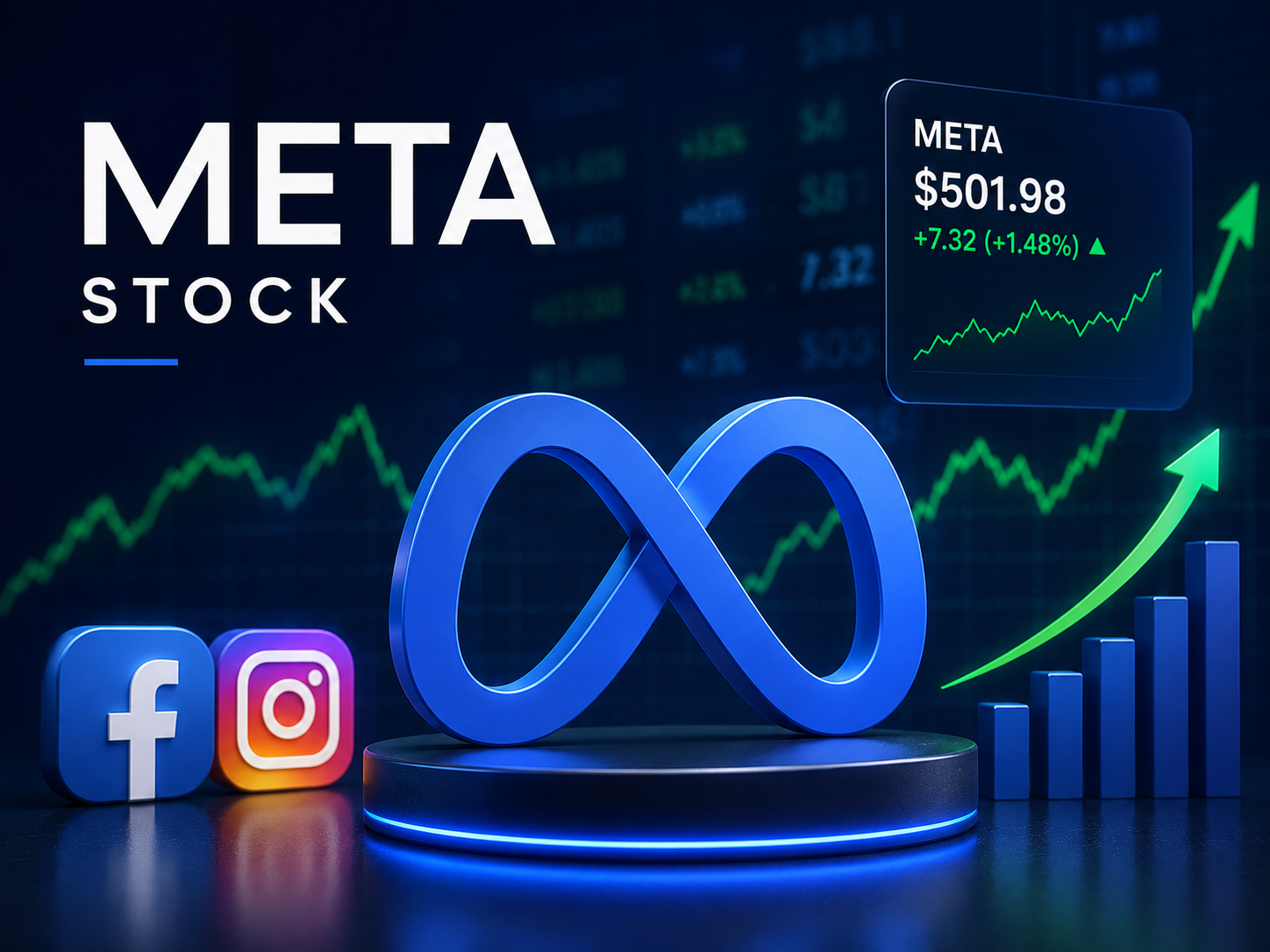
As one of the world’s major technology stocks, Meta has long been a closely watched internet platform company in the U.S. capital market. Meta was formerly known as Facebook. The company listed on Nasdaq in 2012 and later changed its name to Meta Platforms in 2021, as its business scope expanded from a single social network to a broader ecosystem covering social platforms, virtual reality, and artificial intelligence.
From an investment perspective, META combines the characteristics of a social media company, a digital advertising platform, an AI technology platform, and a large cap technology stock. Meta’s market performance is usually influenced not only by user growth, but also by changes in advertising budgets, AI infrastructure investment, regulatory policies, and global risk appetite toward technology stocks.
| Item |
Details |
| Company name |
Meta Platforms, Inc. |
| Stock ticker |
META |
| Listing market |
NASDAQ |
| Industry |
Technology and internet |
| Core businesses |
Social platforms, advertising, AI, Reality Labs |
META’s valuation logic differs from that of traditional media companies. Traditional media companies sell advertising through content or channels, while Meta generates digital advertising revenue through social networks, user data, algorithmic recommendations, and an ad auction system. This platform based structure means META’s long term value depends more heavily on user activity, advertising efficiency, and returns on technology investment.
Advertising revenue is the most important business factor affecting META’s share price. Most of Meta’s revenue comes from digital advertising on platforms such as Facebook, Instagram, and Messenger, so the growth rate of its advertising business directly affects how the market evaluates the company’s profitability.
The core mechanism of Meta’s advertising business is to connect advertisers with target users through user behavior data and an ad auction system. Advertisers allocate budgets based on marketing objectives. Meta then uses algorithms to assess how well ads match users and displays them across placements such as feeds, Reels, and Stories.
Advertising revenue affects META’s share price in two main ways. First, advertising revenue growth shows that the platform’s monetization capability is strengthening. Second, the advertising business usually carries relatively high margins, so growth in advertising revenue often leads to more visible improvement in earnings. Compared with simply expanding the user base, improving advertising monetization efficiency is more likely to drive the market to reassess META’s valuation.
When the economy is strong and companies increase marketing budgets, Meta’s advertising business usually has stronger support for growth. By contrast, when companies cut advertising budgets, META’s share price may come under pressure.
User growth is an important foundation for META’s valuation. Meta’s advertising business depends on a large user network. The larger the user base, the broader the audience advertisers can reach, and the richer the platform’s advertising inventory becomes.
Meta’s user growth includes not only new users, but also user activity, time spent, and frequency of interaction. Even when the total user scale is already high, growth in time spent across areas such as Instagram Reels, Facebook Groups, or WhatsApp business communication may create more opportunities for ad impressions.
Capital markets pay close attention to user data because these metrics reflect whether the platform ecosystem remains attractive. If user growth slows, younger users leave, or platform engagement declines, the market may worry that future advertising revenue growth will be limited.
Meta is also strengthening user retention through short videos, AI recommendations, and messaging services. User growth and user activity together determine the long term ceiling of the advertising business, making them important variables in the valuation of META stock.
How AI Investment Changes Market Expectations
AI investment is becoming an important factor shaping market expectations for META. Meta not only uses AI for ad recommendations and content distribution, but is also advancing Llama large language models, the Meta AI assistant, and AI infrastructure development.
The first impact of AI on META appears in advertising efficiency. Stronger AI models can improve the accuracy of ad matching, help advertisers achieve better conversion results, and increase Meta’s ad pricing power. For a company that relies on advertising revenue, better advertising system efficiency usually translates directly into stronger monetization capabilities.
The second layer of AI’s impact on META comes from ecosystem expansion. Meta AI can be integrated into products such as Facebook, Instagram, and WhatsApp, becoming a new entry point for user interaction and content creation. If AI features improve the user experience, Meta may gain stronger platform stickiness.
AI investment also brings cost pressure. Large model training, data center construction, and chip procurement all require significant capital expenditure, so the market also watches whether AI spending can translate into revenue growth and profit improvement.
Meta’s financial reports are an important basis for analyzing META stock. The market usually evaluates the company’s operating quality through indicators such as revenue, profit, user data, and capital expenditure.
When analyzing Meta’s financial reports, the following metrics usually receive the most attention:
| Metric |
Why It Matters |
| Advertising revenue |
Measures core business growth |
| Daily active users |
Measures platform usage intensity |
| Average revenue per user |
Measures monetization efficiency |
| Operating margin |
Measures profitability |
| Capital expenditure |
Measures AI and infrastructure investment |
Advertising revenue growth is usually the core metric in earnings reports. Since Meta’s main revenue comes from advertising, whether the advertising business is growing directly affects the market’s view of the company’s fundamentals.
Average revenue per user is also important. When user scale is stable, an increase in average revenue per user suggests that Meta’s ad pricing power or monetization efficiency is improving. Operating margin reflects cost control, especially as Meta continues investing in AI and Reality Labs, making profit performance an area of closer market focus.
META is both a large cap technology stock and a digital advertising platform company, so its share price is affected by macroeconomic conditions. Interest rates, corporate advertising budgets, consumer confidence, and risk appetite toward technology stocks can all influence META’s market performance.
The interest rate environment affects growth stock valuations. Higher interest rates usually reduce the discounted value of future cash flows, which may put pressure on large technology stock valuations. When interest rates are low or expectations for rate cuts strengthen, market risk appetite toward growth oriented technology stocks usually improves.
Corporate advertising budgets are also closely tied to the economic cycle. When economic growth is strong, brands and merchants are usually more willing to increase ad spending. When the economy slows, advertising budgets may be reduced, which can affect Meta’s revenue growth.
In addition, the regulatory environment is an important macro variable for META. Privacy protection, data compliance, and antitrust policies may all affect Meta’s ad targeting capabilities and platform operating costs.
Through Gate’s multi asset trading system, users can participate in U.S. stock related markets, including META. Related products offered by Gate may include spot stocks, CFD products, or other trading tools linked to stock prices. Users can choose a suitable way to participate in META market movements based on the relevant product rules.
Different product types involve different trading logic:
| Product Type |
Main Features |
| Spot tokens |
Closer to holding based trading |
| CFD products |
Track META share price movements |
| Derivative tools |
Support two way trading and leverage mechanisms |
CFD products usually allow users to participate in META price movements without directly holding U.S. shares. For users who want short term trading or two-way trading, CFD products provide a more flexible way to participate in the market.
It is important to note that CFDs and leveraged products are derivatives instruments. Their risk and return characteristics differ from directly holding stocks. Before trading META related products, users should understand the product rules, margin requirements, trading fees, and potential risks from price volatility.
Conclusion
META is the stock ticker for Meta Platforms and an important technology stock in the global digital advertising and social media markets. Meta’s core value comes from the social ecosystem formed by platforms such as Facebook, Instagram, and WhatsApp, as well as its monetization capabilities built around advertising, AI, and content recommendations.
When analyzing META stock, advertising revenue, user growth, AI investment, financial metrics, and the macroeconomic environment are all key variables. The advertising business determines current profitability, AI investment shapes future growth expectations, and the macro environment affects the overall valuation of technology stocks.
From a long term perspective, whether Meta can maintain the competitiveness of its advertising business, improve the efficiency of AI applications, and control infrastructure investment costs will continue to influence META’s market performance and valuation logic.
FAQs
META is the stock ticker for Meta Platforms, Inc. on the Nasdaq market. It represents investors’ equity ownership in Meta Platforms.
What Is Meta’s Main Source of Revenue?
Meta’s main source of revenue is digital advertising. Advertising revenue mainly comes from platforms such as Facebook, Instagram, and Messenger.
Advertising revenue is Meta’s core revenue source. Growth in the advertising business usually improves the market’s assessment of Meta’s profitability and valuation.
User growth affects Meta’s ad impression opportunities, platform activity, and long term monetization potential, making user data an important metric for analyzing META’s valuation.
AI investment can improve Meta’s ad recommendation efficiency, content distribution capabilities, and product experience, but it also increases data center and computing infrastructure costs.
Users can participate in the META market through related TradFi products offered by Gate, including spot tokens, CFD products, or other trading tools linked to stock prices.