تُعد إيثريوم منصة بلوكشين مفتوحة المصدر ولا مركزية، وتتميّز بتطبيقها الرائد لقدرات العقود الذكية الكاملة من نوع تورينج. تمكّن هذه الابتكارات المطوّرين من تطوير مجموعة متنوعة من التطبيقات اللامركزية (DApps) على طبقة التسوية العالمية الخاصة بها. كما يعمل أصل ETH الأصلي للنظام البيئي كرسوم (Gas) لرسوم العمليات الحسابية على الشبكة، وكضمان رئيسي يحفظ أمان آلية الإجماع إثبات الحصّة (PoS).
مع تطور تكنولوجيا البلوكشين من مجرد أداة لنقل القيمة إلى بنية تحتية قابلة للبرمجة، أصبحت Ethereum المنصة الأساسية في قلب منظومة Web3، حيث أطلقت مجموعة واسعة من التطبيقات والبروتوكولات مثل التمويل اللامركزي (DeFi)، والرموز غير القابلة للاستبدال (NFTs)، والحوكمة على السلسلة، وترميز الأصول.
تكمن قيمة Ethereum في سعيها الدائم نحو "السيادة القابلة للبرمجة"، مما أحدث تحولًا جوهريًا في نظام الثقة البشري — من الاعتماد المركزي إلى الإجماع القائم على الشيفرة البرمجية. وبفضل جهودها المستمرة نحو "اللا حالة" وترقية شجرة الفركل، تواصل Ethereum خفض الحواجز التشغيلية للعقد، مع الحفاظ على مقاومة عالية للرقابة حتى على أوسع نطاق. يجمع هذا النهج المتوازن بين الأمان واللامركزية ومرونة النظام البيئي، ما يوفّر أساسًا معياريًا لنقل تريليونات الأصول إلى السلسلة، ويؤسس قاعدة تقنية متينة لبناء شبكة تعاون رقمية عالمية مفتوحة وشفافة وعابرة للحدود.
أصول Ethereum
تعد Ethereum منصة بلوكشين لامركزية ومفتوحة المصدر تدعم العقود الذكية والتطبيقات اللامركزية (DApps)، وتعرف غالبًا باسم "الحاسوب العالمي". فهي تتيح التحويلات والمدفوعات من نظير إلى نظير مثل Bitcoin، وتوفر أيضًا بنية تحتية قابلة للبرمجة للمطورين لبناء بروتوكولات مالية وألعاب وتطبيقات متنوعة على السلسلة.
طرح Vitalik Buterin فكرة Ethereum لأول مرة في ورقة بيضاء عام 2013 بهدف إنشاء "بلوكشين قابل للبرمجة". وفي 2014، أطلق الفريق بيع رموز جماعية، جمع خلاله حوالي 18 مليون $ من Bitcoin لتمويل تطوير وإطلاق شبكة Ethereum.
في 30 يوليو 2015، تم إطلاق الشبكة الرئيسية لـ Ethereum رسميًا، مما شكل الانتقال من مرحلة Frontier التجريبية إلى عصر عملي لمنصات العقود الذكية. ومنذ ذلك الحين، مرت Ethereum بعدة ترقيات وأحداث رئيسية، من ضمنها التفرع الصلب الحاسم بعد حادثة DAO (الذي أدى إلى انقسام Ethereum وEthereum Classic). لم تكشف هذه الأحداث عن المخاطر التقنية والإدارية فحسب، بل عززت أيضًا مرونة مجتمع Ethereum في تنسيق الإجماع وترقية البروتوكولات.
ما هو Ethereum
تحليل البنية التحتية: كيف تعمل Ethereum؟
تعمل شبكة Ethereum كحاسوب موزع عالميًا ببنية طبقية تعالج المعاملات، وتنفيذ العقود الذكية، وتحقق الإجماع، لضمان أن جميع العقد تحتفظ بحالة موحدة.
تفصل Ethereum بنيتها إلى طبقة التنفيذ وطبقة الإجماع، اللتين تتواصلان عبر Engine API: حيث تدير طبقة التنفيذ العقود الذكية وتحدّث حالات الحسابات، بينما تضمن طبقة الإجماع ترتيب الكتل وأمان الشبكة.
تعد آلة Ethereum الافتراضية (EVM) جوهر طبقة التنفيذ — بيئة تجريبية مكتملة تورنغ تفسر وتنفذ شيفرة العقود الذكية بنفس الطريقة على كل عقدة كاملة. عند بدء المستخدم لمعاملة، تستهلك EVM الرسوم (Gas) كوقود حسابي لقياس تكلفة كل عملية ومنع الحلقات اللانهائية. وعند اكتمال المعاملة، يتم بث وتأكيد تغييرات الحالة (مثل تحديثات الأرصدة) عبر الشبكة لضمان عدم القابلية للتغيير.
طبقة البنية
المسؤوليات الأساسية
العملاء الممثلون
طبقة التنفيذ
تنفيذ المعاملات، تشغيل EVM، تحديث الحالات
Geth، Erigon
طبقة الإجماع
اقتراح/شهادة الكتل، تأكيد النهائية
Prysm، Lighthouse
طبقة الشبكة
اكتشاف P2P وبث الإشاعات
بروتوكول libp2p
تدفق المعاملات واضح: يوقّع المستخدمون المعاملات (بما في ذلك Nonce للحماية من إعادة التنفيذ، وحد الرسوم Gas Limit للميزانية، وحقول البيانات لاستدعاء العقود)، ويجمعها المدققون في كتل (بمتوسط 12 ثانية لكل كتلة)، وبعد التحقق من جميع العقد، تضاف المعاملات إلى السلسلة. بعد "The Merge" في سبتمبر 2022، انتقلت Ethereum من إثبات العمل (PoW) كثيف الطاقة إلى إثبات الحصة (PoS)، مما خفض استهلاك الطاقة بنسبة %99.95 وجعل المدققين هم الفاعلين الأساسيين بدلاً من المعدنين.
أدوار شبكة Ethereum وبنية المشاركين
تعتمد شبكة Ethereum على مجموعة متنوعة من المشاركين، لتشكيل منظومة لامركزية بتقسيم واضح للمهام: المدققون يؤمنون الإجماع، العقد تخزن البيانات، والمستخدمون يبدؤون التفاعلات. لكل دور آليات حوافز وعقوبات محددة.
الدور
المسؤوليات الأساسية
عتبة الدخول / المخاطر
المدقق
إنتاج الكتل وشهادة المعاملات، والحفاظ على إجماع PoS
تخزين 32 ETH؛ عُرضة لعقوبات القص (slashing)
العقدة الكاملة
التحقق وتخزين بيانات السلسلة الكاملة، وبث المعاملات
يتطلب قرصًا صلبًا بسعة 2 تيرابايت+ ونطاقًا تردديًا عاليًا؛ لا توجد مكافآت مباشرة
العقدة الخفيفة
مزامنة رؤوس الكتل فقط، تحقق دفع مبسط (SPV)
عتاد بمستوى الأجهزة المحمولة كافٍ؛ يعتمد على العقد الكاملة للبيانات
المنسق (Sequencer)
ترتيب معاملات الطبقة 2 وتحميلها إلى L1
عادة تديرها فرق L2؛ هناك مخاطر مركزية
المدققون: حجر الأساس الأمني للشبكة
في عصر PoS، حل المدققون محل المعدنين. من خلال تخزين 32 ETH، يمكن للمستخدمين تفعيل عقد المدققين، والتناوب عبر الأدوار التالية:
مقترح الكتل (Proposer): يبني ويقترح كتلًا جديدة.
الشاهد (Attestor): يصوت لتأكيد الكتل المقترحة.
المكافآت والعقوبات: تحقق اقتراحات الكتل الناجحة عوائد سنوية بنسبة %3–%5. ومع ذلك، تواجه العقد التي تبقى غير متصلة أو تحاول هجمات التوقيع المزدوج قصًا في ETH المخزن.
نظام الحسابات: الحسابات الخارجية مقابل حسابات العقود
الحساب الخارجي (EOA): يتحكم به مفتاح خاص للمستخدم (مثل محفظة MetaMask)، ويمكنه بدء التحويلات والتفاعل مع العقود الذكية.
حساب العقد: لا يمتلك مفتاحًا خاصًا؛ يُدار بمنطق الشيفرة البرمجية المخزنة على السلسلة، مثل بروتوكولات إقراض DeFi مثل Aave أو منصات التداول اللامركزية مثل Uniswap.
تدرج العقد والبنية التحتية
مستويات البيانات: العقد الكاملة تتحقق من جميع المعاملات للاستقلالية؛ العقد الأرشيفية تخزن كل حالة تاريخية، وهي مثالية لتحليل البيانات؛ العقد الخفيفة توفر وصولًا منخفض الطاقة لمحافظ الهواتف المحمولة.
خدمات الوساطة: مزودو RPC (مثل Infura، Alchemy) يوفرون نقاط وصول API للمطورين، ما يزيل الحاجة لإدارة عقدهم الخاصة؛ مجمعات التخزين (مثل Lido) تتيح للمستخدمين الذين يملكون أقل من 32 ETH مشاركة مكافآت المدققين.
وظائف ETH وآلياتها الاقتصادية
يعمل ETH كرمز أصلي لـ Ethereum و"شريان الحياة" الذي يغذي النظام البيئي اللامركزي، ويؤدي دور الوقود، والضمان، ومخزن للقيمة.
الوقود الحسابي (رسوم Gas): يُستخدم لدفع رسوم معاملات الشبكة. ولمنع الشيفرات الضارة من استهلاك موارد غير محدودة، يجب أن يستهلك كل تحويل أو استدعاء عقد ETH.
الضمان الأمني (التخزين): في PoS، يعمل ETH كوديعة تأمين للشبكة. يقوم المدققون بقفل ETH للحصول على حقوق اقتراح الكتل وكسب المكافآت، مما يشكل العمود الفقري لأمان الشبكة.
وسيلة نقل القيمة: باعتباره عملة التسوية الأساسية في Web3، يُستخدم ETH للمدفوعات، وضمانات الإقراض في DeFi، وشراء NFT، وكمرساة قيمة لترميز الأصول الواقعية (RWA).
أحدثت ترقية EIP-1559 في 2021 تغييرًا جذريًا في نموذج ETH الاقتصادي من خلال إدخال آلية حرق الرسوم تلقائيًا. يتم حرق الرسوم الأساسية لكل معاملة، بينما تذهب البقشيش إلى المدققين. أدى ذلك إلى تحول عرض ETH من تضخم خالص إلى توازن ديناميكي — حيث يتسارع الحرق خلال فترات ازدحام الشبكة.
تشجع حوافز التخزين المدققين على الانضمام للشبكة، ما يسمح لحاملي ETH بتحقيق عوائد سلبية:
طريقة المشاركة
الحد الأدنى / الميزات
العائد السنوي المتوقع
مدقق مستقل
يتطلب 32 ETH وخادم مخصص
%3–%5 بالإضافة إلى مكافآت رسوم الأولوية
تخزين سيولة (LSD)
مثال: Lido (stETH)؛ الحد الأدنى 0.01 ETH
حوالي %3–%4.5 (بعد خصم رسوم الإدارة)
إعادة التخزين (Restaking)
مثال: EigenLayer؛ يستخدم ETH المخزن لتأمين خدمات أخرى
زيادة إضافية في العائد
الطبقة 2: محرك توسعة Ethereum وخريطة النظام البيئي
إذا كانت الشبكة الرئيسية لـ Ethereum هي طبقة التسوية للإجماع الأساسي، فإن الطبقة 2 تمثل طبقة التنفيذ عالية الأداء. اليوم، تطورت Ethereum إلى بنية معيارية، توازن بين الأداء العالي واللامركزية عبر حلول الطبقة 2.
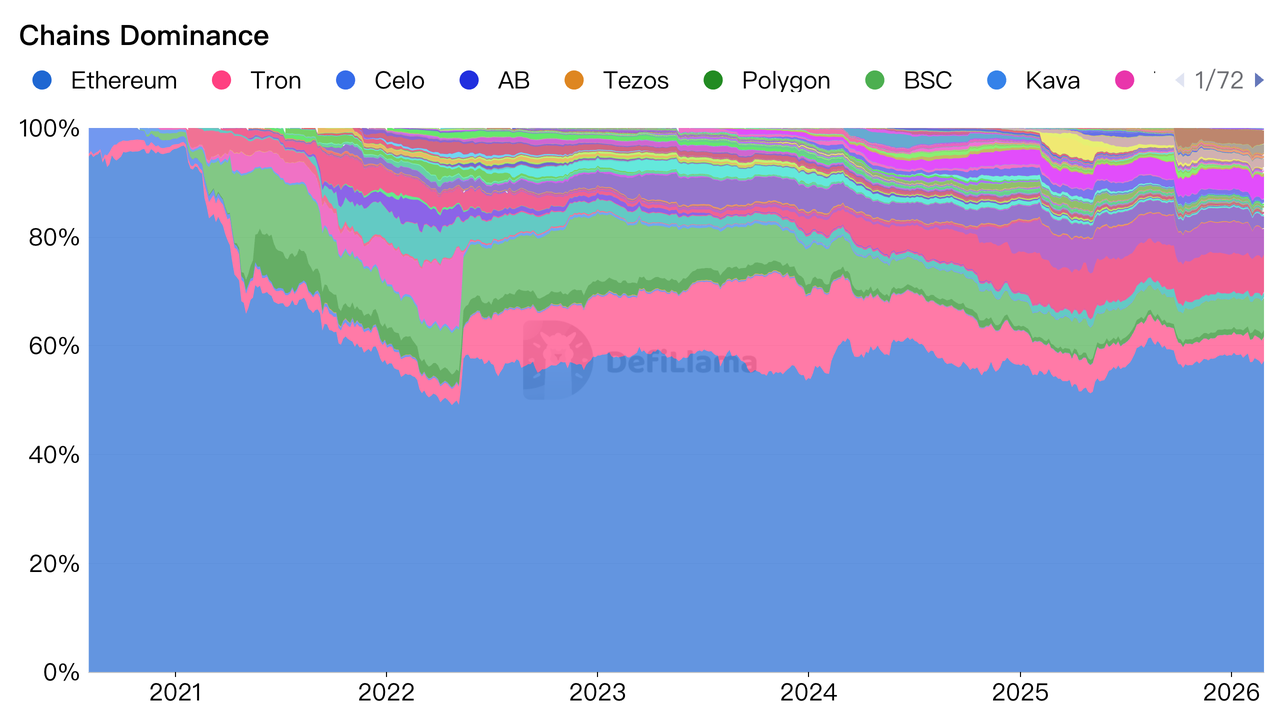
بحلول 2026، تظل Ethereum القلب الذي لا ينازع لصناعة البلوكشين: يبلغ إجمالي القيمة المقفلة في DeFi حوالي 53 مليار $، أي %57 من إجمالي أصول الصناعة، مع بروتوكولات مثل Uniswap V4 وAave وLido وEthena التي تقود الابتكار في DeFi.
الطبقة 2: محرك توسعة Ethereum وخريطة النظام البيئي
لمعالجة ارتفاع تكاليف الشبكة الرئيسية وبطء السرعات، ركزت جهود توسعة Ethereum بشكل أساسي على حلول الطبقة 2.
حلول الرول أب (Rollup): تشمل التجميع المتفائل (Optimistic Rollups) مثل Arbitrum وOptimism، وتجميع إثبات المعرفة الصفرية (ZK-Rollups) مثل zkSync وStarknet.
تأثير ترقية Dencun في 2024: مع تخزين بيانات Blob، انخفضت رسوم معاملات الطبقة 2 بأكثر من %90، وتجاوز متوسط TPS حاجز 5,600، ما جعل الاستخدام التجاري الواسع ممكنًا.
ومع ذلك، تواجه الطبقة 2 تحديات جديدة. ففي فبراير 2026، صرح Vitalik Buterin أن "الطبقة 2 كـ‘تجزئة ذات علامة تجارية’ لمعالجة توسعة Ethereum لم تعد صالحة".
مزايا وقيود Ethereum
تُعتبر Ethereum على نطاق واسع نظام التشغيل لـ Web3. وبينما وضعت معيار الصناعة للامركزية والأمان، لا تزال تواجه تحديات تقنية وإدارية في طريق التبني الجماهيري.
مقارنة بسلاسل الكتل العامة الأخرى، تمتلك Ethereum أكبر مجتمع مطورين، وأعمق سيولة، وأوسع اعتراف للمستخدمين.
لكن قيود Ethereum واضحة: TPS على الشبكة الرئيسية يبلغ فقط 15–30 (أقل بكثير من أكثر من 2,000 في Visa)، ويمكن أن ترتفع رسوم Gas في أوقات الذروة إلى 10$–20$، ما يؤثر سلبًا على تجربة المستخدم. وعلى الرغم من أن حلول الطبقة 2 خففت %90 من الحمل على الشبكة، لا تزال الجسور والمنسقون يمثلون نقاط فشل منفردة.
بالإضافة إلى ذلك، تواجه عملية تخزين Ethereum مخاطر المركزية — إذ تتحكم بروتوكولات مثل Lido في أكثر من %32 من ETH المخزن، ما قد يؤثر على لامركزية الشبكة. ومع ذلك، تتقدم بروتوكولات التخزين اللامركزية بثبات.
Ethereum مقابل BTC
تمثل Ethereum وBitcoin مدرستي "الأولوية للوظائف" و"الأولوية للقيمة" في البلوكشين — حيث تركز Ethereum على التمويل القابل للبرمجة، بينما تتموضع Bitcoin كذهب رقمي. تختلف توجهاتهما وآلياتهما ونظمهما البيئية بشكل واضح.
البعد
Ethereum (ETH)
Bitcoin (BTC)
التوجه
الحاسوب العالمي / منصة العقود الذكية
ذهب رقمي / مخزن للقيمة
آلية الإجماع
PoS (إثبات الحصة)
PoW (إثبات العمل)
حد العرض
لا يوجد حد أقصى (انكماش عبر EIP-1559)
21 مليون (حد أقصى ثابت)
الأداء
يمكن للطبقة 2 أن تتجاوز 5,000 TPS
3–7 TPS (الشبكة الرئيسية)
اتجاه 2026
ترميز الأصول الواقعية (RWA)، التجزئة المعيارية
اعتماد ETF، احتياطيات الخزينة المؤسسية
مفاهيم خاطئة شائعة وتوضيحات
يواجه العديد من القادمين الجدد مفاهيم خاطئة حول Ethereum، غالبًا بسبب ازدحام الشبكة المبكر أو دعاية مضللة. ومع ذلك، تواصل Ethereum تحقيق رؤيتها الأصلية عبر الترقيات المستمرة.
المفهوم الخاطئ 1: ETH = Ethereum
ETH هو الرمز الأصلي (وقود وتخزين)؛ أما Ethereum فهي الشبكة الأساسية وبيئة تنفيذ EVM. البنزين ليس هو محرك السيارة — لا تخلط بينهما.
رغم التقدم السريع لسلاسل الكتل عالية الأداء مثل Solana وSui، فإن قاعدة مطوري Ethereum والإجماع العالمي عليها يجعل من الصعب جدًا تعطيل تأثيرات شبكتها.
المفهوم الخاطئ 3: رسوم Gas دائمًا مرتفعة؛ ارتفاع سعر ETH = زيادة الرسوم
يتم تسعير Gas بـ ETH (ترتفع قيمة gwei أثناء الازدحام)، لكن بعد ترقيات الطبقة 2 وDencun، يبلغ المتوسط 0.05$؛ ارتفاع سعر ETH لا يؤدي مباشرة إلى زيادة رسوم Gas — الازدحام هو العامل الرئيسي.
المفهوم الخاطئ 4: العقود الذكية غير قابلة للتغيير وآمنة 100%
يمكن ترقية العقود الذكية (عبر أنماط الوكيل) وقد تحتوي على ثغرات تدقيق، لذا توجد مخاطر. ومع ذلك، فإن حتمية EVM في Ethereum والعقوبات الاقتصادية تجعلها أكثر أمانًا من معظم الأنظمة المركزية.
الخلاصة
منذ انطلاقها في 2015، تطورت Ethereum من رؤية "الحاسوب العالمي" الجريئة إلى نظام تشغيل أساسي لا غنى عنه لعصر Web3.
بفضل توافقها القوي مع EVM، وأكبر مجتمع مطورين في العالم، وآلية إجماع PoS المرنة، حققت Ethereum توازنًا استثنائيًا بين اللامركزية والأمان.
مستقبلًا، لا تعتبر Ethereum منشأ DeFi وNFTs وDAOs فحسب، بل تقود أيضًا التكامل العميق مع التمويل التقليدي من خلال ترميز الأصول الواقعية. وعلى الرغم من التحديات المستمرة مثل مركزية التخزين وتجزئة السلاسل، فإن خارطة الطريق الواضحة والابتكار الذاتي المستمر يضمنان مكانتها المهيمنة في مشهد سلاسل الكتل العامة التنافسي.
الأسئلة الشائعة
متى انتقلت Ethereum إلى PoS؟
اكتمل الدمج (The Merge) في 15 سبتمبر 2022، مما خفض استهلاك الطاقة بنسبة %99.95 واستبدل المعدنين بالمدققين.
هل ETH انكماشي؟
نعم. تقوم EIP-1559 بحرق الرسوم الأساسية، ومنذ 2024، تجاوز الحرق الصافي مرارًا وتكرارًا الإصدار الجديد.
هل الطبقة 2 آمنة؟
ترث الطبقة 2 في Ethereum أمان الشبكة الرئيسية. تتطلب التجميعات المتفائلة فترة تحدي 7 أيام، بينما توفر تجميعات المعرفة الصفرية إثباتات فورية.
كم تبلغ رسوم Gas في Ethereum؟
تصل الشبكة الرئيسية إلى ذروتها عند 5–15، ومتوسط الطبقة 2 هو 0.01–0.2 (بعد Dencun، انخفضت بنسبة %90). استخدم أداة L2Fees للتحقق من أسعار Gas في الوقت الفعلي.
كيف يمكنني تخزين ETH للحصول على عوائد؟
حاليًا، هناك طريقتان رئيسيتان لتخزين ETH: تشغيل عقدتك الخاصة (يتطلب 32 ETH وخادمًا)، أو استخدام بروتوكولات مثل Lido وRocket Pool، بحد أدنى 0.01 ETH.
هل يمكن أن تحل Ethereum محل التمويل التقليدي؟
وصلت القيمة المقفلة في DeFi على Ethereum إلى مستوى 100 مليار $، وهو ما يعادل البنوك المتوسطة، لكن لا تزال هناك تحديات تنظيمية وامتثال قائمة.
المؤلف: Jayne
المترجم: Jared
المراجع (المراجعين): Ida
إخلاء المسؤولية
* لا يُقصد من المعلومات أن تكون أو أن تشكل نصيحة مالية أو أي توصية أخرى من أي نوع تقدمها منصة Gate أو تصادق عليها .
* لا يجوز إعادة إنتاج هذه المقالة أو نقلها أو نسخها دون الرجوع إلى منصة Gate. المخالفة هي انتهاك لقانون حقوق الطبع والنشر وقد تخضع لإجراءات قانونية.
يُعتبر JTO رمز الحوكمة الأساسي لشبكة Jito، ويشكّل محورًا رئيسيًا في بنية MEV التحتية ضمن منظومة Solana. يوفر هذا الرمز إمكانيات حوكمة فعّالة، ويحقق مواءمة بين مصالح المُدقِّقين والمخزنين والباحثين عبر عوائد البروتوكول وحوافز النظام البيئي. تم تحديد إجمالي المعروض من الرمز عند 1 مليار بشكل استراتيجي لضمان توازن بين الحوافز الفورية والنمو طويل الأجل المستدام.
يؤسس بروتوكول 0x بنية تحتية متقدمة للتداول اللامركزي من خلال مكونات رئيسية تشمل Relayer، وMesh Network، و0x API، وExchange Proxy. يتولى Relayer إدارة بث الأوامر خارج السلسلة، وتتيح Mesh Network مشاركة الأوامر، بينما يوفر 0x API واجهة موحدة لعروض السيولة، ويتولى Exchange Proxy تنفيذ التداولات على السلسلة وتوجيه السيولة بكفاءة. تُمكّن هذه المكونات مجتمعةً من بناء هيكل يجمع بين نشر الأوامر خارج السلسلة وتسوية التداولات على السلسلة، ما يمنح المحافظ، وDEXs، وتطبيقات التمويل اللامركزي (DeFi) إمكانية الوصول إلى سيولة متعددة المصادر عبر واجهة موحدة واحدة.
يُعد Jito وMarinade البروتوكولين الرئيسيين للتخزين السائل على Solana. يعزز Jito العائد عبر MEV (القيمة القصوى القابلة للاستخراج)، ويخدم المستخدمين الذين يبحثون عن عوائد مرتفعة. بينما يوفر Marinade خيار تخزين أكثر استقرارًا ولامركزيًا، ليكون ملائمًا للمستخدمين أصحاب الشهية المنخفضة للمخاطر. يكمن الفرق الجوهري بينهما في مصادر العائد وتركيبة المخاطر.
تُعتبر Pendle وNotional من البروتوكولات الرائدة في قطاع العائد الثابت ضمن التمويل اللامركزي (DeFi)، حيث يعتمد كل منهما آليات مميزة لتوليد العوائد. تقدم Pendle ميزات العائد الثابت وتداول العائد من خلال نموذج تقسيم العائدات PT وYT، في حين تتيح Notional للمستخدمين تثبيت معدلات الاقتراض عبر متجر الإقراض بمعدل فائدة ثابت. بالمقارنة، فإن Pendle أنسب لإدارة أصول العائد وتداول معدلات الفائدة، بينما تتخصص Notional في سيناريوهات الإقراض بمعدل فائدة ثابت. يسهم كلا البروتوكولين في تطوير سوق العائد الثابت في التمويل اللامركزي (DeFi)، حيث يتميز كل منهما بنهج فريد في هيكلية المنتج وتصميم السيولة والفئات المستهدفة من المستخدمين.
يُعد PT و YT الرمزين الأساسيين للعائد في بروتوكول Pendle. يمثل PT (رمز رأس المال) رأس المال الخاص بأصل العائد، وغالبًا ما يتم تداوله بسعر أقل من قيمته الاسمية، ويُسترد بقيمته الاسمية عند تاريخ الانتهاء. أما YT (رمز العائد) فيمثل الحق في العائد المستقبلي للأصل، ويمكن تداوله للحصول على العوائد المتوقعة. من خلال تقسيم الأصول ذات العائد إلى PT و YT، أنشأت Pendle سوقًا لتداول العائدات ضمن التمويل اللامركزي (DeFi)، مما يمكّن المستخدمين من تأمين عوائد ثابتة، والمضاربة على تقلبات العائد، وإدارة مخاطر العائد بفعالية.
يكمن الفرق الجوهري بين Cardano وEthereum في نماذج السجلات وفلسفات التطوير لكل منهما. تعتمد Cardano على نموذج Extended UTXO (EUTXO) المستمد من Bitcoin، وتولي أهمية كبيرة للتحقق الرسمي والانضباط الأكاديمي. في المقابل، تستخدم Ethereum نموذجًا معتمدًا على الحسابات، وبصفتها رائدة في مجال العقود الذكية، تركز على سرعة تطور النظام البيئي والتوافق الشامل.