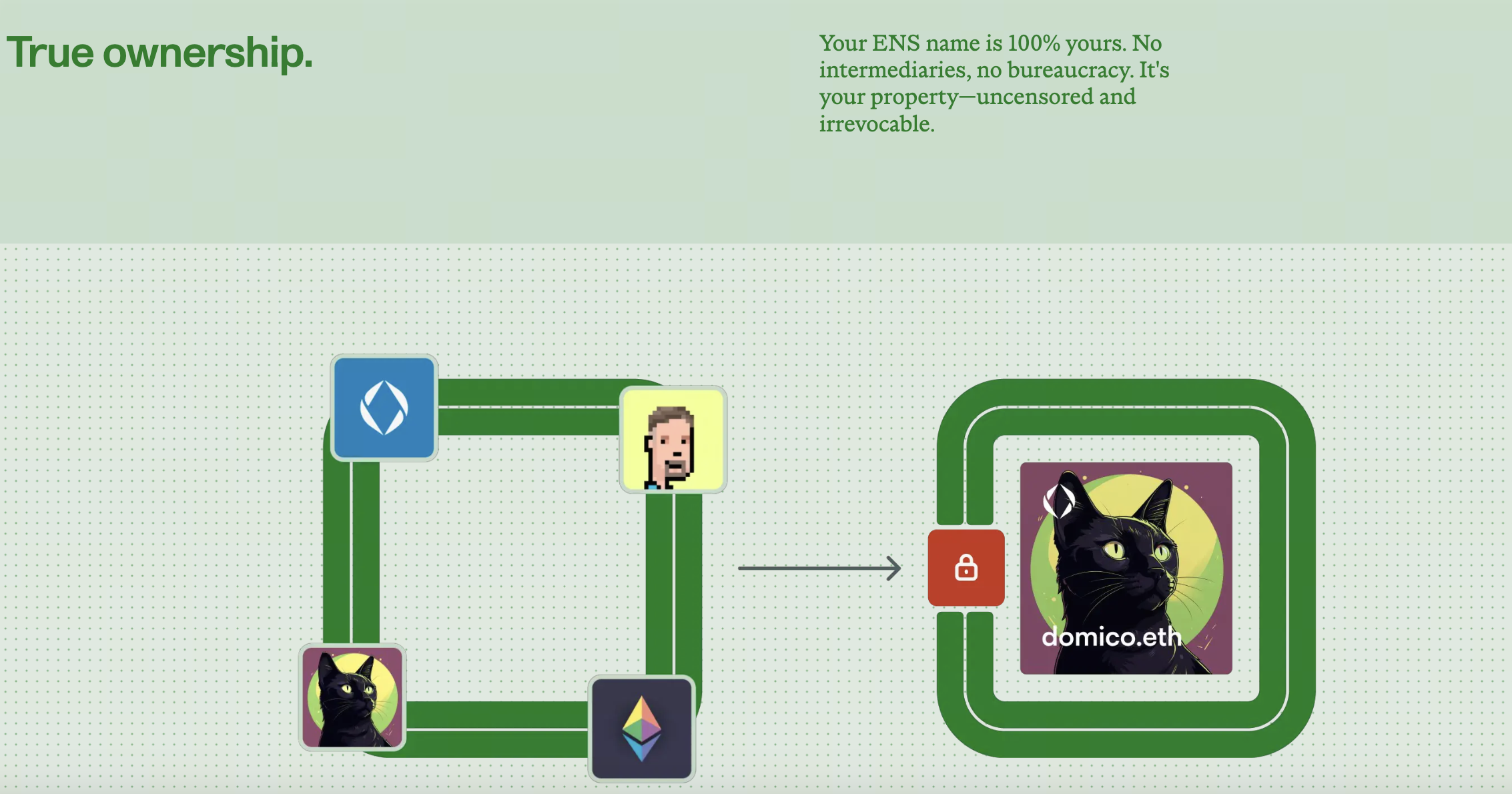
Within the Web3 ecosystem, identity is shifting away from reliance on email, phone numbers, or platform accounts, and is increasingly anchored in wallet addresses, on-chain records, and verifiable credentials. ENS plays a pivotal role by making blockchain addresses more readable and empowering on-chain accounts with robust identity features. For everyday users, ENS streamlines transfers and logins; for developers and protocols, ENS delivers an integrable, verifiable, and composable layer for identity resolution.
ENS use cases are rapidly expanding—from wallet payments, DAO management, NFT display, and on-chain social, to multi-chain growth and competition among DID protocols. Recent developments include ENSv2’s commitment to continued deployment on Ethereum L1 and discontinuation of the standalone Namechain approach. The latest ENS App, ENS Explorer, Universal Resolver, Para integration, Gemini Smart Wallet subdomains, and the Base ecosystem’s Basenames support for ENSIP-19 all further solidify ENS as a cornerstone of Web3 identity infrastructure.
Why ENS Is the Foundation of Web3 Identity
ENS underpins Web3 identity by solving the problem of unreadable blockchain addresses. Traditional wallet addresses are long and complex, making them hard to memorize and difficult to associate with ownership. ENS introduces human-readable names like name.eth, creating a stable link between addresses, profiles, and identities.
Another key factor is ENS’s open protocol design. Any wallet, DApp, block explorer, or Smart Contract can access ENS records without relying on a centralized authority. This openness transforms ENS from a mere domain product into a shared identity standard for Web3 applications.
Crucially, ENS names are controlled by users’ wallets and can be combined with on-chain assets, DAO permissions, NFT avatars, social accounts, and website content. An ENS name can serve as a payment address, personal homepage, organizational identity, brand entry point, or application namespace. This versatility positions ENS as the foundational account layer for Web3.
ENS in Wallets and Payment Scenarios
Wallets and payments are the most fundamental and mature ENS use cases. Users can link their Ethereum address to an ENS name, allowing others to send funds simply by entering name.eth—wallets automatically resolve the correct address. This reduces errors, confusion, and failed transfers.
Leading wallets support both forward and reverse ENS resolution. Forward resolution maps ENS names to addresses, while reverse resolution displays the primary ENS name for a given address. In block explorers, transaction logs, or DeFi apps, users see recognizable names instead of just 0x addresses.
New ecosystem integrations are further enhancing the ENS wallet experience. Para’s ENS integration allows users to register and manage ENS names via email, social login, or phone number, lowering the barrier to Web3 entry. Gemini Smart Wallet has introduced ENS subdomains, automatically assigning unique subnames under gemini.eth for each user, and leveraging ENS for wallet identification and account recovery.
ENS for DAO and Community Management
DAOs and communities require clear identity, permission, and organizational structures. ENS provides a unified namespace for DAOs—such as dao.eth, treasury.dao.eth, vote.dao.eth, and grants.dao.eth—to distinguish treasury, governance, grants, working groups, and member roles.
On the community level, ENS subdomains can serve as member identifiers. Projects or DAOs can issue subdomains to contributors (e.g., alice.community.eth), enabling member identity display, contribution tracking, or role assignment. Compared to centralized usernames, ENS subdomains integrate more seamlessly with wallets, on-chain activity, and permission systems.
ENS DAO itself exemplifies on-chain governance. ENS token holders participate in protocol governance or delegate voting, while the DAO manages the ecosystem, public goods funding, service provider budgets, and long-term protocol direction through working groups. This governance model further reinforces ENS’s status as public infrastructure.
Integrating ENS with NFTs and Social Protocols
ENS’s integration with NFTs centers on identity display and avatar records. Users can set NFTs as their ENS avatars, allowing wallets, block explorers, and select DApps to display these avatars alongside ENS names—turning NFTs into a core part of on-chain identity.
For on-chain social, ENS acts as a user nickname and identity index. Social protocols, content platforms, and community tools can access ENS names, avatars, websites, social links, and text records, enabling consistent cross-app identity. Unlike platform usernames, ENS names are user-controlled and portable across wallets.
ENS complements, rather than competes with, social ecosystems like Farcaster and Lens. Farcaster and Lens focus on social graphs, content, and relationships; ENS provides foundational naming and identity resolution. Users can leverage ENS as their main identity gateway while building content and networks across multiple social protocols.
ENS Expansion in Multi-Chain Ecosystems
As multi-chain ecosystems evolve, user assets and activities are no longer limited to Ethereum mainnet. ENS’s cross-chain value lies in allowing a single name to bind addresses across multiple chains, supporting unified identity management.
Universal Resolver is key to multi-chain resolution, providing a single entry point for applications and reducing developer complexity. ENSv2 will further enhance cross-chain resolution and introduce a more flexible registration framework, making ENS ideal for multi-chain account management.
The Base ecosystem’s Basenames are a prime example—using name.base.eth and supporting the ENSIP-19 L2 Primary Names standard, enabling L2 names to function as primary identities across networks. This marks ENS’s evolution from Ethereum-centric domain service to a cross-network identity coordination layer.
How ENS Differs from Other DID Protocols
DID (Decentralized Identifier) protocols focus on universal, decentralized identity standards for credentials, authentication, data permissions, and cross-platform identity. ENS, by contrast, is a practical on-chain naming system emphasizing names, addresses, profiles, and resolution.
ENS’s edge over general DID solutions is deep ecosystem integration—supported by a wide range of wallets, DApps, block explorers, NFT platforms, and DeFi applications—delivering immediate usability. Once registered, ENS names can be used across live applications.
Compared to other on-chain domain projects, ENS benefits from Ethereum ecosystem consensus, open contract design, DAO governance, and robust developer support. ENS aims to be the shared identity infrastructure for all of Web3, not just a single app or chain.
Drivers of ENS Ecosystem Growth
ENS ecosystem growth is driven first by user experience needs. The challenge of unreadable wallet addresses has persisted, and ENS offers a straightforward solution. As Web3 payments, transfers, approvals, and account interactions grow, demand for ENS will remain strong.
Second, ecosystem integration fuels growth. The more wallets, exchanges, block explorers, DAO tools, NFT marketplaces, and social protocols that support ENS, the greater its utility and network effect—driving user adoption.
Third, protocol upgrades propel expansion. ENSv2 will lower user and developer barriers with a clearer layered architecture, flexible permissions, simplified registration, and stronger cross-chain support. The new ENS App targets mainstream users, while ENS Explorer serves developers and advanced users, together boosting ecosystem accessibility.
The Future of ENS in Web3
ENS’s future potential in Web3 centers on three key directions. First, as account abstraction and Smart Wallet adoption rise, ENS is poised to become the gateway for managing smart accounts, account recovery, and permission identification—already evident in the Gemini Smart Wallet integration with ENS subdomains.
Second, unified multi-chain identity. As L2s, app chains, and cross-chain protocols mature, users will require consistent identity across networks. If ENS can simplify cross-chain resolution through Universal Resolver, ENSIP standards, and the ENSv2 framework, it could become the universal naming layer for multi-chain identity.
Third, on-chain social and AI Agent use cases. In the future, users, DAOs, apps, bots, and AI Agents will all need readable, verifiable on-chain identities. ENS names can serve as gateways—connecting wallets, permissions, profiles, reputation, and payment addresses—to enable seamless automated interactions.
Conclusion
ENS’s value in Web3 has evolved from a simple wallet address alias into core infrastructure for on-chain identity, payment gateways, DAO namespaces, NFT display, multi-chain accounts, and social profiles. Its open protocol and broad integration empower users to maintain a stable, readable identity across diverse applications.
With ENSv2 anchored on Ethereum L1, the rollout of the new ENS App and ENS Explorer, Universal Resolver adoption, and ecosystem integrations like Para, Gemini, and Basenames, ENS’s reach continues to expand. For the Web3 ecosystem, ENS’s true significance lies not just in making addresses memorable, but in providing a composable, verifiable, and extensible identity layer for decentralized networks.







