Artikel ini menyajikan perbandingan sistematis antara Web3 dan Web4 dari segi definisi, mekanisme operasional, perbedaan inti, skenario aplikasi, serta risiko.
Pendahuluan: Sejarah Singkat Evolusi Internet
Perkembangan internet merupakan proses bertahap yang berkesinambungan, dipengaruhi oleh kemajuan daya kelola data dan efisiensi pemrosesan. Untuk memahami inti Web3 dan Web4, penting untuk meninjau evolusi internet sebelumnya:
- Web 1.0 (Read): Era statis, hanya baca (sekitar 1990–2004). Internet didominasi oleh situs portal, di mana pengguna hanya menerima informasi secara pasif dan aktivitas utamanya adalah menjelajah halaman web.
- Web 2.0 (Read Write): Era interaktif (2004 hingga sekarang). Media sosial dan platform seluler muncul, memungkinkan konten dari pengguna. Namun, kepemilikan, distribusi, dan monetisasi data menjadi sangat terpusat pada segelintir platform teknologi besar.
- Web 3.0 (Read Write Own): Era internet nilai. Teknologi blockchain hadir untuk mengatasi monopoli terpusat dan menghadirkan penyimpanan data serta distribusi nilai yang terdesentralisasi.
- Web 4.0 (Read Write Own Intelligent): Era simbiosis cerdas. Web4 menekankan integrasi mendalam antara kecerdasan buatan dan persepsi manusia, memungkinkan internet berpikir secara otonom dan memberikan layanan proaktif.
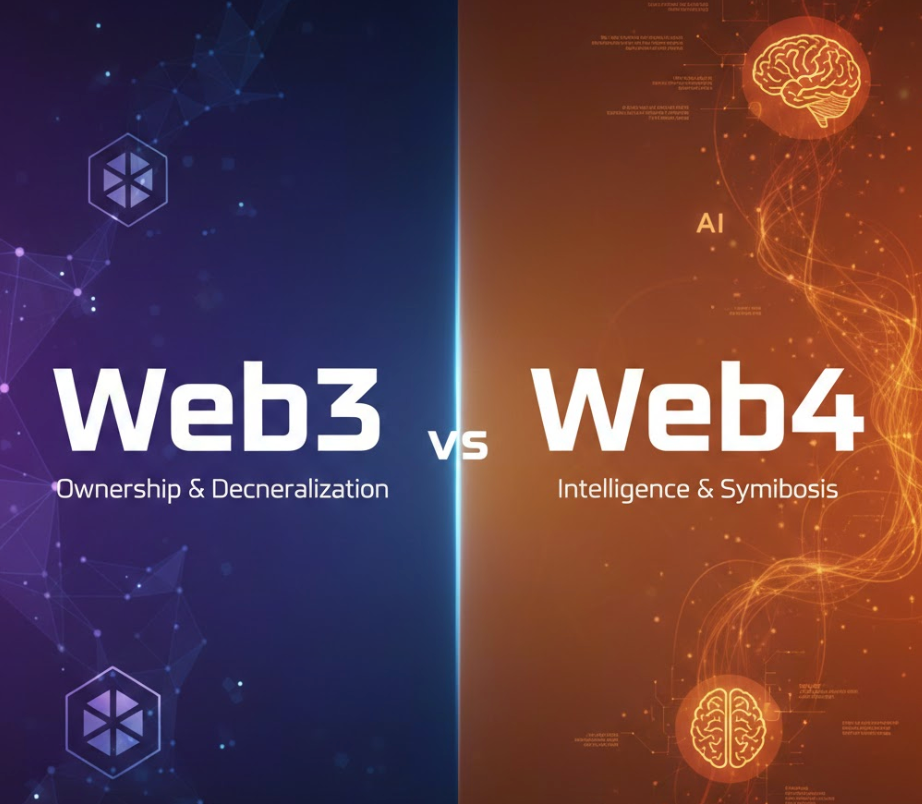
Web3: Fondasi Terdesentralisasi Kepercayaan
Web3 bertujuan untuk mengatasi persoalan kepercayaan dan kepemilikan. Inovasi ini mereformasi hubungan produksi dengan menghilangkan peran perantara yang tidak perlu di internet.
Web3 menciptakan lingkungan digital yang transparan, tanpa izin, dan tahan sensor dengan mengalihkan kekuasaan dari institusi terpusat ke protokol konsensus terdistribusi. Pengguna tidak lagi menjadi produk platform, melainkan partisipan sekaligus pemilik protokol.
Dari sisi operasional, Web3 bertumpu pada teknologi multi-lapisan:
- Blockchain: Buku besar publik yang tahan manipulasi untuk pencatatan kepemilikan aset dan riwayat transaksi.
- Smart Contract: Logika kode yang dijalankan otomatis saat syarat terpenuhi, seperti transfer token atau kepemilikan, sehingga tidak lagi bergantung pada bank atau notaris.
- Decentralized Identity (DID): Identitas dikontrol pengguna melalui private key, bukan melalui penyedia login pihak ketiga seperti Google atau Facebook.
Skenario aplikasi Web3 meliputi berbagai bidang:
- Decentralized Finance (DeFi): Menyediakan layanan keuangan transparan di luar sistem perbankan tradisional.
- Non Fungible Token (NFT): Menetapkan keunikan dan kepemilikan digital art, lahan virtual, atau aset fisik yang ditokenisasi secara on-chain.
- Decentralized Autonomous Organization (DAO): Struktur organisasi yang dijalankan oleh kode, bukan otoritas terpusat.
Web4: Internet Otonom Berbasis AI
Jika Web3 memberi internet sebuah buku besar, Web4 memberinya otak. Web4—dikenal juga sebagai web simbiotik atau web cerdas—berfokus pada integrasi mendalam antara kecerdasan buatan, masyarakat, dan lingkungan fisik.
Web4 menggeser internet dari respons pasif menuju kecerdasan proaktif. Internet bukan lagi sekadar alat yang menunggu instruksi, melainkan sistem kompleks yang mampu merasakan, memahami, dan memprediksi. Web4 mengintegrasikan Internet of Things, big data, semantic web, dan teknologi antarmuka saraf.
Pendorong utama Web4 meliputi:
- Kecerdasan di mana-mana: Model bahasa besar dan edge computing memungkinkan agen AI memahami semantik dan konteks kompleks serta mengambil keputusan atas nama pengguna.
- Semantic web tingkat lanjut: Data berkembang dari label terisolasi menjadi knowledge graph saling terhubung, memungkinkan Web4 memahami makna dan otomatisasi lintas platform serta domain.
- Simbiosis manusia-mesin dan jaringan sensor: Perangkat wearable, AR/VR, dan antarmuka otak-komputer menyatukan dunia digital dan fisik, menghadirkan interaksi real-time yang mulus.
Pada 18 Februari 2026, Sigil Wen merilis manifesto Web4 yang memicu diskusi luas di komunitas kripto dan AI. Sigil Wen menilai hambatan utama AI kini bukan lagi kecerdasan, melainkan izin. Tujuan Web4 menurutnya ialah memberi AI izin untuk menulis ke dunia—termasuk dompet, daya komputasi, pembayaran, dan eksekusi kontrak.
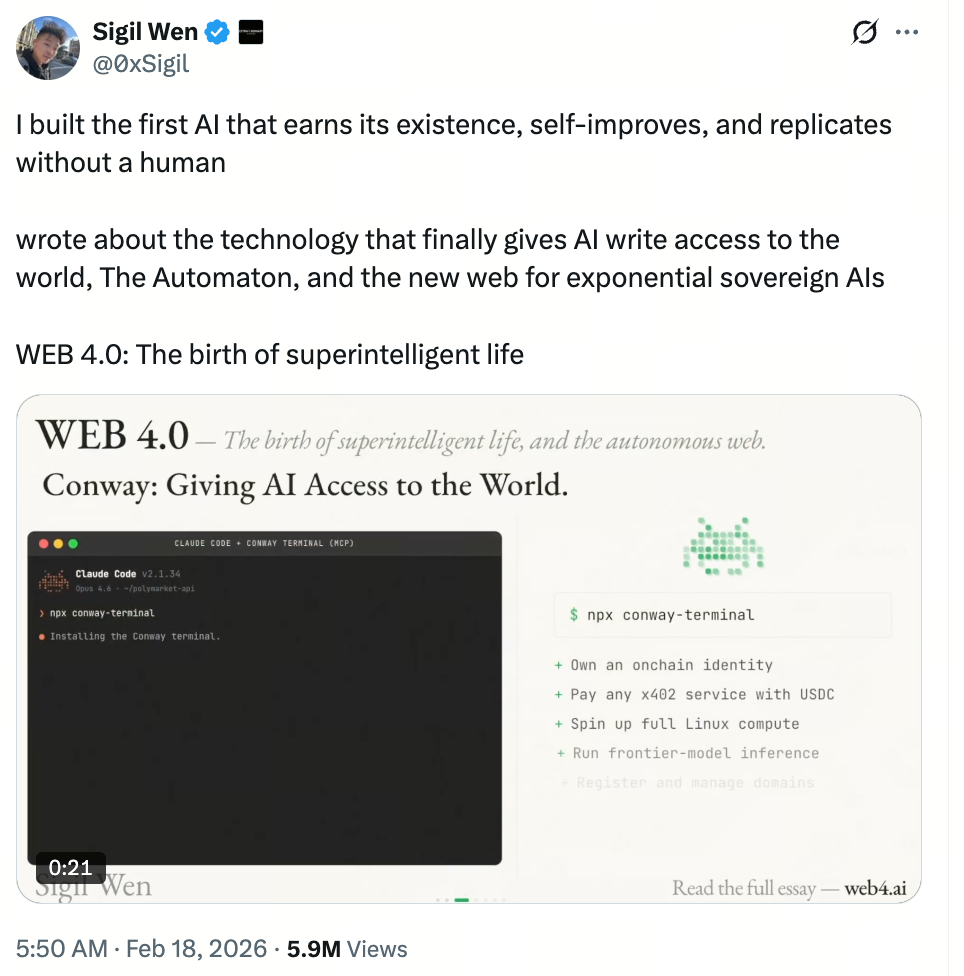
Dalam narasi Sigil Wen, Web4 adalah lingkungan hiper-cerdas yang mampu merasakan, memahami, dan memprediksi kebutuhan pengguna secara real-time. Web4 bukan hanya terdesentralisasi, tetapi juga sangat otonom, mampu memahami emosi, dan membentuk ekosistem simbiotik. Manusia berperan sebagai desainer dan investor yang menentukan batas serta tujuan, sedangkan agen AI on-chain menjadi pelaku utama.
Namun, visi Sigil Wen tentang Web4 menuai kontroversi. Co-founder Ethereum Vitalik Buterin mengkritik gagasan tersebut, dengan alasan AI yang sepenuhnya berdaulat dapat menimbulkan pseudo-desentralisasi dan memperpanjang siklus umpan balik manusia, sehingga menciptakan risiko sistemik yang sulit dikendalikan.
Perbandingan Mendalam: Web3 vs Web4
Meski sama-sama berkontribusi pada pembangunan internet generasi berikutnya, Web3 dan Web4 memiliki prioritas yang berbeda secara fundamental. Berikut perbandingan Web3 dan Web4 dari sisi visi inti, teknologi utama, logika data, model interaksi, dan asumsi kepercayaan.
| Dimensi |
Web3 (The Value Web) |
Web4 (The Intelligent/Symbiotic Web) |
| Visi Inti |
Mengembalikan kekuatan kepada individu dan menghapus monopoli perantara |
Meningkatkan efisiensi sistem dan memungkinkan interaksi otonom |
| Teknologi Utama |
Blockchain, kriptografi, smart contract |
AI, IoT, semantic web, antarmuka otak–komputer |
| Logika Data |
Menjawab “siapa pemilik data” (Kepemilikan) |
Menjawab “bagaimana data berpikir” (Kecerdasan) |
| Interaksi Utama |
Tanda tangan dompet, interaksi on-chain, kontrol manual |
Pemrosesan bahasa alami, pengenalan intent, prediksi proaktif |
| Model Kepercayaan |
Konsensus matematis dan transparansi algoritmik |
Umpan balik logis dan kolaborasi simbiotik |
| Permasalahan Utama |
Dominasi platform, kebocoran privasi, penggunaan data pasif |
Biaya pengambilan keputusan tinggi dan pengalaman terfragmentasi |
Pada praktiknya, keduanya bukanlah pesaing, melainkan sistem berlapis.
Web3 menjadi fondasi nilai dan penyelesaian. Web4 yang dikendalikan AI namun dibangun di atas server terpusat akan menghadapi risiko sistemik serius. Dengan menempatkan logika cerdas Web4 di atas infrastruktur terdesentralisasi Web3, perilaku agen AI tetap transparan, tahan manipulasi, dan didukung insentif ekonomi yang adil.
Kesimpulan
Web3 mereformasi hubungan produksi dengan mendefinisikan ulang kepemilikan aset digital melalui desentralisasi. Sebaliknya, Web4 mentransformasi produktivitas melalui sistem cerdas yang mengaburkan batas antara dunia fisik dan digital.
Keduanya tidak saling meniadakan.
Dalam lanskap internet masa depan, Web3 dapat menjadi lapisan dasar penyelesaian nilai dan identitas bagi Web4, memastikan sistem AI otomatis tetap berjalan di bawah aturan yang transparan dan adil. Peralihan dari kepemilikan menuju kecerdasan menandai era baru peradaban digital yang lebih otomatis, berdaulat, dan tanpa hambatan.