For Layer1 networks, tokens serve not only as a medium of exchange but also as the central component of the network’s incentive mechanism. The ability of a public blockchain to continually attract users, developers, and ecosystem partners depends largely on whether its tokenomics can strike a balance between incentivizing growth and supporting value.
Pharos positions PROS as the core value asset in RealFi infrastructure. Its role extends beyond paying trading fees—it is a critical asset linking network operations, ecosystem incentives, and long-term value capture. As more real-world assets and institutional financial activities are deployed on the network, PROS will facilitate trading fee payments, network staking, and ecosystem participation, forming a closed value loop driven by network usage demand.
What is PROS’s role within the Pharos network?
PROS is the native token of the Pharos network, fulfilling multiple critical functions throughout the ecosystem and serving as a foundational asset for network operations and value circulation. Primarily, PROS is used to pay on-chain trading fees and execution costs.
Additionally, PROS is utilized for network staking, securing the network via the PoS (Proof of Stake) mechanism. It also serves governance purposes, enabling holders to participate in network upgrades, parameter adjustments, and ecosystem proposal voting, thereby influencing the protocol’s future direction.
On the ecosystem development front, PROS incentivizes developers, liquidity providers, and user growth initiatives, including ecosystem grants, liquidity rewards, and RWA onboarding bonuses. As Pharos expands into real financial scenarios, PROS may also be used for stablecoin collateralization, priority access to financial infrastructure, and specialized functions such as RWA staking.
How is PROS’s initial supply and distribution mechanism structured?
According to the official tokenomics, PROS’s initial Genesis Supply is set at 1 billion tokens. This initial supply forms the basis for early token distribution, supporting ecosystem development, network security, and long-term growth. Future issuances may occur based on the network staking mechanism and established policies to sustain PoS network operations and incentivize validators.
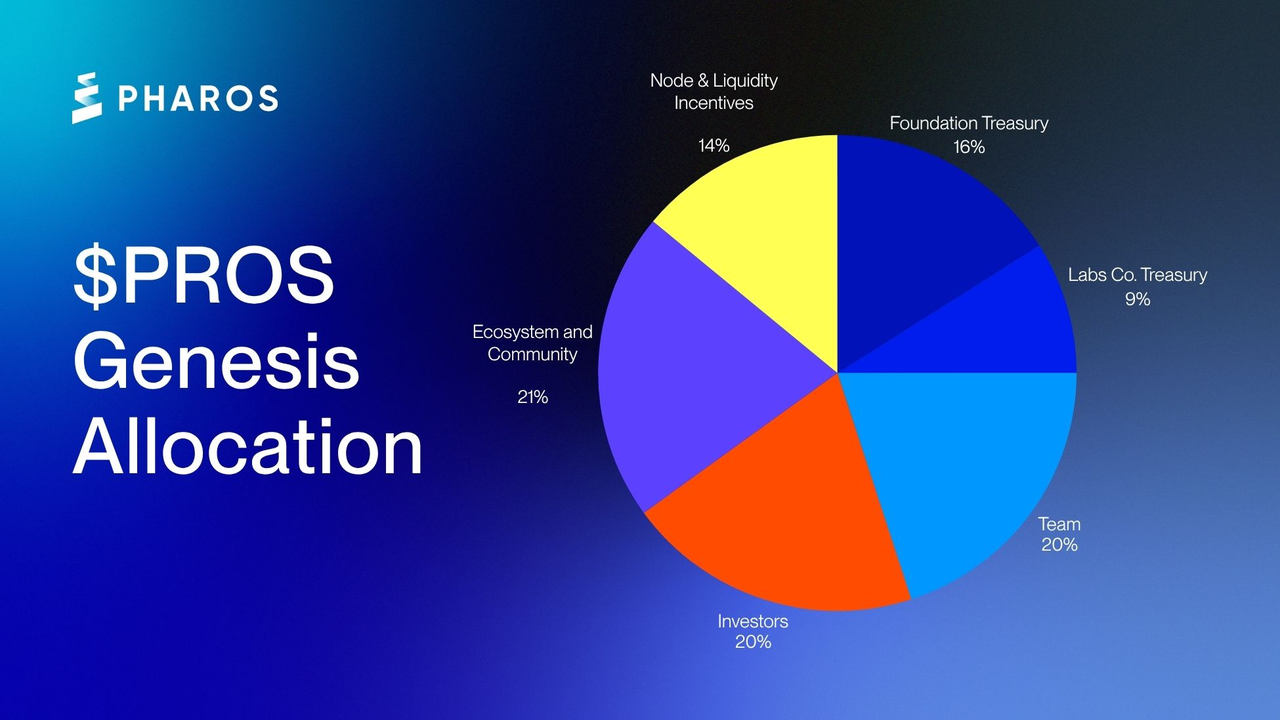
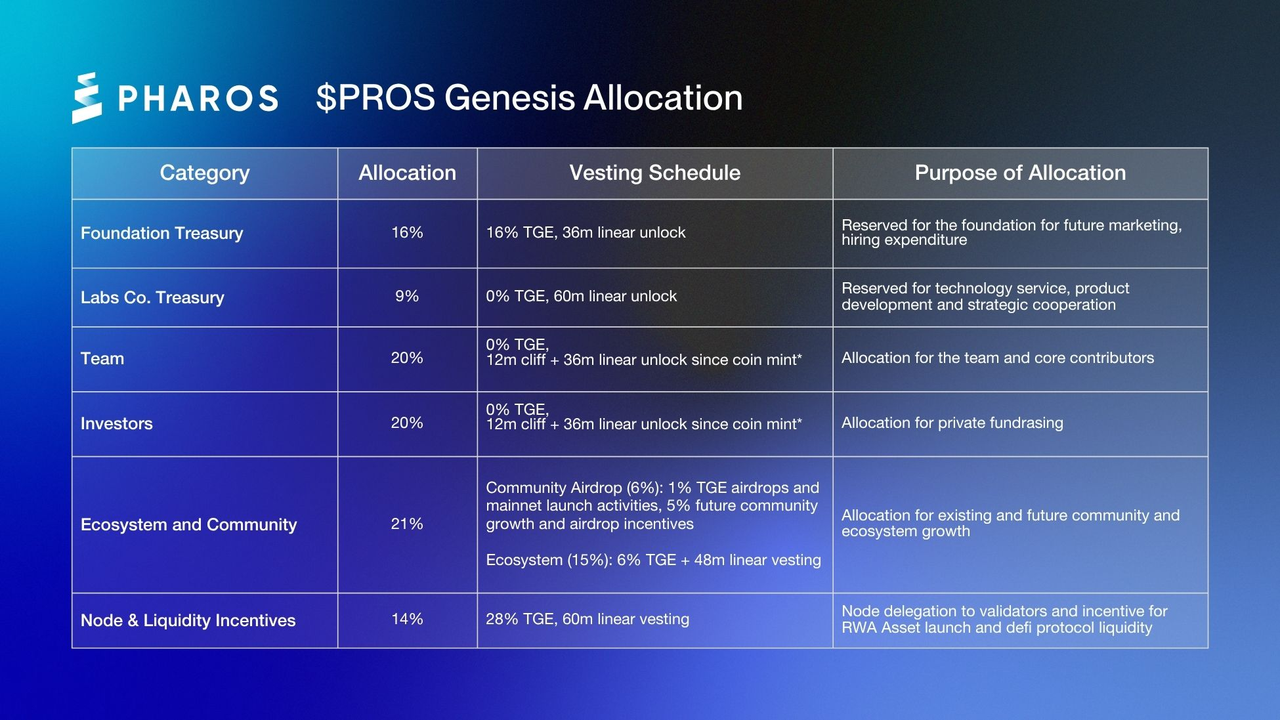
The initial supply is distributed according to a long-term release principle, aiming to foster ecosystem growth while mitigating early circulation pressure. Through a phased release mechanism, Pharos strategically allocates tokens to core participants, ecosystem incentives, and network development funds, aligning the token release schedule with the network’s progress. This approach helps reduce short-term sell pressure and ensures the interests of token holders, validators, and ecosystem builders are aligned with the network’s long-term growth.
How does the PROS staking issuance mechanism balance scarcity and long-term incentives?
Within PROS tokenomics, Pharos implements a phased staking issuance mechanism to balance supply scarcity and sustained network incentives. According to the official design, the staking inflation rate is set at 0% for the first six months after mainnet launch, meaning no additional tokens are minted through staking during the initial network phase. This structure helps prevent early supply dilution, providing a more stable environment for network launch and market price discovery.
Starting in the seventh month, the PROS staking inflation rate will be set at an annualized 5%, supporting validator incentives, network security, and ongoing ecosystem development. As the network matures, moderate issuance ensures continuous returns for validators and staking participants, maintaining the security and operational efficiency of the PoS network.
Going forward, the Pharos Foundation may dynamically adjust this issuance ratio based on network conditions, accommodating staking participation rates, validator node incentives, and ecosystem expansion needs.
How does PROS capture RealFi network growth value?
PROS’s value capture mechanism is anchored in the growth of real financial activities. Pharos aims to enable RWA, payments, and institutional-grade financial applications—all scenarios requiring PROS for trading fee payments or network participation. As on-chain financial activity increases, demand for PROS rises accordingly, allowing network expansion to translate directly into token value appreciation.
This value capture model positions PROS as the primary beneficiary asset of Pharos infrastructure growth. As more real financial assets are integrated into the network, PROS’s value support mechanism will be further reinforced, representing the core of its RealFi token model.
Summary
Pharos (PROS) tokenomics are not simply built around trading fees; they form a comprehensive model centered on long-term incentives, supply scarcity, and RealFi value capture. By reducing short-term sell pressure through extended release schedules, enhancing scarcity with limited supply, and establishing value recirculation through network usage demand, PROS is engineered as the central value asset supporting Pharos infrastructure growth.
Over the long term, the value potential of PROS depends on Pharos’s ability to expand in RWA and institutional finance. If the network continues to attract real financial activity, PROS will strengthen its value support in tandem with growing network demand.
FAQs
Why does PROS focus on long-term release?
Long-term release reduces early sell pressure and aligns ecosystem participants’ interests with the network’s sustained development, increasing token model stability.
How is PROS’s scarcity achieved?
PROS maintains scarcity through limited supply, strengthening token value support as network demand grows and reducing long-term inflation risk.
What is the source of PROS’s value?
PROS’s value is primarily driven by network usage demand—including trading fee payments, staking participation, and ecosystem expansion—making it the core medium of value circulation for Pharos RealFi infrastructure.







