In traditional identity systems, data verification is often controlled by centralized institutions, with opaque fee structures and limited reusability. Billions Network introduces a token mechanism to standardize and price verification services, creating an open identity verification market.
From the perspective of the Web3 data economy, the value of BILL is closely tied to network usage. As demand grows for identity verification, AI agent verification, and data services, the frequency and demand for token circulation within the system will rise in parallel, forming a closed loop of “data → verification → fees → incentives.”
The Role of BILL in Billions Network: Payments, Incentives, and Governance
As the core utility token of Billions Network, BILL runs through the entire identity verification and data services system. At the most basic usage level, users need to pay BILL, or an equivalent fee, to call verification services, such as completing identity authentication or requesting credential verification.
Within the incentive mechanism, BILL is used to reward key participants in the network, including attesters, verifiers, and infrastructure nodes. These roles earn token rewards by providing identity verification, data proofs, and interface services, helping keep the network running.
BILL also serves a staking function. Nodes need to stake a certain amount of tokens before participating in the network. This mechanism helps constrain behavior and improve service quality. The size of a stake is often linked to reputation weight, which in turn affects a node’s credibility within the system.
Over the long term, BILL will also be used in governance mechanisms, such as adjusting protocol parameters or managing trust registries. This means it is not only a payment tool, but is gradually becoming a core asset for network governance and value distribution.
Billions Network Verification Fee Mechanism: How Data Services Are Priced
Billions Network’s fee model is based on charging for each verification service, with different types of verification priced differently. For example, basic human identity verification has a lower fee, while full KYC or enterprise level verification services are priced higher.
This tiered pricing model allows the network to serve a wide range of needs, from ordinary users to enterprise level use cases, while preserving flexibility. Users only pay for the verification they need and do not have to bear unnecessary extra costs.
The system also introduces credential reuse fees. When a verification result is called repeatedly, a small query fee is generated. This design gives data verification the ability to produce ongoing returns and creates a long term source of revenue.
From an economic perspective, this fee mechanism reflects a typical “usage driven model”: the more frequently the network is used, the higher the verification fee revenue, which in turn provides stable incentives for nodes and ecosystem participants.
BILL Node Incentive Structure: How Verifiers Earn Rewards
Billions Network’s node incentive system is built around contributions to verification services. Attesters are responsible for generating verifiable credentials, while verifiers handle verification requests. Both can earn BILL rewards by providing services.
In practice, node revenue mainly comes from a share of verification fees and potential incentive programs. The higher the service quality and verification accuracy, the stronger a node’s reputation in the system, allowing it to receive more business and earn more revenue.
Staking plays a key role here. Nodes need to lock a certain amount of BILL before they can participate in verification services. This not only raises the entry threshold, but also reduces the risk of malicious behavior.
The network also supports early growth through community incentives and ecosystem rewards, such as developer incentives and hackathon rewards. This structure helps the network build network effects more quickly in its early stages.
Analysis of the BILL Supply and Distribution Model
BILL uses a fixed total supply model, with a total supply of 10 billion tokens, 10,000,000,000, and no inflation mechanism. This means token supply is predictable, which helps establish stable long term expectations.
In its distribution structure, the community receives the largest share at around 40%, which is used to incentivize users, developers, and ecosystem participants. This reflects a community first distribution philosophy.
The team and contributors account for around 20%, with lockup and linear vesting mechanisms designed to ensure long term participation and alignment of interests. The foundation accounts for around 32%, supporting operations, liquidity, and ecosystem development.
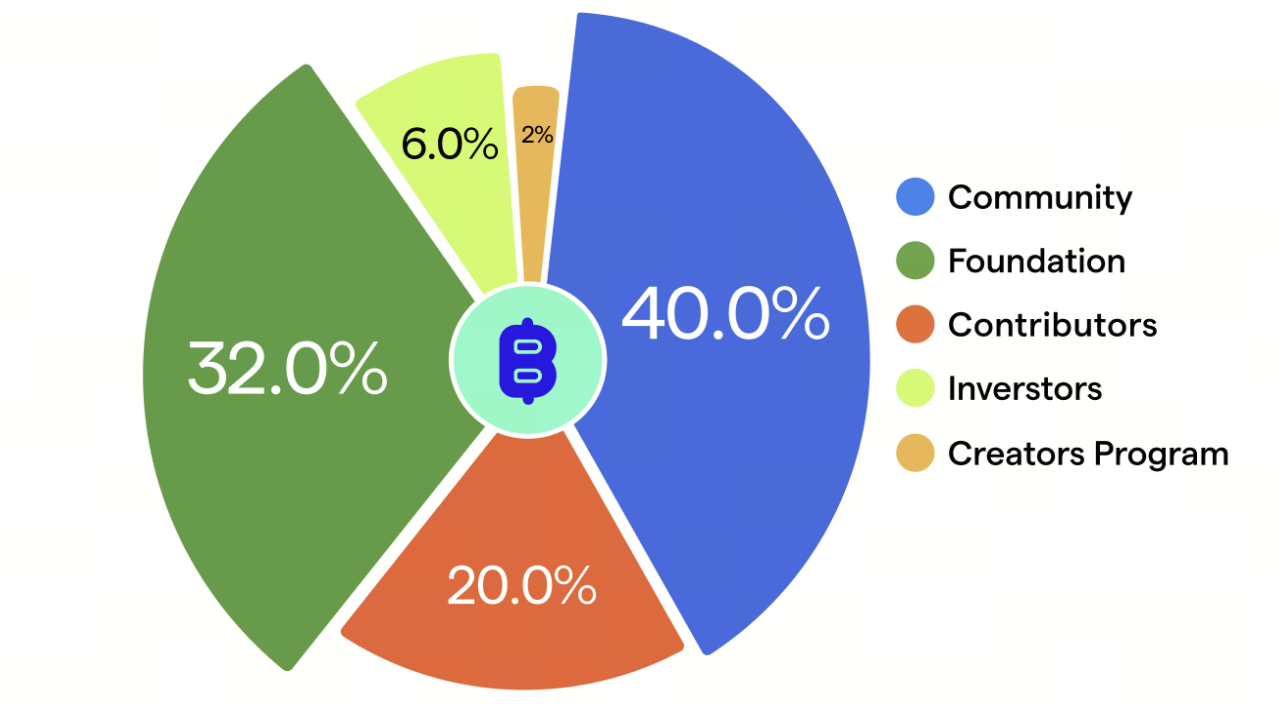
Source: billions.network
Investors and other project allocations make up a smaller share and follow a phased release mechanism. Overall, the release schedule begins with about 24% in circulation at the initial stage and gradually reaches full release over four years, helping avoid market shocks.
Billions Network’s Data Economy and Value Capture Logic
Billions Network’s value model is built on demand for data verification. Users pay for verification services, while nodes provide verification capabilities, creating an economic cycle centered on data.
As more applications connect to the network, verification requests may grow rapidly, especially in AI identity verification and cross platform authentication scenarios. This would increase both the usage frequency and demand for BILL.
The credential reuse mechanism further strengthens value capture. A single verification can be called multiple times, generating ongoing returns and giving data long term economic value.
At its core, this model is an expression of the “data economy”: identity and reputation are no longer just information, but resources that can be priced and circulated, supporting the development of Web3 trust infrastructure.
BILL Tokenomics Risks and Sustainability Analysis
Although BILL’s economic model is clearly designed, it still faces certain challenges. First, network value depends heavily on usage. If demand for verification does not grow enough, token circulation and value capture will be limited.
Second, the fee structure needs to strike a balance between user affordability and node revenue. Fees that are too high may discourage usage, while fees that are too low may weaken incentives.
In addition, while node staking improves security, it may also raise the barrier to participation and affect the degree of network decentralization. This requires dynamic balance through parameter adjustments.
Over the long term, the sustainability of Billions Network depends on whether it can build large scale application scenarios and find a stable path between data privacy and compliance.
Conclusion
Billions Network (BILL) builds a token economic system around identity verification and trusted data services through a fixed supply and usage driven model. Its core idea is to turn demand for data verification into sustained economic incentives.
This model not only improves the efficiency of identity systems, but also provides Web3 with a scalable framework for the data economy. As demand for AI and digital identity grows, the value of BILL will increasingly depend on network usage scale and ecosystem development.
FAQ
What are the main uses of the BILL token?
It is used to pay verification fees, incentivize node participation, and support future governance decisions.
How are fees calculated in Billions Network?
They are priced according to the type of verification, with fees increasing step by step from basic identity verification to full KYC.
Does BILL have an inflation mechanism?
No. BILL uses a fixed total supply model, with a total supply of 10 billion tokens.
How do nodes earn income through BILL?
They earn rewards by providing verification services, participating in the network, and staking tokens.
Is the BILL economic model sustainable?
It depends on whether network usage grows and demand for data verification continues to expand.







