Qu’est-ce que le protocole Constellation ? Une refonte complète de l’architecture blockchain
Alors que la concurrence entre blockchains publiques évolue d’une simple « course à la performance » vers une lutte autour de la « structure de marché », les mécanismes d’ordonnancement des transactions deviennent le nouvel enjeu central. Constellation, proposé par Anza, constitue une avancée architecturale majeure visant à relever directement ce défi.
Contrairement aux approches classiques qui cherchent à augmenter le TPS ou à réduire les frais de Gas, Constellation repense en profondeur la question de « qui décide de l’ordre des transactions ». Son innovation clé est l’introduction de la Multi-Proposer Concurrency (MCP), qui élargit le droit de proposer des transactions d’un unique nœud à un processus collaboratif à l’échelle du réseau. Ce basculement modifie de façon fondamentale la répartition du pouvoir dans la production des blocs.
Problèmes centraux du modèle Solana actuel : monopole du Leader et MEV
Dans l’architecture actuelle de Solana, chaque slot est piloté par un Leader unique, chargé du traitement des transactions et de la construction des blocs. Si ce modèle offre de hautes performances, il génère plusieurs défis structurels :
- Pouvoir d’ordonnancement très centralisé : le Leader détient une autorité totale sur l’ordre des transactions et, par conséquent, sur la répartition de la valeur.
- Problématique aiguë du MEV : des pratiques telles que le front-running, les attaques sandwich et le sniping lors des liquidations reposent toutes sur le contrôle de l’ordre pour générer du rendement.
- Risque de censure : le Leader peut ignorer sélectivement certaines transactions, rendant possible une censure discrète.
Tous ces problèmes découlent d’une logique fondamentale : Pouvoir d’ordonnancement centralisé → Rendements concentrés → Incitations déséquilibrées
Fonctionnement de la MCP : la Multi-Proposer Concurrency en pratique
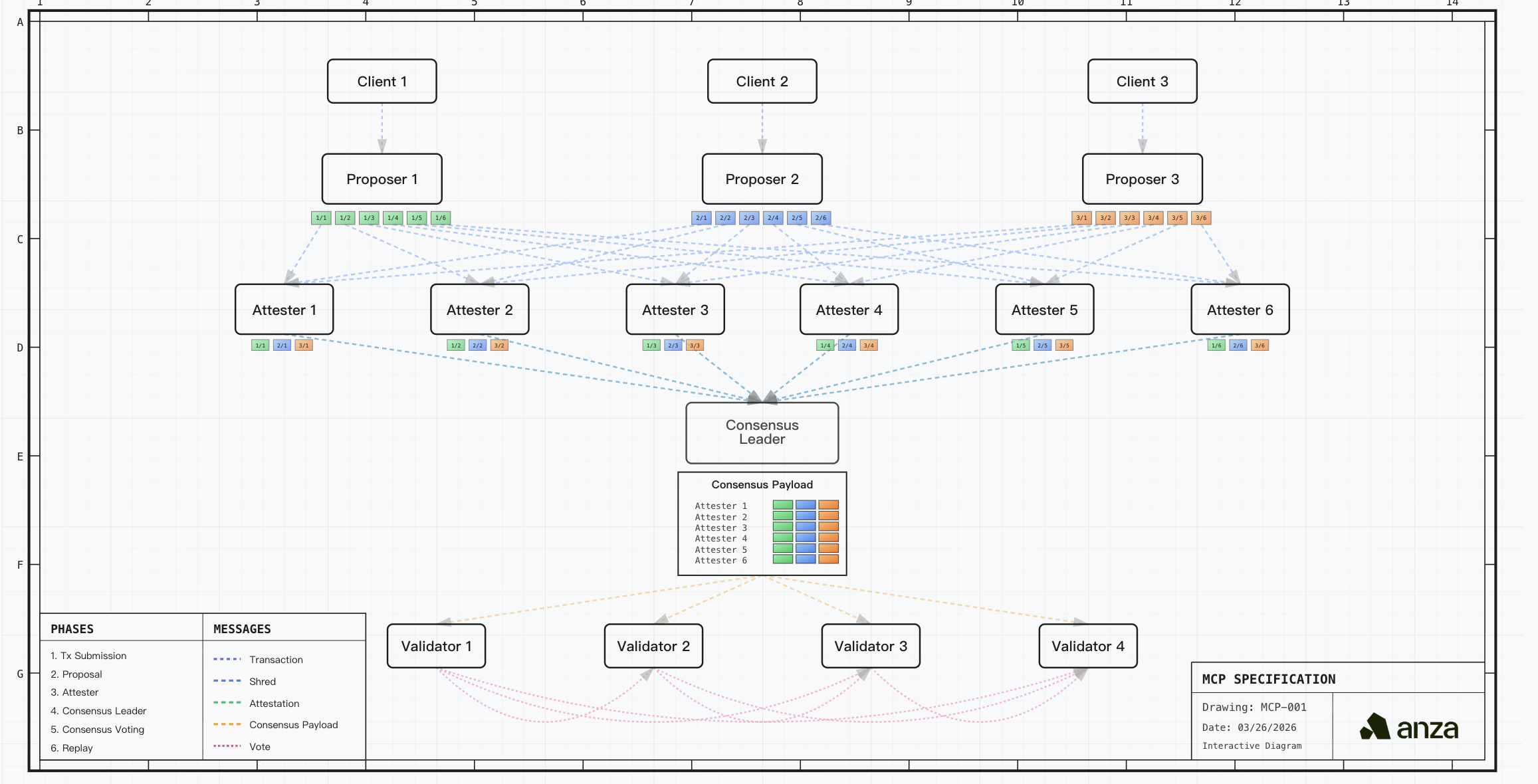 Source : Anza Constellation Protocol Page
L’avancée majeure de Constellation est de diviser le processus de proposition des transactions—jusqu’ici monopolisé par le Leader—en tâches parallèles réalisées par plusieurs participants, créant ainsi un « marché concurrentiel des transactions ». Le processus s’opère comme suit :
- Plusieurs proposeurs collectent simultanément des transactions sur le réseau.
- Environ toutes les 50 ms, chacun soumet des fragments de transactions.
- Les attesteurs valident et horodatent les transactions, puis les diffusent sur le réseau.
- À l’étape finale, le Leader agrège tous les fragments de transactions et produit le bloc.
Ce mécanisme induit trois changements majeurs :
- Le flux des transactions n’est plus concentré sur un seul nœud, mais se diffuse à l’échelle du réseau.
- Les proposeurs entrent en concurrence, instaurant une dynamique de marché.
- La production des blocs passe d’une exécution séquentielle à un traitement parallèle.
En synthèse, Constellation transforme la génération de blocs d’un « processus linéaire » en un « système concurrent ».
Résistance à la censure : du jugement individuel aux garanties protocolaires
Traditionnellement, l’inclusion d’une transaction dans un bloc dépend en grande partie du jugement subjectif du Leader. Constellation intègre la résistance à la censure directement dans les règles du protocole :
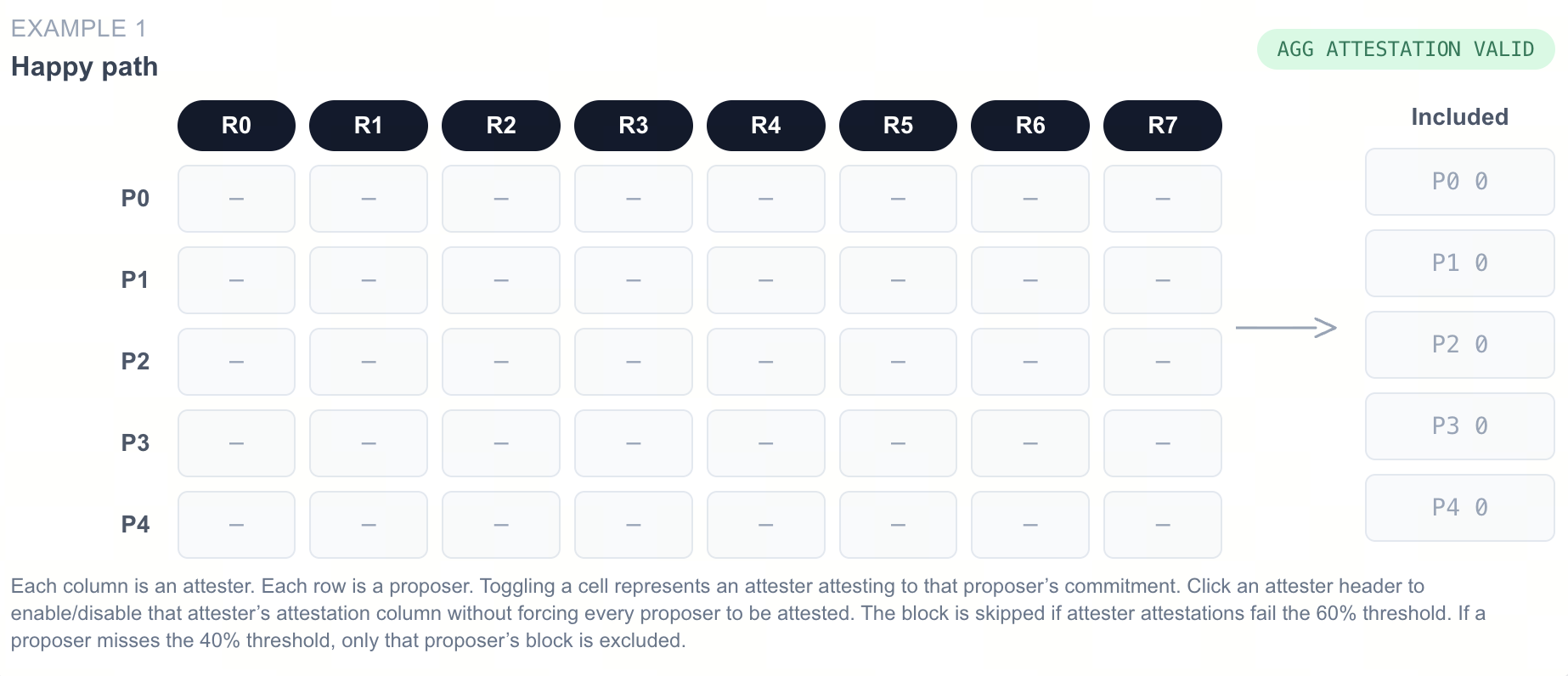
Dès lors qu’au moins 40 % des attesteurs constatent une transaction, le Leader doit l’inclure dans le bloc.
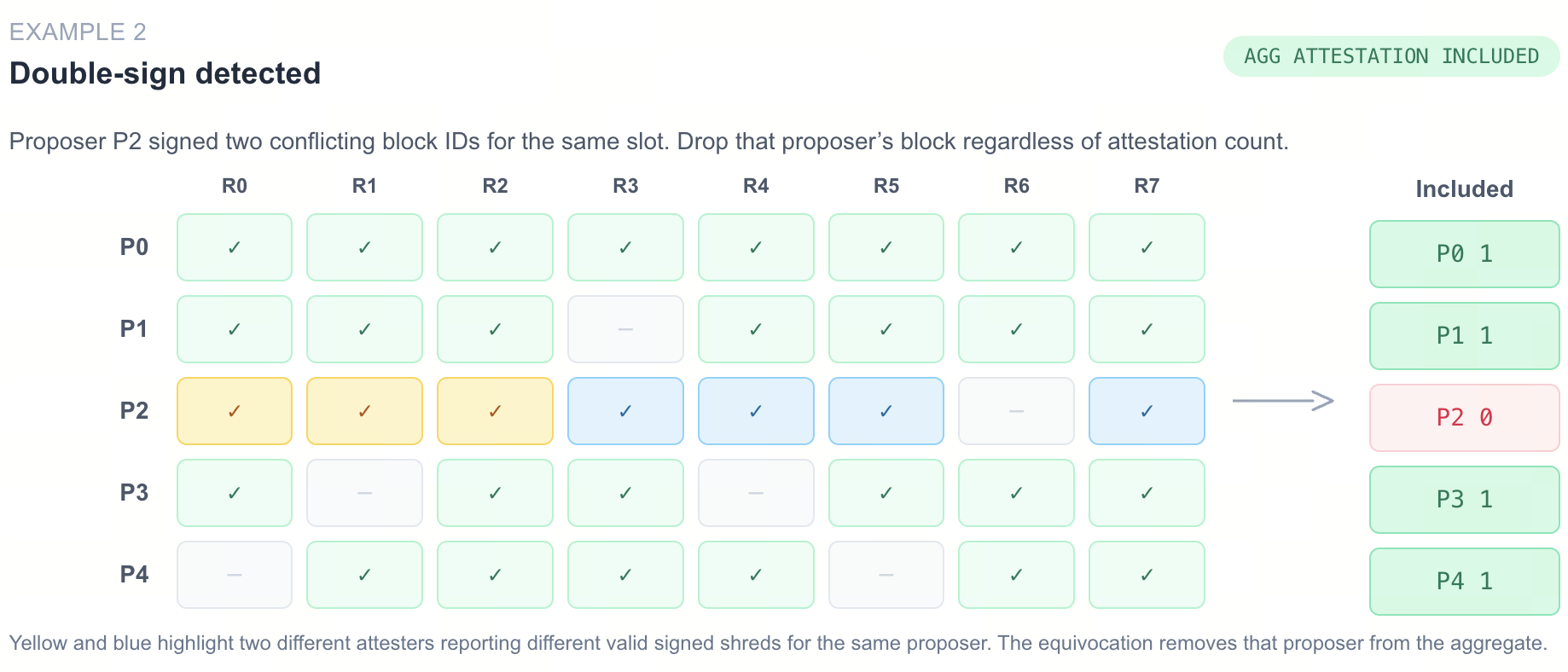
Si une transaction n’est pas suffisamment confirmée (par exemple, si elle n’atteint pas un seuil supérieur), le bloc peut être ignoré ou jugé invalide.
Ce schéma a plusieurs effets directs :
- Le Leader ne peut plus censurer en ignorant simplement certaines transactions.
- Un attaquant devrait contrôler une part significative des nœuds pour influencer le résultat des transactions.
- La confirmation des transactions passe d’une décision isolée à un consensus collectif.
Fondamentalement, le système évolue d’une « confiance dans les nœuds » à une « confiance dans les règles du protocole ».
Frais et incitations : une nouvelle répartition du pouvoir d’ordonnancement
Constellation ne modifie pas seulement la structure technique, il repense aussi le modèle d’incitation économique. La structure des frais se divise en deux grandes catégories :
- Inclusion Fee (frais d’inclusion, prélevé pour qu’une transaction soit incluse dans un bloc)
- Ordering Fee (valeur issue de l’ordonnancement des transactions)
L’innovation majeure réside dans la distribution des frais d’ordonnancement :
- Les frais d’ordonnancement ne sont plus monopolisés par le Leader.
- Ils sont répartis entre les validateurs du réseau en fonction du stake.
Les effets de ce modèle sont les suivants :
- Empêcher les Leaders de capter des rendements excessifs par l’ordonnancement.
- Réduire le risque de reconcentration du pouvoir.
- Transformer les rendements liés à l’ordre en un bien public.
Ce point est essentiel, car il s’attaque au risque de « décentralisation technique mais centralisation économique ».
Constellation et MEV : compression, mise en marché ou restructuration ?
Constellation ne fait pas disparaître le MEV ; il en modifie la nature. Structurellement, trois évolutions sont possibles :
- Le MEV est compressé : la dispersion du pouvoir d’ordonnancement réduit les opportunités d’arbitrage.
- Le MEV devient piloté par le marché : les proposeurs se disputent le flux de transactions, créant un marché ouvert.
- Le MEV est restructuré : l’enjeu se déplace du front-running on-chain vers la compétition sur le flux d’ordres.
En résumé, le MEV passe de « rendements cachés » à une « concurrence explicite ».
Comparatif sectoriel : Constellation vs. Flashbots—deux voies divergentes
Actuellement, le secteur se divise entre deux grandes approches du MEV :
- Approche off-chain (ex. Flashbots) :
- Résout l’ordonnancement via des enchères hors chaîne.
- Ne modifie pas le protocole sous-jacent.
- Approche protocolaire (ex. Constellation) :
- Restructure le flux de transactions directement au niveau du protocole.
- Intègre les mécanismes d’ordonnancement dans le consensus.
Les distinctions majeures sont :
- Contrôle : marchés off-chain vs. règles protocolaires.
- Source du risque : centralisation des relais vs. complexité du protocole.
- Scalabilité : optimisation externe vs. restructuration interne.
Ces approches incarnent des orientations profondément différentes pour le développement de l’écosystème.
Enjeux pour la DeFi et la finance on-chain : vers le trading haute fréquence
La cadence de 50 ms de Constellation rapproche les systèmes on-chain des vitesses de matching de la finance traditionnelle, entraînant des mutations structurelles :
- Le trading haute fréquence (HFT) devient possible, élargissant considérablement la gamme des stratégies exploitables.
- Les modèles Carnet d’ordres gagnent en pertinence, réduisant la dépendance exclusive aux AMM.
- La découverte des prix s’améliore, avec moins de distorsions liées à l’ordonnancement manuel.
Ces avancées laissent entrevoir une transition de la DeFi de la phase de « liquidité automatisée » vers une ère de « structures de marché complexes ».
Risques et défis : de nouvelles dynamiques concurrentielles
Si Constellation introduit une architecture avancée, sa nouvelle structure peut aussi générer de nouveaux défis :
- Cartels de proposeurs : plusieurs proposeurs pourraient s’entendre pour reprendre le contrôle du flux de transactions.
- Complexité accrue du système : l’architecture multi-rôles accroît à la fois la surface d’attaque et les coûts de maintenance.
- Synchronisation du réseau : la concurrence pourrait entraîner des problèmes de latence et de cohérence.
En somme, les problèmes existants ne disparaissent pas : ils se déplacent vers de nouveaux niveaux et de nouvelles dynamiques de compétition.
Perspectives : le rôle de Constellation dans la feuille de route de Solana
Constellation n’est pas une simple mise à niveau indépendante ; elle s’inscrit dans la stratégie à long terme de Solana. Les axes d’évolution potentiels incluent :
- L’intégration avec les prochaines évolutions du consensus (telles qu’Alpenglow)
- L’exécution parallèle accrue et une capacité réseau supérieure
- Le support de la finance institutionnelle et de scénarios de trading avancés
À long terme, l’ambition n’est pas seulement d’atteindre de meilleures performances, mais de faire évoluer la blockchain vers une infrastructure reflétant les marchés financiers réels.
Conclusion
La véritable portée de Constellation réside dans la redistribution du « pouvoir d’ordonnancement des transactions ». Grâce à son mécanisme de concurrence multi-proposeurs, elle opère trois transformations majeures :
- Du contrôle centralisé → à la concurrence multipartite
- De l’ordre implicite → à des marchés explicites
- De l’optimisation locale → à la refonte architecturale
Si ce mécanisme est mis en œuvre avec succès, il fera entrer les blockchains publiques dans une nouvelle ère—où la compétition ne portera plus seulement sur la vitesse, mais sur la capacité à bâtir une structure de marché plus équitable et plus efficace.