Will Bitcoin Really Hit $1 Million by 2030? Kiyosaki’s Bold Claim and What Newcomers Should Know

Last Updated 2026-03-30 20:18:44
Reading Time: 1m
Robert Kiyosaki, the author of "Rich Dad Poor Dad," recently predicted that Bitcoin will reach 1 million dollars by 2030. This article combines the latest prices of Bitcoin and industry trends to analyze its possibilities, and offers rational entry suggestions and risk control guidelines for newbies.

1. Review of Bitcoin’s History and Current Price
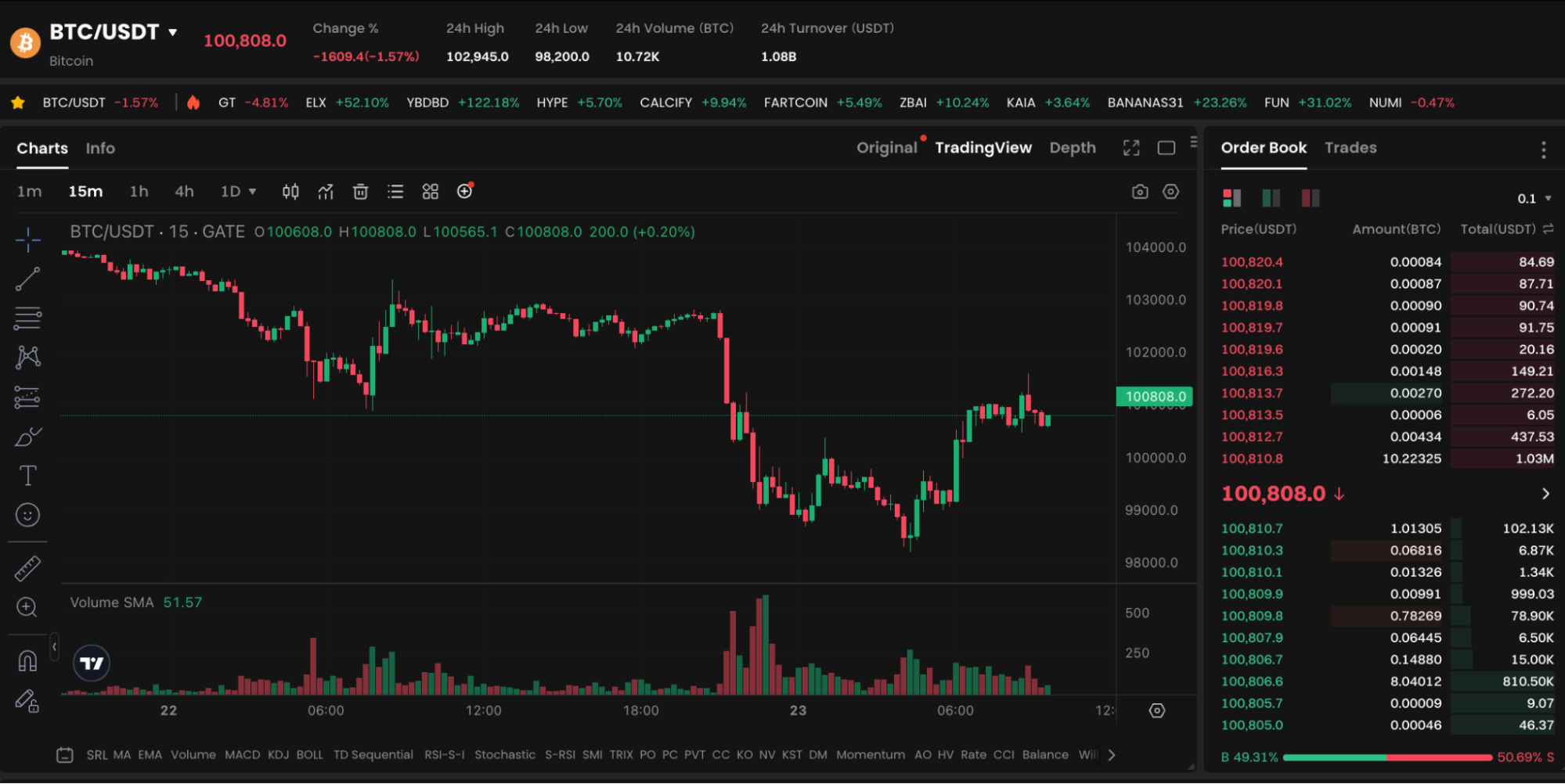

Figure:https://www.gate.com/trade/BTC_USDT

Bitcoin has undergone a transformation from a “hacker toy” to “digital gold” since it was proposed by Satoshi Nakamoto in 2009. From initially being worth less than 1 cent, it first broke through $20,000 in 2017 and soared to a peak of $69,000 in 2021, shocking the world with its dramatic increase.

As of June 23, 2025, the price of Bitcoin is approximately $100,800. Although it briefly dropped below the psychological threshold of $100,000 on the evening of the 22nd, it remains in a fluctuating upward channel overall. Despite the volatility, Bitcoin has been regarded by many institutions as an anti-inflation asset, maintaining its position as the world’s leading cryptocurrency by market capitalization.

2. The Logic Behind Kiyosaki’s Million Dollar Prophecy

In June 2025, Robert Kiyosaki, the author of “Rich Dad Poor Dad,” stated in a public post: “I believe Bitcoin can reach $1,000,000 by 2030.” He sees Bitcoin as a core tool to combat “fake money” (fiat money). He pointed out that governments printing money without limits leads to inflation, while the scarcity and decentralized mechanism of Bitcoin can effectively hedge against this risk.

Kiyosaki stated that he entered the market when Bitcoin was at $6,000, and now he is even more confident about its future upside potential. Although his views are aggressive, there is a certain macroeconomic basis behind them.

3. Four Major Factors Supporting the Long-term Bull Market of Bitcoin

(1) Scarcity and Halving Mechanism: The total supply of Bitcoin is fixed at 21 million coins, with a halving occurring every four years, demonstrating a clear deflationary attribute. In 2024, it just experienced its fourth halving, reducing the daily new coin production from 900 coins to 450 coins. This mechanism forms the supply foundation for long-term price increases.

(2) Institutional and sovereign funds entering the market: Global asset management giants such as BlackRock and Fidelity have significantly increased their holdings in Bitcoin through ETFs and funds. In addition, countries like El Salvador and Argentina have incorporated Bitcoin as legal assets, marking a rise in recognition at the sovereign level.

(3) Global macro uncertainty: Factors such as inflation, geopolitical conflicts, and the decline of dollar hegemony are driving more investors to seek safe-haven assets. Bitcoin, independent of any national monetary system, has become the “safe-haven gold” of the digital age.

(4) The technical ecosystem is continuously improving: Lightning Network, Bitcoin ETF, payment integration, Web3 application development, etc., greatly expanding the practical use cases of Bitcoin, no longer just a “speculative target.”

4. How should newbies participate? Practical advice and risk control reminders

For newbies, although Bitcoin has great potential, it is not without risks. Here are a few suggestions for reference:

(1) Understand volatility risk and prepare for the long term: Bitcoin may rise or fall sharply in the short term. For example, it dropped by 60% within a few months in 2022. Newbies need to have sufficient psychological expectations and should not blindly chase highs and sell lows.

(2) Use a dollar-cost averaging strategy to smooth out costs: It is recommended to invest funds in batches, buying regularly on a monthly or weekly basis, and not to attempt to “buy the dip” or “sell at the peak.” In the long run, this approach can effectively reduce holding costs.

(3) Set up profit-taking and stop-loss mechanisms: establish profit targets and the maximum allowable loss percentage. For example, take some profits when the price rises by 100%, and cut losses if they exceed 20%. Discipline is crucial.

(4) Diversified allocation to avoid single bets: While Bitcoin is powerful, it is also recommended to allocate other assets like Ethereum and stablecoins to form a cryptocurrency asset portfolio, reducing overall volatility.

(5) Pay attention to regulatory and technical risks: Global regulation of cryptocurrencies remains uncertain, which may lead to significant market fluctuations. Additionally, technical issues such as hacker attacks and wallet losses should also be monitored.

Summary

“Will Bitcoin reach one million dollars by 2030?” This question cannot be definitively answered by anyone today. However, from the perspectives of supply mechanisms, institutional holdings, and global economic trends, this goal is not mere fantasy. Robert Kiyosaki’s view may be overly aggressive, but it reflects a high recognition of Bitcoin’s long-term value in the market.

For ordinary investors, it might be wise to consider this million target as a thinking anchor, gradually understanding, entering the market steadily, and allocating reasonably, in order to truly grasp this trend that may change the distribution of future wealth.

Author: Max
Disclaimer
* The information is not intended to be and does not constitute financial advice or any other recommendation of any sort offered or endorsed by Gate.
* This article may not be reproduced, transmitted or copied without referencing Gate. Contravention is an infringement of Copyright Act and may be subject to legal action.

Related Articles

AI-Native Settlement Layers: How United Stables Is Building the Next Financial Rail
Beginner

AI-Native Settlement Layers: How United Stables Is Building the Next Financial Rail

Stablecoins were originally designed as dollar substitutes within exchanges, primarily used for asset pricing and trade settlement. As on-chain financial ecosystems have matured, their role has expanded beyond simple payments to include collateral assets, cross-chain liquidity mediums, and unified settlement units. In particular, as AI systems and automated agents begin to participate directly in economic activity, demand has risen sharply for programmable value units capable of instant settlement. This shift is pushing stablecoins toward the role of foundational financial infrastructure.
2026-03-25 03:16:17
DePIN Identity Network and Real World Applications: How Humanity Protocol Brings on-chain Identity Into the Physical World
Beginner

DePIN Identity Network and Real World Applications: How Humanity Protocol Brings on-chain Identity Into the Physical World

Most Web3 identity systems remain confined to on-chain environments and struggle to achieve meaningful adoption in real world settings. Through a DePIN architecture and physical verification hardware, Humanity Protocol aims to bring decentralized identity into access control systems, hospitality, public services, and offline events, allowing on-chain identity to function not just as a digital credential, but as foundational infrastructure for real world access.
2026-03-25 07:40:53
The ve(3,3) Flywheel Explained: How AERO Tokenomics Powers Aerodrome’s DeFi Economy
Beginner

The ve(3,3) Flywheel Explained: How AERO Tokenomics Powers Aerodrome’s DeFi Economy

In the competition for DeFi liquidity, high-inflation mining alone is no longer enough to build lasting advantages. Aerodrome applies the ve(3,3) economic model to redesign token emissions, voting mechanisms, and revenue distribution, creating a liquidity flywheel centered on governance and cash flow. This article examines AERO tokenomics, the veAERO locking mechanism, and protocol revenue models to explain how Aerodrome builds a sustainable DeFi economic system.
2026-03-25 06:41:58
Aerodrome Tokenomics: How ve(3,3) Powers Base's Most Profitable DEX
Beginner

Aerodrome Tokenomics: How ve(3,3) Powers Base's Most Profitable DEX

AERO is the native token of Aerodrome Finance, a core decentralized exchange and liquidity protocol in the Base ecosystem. It is primarily used for liquidity incentives and ecosystem operations. veAERO is a governance NFT that users receive by locking AERO, representing both voting power and the right to share protocol revenue. Through a dual track structure of AERO as a utility token and veAERO as a governance credential, Aerodrome separates liquidity usage value from long term governance power, allowing participants to act as liquidity providers, governance decision makers, and revenue sharers within the same system.
2026-03-25 06:40:31
Aster vs Hyperliquid: Which Perp DEX Will Prevail?
Beginner

Aster vs Hyperliquid: Which Perp DEX Will Prevail?

Aster and Hyperliquid are the two representative protocols of the "purpose-built L1 path" within the current decentralized perpetual exchange (Perp DEX) sector. As a pioneer in the field, Hyperliquid has built a deep liquidity moat through its highly mature order book architecture and strong community consensus. Conversely, Aster, as a rising challenger, seeks to leapfrog the competition in high-performance trading through more aggressive multi-chain aggregation logic, private transaction modules, and an underlying execution environment optimized for 2026 market demands.
2026-03-24 11:58:33
Gold Price Forecast for the Next Five Years: 2026–2030 Trend Outlook and Investment Implications, Could It Reach $6,000?
Beginner

Gold Price Forecast for the Next Five Years: 2026–2030 Trend Outlook and Investment Implications, Could It Reach $6,000?

Analyze current gold price trends alongside authoritative five-year forecasts, integrating an evaluation of market risks and opportunities. This gives investors insight into the potential trajectory of gold prices and the main drivers expected to shape the market over the next five years.
2026-03-25 18:13:30





