XAUT, also known as Tether Gold, is a blockchain token backed 1:1 by physical gold. Each token represents ownership of one troy ounce of LBMA standard gold stored in professional vaults. Technically, XAUT differs from typical cryptocurrencies. Its value is not determined purely by market consensus, but is instead fully backed by physical gold reserves, which requires a robust system of custody, auditing, and trust.
Its significance goes beyond offering a relatively stable crypto asset. It also represents an effort to integrate the traditional precious metals market with on-chain financial systems.
This article explores XAUT’s background, operational model, custody and audit framework, similarities and differences compared with traditional and other gold tokens, market applications, pricing mechanism, participation methods, and potential risks.
What Is XAUT? Project Background and Issuer Overview
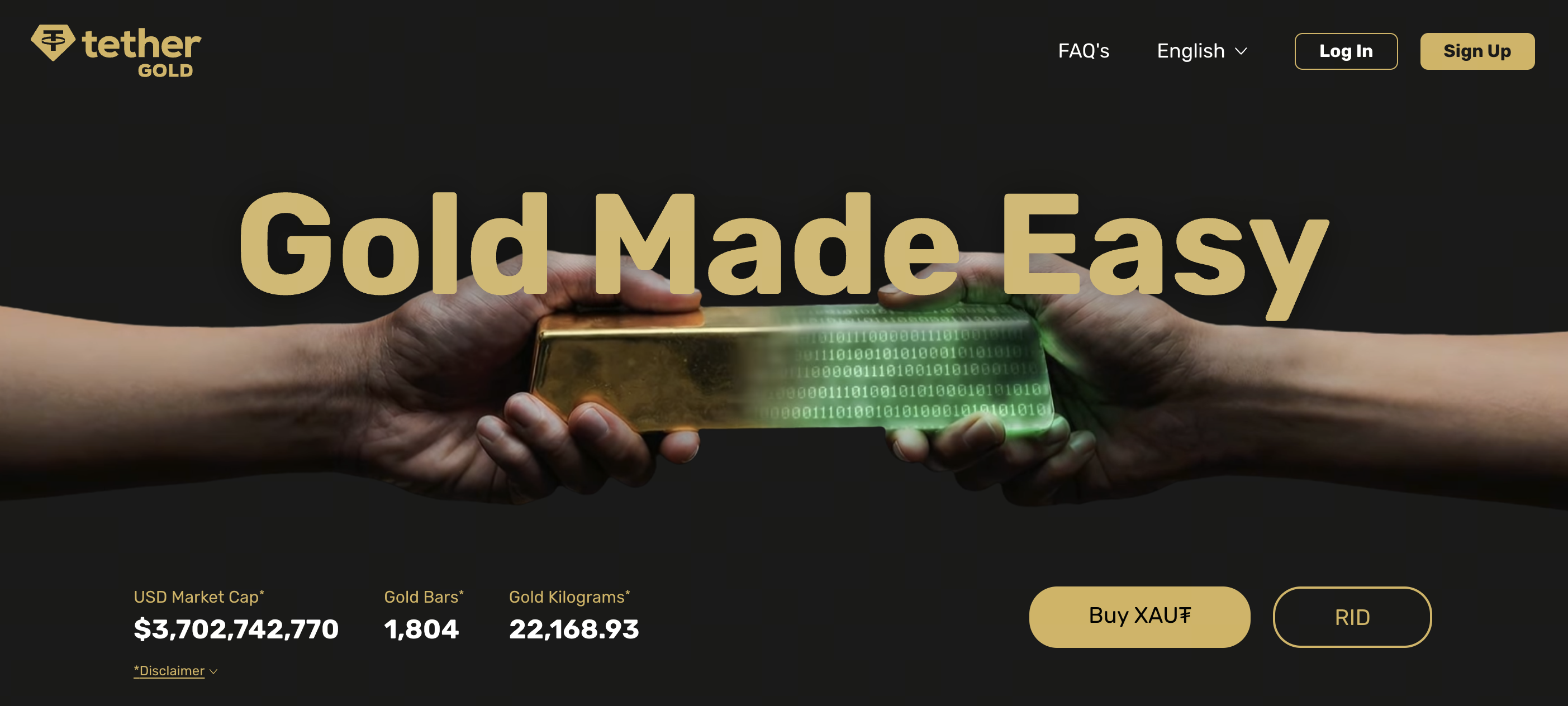
Source: Tether official website
XAUT, commonly known as Tether Gold, is issued by Tether and backed by physical gold. Each XAUT token theoretically represents ownership of one troy ounce of gold stored in insured Swiss vaults.
Tether is one of the world’s leading stablecoin issuers, best known for USDT, a stablecoin pegged to the US dollar. XAUT represents Tether’s strategic expansion into real world assets, aiming to bring traditional gold investment on chain so users globally can hold gold in tokenized form.
XAUT was launched against a broader macroeconomic backdrop. Amid accommodative monetary policies, rising inflationary pressures, and heightened geopolitical risks, gold prices have continued to reach new highs. As demand for safe haven assets increased, these conditions created a favorable environment for XAUT’s development.
How Does XAUT Work? Gold Reserves and On Chain Token Mapping
XAUT’s operational model can be summarized in two components: asset backing and on chain tokenization.
- Physical gold backing: Each XAUT token corresponds to a specific quantity of physical gold that meets London Bullion Market Association standards and is stored in Swiss vaults.
- On-chain issuance and mapping: When users acquire XAUT through the issuer, the equivalent value is allocated toward the purchase of gold, and a corresponding amount of XAUT is minted. These tokens can then be freely transferred, traded, or used as collateral on-chain.
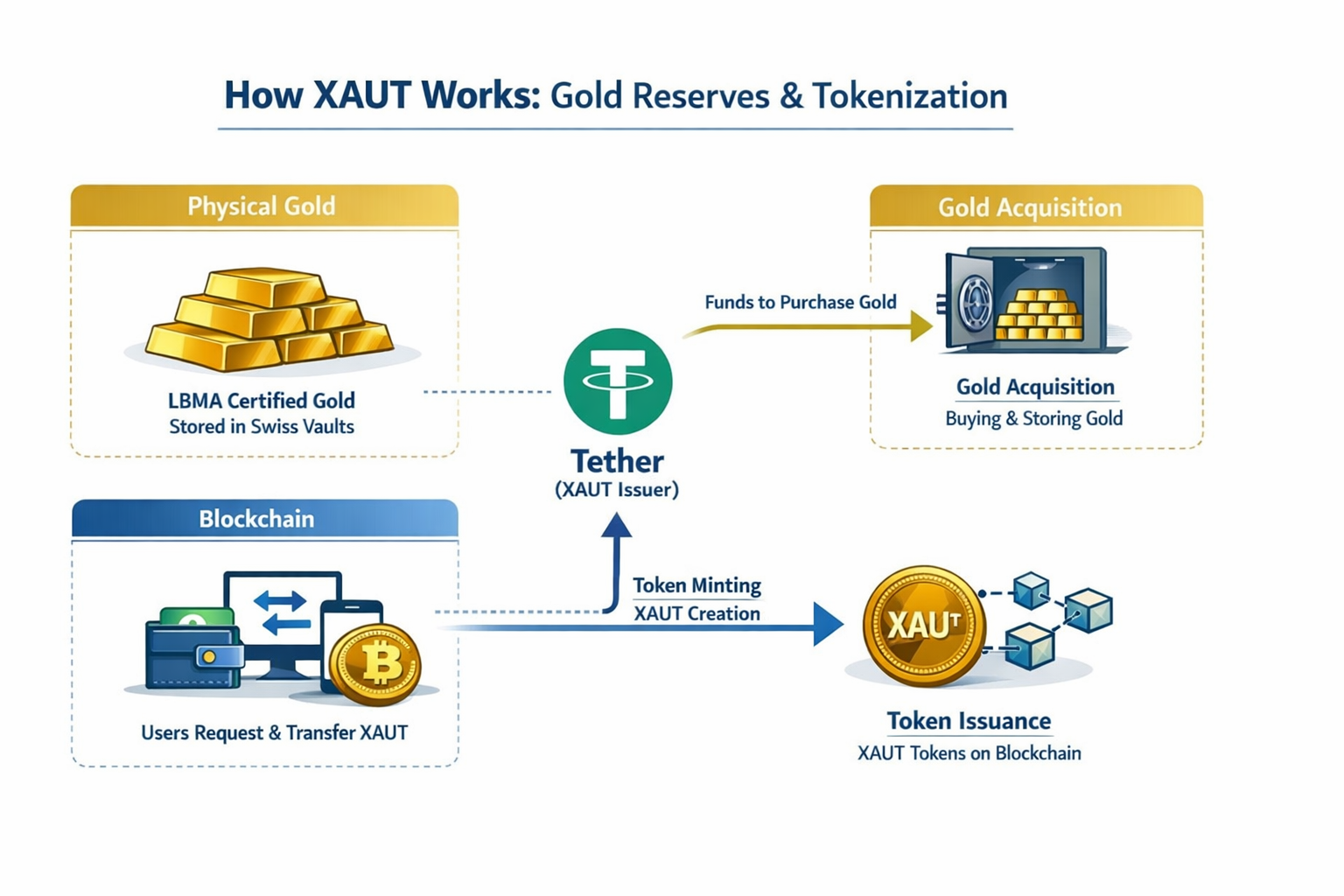
This structure depends on strict custody and auditing practices to ensure that every token is fully backed by physical gold. At the same time, unlike traditional banking systems, XAUT benefits from blockchain level transaction transparency.
How Is the Physical Gold Behind XAUT Custodied and Audited?
The custody and auditing of XAUT’s underlying gold are central to market confidence:
- Physical gold is stored in high security vaults, typically located in jurisdictions such as Switzerland, known for strong regulatory and security standards.
- Independent third party accounting firms conduct regular audits of the gold reserves and publish reports disclosing reserve status, verifying the 1:1 relationship between tokens and physical assets.
- Users can verify details related to their holdings through official tools, such as checking on chain information linked to specific gold bar serial numbers.
Despite the existence of audit mechanisms, investors should recognize that standards of audit independence and transparency can vary across issuers within the industry.
How Does XAUT Differ from Traditional Gold Investments?
Traditional gold investments include physical bullion, gold ETFs, gold futures, and gold mining equities. XAUT differs in several key ways:
- On chain liquidity: As a token that can operate on standards such as Ethereum ERC-20, XAUT can trade globally on crypto markets 24/7, offering more flexible trading hours compared with traditional gold ETFs.
- High divisibility: Physical gold often requires higher minimum investment amounts, whereas XAUT can be divided into small units, lowering the barrier to entry.
- No self storage required: Investors do not need to store gold themselves or arrange physical custody, as professional institutions manage storage.
That said, compared with traditional gold ETFs, XAUT may differ in terms of regulatory oversight, market depth, and transparency, especially across different jurisdictions with varying compliance requirements.
How Does XAUT Compare with Other Gold Tokens Such as PAXG?
There are several gold-backed tokens in the market, including Paxos’ PAXG. The main differences between XAUT and PAXG include:
| Comparison Dimension |
XAUT (Tether Gold) |
PAXG (Paxos Gold) |
| Issuer |
Tether |
Paxos Trust Company |
| Regulatory Status |
Issued by Tether; regulatory framework depends on its operational structure |
Issued by Paxos; regulated by the New York State Department of Financial Services, NYDFS |
| Gold Per Token |
1 troy ounce of LBMA standard gold |
1 troy ounce of LBMA standard gold |
| Gold Storage Location |
Swiss vaults |
London vaults |
| Gold Standard |
LBMA Good Delivery |
LBMA Good Delivery |
| Physical Redemption |
Supported, subject to minimum thresholds |
Supported, redeemable for gold bars or cash |
| Audit Mechanism |
Regular publication of gold reserve reports |
Regular audits with disclosures to regulators |
| On Chain Standard |
Primarily ERC-20, Ethereum |
ERC-20, Ethereum |
| Market Positioning |
Strong emphasis on crypto ecosystem integration, closely associated with the USDT system |
Greater emphasis on compliance and institutional grade trust |
| Market Cap and Liquidity |
Typically higher market cap with broad exchange coverage |
Slightly lower market cap than XAUT, but higher institutional acceptance |
| Target Users |
Crypto native investors and DeFi users |
Compliance focused investors and institutional participants |
- XAUT advantages: Generally stronger liquidity and clear synergy within the Tether ecosystem, making it attractive to crypto native users.
- PAXG advantages: Higher regulatory transparency and positioning that may align more closely with institutional compliance requirements.
For reference, PAXG is issued as PAX Gold. Both XAUT and PAXG are fundamentally on-chain representations of physically backed gold, with key differences rooted in issuer background, regulatory environment, and market positioning.
Use Cases of XAUT in the Crypto Market
XAUT’s primary applications include:
- Store of value: As a safe haven asset with gold exposure, it may provide relative stability during periods of market volatility.
- Trading and hedging: It can serve as a trading pair asset or hedging instrument, enabling diversified portfolio construction alongside other crypto assets.
- DeFi collateral: On certain platforms, XAUT can be used as collateral to obtain liquidity or participate in lending activities.
How Is XAUT’s Price Linked to the Gold Market?
XAUT’s price is closely tied to the spot gold market. Market data suggests a correlation of approximately 97% between XAUT and spot gold prices. When spot gold rises, XAUT’s market price typically follows. During periods of heightened volatility or liquidity constraints, temporary deviations may occur, but overall the linkage remains strong.
How to Buy, Hold, or Redeem XAUT?
Most major crypto exchanges and DeFi platforms support XAUT trading:
- Buying on exchanges: Users can purchase XAUT on centralized exchanges or decentralized exchanges using mainstream stablecoins such as USDT.
- Wallet storage and transfers: XAUT is commonly supported by wallets compatible with the ERC-20 standard, allowing cross platform transfers.
- Physical redemption (subject to issuer policy): Some issuers allow token holders to redeem XAUT for physical gold through official channels, although minimum thresholds and fees typically apply.
What Risks Should Investors Consider When Investing in XAUT?
Investing in XAUT involves several types of risk:
- Custody and audit risk: If the custodian or auditor fails in its duties or loses credibility, the token’s value backing could be affected.
- Market risk: Although linked to gold, XAUT’s price may still be influenced by exchange liquidity and trading dynamics.
- Regulatory risk: Different countries apply different regulatory frameworks to gold tokens, and the legal classification of such assets continues to evolve.
Conclusion: The Long Term Value of XAUT in the Digital Gold Sector
As one of the prominent on chain “digital gold” representations, XAUT builds a bridge between traditional precious metals and crypto assets through physical gold backing, blockchain circulation, and growing market acceptance. Its value lies not only in its function as an investment instrument, but also in its role as part of the broader evolution of tokenized real world assets.
At the same time, investors should carefully assess custody compliance, audit transparency, and market risks while considering its potential.
FAQs
What Is the Relationship Between XAUT and USDT?
XAUT is a gold-backed token issued by Tether, while USDT is a US dollar-backed stablecoin. Each represents a different asset backing framework.
Can XAUT Be Redeemed for Physical Gold?
Some issuers provide physical redemption services, though minimum quantity requirements and fees usually apply.
Is It Safe to Trade XAUT on Exchanges?
Trading safety depends on the compliance standards and risk management mechanisms of the exchange. Using established and regulated platforms is generally advisable.
Is XAUT Protected by Regulation?
Regulatory treatment varies across jurisdictions, and the framework governing gold-backed tokens is still developing.
What Is the Long Term Investment Value of XAUT?
Its long term value depends on gold market performance, the development of tokenized asset ecosystems, and overall market adoption.