As a blockchain network that combines PoW and PBFT architecture, Xphere needs to keep its nodes running and its network secure over the long term. To do that, Xphere must establish a continuous token issuance and reward system. Traditional centralized systems usually rely on platform operators to maintain the network, while Xphere depends more heavily on block rewards and node incentives to keep the entire network operating.
The XP token operates around block rewards, node validation, governance mechanisms, and ecosystem expansion. Xphere’s economic model affects not only node earnings, but also the data security and long-term stability of the entire network.
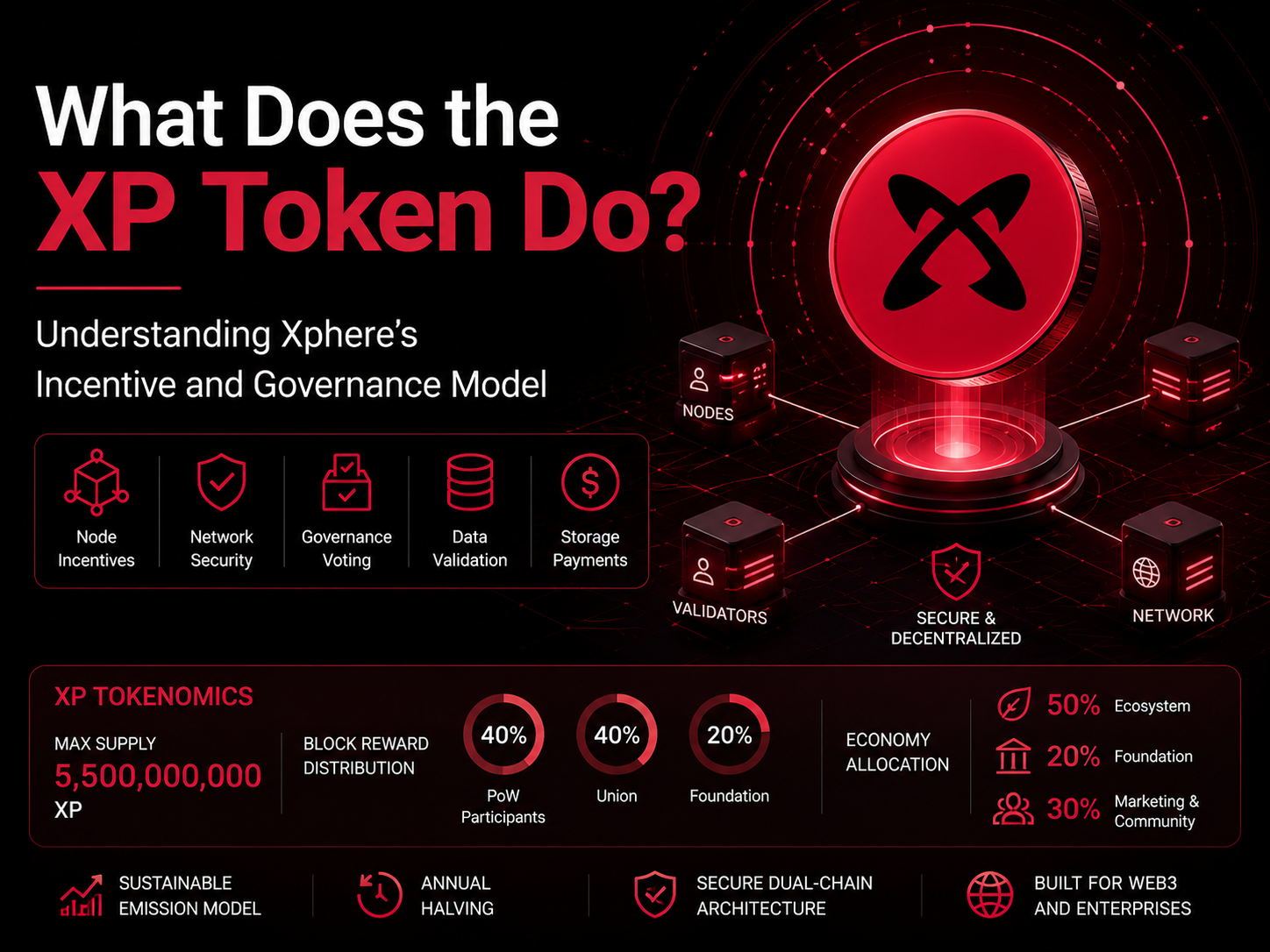
What Is the XP Token
The XP token serves as the core value coordination mechanism within the Xphere network. Xphere uses XP to coordinate collaboration among PoW nodes, Union nodes, the foundation, and the broader ecosystem.
Structurally, XP is closer to a base network asset than an ordinary utility token. XP directly participates in block reward distribution, node incentives, and network governance, which means XP is directly connected to the security of the Xphere network.
Block generation in the Xphere network requires several modules to work together. First, PoW nodes participate in block computation. Then, the Union validation structure confirms the network state. Next, the PBFT mechanism verifies transaction consistency. Finally, the system confirms the new block and distributes XP rewards.
This mechanism means the XP token does more than serve as a payment tool. It also supports network operating costs and security incentives. If nodes stop participating in validation, the overall security of the network may be affected.
According to the official white paper, the XP token is also used for ecosystem development, foundation operations, and community expansion, making XP a core resource for Xphere’s long-term growth.
XP’s Core Functions in the Xphere Network
The core functions of the XP token mainly center on node rewards, network governance, ecosystem expansion, and data validation. These different modules jointly affect the operating efficiency of the Xphere network.
Nodes in the Xphere network need XP to receive long-term operating incentives. First, PoW nodes participate in block generation. Then, the system confirms each node’s contribution. Next, the Union validation layer synchronizes the network state. Finally, block rewards are distributed to different participants according to the rules.
The table below shows the main functions of the XP token in the Xphere network:
| Functional Module |
Main Role |
| Block rewards |
Incentivize node operation |
| Network governance |
Adjust protocol parameters |
| Data validation |
Maintain network security |
| Ecosystem development |
Support network expansion |
| Community incentives |
Promote user growth |
The XP token is designed to maintain long-term, sustainable network collaboration. A decentralized blockchain network cannot rely on a single server, so Xphere must use an economic model to coordinate relationships among different nodes.
Unlike traditional internet systems, node earnings in Xphere are directly tied to network contribution. When nodes participate in block generation and validation, they can continue receiving XP rewards.
Why Nodes Need XP Incentives
The XP incentive mechanism is an important part of Xphere’s network security model. Blockchain networks need to keep nodes online continuously, so node incentives directly affect system stability.
Nodes in the Xphere network need to participate in block validation and data synchronization over the long term, which means the network must establish a continuous reward structure. First, PoW nodes participate in block computation. Then, the PBFT structure confirms transaction states. Next, Union nodes synchronize network results. Finally, the system distributes XP rewards to participants.
This mechanism means XP incentives affect not only node earnings, but also the security of the entire network. Without long-term rewards, a blockchain network may face a decline in validation capacity.
Structurally, the XP incentive mechanism serves both resource coordination and network security functions. Xphere can use block rewards to increase node participation and maintain distributed validation capacity.
Xphere’s dual-layer structure can also reduce the risk of single points of failure. When PoW and PBFT both participate in network operations, the system’s fault tolerance can improve further.
How XP Participates in Network Governance
The XP token affects governance voting and protocol upgrades within the Xphere network. Blockchain networks need to adjust parameters over time, making governance a key part of Xphere.
XP holders can participate in the network governance process. First, the community submits proposals for protocol changes. Then, XP holders vote on those proposals. Next, the system calculates the governance results. Finally, approved proposals move into the network execution stage.
Xphere’s governance scope usually includes block parameters, reward ratios, and ecosystem rules. Different governance outcomes may affect network security, node earnings, and the direction of protocol expansion.
This mechanism means XP has not only economic value, but also governance rights. The more XP a holder has, the greater their influence usually is in network decision-making.
Unlike traditional centralized platforms, Xphere’s governance model places more emphasis on network collaboration. A decentralized network needs to maintain node fairness, so governance rights do not depend entirely on a single institution.
How Xphere’s Reward and Validation Mechanisms Work
Xphere’s reward and validation mechanisms mainly revolve around PoW, PBFT, and the Union structure. Different modules jointly affect network consistency and data security.
The block reward process in the Xphere network requires multiple nodes to collaborate. First, PoW nodes participate in block generation. Then, the PBFT structure confirms transaction validity. Next, the Union validation layer synchronizes the network state. Finally, the system distributes XP rewards according to the rules.
According to the official white paper, Xphere’s block reward distribution is structured as follows:
| Block Reward Direction |
Share |
| PoW participants |
40% |
| Union |
40% |
| Foundation |
20% |
This structure means Xphere places greater emphasis on node collaboration and long-term ecosystem operation. When PoW nodes and Union nodes both receive rewards, the network can maintain a more stable validation structure.
Xphere’s validation mechanism can also improve network consistency. The PBFT architecture confirms transaction states, helping the system reduce the risk of incorrect data entering the blockchain network.
XP Token Supply and Economic Model
According to the official white paper, the maximum supply of XP tokens is 5.5 billion. Xphere’s economic model is closer to a base blockchain issuance model than a traditional fundraising-style token allocation structure.
Xphere’s economic model focuses on long-term network operation and ecosystem expansion. Blockchain networks need to keep attracting node participation, so XP gradually enters market circulation through block rewards.
The XP allocation structure disclosed in official materials is as follows:
| Allocation Direction |
Share |
| Ecosystem development |
50% |
| Foundation |
20% |
| Market and community |
30% |
Xphere’s economic model also includes an annual reduction mechanism. Block rewards decline gradually over time, so the pace of new XP issuance also slows.
This structure means Xphere places greater emphasis on long-term network stability. The continuous reduction mechanism can lower the pace of new supply in later stages and increase the scarcity of network resources.
The official white paper also notes that XP issuance is directly connected to the network’s operating state, so Xphere’s economic model fundamentally depends on the continued operation of the blockchain network.
Main Use Cases of XP
The main use cases of the XP token center on node rewards, network governance, block validation, and ecosystem collaboration. Different on-chain services interact with XP in various ways.
Block validation is one of XP’s main use cases. First, PoW nodes participate in block generation. Then, the PBFT structure verifies transaction states. Next, the Union layer synchronizes the results. Finally, the system distributes XP rewards.
Xphere’s ecosystem expansionalso requires coordination through XP. Some community activities, node expansion efforts, and network development all operate around the XP incentive model.
The XP token can also be used for governance voting and protocol upgrades. XP holders can participate in adjustments to network rules, making XP an important part of Xphere’s governance system.
Unlike traditional internet platforms, Xphere places stronger emphasis on on-chain network collaboration. The XP token runs through block generation, node operation, and governance processes, so Xphere’s operating efficiency is directly connected to its token model.
Conclusion
The XP token is the core utility asset of the Xphere blockchain network. It mainly supports node incentives, block rewards, network governance, and data validation. Xphere uses XP to coordinate PoW nodes, the Union structure, and ecosystem operations.
Xphere’s economic model revolves around block rewards, continuous issuance, and annual reductions. PoW, PBFT, and the Union structure jointly participate in network validation, so XP’s operating logic is closer to a base blockchain issuance system.
Viewed as a whole, XP is more than a payment medium. XP also supports security coordination, governance collaboration, and long-term ecosystem expansion within the Xphere network.
FAQs
What Does the XP Token Do?
The XP token is mainly used for block rewards, node incentives, governance voting, and data validation within the Xphere network. XP directly affects how the Xphere network operates.
What Is the Maximum Supply of XP in Xphere?
According to the official white paper, the maximum supply of XP tokens is 5,500,000,000.
How Are Xphere’s Block Rewards Distributed?
According to official materials, Xphere’s block rewards are distributed to PoW participants, the Union structure, and the foundation, with PoW and Union each receiving 40%.
Why Does Xphere Need an Annual Reduction Mechanism?
Xphere’s annual reduction mechanism is mainly used to slow the pace of new issuance and maintain long-term network economic stability. As block rewards gradually decline, the new supply of XP also decreases over time.
How Does XP Participate in Xphere Governance?
XP holders can participate in Xphere network governance, including adjustments to protocol parameters, changes to reward mechanisms, and updates to ecosystem rules.







