1. What Is OpenEden?
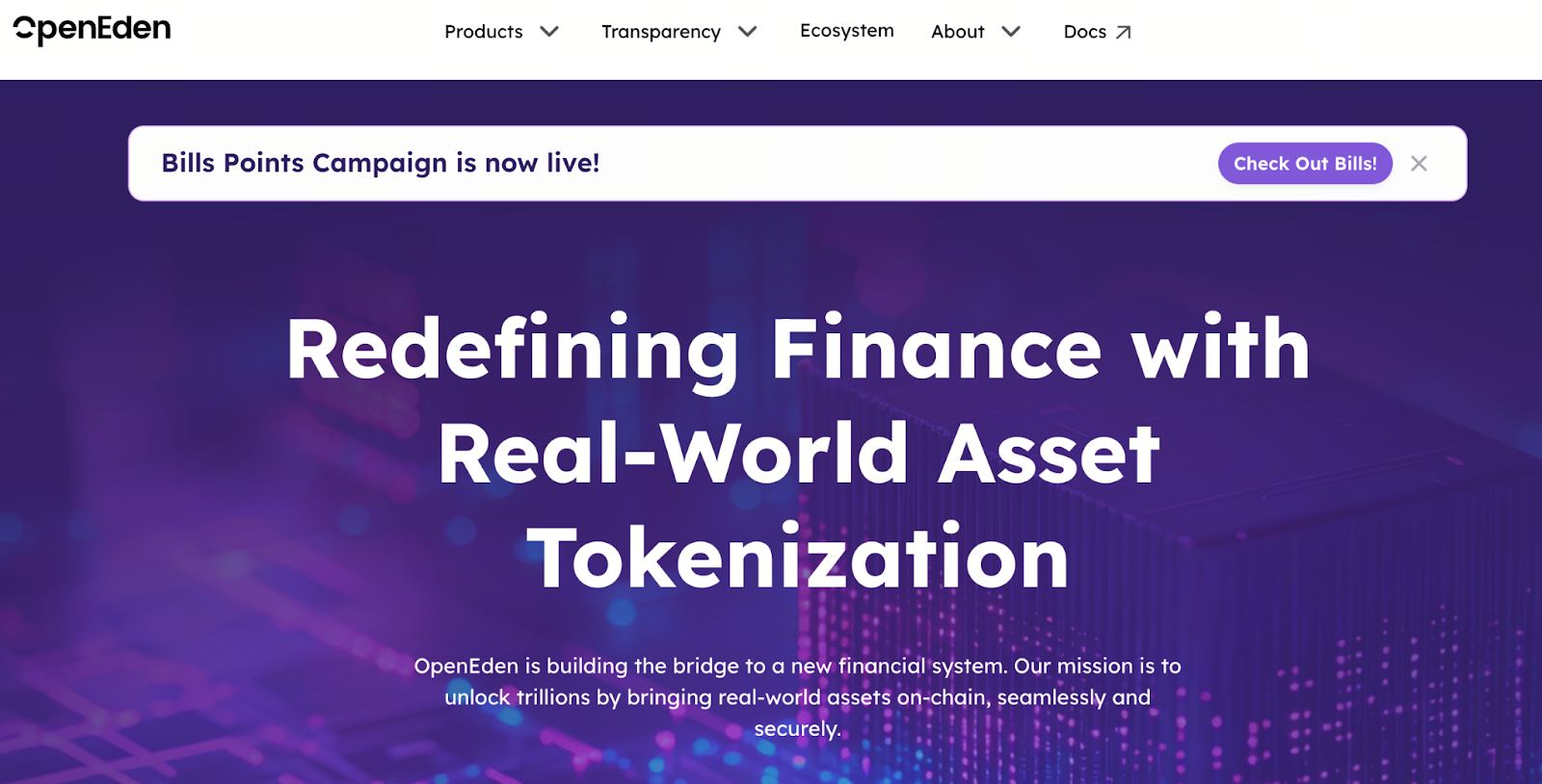
Image: https://openeden.com/
OpenEden is a platform specializing in the tokenization of Real World Assets (RWA). It aims to bring real-world assets—such as U.S. Treasuries and Treasury notes—on-chain via compliant processes and advanced technology, so a broader range of users can access, trade, and manage these assets.
Unlike traditional DeFi, which typically uses crypto assets as collateral, RWA projects add value by integrating conventional financial assets into blockchain ecosystems, expanding the range of asset types and enhancing diversity and stability.
2. RWA and Tokenization: Background Overview
In traditional finance, many high-quality assets—such as government bonds, corporate debt, notes, and real estate—have limited liquidity and high barriers to entry. RWA tokenization leverages regulatory-compliant structures and technology to bring these assets on-chain, introducing features like on-chain trading, fractional ownership, and transparent auditing. This approach lowers entry barriers and increases liquidity.
In recent years, as the crypto market has matured and regulatory frameworks have become clearer, institutional demand for yield-generating assets has surged, driving increased attention to RWA projects. OpenEden emerged in this context, aiming to bridge the gap between real-world assets and blockchain.
3. OpenEden Product Suite: TBILL, USDO, EDEN
OpenEden’s product lineup comprises three main categories:
- TBILL (Tokenized Treasury Bill Shares): The platform combines short-term U.S. Treasuries and overnight repos, then utilizes smart contracts to split and issue tokenized assets on-chain. TBILL holders receive a share of the underlying asset’s interest income.
- USDO (Yield-Bearing Stablecoin): USDO is a stablecoin pegged to $1, featuring a yield accrual mechanism—holders earn passive income simply by holding the token.
- EDEN (Ecosystem/Governance Token): EDEN is OpenEden’s native token, enabling governance, incentives, and community participation, serving as the essential connector within the ecosystem.
The three products work together: TBILL provides the foundational yield, USDO acts as the primary medium for settlement and circulation, and EDEN drives ecosystem incentives and governance.
4. Partnerships and Credibility
To build trust, OpenEden has partnered with established financial institutions for asset management and custody:
- Collaboration with BNY Mellon, which manages and safeguards the tokenized U.S. Treasury assets.
- TBILL has received an investment-grade rating from Moody’s, providing strong credit backing.
These partnerships strengthen OpenEden’s compliance and security profile, enhancing its credibility with both traditional financial institutions and the crypto community.
5. EDEN Token Distribution and Airdrop Plans
OpenEden will launch the EDEN token in August 2025, allocating 7.5% of the supply to participants in the “Bills Campaign.” These tokens will be fully unlocked at the Token Generation Event (TGE).
OpenEden finalized the campaign snapshot on September 15. OpenEden will not count submissions after this date. The minimum threshold for airdrop eligibility is 100,000 points—participants must meet this requirement to qualify.
Additionally, OpenEden is partnering with exchanges and wallet providers for pre-launch campaigns, distributing EDEN from the rewards pool to users who complete social tasks, swaps, liquidity mining, and other activities.
6. Supported Platforms and How Users Can Participate
According to official announcements, EDEN will go live on September 30, 2025, launching in the early-access program of a leading exchange.
Eligible users can claim their EDEN airdrop on the platform’s event page using points once trading opens.
For most users, participation generally involves the following steps:
- Monitor official announcements for airdrop details and eligibility rules
- Engage in the Bills or other point-earning campaigns to accumulate points or complete tasks
- After the token launches, visit supported platforms to claim the airdrop or begin trading
- Participate in liquidity mining, staking, or community incentive programs for additional rewards, if available
7. Risks and Market Outlook
Consider the following key risks:
- Underlying assets remain exposed to market interest rates and credit risk
- Compliance may be affected by changes in regional or global regulations
- Airdrop and distribution mechanisms may favor early participants, with limited returns for the average user
- Market volatility could impact EDEN’s price and liquidity
The market outlook includes the following points:
- If OpenEden continues to advance compliance, transparency, and institutional engagement, it could become a foundational RWA infrastructure
- As the ecosystem token, EDEN’s effectiveness in governance and community participation will be key to long-term sustainability
- As DeFi evolves, demand for on-chain real-world assets may rise steadily. If OpenEden captures this trend, it will be positioned for significant growth
In summary, OpenEden is a noteworthy attempt to bring traditional financial assets onto the blockchain. Even if newcomers choose not to participate right away, tracking the platform’s ecosystem development, tokenomics, and overall progress is worthwhile.







