XAUT, or Tether Gold, is a blockchain token backed by physical gold. Each token represents one ounce of gold stored in a Swiss vault. Issued by Tether, XAUT allows users to hold and trade gold conveniently on the blockchain. From an investor’s perspective, it combines gold’s traditional role as a store of value with the advantages of blockchain technology, including 24 hour global trading and seamless transferability. In effect, it brings a traditional physical asset into the digital financial ecosystem.
This article examines XAUT’s technical framework, reserve structure, custody and audit mechanisms, and pricing logic. It also evaluates its sustainability and potential risks under extreme market conditions.
What Is the Asset Pegging Mechanism Behind XAUT?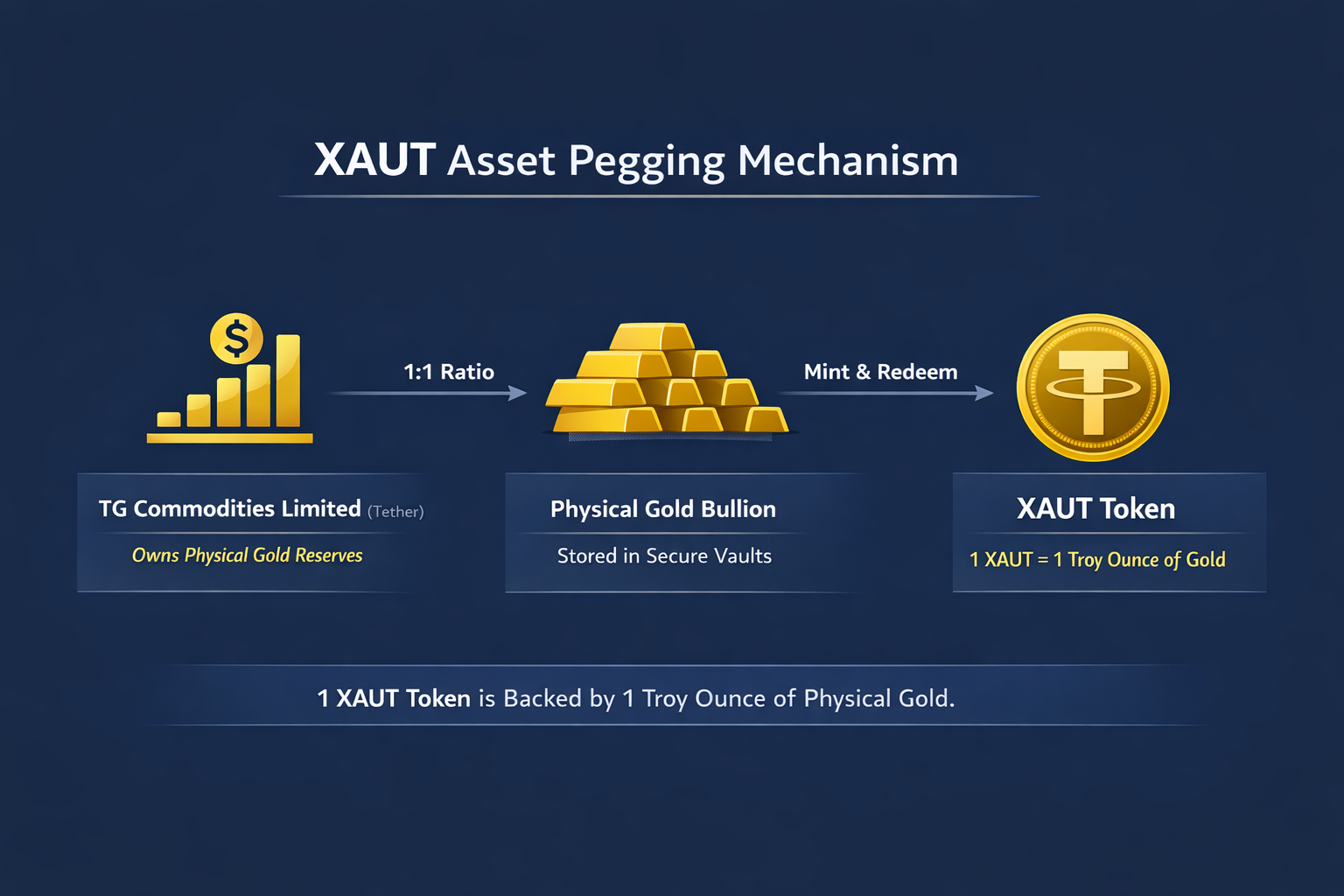
The core value of XAUT lies in its close link to the spot price of gold. Unlike algorithmic stablecoins that rely on mathematical models, XAUT is backed directly by physical gold.
Specifically, the issuer, TG Commodities Limited, a Tether affiliated company, holds physical gold that meets the London Bullion Market Association (LBMA) “Qualified Settlement” standards. This gold is stored in regulated vaults. Whenever new XAUT tokens are minted, an equivalent amount of physical gold is added to reserves, creating a 1:1 backing structure.
This model differs from algorithmic or purely credit backed assets. Its value anchor depends on the supply and demand dynamics of the global precious metals market and international gold prices, rather than solely on market expectations or smart contract logic.
How Much Physical Gold Does Each XAUT Represent?Under XAUT’s backing framework, each token represents ownership of one troy ounce of physical gold. The gold must meet LBMA standards and is stored in regulated professional vaults.
This creates a direct 1:1 link between token issuance and physical reserves:
- When market demand rises and users purchase XAUT through official channels or exchanges, the issuer increases gold reserves to support newly minted tokens.- When XAUT is redeemed and burned, a corresponding amount of physical gold is released or transferred to the redeemer.
According to publicly available reserve attestations, by the end of 2025 XAUT was backed by hundreds of thousands of troy ounces of physical gold, with reserves dynamically adjusted in response to market activity.
It is important to note that although the system promises 1:1 backing, this does not mean every token holder can redeem physical gold freely under all market conditions. Redemption typically involves specific procedures and eligibility requirements.
How Are the Gold Reserves Custodied and Safeguarded?The custody of gold reserves is central to maintaining XAUT’s value peg.
Custodian and location
XAUT’s physical gold is primarily stored in professional vaults in Switzerland. These facilities operate under local laws and security protocols and comply with LBMA Good Delivery standards.
Safekeeping and insurance
In traditional precious metals markets, gold holdings are typically insured and subject to third party security reviews to mitigate risks such as theft or damage. For XAUT reserves, the issuer relies on contractual arrangements to ensure the legality and safety of stored gold.
Reserve statements and ownership clarity
Tether provides a reserve lookup tool that allows users to verify specific XAUT tokens against associated gold bar numbers, weight, and inventory status. This adds traceability to individual holdings and enhances transparency.
This structure preserves the security benefits of physical gold storage while enabling on chain verification, reducing reliance on unilateral claims from the issuer.
Is There an Audit Mechanism to Ensure Reserve Transparency?An effective audit framework is critical to verifying that XAUT reserves exist and match the circulating supply.
Third party attestations
The issuer periodically engages independent accounting firms to review gold reserves and confirm that holdings correspond to the number of tokens in circulation. These attestations are intended to validate reserve adequacy.
Audit frequency and scope
Such attestations are generally conducted at least quarterly. They review the quantity of gold held, storage conditions, and compliance standards, with findings published through official channels.
Public disclosure
Publicly available reports enhance transparency and help strengthen market confidence that XAUT remains backed by physical gold. However, unlike certain financial products with real time audits, XAUT attestations may not always be fully real time, which has at times been a topic of market discussion.
How Does XAUT Track International Gold Prices?XAUT’s market price is primarily driven by the international spot gold price rather than purely by blockchain supply and demand. This is the foundation of its value linkage.
Physical gold as the primary driver
Because each XAUT is backed by physical gold, its price should, in theory, closely follow movements in the spot gold market. When gold prices rise, XAUT’s market price on major exchanges generally increases as well, and vice versa.
Liquidity and market factors
In actual trading, XAUT may deviate slightly from spot gold due to exchange liquidity, bid ask spreads, transaction fees, and short term supply and demand imbalances.
On chain arbitrage and price correction
When significant discrepancies arise between XAUT’s trading price and gold prices, market participants may engage in arbitrage, such as cross market trading or using the issuance and redemption mechanism. These actions help narrow price gaps and reinforce tracking stability.
This “hooked but not hard-nailed” linkage mechanism allows XAUT to reflect gold market movements while still accommodating natural trading fluctuations.
How Are On-Chain Tokens Linked to Off-Chain Gold?The connection between digital tokens and physical gold relies on several technical and institutional design elements:
Blockchain immutability
XAUT operates on blockchains such as Ethereum, where transparent ledgers record token ownership, transfer history, and balances. This ensures public verifiability of token movements.
Smart contract supply control
The smart contract governing XAUT defines rules for minting and burning. New tokens may be issued only after physical gold has been verified and deposited into custody. When tokens are redeemed and burned, corresponding gold may be released from reserves.
Official reserve lookup and bar numbers
The issuer provides a reserve verification tool through which holders can identify the gold bars associated with their XAUT, including bar number, weight, and storage location. This strengthens the link between on chain assets and off chain holdings.
Redemption mechanism
Holders may redeem XAUT for physical gold through official channels, converting digital assets into tangible bullion. The process typically involves compliance checks, fees, and logistical arrangements.
Together, blockchain records, physical custody, and third party verification form a structured bridge between tokenized assets and real world gold. XAUT is therefore more than a price derivative; it is institutionally tied to actual bullion.
Could XAUT’s Peg Fail Under Extreme Market Conditions?Although XAUT is designed with multiple safeguards, extreme market scenarios may present challenges:
Severe gold market volatility
During periods of economic crisis or geopolitical tension, gold prices can move sharply. In such environments, XAUT may temporarily diverge from spot prices or experience heightened volatility, though it would be expected to realign over time.
Redemption and settlement delays
In times of liquidity stress, redeeming physical gold could become slower or more expensive, limiting short term convertibility and potentially affecting market confidence.
Audit timing and transparency concerns
If audit reports are delayed or perceived as insufficient, market participants may question reserve completeness, leading to discounted trading. This represents a structural risk common to asset backed tokens.
Legal and regulatory changes
Regulatory developments in certain jurisdictions could restrict trading, cross border transfers, or redemption of digital assets. Such legal risks may, in extreme cases, weaken the effectiveness of the peg.
Overall, XAUT’s peg is not maintained by a fully automated stabilization protocol. It depends on physical reserves, custody arrangements, and audit oversight. Under normal conditions, these mechanisms help keep prices closely aligned with the spot gold market, but investors should still assess risks carefully in extreme scenarios.
Advantages and Potential Risks of the Digital Gold Model### Advantages
- Global liquidity and trading convenience: As a blockchain asset, XAUT can be traded 24 hours a day on major global exchanges, enhancing the liquidity and usability of gold.- Cost efficiency without personal storage: Holding XAUT eliminates the need for individual storage, insurance, and security arrangements associated with physical gold, while still providing exposure to gold prices.- Divisibility and lower investment thresholds: Unlike traditional bullion, XAUT can be divided into very small units, for example 0.000001 XAUT, lowering the entry barrier for both retail and institutional participants.
Risks
- Audit transparency and third party credibility: The quality, frequency, and independence of attestations directly influence investor trust in reserve backing.- Custodial counterparty risk: The safety of gold reserves depends on vault management and insurance coverage. Operational failures, theft, or force majeure events could lead to losses.- Practical constraints and costs of redemption: Although XAUT is theoretically redeemable for physical gold, fees, logistics, and regulatory compliance may limit the practicality of doing so.- Regulatory uncertainty: Legal frameworks governing asset backed digital tokens remain under development in many jurisdictions and may introduce future uncertainties.
ConclusionTether Gold, or XAUT, is a blockchain asset backed 1:1 by physical gold. Through physical reserves, audit attestations, and smart contract controls, it aims to maintain a close link to international gold prices.
This article has provided a structured and objective analysis of its asset pegging mechanism, reserve custody, audit transparency, pricing dynamics, on chain and off chain linkage, and potential vulnerabilities under extreme conditions.
In essence, XAUT combines traditional precious metals with blockchain infrastructure, offering investors a liquid and accessible way to gain exposure to gold. However, the model still relies on reserve transparency, audit rigor, and a stable legal environment. Investors should evaluate these institutional risks carefully before participating.