Key Pain Points in the Multi-Chain Era
As the EVM ecosystem continues to mature, cross-chain operations have become a daily activity for most Web3 users. Whether executing DeFi transactions, interacting with NFTs, or exploring Layer 2 applications, users often find their actions interrupted before a transaction is even sent. The cause isn’t technical complexity, but rather the fundamental need to prepare one essential resource—gas.
While gas is a familiar concept, users must maintain and prepare it separately in advance. If any chain’s native token balance is insufficient, the entire transaction fails. This seemingly minor preparation cost is steadily accumulating, becoming a significant friction point that directly affects the user experience.
Shifting Gas from Pre-Transaction Preparation to Real-Time Assurance
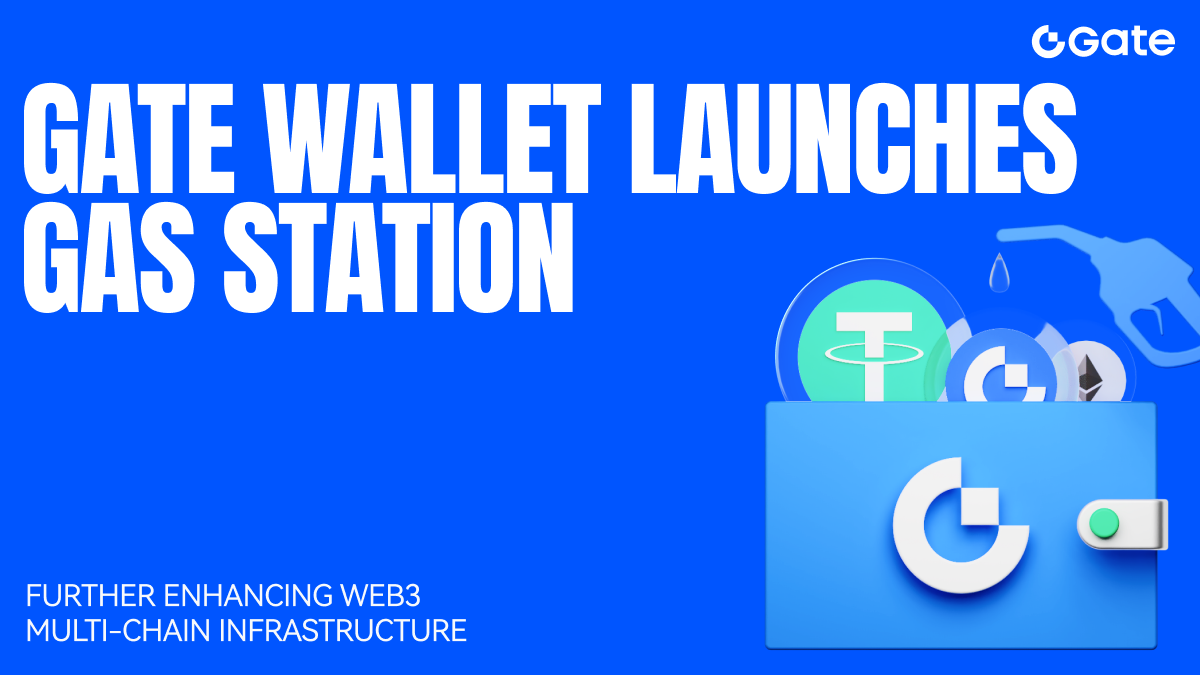
The Gate Wallet Gas Station goes beyond addressing gas issues on a single chain. It fundamentally reimagines gas at the system level by assigning each EVM wallet its own dedicated gas account. When users transact on supported networks and encounter insufficient native gas, the system automatically covers the required fees, ensuring transactions proceed without interruption.
This approach eliminates the need for users to repeatedly check and manually top up gas balances. Instead, the platform handles the process in the background, transforming what was once a barrier into a built-in safeguard.
Cross-Chain Transactions No Longer Constrained by Native Tokens
The Gas Station now supports a wide range of leading EVM networks, including Ethereum, BNB Smart Chain, Base, Arbitrum, Avalanche, Polygon, Optimism, Linea, GateChain EVM, and Gate Layer, with ongoing expansion. Crucially, gas payments are no longer limited to a single native token. Users can top up with over 100 popular cryptocurrencies—such as GT, USDT, USDC, ETH, and BNB—creating a unified gas payment pool. This removes the need to prepare a full set of native assets in advance for multi-chain operations.
Platform-Managed Complexity: The Prerequisite for Mainstream Web3 Adoption
From a product design perspective, the Gas Station embodies Gate’s insight into the current stage of Web3 development. As on-chain activity becomes more frequent, the underlying differences and technical complexity should be managed by the platform—not the user. The closer the process gets to a seamless, ready-to-use experience, the more likely users are to remain engaged long-term. Centralized gas management is a critical step toward making Web3 as user-friendly as mainstream applications.
Transparent Records and Zero Additional Authorization
In line with Gate’s established commitment to security and transparency, the Gas Station provides real-time access to all payment records, account balances, and consumption details. The mechanism requires no additional contract authorizations. This design delivers immediate emergency support while maintaining full traceability of fund flows, reducing user concerns about the payment process.
Accelerating New User Behaviors through Incentives
To lower the barrier for first-time users, Gate is also launching a limited-time incentive campaign. New users who complete their first pre-deposit will receive a gas subsidy, while frequent users may qualify for cashback and referral rewards. These incentives are not just promotional—they are designed to help users quickly develop new habits, making gas-free preparation an intuitive part of the experience.
How to participate: https://www.gate.com/announcements/article/49508
Conclusion
As the multi-chain environment becomes the industry standard, platform competition now centers on delivering a stable, seamless, and sustainable user experience—not just the number of supported applications. The launch of the Gas Station is a clear demonstration of Gate’s ongoing commitment to optimizing foundational Web3 experiences under its All in Web3 strategy. By absorbing operational complexity and reducing friction, Gate is steadily building a more robust Web3 gateway and reinforcing its role as a central hub in the multi-chain ecosystem.