Gate DEX: A Unified Gateway for the On-Chain Issuance Era

Beginner
Quick Reads
Last Updated 2026-03-24 22:37:32
Reading Time: 1m
As token issuance moves from centralized exchanges to public blockchains, market dynamics are undergoing a fundamental transformation. This article explores how on-chain issuance models are reshaping price formation, and how Gate DEX combines asset discovery, on-chain analytics, and trade execution to create a seamless, intuitive one-stop trading experience on the blockchain.

Token Issuance Moves On-Chain, Redefining Market Leadership
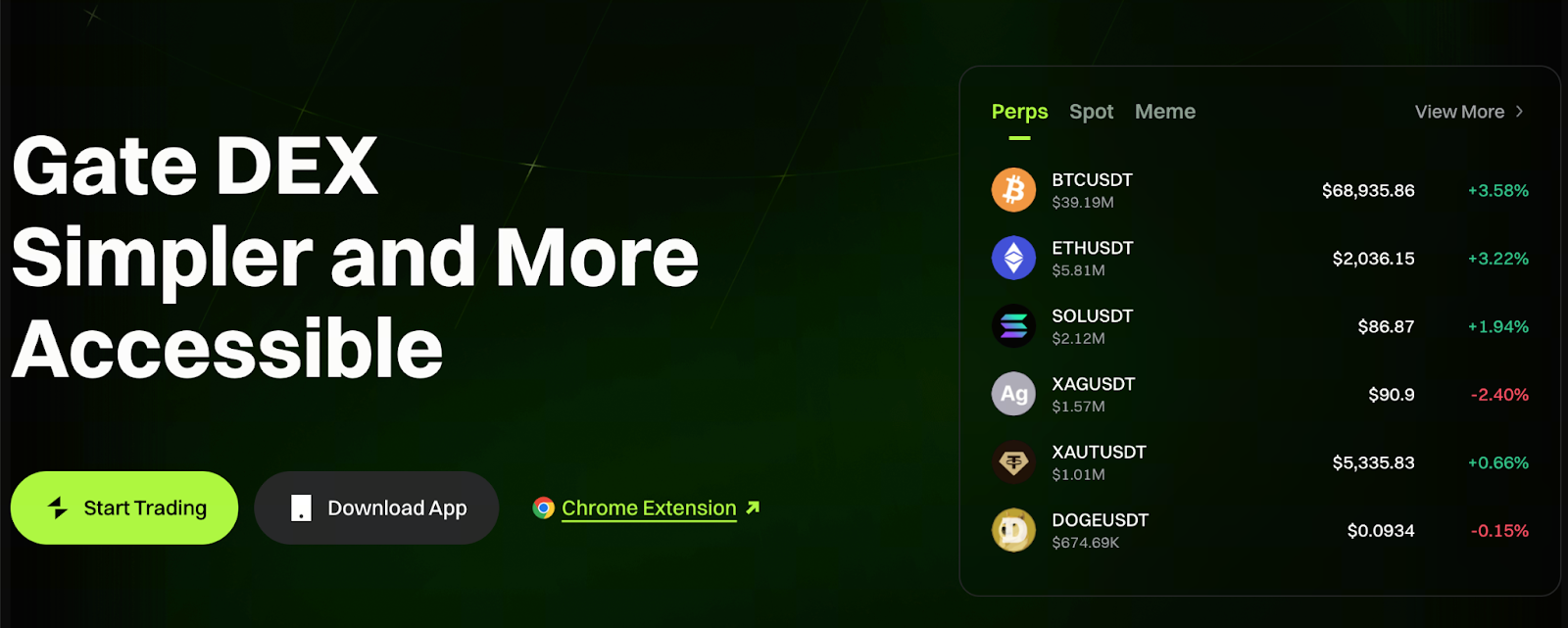
Traditionally, projects seeking market attention needed to pass centralized exchange reviews and complete listing processes. That standard path is loosening. Increasingly, teams are deploying tokens directly on public blockchains, enabling the market to independently discover prices and establish liquidity in a decentralized setting.

The core transformation here is that price discovery is no longer confined to a single platform but is distributed across all on-chain participants through their trading activity. Capital flows themselves serve as the most direct voting mechanism. For project teams, this allows for faster validation of whether their narrative resonates with the market. For investors, early opportunities increasingly arise on-chain—often before any exchange announcement.

Experience seamless on-chain trading now at Gate DEX: https://web3.gate.com/

Real Barriers to On-Chain Participation

In theory, anyone with a wallet can join on-chain trading, but in practice, the process is far more complex. Most users must constantly switch between different tools:

  • Finding token contract addresses through community sources
  • Verifying contract authenticity via blockchain explorers
  • Checking liquidity and token distribution on analytics platforms
  • Finally, executing swaps on a DEX

This fragmented process is not only time-consuming but also heightens the risk of operational errors and misinformation. While on-chain markets are open, the real challenge often lies in information integration, not technical barriers.

Gate DEX’s Integrated Approach

In response, Gate has launched Gate DEX, aiming to consolidate fragmented on-chain workflows into a single entry point.

The focus is not on piling up features, but on streamlining the user journey. Within a single interface, users can:

  • Discover the latest on-chain assets
  • Monitor market trends and liquidity in real time
  • Execute trades directly

This integrated model eliminates the need to jump between multiple windows for on-chain trading, delivering an experience closer to traditional trading platforms. It lowers the learning curve and narrows information gaps.

Compressing the Gap Between Decision and Execution

In early-stage on-chain markets, speed is a competitive advantage. Many opportunities exist only within short market windows. Those able to confirm information and execute trades faster often secure more favorable entry points.

Gate DEX puts data monitoring and trading access on the same level, enabling users to act immediately after making a market decision. This shortens the path from spotting an opportunity to executing a trade—essentially accelerating decision-making.

On-Chain Transparency: Making Risk Traceable

On-chain trading is defined by transparent capital flows. Integrated on-chain data allows users to track various structural indicators, such as:

  • Whether a token is seeing sustained capital inflows
  • Sudden surges in trading volume
  • High concentration of token holdings in a few addresses

While this information does not guarantee returns, it grounds decisions in verifiable data rather than relying solely on community sentiment or single viewpoints.

A Smoother Process Doesn’t Mean Lower Risk

Even with streamlined workflows, new assets remain highly uncertain. Low liquidity, opaque project information, and rapidly shifting market sentiment are the norm in on-chain markets. The platform’s value lies in lowering the barriers to entry and information costs, not in absorbing market volatility for users. Investors should still manage their position sizes and avoid chasing price spikes or excessive leverage driven by short-term gains.

On-Chain Trading Expands to Wider Participation

Previously, on-chain trading was the realm of technical users and early adopters. As interfaces improve and workflows become standardized, on-chain markets are opening up to a broader range of traders. Gate DEX marks the emergence of platform-level gateways for on-chain trading. It is no longer just a collection of fragmented tools, but a core component of a comprehensive trading system. As issuance models move to public blockchains, market entry points must evolve accordingly.

Summary

As token issuance transitions on-chain, market structures and price discovery mechanisms are undergoing deep transformation. On-chain is no longer merely a supplement but the starting point for new assets and liquidity. By integrating asset discovery, data monitoring, and trade execution, Gate DEX brings greater consistency and efficiency to previously fragmented on-chain processes. As the on-chain ecosystem expands, these one-stop entry platforms are becoming vital bridges connecting new projects with market capital—and opening the door for more participants to enter the on-chain world.

Author: Allen
Disclaimer
* The information is not intended to be and does not constitute financial advice or any other recommendation of any sort offered or endorsed by Gate.
* This article may not be reproduced, transmitted or copied without referencing Gate. Contravention is an infringement of Copyright Act and may be subject to legal action.

Related Articles

AI-Native Settlement Layers: How United Stables Is Building the Next Financial Rail
Beginner

AI-Native Settlement Layers: How United Stables Is Building the Next Financial Rail

Stablecoins were originally designed as dollar substitutes within exchanges, primarily used for asset pricing and trade settlement. As on-chain financial ecosystems have matured, their role has expanded beyond simple payments to include collateral assets, cross-chain liquidity mediums, and unified settlement units. In particular, as AI systems and automated agents begin to participate directly in economic activity, demand has risen sharply for programmable value units capable of instant settlement. This shift is pushing stablecoins toward the role of foundational financial infrastructure.
2026-03-25 03:16:17
DePIN Identity Network and Real World Applications: How Humanity Protocol Brings on-chain Identity Into the Physical World
Beginner

DePIN Identity Network and Real World Applications: How Humanity Protocol Brings on-chain Identity Into the Physical World

Most Web3 identity systems remain confined to on-chain environments and struggle to achieve meaningful adoption in real world settings. Through a DePIN architecture and physical verification hardware, Humanity Protocol aims to bring decentralized identity into access control systems, hospitality, public services, and offline events, allowing on-chain identity to function not just as a digital credential, but as foundational infrastructure for real world access.
2026-03-25 07:40:53
Gold Price Forecast for the Next Five Years: 2026–2030 Trend Outlook and Investment Implications, Could It Reach $6,000?
Beginner

Gold Price Forecast for the Next Five Years: 2026–2030 Trend Outlook and Investment Implications, Could It Reach $6,000?

Analyze current gold price trends alongside authoritative five-year forecasts, integrating an evaluation of market risks and opportunities. This gives investors insight into the potential trajectory of gold prices and the main drivers expected to shape the market over the next five years.
2026-03-25 18:13:30
Aster vs Hyperliquid: Which Perp DEX Will Prevail?
Beginner

Aster vs Hyperliquid: Which Perp DEX Will Prevail?

Aster and Hyperliquid are the two representative protocols of the "purpose-built L1 path" within the current decentralized perpetual exchange (Perp DEX) sector. As a pioneer in the field, Hyperliquid has built a deep liquidity moat through its highly mature order book architecture and strong community consensus. Conversely, Aster, as a rising challenger, seeks to leapfrog the competition in high-performance trading through more aggressive multi-chain aggregation logic, private transaction modules, and an underlying execution environment optimized for 2026 market demands.
2026-03-24 11:58:33
Aerodrome Tokenomics: How ve(3,3) Powers Base's Most Profitable DEX
Beginner

Aerodrome Tokenomics: How ve(3,3) Powers Base's Most Profitable DEX

AERO is the native token of Aerodrome Finance, a core decentralized exchange and liquidity protocol in the Base ecosystem. It is primarily used for liquidity incentives and ecosystem operations. veAERO is a governance NFT that users receive by locking AERO, representing both voting power and the right to share protocol revenue. Through a dual track structure of AERO as a utility token and veAERO as a governance credential, Aerodrome separates liquidity usage value from long term governance power, allowing participants to act as liquidity providers, governance decision makers, and revenue sharers within the same system.
2026-03-25 06:40:31
The ve(3,3) Flywheel Explained: How AERO Tokenomics Powers Aerodrome’s DeFi Economy
Beginner

The ve(3,3) Flywheel Explained: How AERO Tokenomics Powers Aerodrome’s DeFi Economy

In the competition for DeFi liquidity, high-inflation mining alone is no longer enough to build lasting advantages. Aerodrome applies the ve(3,3) economic model to redesign token emissions, voting mechanisms, and revenue distribution, creating a liquidity flywheel centered on governance and cash flow. This article examines AERO tokenomics, the veAERO locking mechanism, and protocol revenue models to explain how Aerodrome builds a sustainable DeFi economic system.
2026-03-25 06:41:58





