From Manual Analysis to AI-Driven Decision Support
In earlier trading environments, building a comprehensive decision-making process often demanded substantial time. Traders had to independently organize market data, compare technical indicators, and interpret price structures just to forecast potential trading directions.
This approach was inefficient and relied heavily on individual experience and judgment. For beginners, the entry barrier was extremely high; for veteran traders, emotional and subjective biases could easily cloud decisions. Gate AI was developed to bridge this gap, empowering traders to interpret the market through a more systematic and data-driven framework.
Gate AI: Focused on Decision Support, Not Prediction
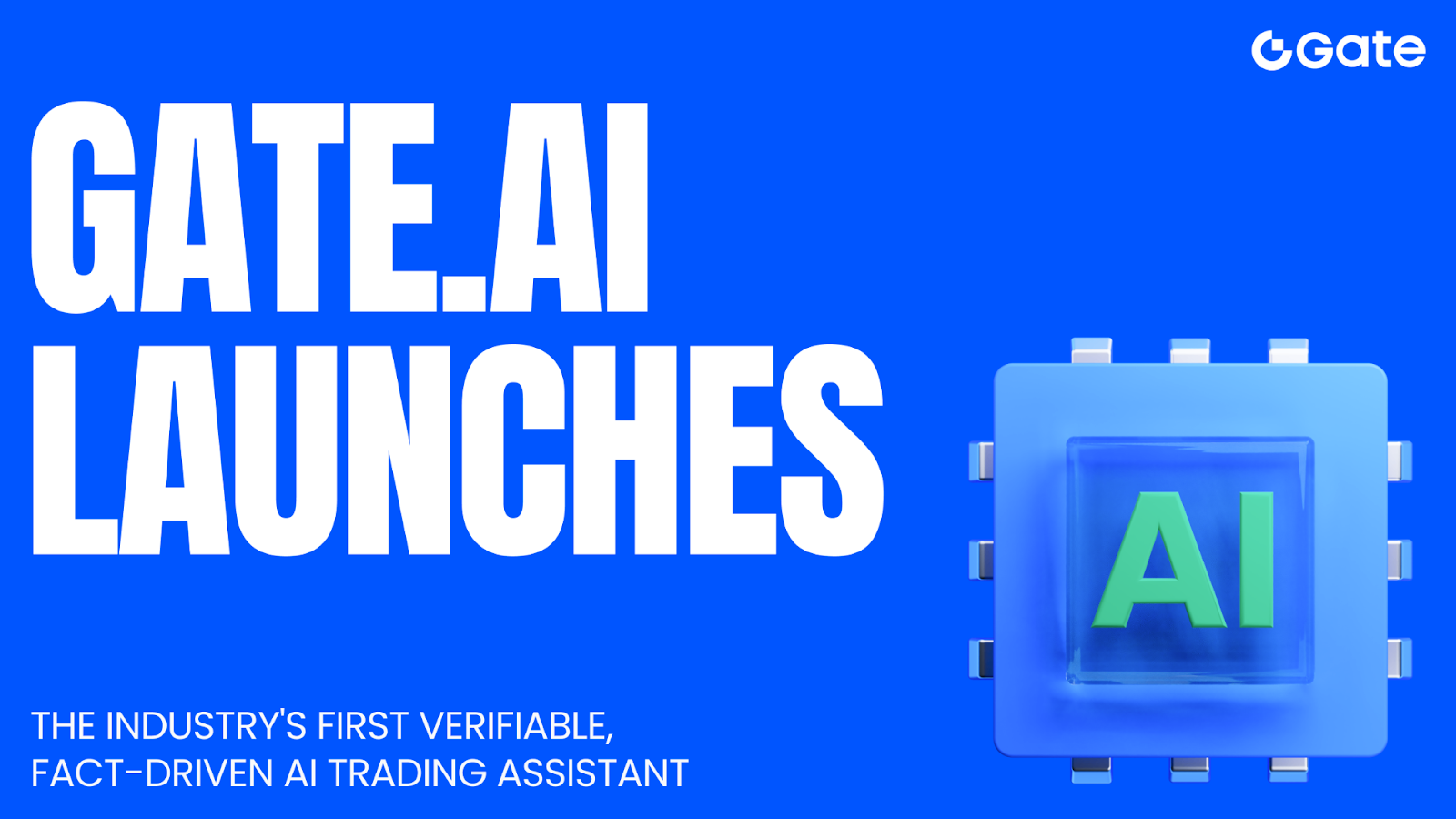
Gate AI is best described as a decision support system rather than a predictive tool.
- Its core functions center on three areas:
- Automatically aggregating market and on-chain data
- Delivering trend analysis and risk alerts
- Providing strategic guidance for decision making
AI does not make decisions for users. Instead, it converts complex information into actionable signals, enabling traders to quickly grasp market dynamics and easing the burden of information processing.
Real-World Applications for All Types of Traders
Gate AI isn’t designed exclusively for professional traders. In reality, it delivers clear value for users at every experience level.
For newcomers, AI acts as a market navigator:
- Helps interpret price trend shifts
- Offers basic strategic direction
- Reduces the likelihood of emotional trading
For advanced users, AI functions as an efficiency enhancer:
- Serves as an auxiliary layer for data analysis
- Improves precision in strategy execution
- Monitors risk changes in real time
In this structure, AI doesn’t replace traders—it provides a second perspective in the decision-making process.
Deep Platform Integration: Gate AI’s Strategic Advantage
While there are many standalone AI analysis tools available, Gate AI stands apart by being fully integrated within the Gate trading platform—it’s not an external add-on.
Users can manage the entire trading workflow in one environment:
- Market monitoring
- AI-driven analysis
- Strategic planning
- Order execution
- Risk management
This unified design dramatically reduces friction and operational costs across platforms, making the process from “information → analysis → action” seamless and intuitive.
AI Is Quickly Becoming Standard in Fast-Paced Markets
As the crypto market matures, price volatility accelerates and capital structures become more complex. Relying solely on manual monitoring and experience is no longer sufficient to track market movements.
AI-assisted trading is evolving from a supplementary tool to a standard feature. The ongoing enhancements to Gate AI reflect the platform’s commitment to intelligent trading—not to create automated trading bots, but to build a system that amplifies human decision-making capabilities.
Conclusion
Gate AI’s real value lies not in making decisions for users, but in enabling faster market comprehension and more rational risk management. As information density rises and market changes accelerate, trading competitiveness is defined by efficient information processing—not just reaction speed. AI won’t make trading effortless, but it will clarify decision-making. Those who embrace this human–machine collaboration early will have the opportunity to establish lasting advantages in complex markets.