BlackRock Bitcoin ETF Sees $570M Weekly Outflow: Institutional Profit-Taking or Temporary Pullback?

Last Updated 2026-03-27 18:31:58
Reading Time: 1m
BlackRock's iShares Bitcoin Trust (IBIT) saw a record $570 million net outflow this week, fueling market debates over profit-taking, capital rotation, and the outlook for Bitcoin's price trajectory.

Background: The Importance of BlackRock IBIT

BlackRock’s iShares Bitcoin Trust (IBIT) stands as one of the most influential spot Bitcoin ETFs in the United States. Serving as a key entry point for institutional investment in the Bitcoin market, IBIT’s fund flows are widely viewed as a primary gauge of institutional sentiment. Over time, this ETF has attracted significant capital into the Bitcoin ecosystem.

Details of the $570 Million Net Outflow
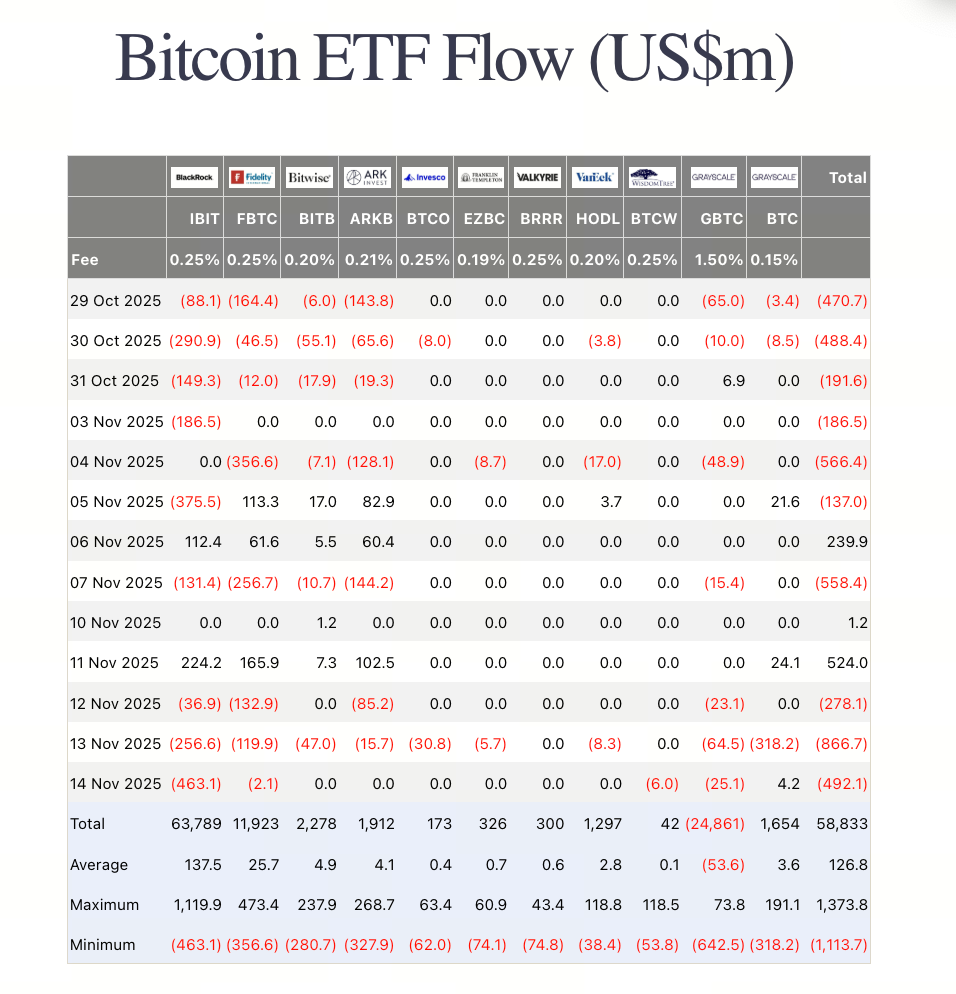

Source: https://farside.co.uk/btc/

Data from Farside Investor shows that BlackRock IBIT has seen continuous fund outflows since October 29, 2025. The most recent data indicates a net outflow of $570 million in the past week, marking the largest one-week withdrawal since February.

Investor Motivation: Profit-Taking vs. Portfolio Rotation

Profit-Taking: Some market participants interpret this net outflow as profit-taking activity. IBIT may have accumulated substantial holdings previously, and with Bitcoin’s price increase, certain investors are now realizing profits.

Portfolio Rotation: Another perspective suggests these funds may be rotating among ETFs. Some capital could be shifting to other crypto assets or different Bitcoin ETFs. Market observers speculate that if Bitcoin regains upward momentum, these funds may “flow back in.”

Impact on Bitcoin Price and Market Sentiment
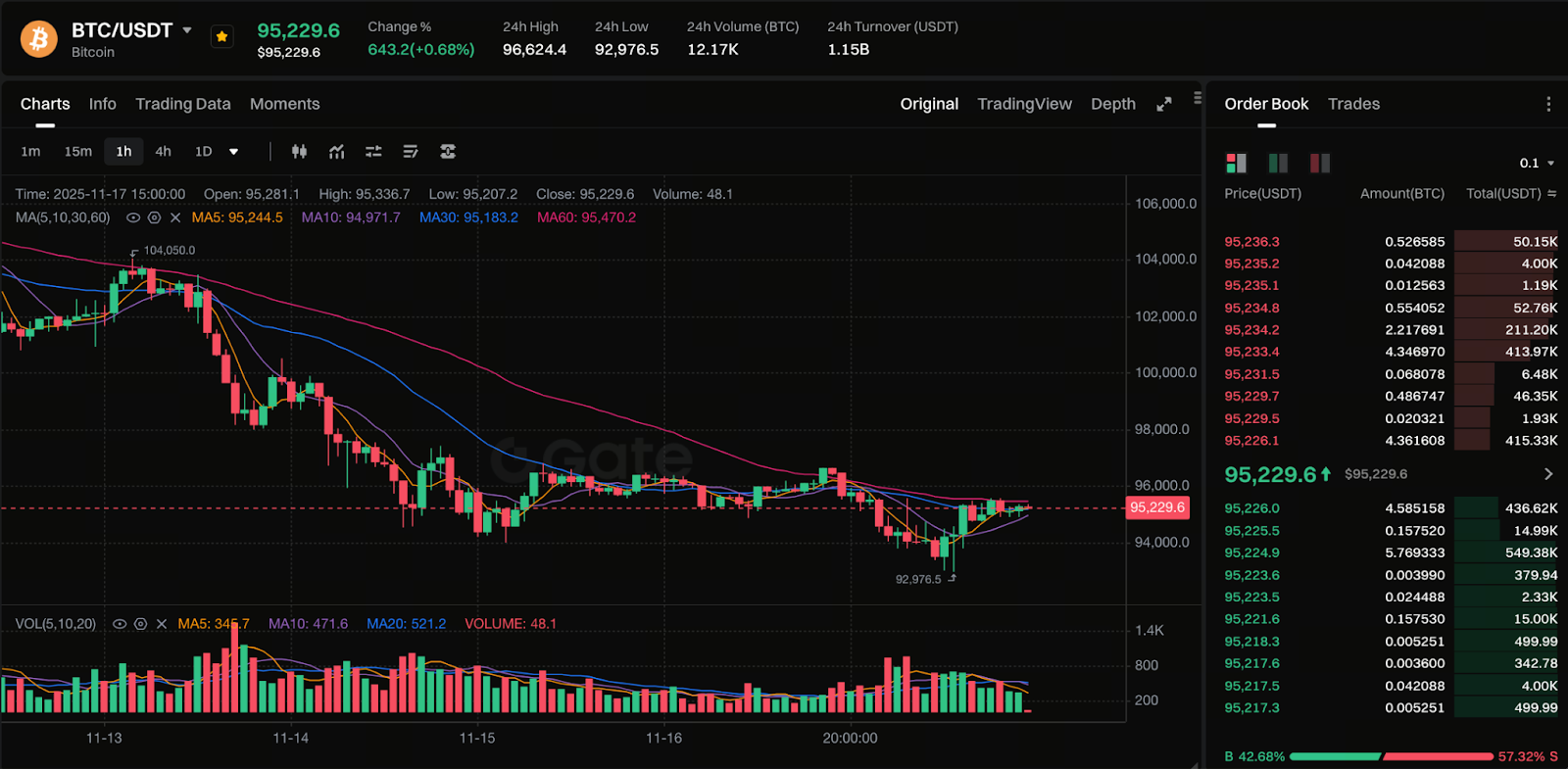

Source: https://www.gate.com/trade/BTC_USDT

This sizable withdrawal has placed immediate pressure on the market. As the largest manager of Bitcoin ETFs, BlackRock’s capital flows strongly impact market confidence. The recent net outflow may trigger volatility in Bitcoin’s price.

Whether this withdrawal leads to broader selling remains uncertain and will depend on fund movements in other ETFs such as Fidelity and Grayscale. If the outflow is limited to short-term profit-taking, its long-term effect on price may be minor.

Analyst and Community Insights

  • Crypto data analyst Ki Young Ju highlights that this is IBIT’s largest weekly withdrawal since February.
  • Some crypto community members believe this may be a “major transfer between whales,” with large investors reallocating via ETFs.
  • Other analysts suggest that if Bitcoin regains upward momentum, these funds could “return in force.”

Potential Future Impact and Risks

  • Risk: If the outflow reflects a structural shift, such as long-term position reductions by major institutions, Bitcoin could face stronger downward pressure.
  • Opportunity: If the capital outflow is temporary, it may set the stage for future inflows. Improved sentiment or price recovery could drive new investment into IBIT.
  • Monitoring: In the coming weeks, it’s critical to closely track IBIT’s fund flows and net inflows/outflows in other Bitcoin ETFs.

Outlook and Conclusion

The $570 million net outflow from BlackRock IBIT this week has garnered significant attention. It may reflect profit-taking by some investors or temporary portfolio rotation among ETFs. Either scenario underscores institutional sensitivity to the current market environment. If the market resumes its upward trajectory, Bitcoin ETFs could see renewed inflows. Conversely, continued outflows warrant caution regarding weakening market confidence in Bitcoin.

Author: Max
Disclaimer
* The information is not intended to be and does not constitute financial advice or any other recommendation of any sort offered or endorsed by Gate.
* This article may not be reproduced, transmitted or copied without referencing Gate. Contravention is an infringement of Copyright Act and may be subject to legal action.

Related Articles

AI-Native Settlement Layers: How United Stables Is Building the Next Financial Rail
Beginner

AI-Native Settlement Layers: How United Stables Is Building the Next Financial Rail

Stablecoins were originally designed as dollar substitutes within exchanges, primarily used for asset pricing and trade settlement. As on-chain financial ecosystems have matured, their role has expanded beyond simple payments to include collateral assets, cross-chain liquidity mediums, and unified settlement units. In particular, as AI systems and automated agents begin to participate directly in economic activity, demand has risen sharply for programmable value units capable of instant settlement. This shift is pushing stablecoins toward the role of foundational financial infrastructure.
2026-03-25 03:16:17
DePIN Identity Network and Real World Applications: How Humanity Protocol Brings on-chain Identity Into the Physical World
Beginner

DePIN Identity Network and Real World Applications: How Humanity Protocol Brings on-chain Identity Into the Physical World

Most Web3 identity systems remain confined to on-chain environments and struggle to achieve meaningful adoption in real world settings. Through a DePIN architecture and physical verification hardware, Humanity Protocol aims to bring decentralized identity into access control systems, hospitality, public services, and offline events, allowing on-chain identity to function not just as a digital credential, but as foundational infrastructure for real world access.
2026-03-25 07:40:53
Gold Price Forecast for the Next Five Years: 2026–2030 Trend Outlook and Investment Implications, Could It Reach $6,000?
Beginner

Gold Price Forecast for the Next Five Years: 2026–2030 Trend Outlook and Investment Implications, Could It Reach $6,000?

Analyze current gold price trends alongside authoritative five-year forecasts, integrating an evaluation of market risks and opportunities. This gives investors insight into the potential trajectory of gold prices and the main drivers expected to shape the market over the next five years.
2026-03-25 18:13:30
Aster vs Hyperliquid: Which Perp DEX Will Prevail?
Beginner

Aster vs Hyperliquid: Which Perp DEX Will Prevail?

Aster and Hyperliquid are the two representative protocols of the "purpose-built L1 path" within the current decentralized perpetual exchange (Perp DEX) sector. As a pioneer in the field, Hyperliquid has built a deep liquidity moat through its highly mature order book architecture and strong community consensus. Conversely, Aster, as a rising challenger, seeks to leapfrog the competition in high-performance trading through more aggressive multi-chain aggregation logic, private transaction modules, and an underlying execution environment optimized for 2026 market demands.
2026-03-24 11:58:33
Aerodrome Tokenomics: How ve(3,3) Powers Base's Most Profitable DEX
Beginner

Aerodrome Tokenomics: How ve(3,3) Powers Base's Most Profitable DEX

AERO is the native token of Aerodrome Finance, a core decentralized exchange and liquidity protocol in the Base ecosystem. It is primarily used for liquidity incentives and ecosystem operations. veAERO is a governance NFT that users receive by locking AERO, representing both voting power and the right to share protocol revenue. Through a dual track structure of AERO as a utility token and veAERO as a governance credential, Aerodrome separates liquidity usage value from long term governance power, allowing participants to act as liquidity providers, governance decision makers, and revenue sharers within the same system.
2026-03-25 06:40:31
What is MetFi? All You Need to Know About METFI (2025 Update)
Intermediate

What is MetFi? All You Need to Know About METFI (2025 Update)

MetFi is a decentralized metaverse and web3 incubator that utilizes NFTs to share investment returns with MetFi NFT holders and members of its community. As of 2025, MetFi trades at $0.225266 USD with a $47.7M market cap, offering AI-driven trading, blockchain learn-to-earn games, and ERC-404 airdrops through its Marine Moguls project for early claim rights to promising Web3 startups.
2026-04-08 23:25:05